

In This Article
A golf trolley battery is the rechargeable power pack that runs an electric golf trolley’s motor. Most are 12V lead-acid or lithium units rated in amp hours (Ah). Some newer trolleys use proprietary 30V lithium packs rated in watt hours (Wh). Capacity decides how many holes you get, while chemistry decides weight, lifespan and cost.
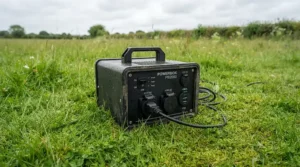
That sounds dry. It isn’t. Your golf trolley battery is the one component that decides whether the trolley glides up the 9th fairway or sulks to a halt beside a bunker. The motor gets the glory and the battery does the graft. In 2026 the market has split into two camps. One is the old-school sealed lead-acid brick, cheap and heavy. The other is the lithium pack, light enough to carry one-handed and priced to make you wince.
This guide covers seven real options for a replacement golf trolley battery, from a roughly £50 Yuasa lead-acid unit to trolley-specific 30V lithium packs from PowaKaddy and Stewart Golf. It leans on published specs, manufacturer warranty terms and aggregated customer-review themes. It does not rely on hands-on testing, which hasn’t been done. It also translates the jargon, from what voltage/amp hours really mean to how battery lifespan plays out over a few seasons. Most lithium packs for trolleys use LiFePO4 chemistry, a type of lithium-ion battery covered in Wikipedia’s overview of lithium iron phosphate batteries, which notes it stores less energy per kilo than other lithium-ion types.
One caveat up front: prices move constantly, so this article uses ranges only. Always check the current price before you buy.
Quick Comparison: 7 Replacement Golf Trolley Battery Options at a Glance
Here is the whole field on one screen before we dig in. Spec numbers come from manufacturer and retailer listings. Review evidence is only shown where a real, sizeable review pool existed.
| Battery | Spec | Weight | Indicative price* | Review evidence | Best For |
|---|---|---|---|---|---|
| Motocaddy LitePower Extended Lithium 22Ah | 12V LiFePO4, 22Ah | 2.9kg | £200–£300 | None verified | Universal fit, 27–36 holes |
| PowaKaddy 30V Plug ‘n’ Play 18 Hole Lithium | 30V NCM, 220Wh | 1.8kg | £250–£320 | None verified | PowaKaddy FX/CT/RX owners, 18 holes |
| PowaKaddy 30V Plug ‘n’ Play 36 Hole XL Lithium | 30V NCM, 260Wh | 1.85–1.95kg | £300–£380 | None verified | Hilly courses, long days |
| Stewart Golf SmartPower | Smart LiFePO4, app-linked | Roughly 3kg | £250–£350 | Mixed owner reviews | Q Series and VERTX owners |
| PROGolf 12V 22Ah 36 Hole Lithium | 12V LiFePO4, 22Ah | Not stated | £130–£200 | 4–5★ on same-spec listing | Value-minded upgraders |
| Maplin Plus 36 Hole 22Ah LiFePO4 | 12V LiFePO4, 22Ah | 2.9kg | £140–£160 | None verified | Cheapest lithium route |
| Yuasa REC22-12 | 12V 22Ah cyclic VRLA | Several kg more | £50–£65 | 4.8/5 (450+ reviews) | Tight budgets, occasional play |
*Indicative brackets drawn from retailer listings and trade-press RRPs found during research. Check the current price.
Looking at the table, the Yuasa REC22-12 wins on upfront cost by a distance, and its review pool is the only large one I could verify. The Maplin Plus 36 Hole 22Ah LiFePO4 is the lithium bargain on paper, though its reviews couldn’t be verified. The PowaKaddy and Stewart Golf packs cost more because they’re built around specific trolleys, so check compatibility before getting excited about weight savings.
💬 Just one click — help others make better buying decisions too!😊
Top 7 Golf Trolley Battery Picks: Expert Analysis
1. Motocaddy LitePower Extended Lithium 22Ah — universal fit for most trolleys
If you want a replacement golf trolley battery without replacing the trolley, this is the “fits nearly anything” answer. It’s a 12V LiFePO4 pack rated at 22Ah, which works out at roughly 264Wh, and it weighs 2.9kg. Motocaddy says it uses a universal connection system and an upgraded battery management system (BMS). The maker also says it covers 36 holes on a single-motor trolley or 18 on a dual-motor one.
On paper, the headroom is the point. If you play 27 or 36 holes, or your trolley is a thirsty dual-motor model, 22Ah buys breathing space. What most buyers overlook is the warranty wording. The three-year cover is tied to the battery retaining 75% of its original rated capacity (Wh), which gives you a measurable yardstick instead of vague promises.
I couldn’t verify a meaningful pool of independent reviews for this exact pack. The maker and retailers do warn that hills, soggy fairways, heavy bags and USB charging can all shorten range.
Pros:
- ✅ Universal connection suits most mainstream trolleys
- ✅ 22Ah gives genuine headroom for long days
- ✅ Warranty backed by a 75% capacity-retention promise
Cons:
- ❌ Three-year cover is shorter than PowaKaddy’s five
- ❌ Pricier than unbranded 22Ah lithium rivals
Trade press once listed the 36-hole LitePower at a launch RRP near £300, and street prices vary, so check the current price. It’s strong value if you want brand backing and flexibility.
2. PowaKaddy 30V Plug ‘n’ Play 18 Hole Lithium — slimmest pack, stays fitted when folded
PowaKaddy’s second-generation 30V system is built around its own trolleys. The 18-hole pack is rated at 220Wh and weighs about 1.8kg. The maker says it’s 40% smaller than the previous version with no capacity loss. A top-mounted isolator switch with an LED indicator stops it discharging while you travel with it fitted.
Chemistry explains the slimness. This is nickel cobalt manganese (NCM) lithium, which packs more energy into less space than LiFePO4. That’s why the battery can stay in the trolley when folded, which is the real convenience. At 220Wh it’s roughly equivalent to a 12V 18Ah pack, so don’t expect miracles beyond 18 holes. It suits PowaKaddy FX, CT and RX owners on flat to moderately rolling courses.
I couldn’t verify a large independent review pool for this pack. One trade-press tester noted that PowaKaddy batteries make an audible sound, which is worth knowing if you’re a library-quiet golfer.
Pros:
- ✅ Very slim and light at around 1.8kg
- ✅ Can stay in the trolley when folded
- ✅ Five-year warranty (check terms on your retailer’s listing)
Cons:
- ❌ Only fits compatible 30V PowaKaddy trolleys
- ❌ Audible battery sound noted by one tester
Expect a price in the mid-£200s to low £300s, but check the current price. Good value only if you already own a compatible trolley.
3. PowaKaddy 30V Plug ‘n’ Play 36 Hole XL Lithium — extra margin for hills and long days
This is the bigger sibling, rated at 260Wh and weighing roughly 1.85–1.95kg depending on the listing. One retailer lists a nominal 29.6V and a full charge in about five hours. It also has an auto power-off if left unused for ten hours. One UK retailer notes that the charger isn’t included, so check what’s in the box.
The arithmetic is interesting. 260Wh is only about 18% more than the 220Wh pack. That’s welcome extra margin but nowhere near double. So treat the “36 hole” label as best-case, efficiency-dependent territory. A sensible reading is that it adds comfortable buffer for hilly 18-holers and occasional 27-hole days. The extra cost is a modest premium over the 18-hole pack, and the weight barely changes.
Independent review data was thin, so treat the maker’s range claims as claims. The maker’s own listings say terrain and bag weight can reduce range.
Pros:
- ✅ Roughly 18% more energy than the 18-hole pack
- ✅ Very light for the capacity it carries
- ✅ Isolator switch and auto power-off protect the charge
Cons:
- ❌ “36 hole” rating is optimistic on hilly courses
- ❌ Compatible with 30V PowaKaddy trolleys only
A European retailer lists it at roughly €400–€430, hinting at a mid-£300s UK bracket. Check the current price. Worth it for hilly venues, not for flat parkland.
4. Stewart Golf SmartPower — Bluetooth app that shows what’s really left
Stewart Golf’s SmartPower pack is designed for the Q Series and VERTX Remote. The standout is the free app, which reads voltage, current and temperature over Bluetooth and shows percentage remaining. It also tracks charge progress and long-term capacity against the original, and it lets you set low-power and high-temperature alerts.
That last feature is quietly clever. Most golfers only discover a tired battery when the trolley dies on the 15th. A capacity-versus-new figure turns a guess into a decision. Stewart also sells larger-capacity options, and Golf Monthly’s X9 Follow review notes that an uprated battery gives around 40% more power, enough for 36 holes on flat courses.
Owner reviews are mixed but informative. One reported seven years from a battery. Another found the standard pack had only around 15% left after 18 holes on a Q Follow, upgraded to the Max, and still wouldn’t trust it for 36. A third wanted clearer app instructions.
Pros:
- ✅ App reports capacity against the original
- ✅ Temperature and low-charge alerts built in
- ✅ One owner reports a seven-year lifespan
Cons:
- ❌ Standard capacity can be tight on hilly 18 holes
- ❌ Owner reports of thin app onboarding
Older Stewart battery-and-charger bundles were listed around £300. For SmartPower, check the current price. Excellent for data-lovers who buy the Max option.
5. PROGolf 12V 22Ah 36 Hole Lithium — branded lithium without the premium
The listing describes a 12V 22Ah lithium alternative to AGM lead-acid. It measures 168 × 128 × 105mm and comes as a complete package with battery, charger, connector and bag. It’s rated for up to two rounds depending on whether your trolley has one motor or two. The standard warranty is two years, extendable to five on the lithium battery if you return the registration card.
That registration detail matters. Miss the card and you’ve effectively halved your cover. The dimensions tell you it should drop into most standard 12V trays, but measure your tray before you order.
Reviews of the same-spec ProGolf 22Ah lithium on Tayna are mostly four and five stars. Buyers praise the low weight, quick charging and easy handling of heavy bags. The complaints are about a noisy charger fan, a charger connection that felt inferior to other batteries, and the charger carrying only a two-year warranty.
Pros:
- ✅ Complete kit with charger, bag and connector
- ✅ Five-year warranty available on registration
- ✅ Light, quick-charging, well-reviewed same-spec pack
Cons:
- ❌ Charger fan noise reported by reviewers
- ❌ Weight isn’t stated in the listing
Expect a bracket somewhere around £130–£200, but check the current price. Solid middle-ground value for most club golfers.
6. Maplin Plus 36 Hole 22Ah LiFePO4 — cheapest way into lithium
At 2.9kg and 168 × 128 × 102mm, this is a 12V 22Ah LiFePO4 pack with a charger and Torberry-to-T-bar connections in the box. The listing says it replaces many 16–28Ah batteries on popular trolleys and includes cell-monitoring BMS protection. A sibling 27-hole 18Ah model showed as sold out, which tells you stock can be patchy.
Treat the listed charge time with some scepticism. The page quotes a figure that looks implausibly short for 22Ah. That doesn’t mean the product is bad, only that the page’s own claims need sanity-checking before you rely on them.
I couldn’t verify a meaningful review pool for this battery. So the honest summary is “good spec sheet, unproven in the wild”. That’s an acceptable gamble at this price, particularly if you buy from a seller with a clear returns policy.
Pros:
- ✅ Lowest-priced lithium 22Ah pack I found
- ✅ Charger and connectors included
- ✅ Same footprint class as standard 12V trays
Cons:
- ❌ No verifiable reviews
- ❌ Listing claims need independent checking
The listing showed around £119 before VAT, so expect roughly £140–£160 inc. VAT. Check the current price. Good value for budget lithium, with a risk premium.
7. Yuasa REC22-12 — cheapest route back onto the course
This is the sensible, slightly dull choice. It’s a 12V 22Ah cyclic VRLA golf battery, a sealed lead-acid design. It’s far heavier than any lithium option here, but it’s also the cheapest by a mile. Prices on Tayna’s listing moved between roughly £50 and £62 inc. VAT.
It’s also the only battery here with a large verified review pool, at around 4.8/5 from over 450 reviews. Buyers repeatedly say it fits PowaKaddy and Motocaddy trays and handles 18 holes, including hilly ones. The recurring complaints are practical. Some orders arrived without a T-bar adapter. One buyer said it struggled to complete 15 holes at 13 months, while others reported two or even four years.
Treat lead-acid care as non-negotiable. Motocaddy’s Rod Brown told Golfmagic that AGM batteries should never be run flat and should go back on charge within 24 hours of a round.
Pros:
- ✅ Cheapest option by a wide margin
- ✅ Large verified review pool, strongly positive
- ✅ Fits many standard trolley trays
Cons:
- ❌ Much heavier than lithium to lift into the boot
- ❌ Lifespan in reviews varies from about one to four years
Expect around £50–£65. A cheaper PROGolf PRG-22 lead-acid alternative sat near £40 on the same retailer, with 4.7/5 from 160+ reviews. Best value for occasional play.
✨ Don’t Miss These Exclusive Deals!
🔍 Take your golf trolley battery upgrade to the next level with these carefully selected options.Click on any highlighted item to check current pricing and availability. The right pack will keep your trolley humming through every round, and your shoulders will thank you for it!
How to Fit and Run In a Replacement Golf Trolley Battery
Fitting a replacement golf trolley battery takes ten minutes, but doing it properly sets up years of service. Follow this sequence, which draws on retailer guidance and the care advice in Golfmagic’s coverage.
- Match the voltage first. Check your trolley manual. A 12V pack will not run a 30V system, and vice versa.
- Measure the tray. Compare length, width and height against the listing. The Maplin Plus 36 Hole 22Ah LiFePO4 is 102mm high, while its 18Ah sibling is only 75mm.
- Check the connector. Some orders arrive without the right T-bar or Torberry lead. A reviewer lost five days waiting for an adapter.
- Charge before first use. Lead-acid reviewers mention charging for around eight hours first. Follow the instruction sheet for lithium.
- Register the warranty immediately. The PROGolf 12V 22Ah 36 Hole Lithium extended cover depends on it.
- Recharge after every round. For lead-acid, aim for within 24 hours.
Common first-30-day mistakes include leaving the battery in a cold boot, using a charger meant for a different chemistry, and ignoring the isolator switch on packs like the PowaKaddy 30V Plug ‘n’ Play 18 Hole Lithium.
Golf Trolley Battery Problems and Solutions
Problem: the trolley dies around hole 15. Usually the battery is ageing, the course is hillier than the rating assumes, or the trolley needs servicing. Try a full charge cycle first. If the problem persists, consider a higher-capacity pack such as the Motocaddy LitePower Extended Lithium 22Ah.
Problem: the new battery won’t fit the tray. Wider lithium packs and slimmer lead-acid ones aren’t interchangeable. Measure before buying and ask the seller about compatibility.
Problem: it arrived without the right lead. This is common with budget packs like the Yuasa REC22-12. Order the correct adapter at the same time, and don’t bodge connections.
Problem: a lithium pack seems dead after storage. Battery management systems can cut output after a deep discharge. Follow the manufacturer’s recovery guidance and don’t force it.
Problem: the charger is noisy. Reviewers of the PROGolf 12V 22Ah 36 Hole Lithium mention a fan that runs until charging finishes. It’s a nuisance, not a fault.
Real-World Scenarios: Matching a Golf Trolley Battery to Your Golf
Scenario 1: the Saturday 18-holer on flat parkland. You play weekly and have a budget of around £150. A 12V 22Ah lithium like the PROGolf 12V 22Ah 36 Hole Lithium or Maplin Plus 36 Hole 22Ah LiFePO4 gives you lightness and spare capacity.
Scenario 2: the hilly-course society golfer. You play 27 or 36 holes monthly and push heavy bags uphill. Capacity matters most, so the Motocaddy LitePower Extended Lithium 22Ah suits a mainstream trolley. A PowaKaddy owner should consider the PowaKaddy 30V Plug ‘n’ Play 36 Hole XL Lithium.
Scenario 3: the occasional golfer on a tight budget. You play twice a month and your trolley works. Spending £50–£65 on a Yuasa REC22-12 makes more sense than a £300 lithium pack. The catch is discipline, because you must recharge it promptly.
Scenario 4: the gadget-lover with a Q Series trolley. You want to know exactly what’s left on the 12th tee. The Stewart Golf SmartPower with the Max capacity option fits, though owner reports suggest not to count on 36 holes.
How to Choose a Replacement Golf Trolley Battery
Picking a replacement golf trolley battery is easier with a checklist than with a spec sheet.
- Confirm voltage. Check your trolley’s required voltage, usually 12V, though some modern trolleys use 30V proprietary systems.
- Decide on capacity. 16–18Ah suits most 18-holers, and 22Ah suits 27–36 holes or dual-motor trolleys.
- Pick a chemistry. Lithium for convenience, lead-acid for the lowest upfront cost.
- Check physical fit. Measure your tray and compare it with the listing dimensions.
- Verify connectors and charger. Check whether leads and a charger are included.
- Compare warranty terms. Look for registration requirements, UK-only cover and capacity-retention promises.
- Read real reviews. Favour packs with large verifiable review pools, and be wary when none exist.
Voltage/Amp Hours Explained: What the Numbers Mean
Voltage/amp hours sounds like engineering homework, but the maths is one line. Multiply volts by amp hours and you get watt hours (Wh), the true measure of stored energy. A 12V 22Ah pack holds roughly 264Wh, while the PowaKaddy 30V Plug ‘n’ Play 36 Hole XL Lithium is listed at 260Wh. Nearly identical energy, very different formats.
That means Ah figures only compare fairly between packs of the same voltage. A 12V 22Ah pack and a 30V pack with a similar Wh rating can do comparable work. Don’t assume that “bigger number = longer range” without checking volts.
Voltage itself is about compatibility. A 12V battery won’t power a 30V trolley, and trolley-specific systems like PowaKaddy’s list their compatible models. Motocaddy’s own range notes that dual-motor trolleys can halve the holes you get from the same battery. And the Ah rating isn’t a guarantee. Terrain, wet fairways, bag weight, USB charging and trolley efficiency all move the real-world figure.
Lithium vs Lead-Acid Battery: The Honest Comparison
The lithium vs lead-acid battery debate comes down to what you value: money now or convenience over time.
| Factor | Lithium | Lead-acid |
|---|---|---|
| Weight | Roughly 2–3kg for 22Ah packs | Several kg heavier |
| Lifespan evidence | Warranties of 3–5 years | Reviewers report ~1–4 years |
| Upfront cost | Mid-£100s upwards | Roughly £40–£65 |
| Care demands | Top up between rounds, store sensibly | Recharge within 24 hours, never run flat |
| Best For | Motocaddy LitePower Extended Lithium 22Ah, PROGolf 12V 22Ah 36 Hole Lithium | Yuasa REC22-12, PROGolf PRG-22 |
Manufacturers claim lithium lasts around five times longer than a lead-acid unit and is about 75% lighter. Those are marketing comparisons against a 24Ah lead-acid battery, so take them as directional. The weight difference is real and obvious every time you lift the trolley into a boot. If you play often, lithium makes sense. If you play rarely, lead-acid can be the smarter spend.
Battery Lifespan and Long-Lasting Trolley Battery Habits
Battery lifespan is where claims and reality diverge. One discontinued lithium listing boasted 2,000-plus rounds, which at one round a week is roughly 38 years. Calendar ageing and warranty windows are therefore a better guide than cycle counts. A long-lasting trolley battery usually earns that reputation through habits, not magic.
For lead-acid, Motocaddy’s advice via Golfmagic is clear. Never run it flat, and recharge within 24 hours. Don’t leave it in the boot for a week. The Golfmagic winter care guide adds that stored batteries need a full charge every 4–8 weeks. For lithium, top up between rounds and avoid heat. The Stewart Golf SmartPower app helps by showing capacity against new.
| Battery | Price bracket | Longevity signal | Best For |
|---|---|---|---|
| Yuasa REC22-12 | £50–£65 | Reviewers report ~1–4 years | Light use |
| Maplin Plus 36 Hole 22Ah LiFePO4 | £140–£160 | No verified data | Budget lithium |
| PROGolf 12V 22Ah 36 Hole Lithium | £130–£200 | 5-year warranty on registration | Regular club golf |
| Motocaddy LitePower Extended Lithium 22Ah | £200–£300 | 3-year, 75% capacity promise | Long days |
| PowaKaddy 30V Plug ‘n’ Play 36 Hole XL Lithium | £300–£380 | 5-year warranty | Hilly courses |
Take a hypothetical case. A £55 lead-acid battery lasting two years costs about £27 a year, while a £150 lithium pack lasting five years costs about £30. That’s roughly break-even, with weight and charging convenience as the bonus. The PowaKaddy pack carries a premium for its trolley-specific design, and the Yuasa REC22-12 remains the lowest-risk spend.
Best Trolley Battery Brands: How the Big Names Compare
Rather than crowning one winner, here’s how the best trolley battery brands stack up on what each does well.
Motocaddy and LitePower. Motocaddy took a significant shareholding in LitePower, so a universal replacement from that stable carries brand weight. Motocaddy’s own trolley batteries come with up to five-year cover, while LitePower packs carry three. The newer Motocaddy 2026 SE trolley uses a cable-free Click ‘n’ Connect lithium battery, which signals where the brand is heading.
PowaKaddy. Proprietary 30V NCM packs with five-year cover. Slim and light, but locked to compatible trolleys.
Stewart Golf. A British brand making electric trolleys since 2003, with smart-battery monitoring that’s unusual in this market.
PROGolf. American Golf’s own-brand range with registration-linked five-year cover. Its Little Miracle LM36 predecessor was discontinued with PROGolf named as the recommended replacement.
Yuasa. The established name in sealed lead-acid, with the strongest verified review volume here.
Maplin. The budget challenger, with a good spec sheet but thin independent evidence.
What to Expect: Real-World Performance on the Course
Spec sheets promise holes, but your course decides. Motocaddy’s own advice is that its 22Ah battery will complete 36 holes on a single-motor trolley in normal conditions, with no guarantee. Steep gradients, wet grass and heavy bags all eat into that.
Owners tell a similar story. One Stewart Golf SmartPower reviewer found the standard pack nearly drained after 18 holes, while another’s battery died on the 17th from a 65% start. By contrast, Yuasa REC22-12 reviewers report comfortable 18 holes, even on hilly courses.
A sensible rule is to size for your hardest round, not your average one. If your home course is flat, a 16–18Ah pack or the PowaKaddy 30V Plug ‘n’ Play 18 Hole Lithium will do. If it’s hilly, buy the bigger one, as the extra cost is the cheapest insurance in golf. Cold weather also trims capacity, so winter rounds need more margin.
Common Mistakes When Buying a Golf Trolley Battery
Buying on Ah alone. Ignoring voltage means the battery simply won’t work.
Believing “36 hole” labels. These are best-case claims, as the arithmetic on the PowaKaddy 30V Plug ‘n’ Play 36 Hole XL Lithium shows.
Skipping connectors. Several reviewers received packs without the correct lead.
Using the wrong charger. Forum advice stresses that sealed lead-acid, AGM and gel batteries need different charging currents, and lithium needs its own charger entirely.
Forgetting registration. The PROGolf 12V 22Ah 36 Hole Lithium five-year cover depends on returning the card. PowaKaddy warranty terms are UK-based, so check them if buying abroad.
Leaving a flat battery sitting. Lead-acid left uncharged in the boot can take many cycles to recover, according to Motocaddy’s comments.
Chasing the lowest price blindly. An unreviewed pack like the Maplin Plus 36 Hole 22Ah LiFePO4 may well be fine, but buy from a seller with easy returns.
Safety, Warranty and Disposal Guide
Lithium packs reward sensible handling. UK fire-service guidance advises charging batteries in a safe, visible place and warns that cheap, non-compliant chargers can be dangerous. Stick with the charger supplied for your pack.
Some clubs have rules about storing lithium batteries in trolley sheds, so check before leaving yours at the club. Golf Digest’s coverage of Stewart’s trolleys makes the same point.
Disposal matters too. Natural Resources Wales and the fire and rescue services urge people to dispose of lithium-ion batteries safely, because damaged batteries thrown in general waste can cause serious fires. Take old packs to a household recycling centre or return them to a retailer when buying a replacement.
On warranties, read the small print. Check whether cover is UK-only, whether registration is required, and whether the charger is covered for as long as the battery. Motocaddy, for example, lists its battery warranty separately from its trolley cover.
FAQ
❓ Can I put a lithium battery in my old golf trolley?
❓ Do I need a new charger when I switch to lithium?
❓ Is a 36-hole battery worth it if I only play 18?
❓ How often should I charge my golf trolley battery?
❓ Where can I recycle an old golf trolley battery?
Conclusion
Choosing a golf trolley battery isn’t about finding the “best” one. It’s about matching chemistry, capacity and voltage to the golf you actually play. If you want the lowest upfront spend, the Yuasa REC22-12 is the proven, well-reviewed pick, provided you charge it promptly. If you want a universal lithium upgrade with brand backing, the Motocaddy LitePower Extended Lithium 22Ah is the most flexible. For value-minded club golfers, the PROGolf 12V 22Ah 36 Hole Lithium balances price and cover well, while the Maplin Plus 36 Hole 22Ah LiFePO4 is a budget gamble with a strong spec sheet.
If you own a modern PowaKaddy or Stewart trolley, stay inside the ecosystem. Pick the PowaKaddy 30V Plug ‘n’ Play 18 Hole Lithium for flatter courses, the PowaKaddy 30V Plug ‘n’ Play 36 Hole XL Lithium for hills, or the Stewart Golf SmartPower if you love data. Whatever you choose, check voltage and fit, register the warranty and recharge after every round. Do that, and your battery lifespan will take care of itself.
✨ Ready to power up?
🔋 Check the current price on your favourite pack, pick the one that suits your course, and enjoy rounds without the dreaded dead-trolley shuffle. 🏌️♂️
Recommended for You
- Compact Push Golf Trolley For Travel: 7 Smart Picks (2026)
- Folding Push Golf Trolley: 7 Proven Picks For UK Golfers (2026)
- Push Trolley For Hilly Courses: 7 Best Picks That Stay Put (2026)
Disclaimer: This article contains affiliate links. As an Amazon Associate, I earn from qualifying purchases. If you purchase products through these links, we may earn a small commission at no additional cost to you.
✨ Found this helpful? Share it with your friends! 💬🤗
