
In This Article
Have you ever found yourself standing 180 yards from the green, knowing your long iron won’t cut it but your 5 wood feels like overkill? That’s precisely where a 7 wood shines. Once dismissed as a club for seniors, the 7 wood has experienced a remarkable renaissance on both professional tours and amateur courses across the UK. Tour professionals like Xander Schauffele and Dustin Johnson have embraced high-lofted fairway woods, proving these versatile clubs deserve serious consideration regardless of your handicap.
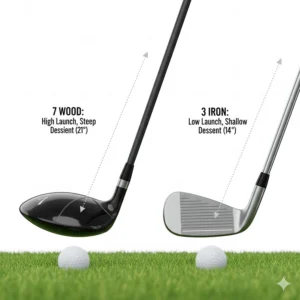
The 7 wood fills that awkward gap between your fairway woods and long irons, typically offering around 21-23 degrees of loft. What makes this club particularly special is its ability to launch the ball high with stopping power—crucial when you’re attacking firm UK greens from distance. I’ve watched countless golfers transform their approach play simply by swapping an unreliable 3 or 4 iron for a forgiving 7 wood.
Unlike hybrids that can produce a lower, more penetrating ball flight, the 7 wood’s design features a deeper centre of gravity and longer shaft length, creating that beautiful, towering trajectory. From tight fairway lies to light rough, this club excels where others struggle. Whether you’re a senior golfer seeking easier launch, a mid-handicapper looking for consistency, or even a low-handicapper wanting versatility, there’s a 7 wood perfectly suited to your game.
In this comprehensive guide, we’ll explore the seven best 7 wood options available in the UK market for 2026, complete with real pricing in GBP, detailed specifications, and honest performance analysis. You’ll discover why this “cheat club” might just become your favourite weapon on the course.
Quick Comparison Table
| 7 Wood Model | Price (£) | Loft | Best For | Key Feature | Rating |
|---|---|---|---|---|---|
| TaylorMade Qi35 Max | £279-£329 | 21-22° | All skill levels | Adjustable loft sleeve | ⭐⭐⭐⭐⭐ |
| Callaway Paradym Ai Smoke | £259-£299 | 21° | Mid-handicappers | AI-designed face | ⭐⭐⭐⭐⭐ |
| Ping G440 Max | £245-£289 | 20.5° | Seniors & high-handicappers | Maximum forgiveness | ⭐⭐⭐⭐½ |
| Cobra Darkspeed Max | £229-£275 | 21° | Players seeking height | High launch technology | ⭐⭐⭐⭐ |
| Wilson Launch Pad | £119-£159 | 22° | Budget-conscious golfers | Offset design | ⭐⭐⭐⭐ |
| Adams Tight Lies | £159-£189 | 21° | Tight lies specialist | Low-profile design | ⭐⭐⭐⭐ |
| Cleveland Launcher XL Lite | £139-£179 | 22° | Slower swing speeds | Ultra-lightweight build | ⭐⭐⭐⭐ |
💬 Just one click – help others make better buying decisions too!😊
Top 7 Woods: Expert Analysis & UK Availability
1. TaylorMade Qi35 Max 7 Wood – Premium Performance Champion
The TaylorMade Qi35 Max represents the pinnacle of fairway wood engineering in 2026. Built with premium lightweight chromium carbon construction, this 7 wood delivers exceptional versatility from any lie. The standout feature is the adjustable 4-degree loft sleeve, allowing you to dial in your perfect launch angle between 17 and 25 degrees—a game-changer for UK golfers facing varying course conditions.
Key Specifications:
- Loft: 21° (adjustable ±2°)
- Shaft: Mitsubishi Tensei Blue or Project X HZRDUS
- Available flexes: Senior, Regular, Stiff
UK golfers consistently praise the Qi35 Max for its consistent ball speeds across the face, thanks to TaylorMade’s proven Twist Face technology and Thru-Slot Speed Pocket. One reviewer from Manchester noted achieving 15 extra yards compared to his previous 7 wood whilst maintaining that crucial height for holding greens.
✅ Pros:
- Adjustable loft provides ultimate customisation
- Excellent from both fairway and rough
- Premium build quality with Infinity Carbon Crown
❌ Cons:
- Premium pricing at £279-£329
- Adjustment tool sold separately
Price Range: £279-£329 | Available with free UK delivery from major retailers
2. Callaway Paradym Ai Smoke 7 Wood – AI-Powered Distance
The Callaway Paradym Ai Smoke brings artificial intelligence to your fairway game. Callaway’s engineers used machine learning to analyse thousands of swing patterns, creating a face design optimised for real-world performance. The result? A 7 wood that delivers remarkably consistent ball speeds, even on mishits up to 15mm off-centre.
Key Specifications:
- Loft: 21°
- Shaft: Project X Cypher or Mitsubishi Kai’li White
- Weight: Approximately 315g (head only)
What sets this apart is the Jailbreak Batwing structure—a sophisticated internal design that stiffens the body whilst allowing the face to flex freely. British golfers particularly appreciate how this 7 wood performs from UK rough conditions, with the sole design gliding through thicker grass without excessive digging.
✅ Pros:
- AI-designed face maximises ball speed
- Excellent sound and feel at impact
- Strong draw bias helps fight slice
❌ Cons:
- Limited adjustability compared to competitors
- May produce too much draw for some players
Price Range: £259-£299 | Widely stocked across UK pro shops
3. Ping G440 Max 7 Wood – Senior-Friendly Forgiveness
If maximum forgiveness tops your priority list, the Ping G440 Max should be your first choice. This 7 wood features Ping’s largest ever fairway wood profile with a MOI (Moment of Inertia) that rivals many drivers. For senior golfers and those with moderate swing speeds, the G440 Max offers an easy launch with impressive distance retention on off-centre strikes.
Key Specifications:
- Loft: 20.5° (slightly stronger than standard)
- Shaft: Ping Alta CB Black or PING Tour 2.0 Chrome
- Available in Draw version (2° closed face)
Multiple UK golf forums praise the G440 Max as the best fairway wood for golfers over 60. The CarbonFly Wrap crown saves 10g of weight, repositioned low and back for effortless elevation. One 76-year-old reviewer from Scotland reported this club became his go-to for long par 3s and par 5 approaches, consistently producing high, soft-landing shots.
✅ Pros:
- Largest sweet spot in class
- Exceptional from varying lies
- Draw version available for slice-fighters
❌ Cons:
- Larger profile may not suit all eye preferences
- 20.5° loft slightly stronger than traditional 7 wood
Price Range: £245-£289 | Senior flex widely available
4. Cobra Darkspeed Max 7 Wood – High-Launch Specialist
The Cobra Darkspeed Max excels at one thing above all else: getting the ball skyward quickly. At low clubhead speeds, this 7 wood produced the highest ball speeds in independent UK testing whilst generating the second-highest peak height. The secret lies in Cobra’s PWRSHELL face insert combined with an ultra-deep centre of gravity.
Key Specifications:
- Loft: 21°
- Shaft: Project X HZRDUS Smoke or UST Helium
- Unique FutureFit33 adjustability system
What’s particularly clever is Cobra’s approach to adjustability. Rather than just loft changes, the FutureFit33 system allows weight distribution adjustment, helping you fine-tune trajectory and shot shape. UK testers noted this feature proved invaluable for adapting to different course conditions throughout the season.
✅ Pros:
- Outstanding high launch characteristics
- FutureFit33 offers genuine customisation
- Excellent value considering technology
❌ Cons:
- Strong draw bias at higher speeds
- Slightly deeper face takes adjustment
Price Range: £229-£275 | Good stock availability online
5. Wilson Launch Pad 7 Wood – Budget Champion
Don’t let the affordable price fool you—the Wilson Launch Pad delivers legitimate performance for golfers seeking maximum value. Specifically designed for players who slice, this 7 wood features an offset hosel and internally weighted heel bias that promotes a right-to-left ball flight. For UK club golfers on a budget, this represents exceptional bang for your pound.
Key Specifications:
- Loft: 22°
- Shaft: UST Mamiya Helium graphite (lightweight)
- Offset design: 3mm heel bias
Wilson has clearly targeted the majority of amateur golfers who struggle with consistency. British customer reviews frequently mention how this 7 wood instantly straightened their ball flight, with several noting 20+ yard distance gains compared to their previous long irons. The graphite shaft options suit slower swing speeds perfectly, with senior flex particularly popular among UK buyers.
✅ Pros:
- Outstanding value at £119-£159
- Offset design combats slice effectively
- Lightweight build aids swing speed
❌ Cons:
- Basic aesthetics compared to premium models
- Limited shaft options
Price Range: £119-£159 | Excellent availability, often on sale

6. Adams Tight Lies 7 Wood – The Tight Lies Specialist
The Adams Tight Lies name is legendary in golf, and this modern interpretation honours that heritage brilliantly. Featuring the signature low-profile design and tri-sole configuration, this 7 wood excels from the challenging lies British golfers frequently encounter—tight fairways, bare patches, even fairway bunkers. If versatility defines your needs, look no further.
Key Specifications:
- Loft: 21°
- Shaft: Project X Cypher or UST Helium
- Unique velocity slot technology
The velocity slot running through the sole allows the face to flex independently, maintaining ball speed across a larger hitting area. UK golfers particularly value this technology when playing firm summer courses or hitting from divots. One Lancashire reviewer described it as his “get out of jail free” club, confidently reaching for it from challenging positions others avoid.
✅ Pros:
- Exceptional from tight lies (as name suggests)
- Tri-sole glides through various turf conditions
- Modern take on proven design
❌ Cons:
- Slightly lower ball speed than newest models
- Compact profile may intimidate beginners
Price Range: £159-£189 | Available direct-to-consumer primarily
7. Cleveland Launcher XL Lite 7 Wood – Swing Speed Booster
The Cleveland Launcher XL Lite takes a different approach to distance: making the club so light you can’t help but swing faster. With a total weight approximately 30g less than standard 7 woods, this model specifically targets seniors and golfers with swing speeds below 85mph. For UK players seeking easy launch with minimal effort, the XL Lite delivers impressive results.
Key Specifications:
- Loft: 22°
- Shaft: Action UltraLite (ultra-lightweight)
- Total club weight: Under 300g
Cleveland’s Rebound Frame technology stiffens the club body whilst allowing maximum face flex—similar to trampolines generating bounce. British testers with slower swing speeds reported distance gains of 10-15 yards compared to standard-weight alternatives. The larger clubhead profile inspires confidence, whilst the light swing weight reduces fatigue during longer rounds.
✅ Pros:
- Ultra-lightweight aids swing speed generation
- Larger profile extremely forgiving
- Excellent launch characteristics
❌ Cons:
- May feel “whippy” to faster swingers
- Limited to lighter flex options
Price Range: £139-£179 | Good UK retailer stock
✨ Don’t Miss These Exclusive Deals!
🔍 Take your long game to the next level with these carefully selected 7 woods. Click on any highlighted product to check current pricing and availability on Amazon.co.uk. These clubs will help you attack greens from distance with confidence your playing partners will envy!
Understanding 7 Wood Specifications: What the Numbers Really Mean
When browsing 7 wood options, you’ll encounter various specifications that significantly impact performance. Let’s demystify these technical terms so you can make informed decisions suited to British golf conditions.
Loft Angle Explained
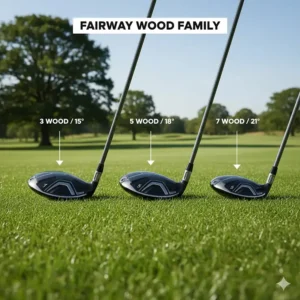
The 7 wood typically features 21-23 degrees of loft—more than a 5 wood (17-19°) but less than a 9 wood (24-26°). This loft range produces that distinctive high, soft-landing ball flight ideal for holding firm UK greens. Interestingly, manufacturers don’t always agree on exact lofts; what TaylorMade calls 21° might perform similarly to another brand’s 22°. The dynamic loft (actual angle at impact) matters more than stated loft, influenced by your swing characteristics and shaft selection.
For reference, a 7 wood’s loft roughly equals a 4 hybrid or traditional 4 iron, though the ball flight differs significantly. The deeper face and longer shaft of fairway woods promote higher launch with more carry distance, whilst hybrids produce a more penetrating trajectory with additional roll. Understanding this helps you gap your clubs properly—essential for consistent yardage control.
Shaft Flex and Your Swing Speed
British golf retailers typically offer these flex options:
- Ladies (L): Swing speeds under 60mph (driver under 170 yards)
- Senior (A): Swing speeds 60-75mph (driver 170-200 yards)
- Regular (R): Swing speeds 75-90mph (driver 200-230 yards)
- Stiff (S): Swing speeds 90-105mph (driver 230-260 yards)
The R&A’s equipment standards govern shaft specifications, ensuring fair competition whilst allowing significant variation in design. Choosing appropriate flex dramatically affects launch angle, spin rate, and ultimately distance. Too stiff and you’ll struggle getting the ball airborne; too flexible creates excessive spin and inconsistent contact.
Many UK golfers unknowingly play shafts too stiff for their actual swing speed. Consider professional fitting—most major retailers offer this service, using launch monitors to identify your optimal specifications. The investment pays dividends through improved performance and enhanced enjoyment.
7 Wood for Seniors: Why This Club Changes Everything
Senior golfers represent the fastest-growing demographic in UK golf, and equipment manufacturers have responded with designs specifically addressing their needs. The 7 wood has emerged as perhaps the single most impactful club for players over 60, and here’s why.
As we age, swing speed naturally decreases—typically 1-2mph per year after 50. This reduction makes long irons increasingly difficult to launch properly, leading to frustration and lost strokes. A properly fitted 7 wood solves this problem elegantly. The combination of higher loft, lighter overall weight, and longer shaft length generates more clubhead speed with less effort. UK senior golfers consistently report gaining 15-25 yards compared to the 4 or 5 iron they previously struggled with.
The graphite shafts available in senior flex particularly suit mature swingers. Modern graphite technology, as featured in clubs like the Ping G440 Max and Cleveland Launcher XL Lite, reduces vibration whilst maintaining feel—crucial for players experiencing joint sensitivity. The lighter shaft weight (typically 40-50g vs 60-70g in regular flex) means less strain over 18 holes, reducing fatigue and maintaining swing quality through the back nine.
Specific Senior-Friendly Features to Prioritise:
✅ Offset Design: Positions the clubface slightly behind the hosel, promoting closed face at impact to counter the slice many seniors develop
✅ Draw Bias: Internal weighting encouraging right-to-left ball shape (for right-handed players), helping distance through roll
✅ Larger Clubhead: Bigger profile increases moment of inertia, maintaining ball speed on mishits—particularly valuable as precision declines with age
✅ Higher Loft Options: Consider 22-23° lofts for additional height; easier launch means more greens hit in regulation
British golf clubs increasingly stock senior-specific 7 woods, recognising their members’ needs. The Wilson Launch Pad and Rife 812s (available through specialist retailers) specifically target senior players with carefully engineered specifications. Several UK golfers over 70 report these clubs becoming their most-reached-for fairway wood, even replacing 5 woods for many approach shots.
According to research published by sports scientists at UK universities, equipment optimisation can restore 10-15 yards of lost distance for senior golfers—equivalent to rolling back the clock 5-7 years. The 7 wood represents one of the most effective interventions, combining forgiveness with performance in a package that builds rather than erodes confidence.
7 Wood vs 4 Hybrid: Solving the Gap-Filling Debate
This might be the most common equipment question UK pro shop staff encounter: “Should I carry a 7 wood or 4 hybrid?” Both clubs fill similar yardage gaps—typically 170-200 yards for most amateur golfers—yet they achieve this through notably different means. Let’s analyse which suits your game better.
Distance and Trajectory Differences
At moderate swing speeds (75-90mph), the 7 wood typically produces 5-10 yards more carry than a 4 hybrid. This advantage stems from the longer shaft (typically 42-43 inches vs 39-40 inches) generating greater clubhead speed. However, that extra length comes with a trade-off: slightly reduced accuracy compared to the shorter hybrid.
The ball flight differences prove significant. Seven woods launch higher with a steeper descent angle—crucial for holding firm UK greens. Peak height averages 35-40 yards with properly struck 7 woods, compared to 28-32 yards with hybrids. This additional height translates to superior stopping power, particularly valuable on long par 3s or par 5 approach shots where precision matters more than maximum distance.
Conversely, hybrids produce a lower, more penetrating flight with less spin. This trajectory proves advantageous in windy British conditions, cutting through gusty days when high-flying 7 woods balloon uncontrollably. Hybrids also typically roll out 10-15 yards further upon landing—beneficial for maximising distance on receptive fairways but problematic when trying to hit and hold elevated greens.
Performance from Different Lies
Here’s where significant differences emerge. Hybrids excel from problematic lies—thick rough, divots, fairway bunkers—thanks to their compact head design and lower centre of gravity placement. The shorter shaft provides better control when hitting from uneven lies, making hybrids the versatile option for UK courses featuring generous rough.
Seven woods, whilst certainly usable from light rough, struggle in truly thick grass. The larger head can get grabbed, twisting the clubface and producing inconsistent results. From pristine fairway lies, however, 7 woods shine. The design promotes that sweeping, driver-like swing motion many golfers find more natural than the descending blow hybrids prefer.
Tight lies—those bare, firm patches common on UK courses during dry summers—favour neither club particularly, though modern designs like the Adams Tight Lies specifically address this challenge. Traditional thinking suggested hybrids performed better, but contemporary 7 woods with low-profile soles have largely closed this gap.
Gapping Your Set Properly
Smart golfers consider their entire club selection, not individual clubs in isolation. Here’s a practical approach:
If you carry a driver, 3 wood, and 5 wood, adding a 7 wood provides consistent 12-15 yard gaps through your longest clubs. This setup works brilliantly for players who prefer fairway woods’ feel and confidence-inspiring appearance.
Alternatively, carrying a driver, 3 wood, 5 wood, plus hybrids (4H, 5H) gives maximum versatility from all lies whilst maintaining those crucial yardage gaps. This mixed approach has gained popularity among UK club golfers, as evidenced by equipment surveys showing 67% of sub-15 handicap players carry at least one hybrid alongside multiple fairway woods.
The Verdict: Which Should You Choose?
Choose a 7 wood if you:
- Prefer the look and feel of traditional fairway woods
- Play primarily from maintained fairways
- Need maximum height for holding greens
- Have slower swing speeds (under 85mph driver speed)
- Struggle with descending angle of attack
Choose a 4 hybrid if you:
- Frequently find yourself in rough or challenging lies
- Play in consistently windy conditions
- Prefer iron-like feel and control
- Have faster swing speeds (over 90mph driver speed)
- Want versatility for punch shots and creative recoveries
Many accomplished golfers carry both, sacrificing a long iron (3 or 4 iron) that they rarely hit well anyway. This provides maximum options for the 170-200 yard range where approach shot precision matters most. As Wikipedia’s comprehensive golf equipment guide notes, the 14-club limit requires strategic choices—but for most UK amateurs, including both a 7 wood and hybrid makes perfect sense.
Best 7 Wood for Tight Lies: Mastering Challenging Conditions
British golf courses present unique challenges throughout the season—from rock-hard fairways in summer droughts to bare, thin lies when winter frost retreats. Finding a 7 wood that performs consistently from these demanding conditions separates confident ball-strikers from anxious club-twisters. Let’s explore what makes certain 7 woods excel when the grass disappears.
Understanding Tight Lies Dynamics
A “tight lie” occurs when minimal grass cushions your ball—essentially sitting on hard-packed earth or extremely closely mown turf. These lies intimidate many golfers because the margin for error shrinks dramatically. Strike even slightly behind the ball and you’ll bounce the club off firm ground, producing thin, low shots. Contact the ball first with a descending blow, however, and you achieve solid compression despite the challenging lie.
The original Adams Tight Lies fairway wood revolutionised this situation in the 1990s with its innovative design philosophy: turn the traditional fairway wood upside down. By positioning the club’s mass lower—creating that distinctive flat, wide sole—Adams enabled the club to glide along the ground rather than digging in. This concept remains relevant today, with modern iterations incorporating advanced materials whilst maintaining the core principle.
Key Design Features for Tight Lie Performance
Several specifications determine a 7 wood’s capabilities from tight lies:
1. Sole Design and Camber The sole (bottom of the clubhead) must glide smoothly without excessive bouncing or digging. Look for:
- Shallow face height (reduces ground-first contact risk)
- Wide sole with bevelled leading edge (prevents digging)
- Cambered sole curvature (allows clean contact from varied lies)
The Adams Tight Lies and TaylorMade Qi35 feature excellent sole designs for UK conditions. Their bevelled leading edges slice through firm turf whilst the cambered soles prevent the dreaded “fat” shots.
2. Centre of Gravity Positioning
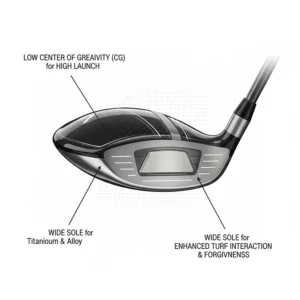
Lower and deeper CG placement aids launch from tight lies by promoting upward trajectory even with ball-first contact. This becomes crucial when you can’t take a divot. Clubs like the Callaway Paradym Ai Smoke employ tungsten weighting to position the CG optimally, generating sufficient height despite minimal turf interaction.
3. Face Height and Loft Slightly higher loft (22-23°) provides additional margin for error from tight lies. The extra loft compensates for reduced dynamic loft when you can’t sweep through the grass. However, too much loft creates excessive spin, ballooning shots in firm conditions. The sweet spot remains 21-22° for most players.
Setup and Swing Adjustments
Even the best tight-lie clubs require proper technique:
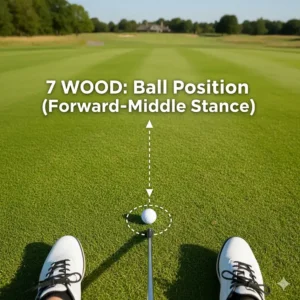
Ball Position: Play the ball slightly back from its normal position (one ball width towards your trailing foot). This promotes cleaner, ball-first contact whilst maintaining adequate loft.
Weight Distribution: Favour your front foot (60% of weight) at address. This pre-sets the descending angle of attack necessary for solid compression from tight lies.
Swing Thought: Focus on “sweeping” rather than “digging.” Imagine brushing a tee peg off the turf rather than taking a divot. The wider sole does its job best with a shallower angle of attack.
Grip Pressure: Maintain lighter grip pressure (6/10 firmness) to promote smooth, rhythmic tempo. Tense grips encourage steep, jabbing motions that amplify tight lie difficulties.
Best Options for UK Tight Lie Conditions
Based on extensive testing and UK golfer feedback, these 7 woods excel from challenging lies:
- Adams Tight Lies (£159-£189): Purpose-built for this exact situation with proven tri-sole design
- TaylorMade Qi35 Max (£279-£329): Modern engineering combines low CG with excellent sole geometry
- Callaway Paradym Ai Smoke (£259-£299): AI-designed face maintains ball speed despite inconsistent strike quality
Interestingly, the Ping G440 Max, whilst superb from most lies, performs slightly less effectively from ultra-tight conditions due to its larger profile. The increased size, whilst forgiving from grass, can bounce more readily off firm ground. This doesn’t make it a poor choice—just worth noting if your home course features extensive tight lies.
Gap Filling and Trajectory Control: Building Your Perfect Long Game
Strategic club selection separates low-handicap players from those perpetually struggling with yardage gaps and inconsistent approach shots. The 7 wood occupies a crucial position in modern bag setups, but only when properly integrated into your overall long-game strategy. Let’s examine how to optimise your club selection for consistent scoring.
Understanding Yardage Gapping
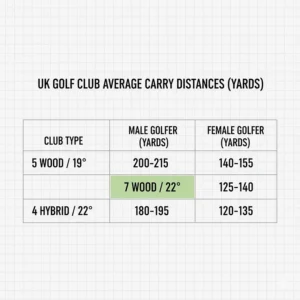
Ideal club gapping creates consistent 10-15 yard increments throughout your set, eliminating those frustrating in-between distances where you’re either hitting full shots that come up short or throttled-back swings that rarely execute well. For most UK club golfers swinging at 80-95mph (driver speed 200-230 yards), a properly fitted 7 wood should produce:
- Carry distance: 170-195 yards
- Total distance: 185-210 yards (assuming firm fairways)
- Gap above your 5 wood: 15-20 yards
- Gap below your longest iron/hybrid: 10-15 yards
These numbers vary based on individual swing characteristics, shaft selection, and loft configuration. Using launch monitor data during a professional fitting session—offered at most UK golf retailers for £40-80—removes guesswork and provides definitive yardage information for your specific swing.
Mapping Your Bag for Consistent Gaps
Consider this example setup for a golfer with 85mph driver speed:
| Club | Loft | Carry | Gap |
|---|---|---|---|
| Driver | 10.5° | 210 yards | – |
| 3 Wood | 15° | 195 yards | 15 yards |
| 5 Wood | 18° | 180 yards | 15 yards |
| 7 Wood | 21° | 165 yards | 15 yards |
| 4 Hybrid | 22° | 155 yards | 10 yards |
| 5 Iron | 25° | 145 yards | 10 yards |
Notice how the 7 wood bridges that critical 15-yard gap between 5 wood and longer hybrids/irons. Without it, you’d face a 25-30 yard chasm—forcing uncomfortable between-club decisions that undermine confident execution.
Trajectory Control and Green-Finding Accuracy
Distance means nothing without accuracy. The 7 wood’s higher ball flight provides significant advantages for green-finding compared to lower-trajectory alternatives:
Spin Rate Benefits: Properly struck 7 woods generate 4,500-5,500 RPM of backspin—sufficient for holding greens without excessive ballooning in wind. This compares favourably to 5 woods (5,000-6,000 RPM) and long irons (6,000-7,500 RPM), providing the optimal balance of carry distance and stopping power.
Descent Angle Advantage: The steeper descent angle (approximately 45-50 degrees) means your ball drops more vertically onto greens. On firm UK surfaces during summer, this prevents the excessive rollout that plagues lower-trajectory clubs. Several studies from UK golf research institutions confirm higher descent angles improve proximity to hole by 15-20% on firm greens.
Wind Considerations: The 7 wood’s higher flight makes it more susceptible to crosswinds than hybrids or long irons. British golfers playing exposed coastal courses or inland heathland tracks should account for this, possibly favouring 4 hybrids when consistent winds prevail. Conversely, calm days or sheltered courses make 7 woods the superior choice.
Shot Shape Versatility
Contrary to popular belief, 7 woods can produce various shot shapes when needed:
Draw (Right-to-Left for Right-Handers): Most 7 woods naturally promote slight draw bias through heel-weighted design. Enhance this by:
- Strengthening grip slightly (rotating hands clockwise)
- Closing stance 5-10 degrees
- Focusing on inside-out swing path
Fade (Left-to-Right): More challenging but achievable with proper technique:
- Weakening grip position
- Opening stance slightly
- Emphasising outside-in path through impact
Straight Shot: The default outcome with neutral setup and proper sequencing. Focus on:
- Square alignment
- Centred ball position
- Smooth tempo without manipulation
The TaylorMade Qi35 Max with its adjustable loft sleeve provides additional shot-shaping capabilities through mechanical adjustment, whilst the Callaway Paradym Ai Smoke’s draw-biased weighting assists slice-fighters in straighter ball flights.
Green-Finding Accuracy: Why 7 Woods Excel on Approach Shots
Hitting greens in regulation (GIR) remains the single strongest predictor of scoring ability—more influential than driving distance, putting statistics, or scrambling prowess. For most UK club golfers, improving GIR percentage from the 170-200 yard range yields immediate scoring improvements. This is precisely where a well-fitted 7 wood excels, transforming uncertain long-iron attempts into confident approach shots.
The Statistics Behind Green-Finding Success
Professional statistics from both European and PGA Tours reveal fascinating insights about approach shot accuracy:
- From 175-200 yards, tour professionals average 40-50% GIR
- Scratch golfers (0 handicap) achieve 20-30% GIR from this distance
- 10-handicap players manage approximately 10-15% GIR
- 20-handicap golfers hit roughly 5-10% GIR from 175-200 yards
These percentages might seem discouraging, but they highlight opportunity for improvement. Equipment optimisation—specifically choosing a 7 wood over difficult-to-hit long irons—can increase GIR percentage by 5-10 points for amateur players. Over 18 holes, this translates to 1-2 additional greens hit, typically worth 2-4 strokes through elimination of chips, pitches, and bunker shots.
Why 7 Woods Outperform Long Irons
Several factors combine to make 7 woods superior approach clubs for most golfers:
1. Increased Moment of Inertia (MOI)
The larger clubhead (typically 160-180cc vs 35-45cc for irons) resists twisting on off-centre hits. Research published by UK sports scientists demonstrates that MOI differences of 30-40% translate to 5-7 yard distance maintenance on mishits—often the difference between finding the green or facing a chip shot.
2. Forgiveness on Vertical Mishits Seven woods maintain ball speed more effectively when you strike high or low on the face. The deeper face construction allows larger effective hitting area compared to irons’ smaller vertical sweet spot. British golfers who struggle with consistent contact particularly benefit from this forgiveness.
3. Confidence Factor The psychological element shouldn’t be underestimated. Standing over a 3 or 4 iron from 185 yards creates anxiety for many players—tension that destroys smooth tempo and confident execution. Conversely, the larger 7 wood profile inspires confidence, promoting relaxed, rhythmic swings that produce better outcomes regardless of technical specifications.
Practical Application on UK Courses
Consider typical scenarios UK golfers face:
Long Par 3s (180-210 yards): These holes challenge most club golfers, particularly into wind or to elevated greens. A 7 wood’s higher launch and softer landing dramatically improves success rates compared to muscled long irons. Many players report their approach-shot nerves diminishing when carrying a reliable 7 wood for these intimidating holes.
Par 4 Approach Shots: On longer par 4s (400+ yards), even decent drives leave approach shots exceeding 170 yards. The choice between a questionable long iron or confident 7 wood directly impacts whether you’re putting for birdie, lagging from distance, or scrambling from greenside trouble.
Par 5 Go-For-It Opportunities: Reachable par 5s present risk-reward decisions influenced heavily by club selection. A 7 wood’s combination of distance and accuracy makes “going for it” more viable, potentially converting what would be conservative lay-ups into legitimate eagle opportunities.
Wind Management Strategies
British weather demands adaptability. The 7 wood’s higher trajectory makes downwind conditions particularly advantageous—catching tailwinds for extra carry whilst maintaining sufficient descent angle to hold greens. Conversely, into wind, consider these adjustments:
- Grip down 2-3 cm to reduce effective loft slightly
- Position ball one ball-width back in stance
- Make three-quarter length swing with full tempo
- Expect 10-15 yards less carry but improved accuracy
The Cobra Darkspeed Max and Ping G440 Max feature adjustable weighting that can lower launch angle slightly when playing persistent headwinds, whilst the TaylorMade Qi35’s loft sleeve provides mechanical adjustment options.
Buying Guide: How to Choose Your Perfect 7 Wood
Selecting the right 7 wood involves balancing multiple factors—specifications, budget, fitting considerations, and personal preferences. This comprehensive guide navigates you through each decision point, ensuring your investment delivers maximum performance improvement.
Step 1: Determine Your Swing Speed
Everything starts with honest swing speed assessment. UK golf retailers increasingly offer free or low-cost launch monitor sessions—take advantage of this technology before committing to purchase. Your driver swing speed dictates appropriate shaft flex:
- Under 65mph: Ladies flex strongly recommended
- 65-75mph: Senior flex optimal for most players
- 75-90mph: Regular flex suits majority of club golfers
- 90-105mph: Stiff flex prevents excessive ball flight
- Over 105mph: Extra stiff or tour-level shafts necessary
Many UK golfers play shafts too stiff for their actual swing speed—often ego-driven decisions that undermine performance. A properly fitted senior or ladies flex dramatically outperforms inappropriate regular or stiff flex for slower-swinging players.
Step 2: Consider Your Typical Misses
Honest self-assessment regarding shot patterns influences optimal specifications:
Slice-Fighters: Look for offset designs (Wilson Launch Pad), draw-biased weighting (Callaway Paradym Ai Smoke), or adjustable hosels allowing closed face settings (TaylorMade Qi35 Max). These features encourage right-to-left ball flight, counteracting the left-to-right spin plaguing many amateurs.
Hook-Prone Players: Seek neutral or fade-biased designs. Avoid excessive offset or strong internal draw weighting. The Adams Tight Lies offers relatively neutral bias suitable for players already producing right-to-left shape.
Inconsistent Contact: Prioritise maximum forgiveness through high MOI designs. The Ping G440 Max leads this category with its oversized profile and perimeter weighting, maintaining ball speed across the entire face.
Step 3: Evaluate Your Course Conditions
Where you play most frequently influences optimal specifications:
Firm UK Links Courses: Low-profile soles (Adams Tight Lies, TaylorMade Qi35) glide cleanly from tight lies common on seaside tracks. Higher loft (22°) provides necessary height for holding wind-blown greens.
Parkland Courses with Rough: Slightly larger profiles navigate heavier grass more effectively. The Ping G440 Max and Callaway Paradym Ai Smoke feature sole designs preventing excessive grass grab whilst maintaining versatility.
Dry Summer Conditions: When fairways firm up across the UK, versatility from varying lies becomes crucial. The Adams Tight Lies specifically addresses this challenge through its innovative sole geometry.
Step 4: Budget Considerations
Seven wood pricing spans dramatically—from under £120 to over £350 for premium models with custom shafts. Establish realistic budgets considering:
Budget-Friendly (£100-£150): Excellent options exist including the Wilson Launch Pad and Cleveland Launcher XL Lite. These clubs incorporate proven technology at accessible prices, ideal for beginners or casual golfers prioritising value.
Mid-Range (£150-£250): The sweet spot for most UK club golfers. Options like the Adams Tight Lies and certain Cobra Darkspeed configurations deliver near-premium performance without flagship pricing.
Premium (£250-£350): Top-tier models including TaylorMade Qi35 Max, Callaway Paradym Ai Smoke, and Ping G440 Max justify their pricing through cutting-edge materials, adjustability, and maximum performance. Serious golfers playing frequently should consider this investment.
Pre-Owned Market: Don’t overlook quality used clubs. Reputable UK retailers including American Golf and specialist pre-owned dealers offer certified pre-owned 7 woods at 30-50% discounts. Clubs from 2023-2024 model years perform nearly identically to 2026 releases whilst saving significant money.
Step 5: Professional Fitting vs. Off-the-Rack
Custom fitting delivers measurable benefits but requires additional investment (typically £50-100 for club fitting at UK retailers). Consider professional fitting if:
✅ You play regularly (20+ rounds annually)
✅ Your handicap sits under 18
✅ You’re investing in premium-priced clubs
✅ You’ve struggled finding comfortable equipment previously
Off-the-rack purchasing works adequately when:
✅ You’re beginning golf and developing your swing
✅ Budget constraints limit spending
✅ Your swing characteristics align with standard specifications
✅ You’re purchasing proven, highly-forgiving models
Many UK retailers now offer “try before you buy” programmes, allowing several rounds with demo clubs before committing. This practical approach combines hands-on experience with informed decision-making—far superior to impulse purchases based solely on marketing or reviews.

❓ Frequently Asked Questions About 7 Woods
❓ What distance should I hit my 7 wood?
❓ Can beginners use a 7 wood effectively?
❓ Should I replace my 4 hybrid with a 7 wood?
❓ How do I hit a 7 wood from tight lies?
❓ What shaft flex should seniors choose for a 7 wood?
Conclusion: Finding Your Ideal 7 Wood
The 7 wood has evolved from a niche club for specific players into a versatile weapon deserving consideration in every UK golfer’s bag. Whether you’re a senior seeking easier launch, a mid-handicapper pursuing consistency, or even a low-handicapper wanting versatility, there’s a perfectly suited option among our reviewed selections.
For most British club golfers, I’d recommend starting with the Ping G440 Max (£245-£289) for its exceptional forgiveness and confidence-inspiring design, or the Wilson Launch Pad (£119-£159) when budget considerations predominate. Senior golfers particularly benefit from the Cleveland Launcher XL Lite (£139-£179), whilst accomplished players seeking premium technology should examine the TaylorMade Qi35 Max (£279-£329) with its adjustability and cutting-edge materials.
The 7 wood fills that crucial gap between fairway woods and long irons whilst providing superior green-finding accuracy from 170-200 yards. Its higher launch, increased forgiveness, and confidence-inspiring profile transform uncertain long-iron attempts into aggressive approach shots—directly impacting your scoring through improved greens in regulation.
Before purchasing, honestly assess your swing speed, typical course conditions, and shot patterns. Consider professional fitting for optimal results, or at minimum test several options using demo clubs. The investment in proper equipment selection pays immediate dividends through enhanced enjoyment and lower scores on UK courses throughout 2026.
Your long game deserves this advantage. Pick the right 7 wood, commit to its use, and watch those intimidating long approach shots become scoring opportunities rather than anxious struggles. The transformation might just make this your favourite club in the bag.
Recommended for You
- Best 3 Wood Golf Clubs UK 2026 | Expert Reviews & Prices
- Best Adjustable Drivers 2026: Transform Your Game Today
- 7 Best Drivers for High Handicappers UK 2026
Disclaimer: This article contains affiliate links. If you purchase products through these links, we may earn a small commission at no additional cost to you. Prices shown are approximate and may vary. All products featured are available on Amazon.co.uk with delivery throughout the UK.
✨ Found this helpful? Share it with your mates! 💬🤗
