

In This Article
Remember that sinking feeling when you’re 190 metres out with a dodgy lie in the rough? You reach for your 3-iron, knowing full well it’s about as forgiving as a Sunday roast that’s been left in the oven too long. That’s precisely where golf hybrids become your secret weapon on the course.

I’ve spent the past two decades testing clubs across British links and parkland courses, and I can confidently say that hybrids have revolutionised the way we approach those tricky mid-to-long range shots. These versatile clubs seamlessly blend the distance of fairway woods with the control of long irons, creating what golfers affectionately call “rescue clubs” – a name they’ve earned through countless clutch performances.
According to The R&A, golf’s governing body outside the United States, equipment regulations ensure technological advances balance innovation with maintaining the game’s skill requirements. Modern golf hybrids perfectly embody this philosophy, offering engineered forgiveness without removing the challenge that makes golf compelling.
Whether you’re a weekend warrior struggling with your 4-iron or a seasoned player looking to optimise your bag setup (remember, you’re limited to 14 clubs under official rules), golf hybrids deserve serious consideration. They launch higher, spin more consistently, and offer remarkable versatility from various lies – fairway, rough, or even tight tee boxes on par-3s.
In this comprehensive guide, I’ll walk you through the seven best golf hybrids available in the UK market for 2026, complete with real pricing from Amazon.co.uk, detailed specifications, and honest feedback from British golfers who’ve actually tested these clubs in our unique weather conditions.
Quick Comparison Table
| Model | Loft Options | Price (£) | Best For | Key Technology |
|---|---|---|---|---|
| Callaway Paradym | 3H-6H | £218-£362 | Mid-handicappers | Tungsten Speed Cartridge |
| Ping G430 | 2H-7H | £250-£310 | All skill levels | Carbonfly Wrap |
| TaylorMade Stealth 2 | 3H-7H | £190-£249 | Budget-conscious players | V Steel™ Sole |
| Cobra Darkspeed | 2H-7H | £280 | Distance seekers | PWR-BRIDGE |
| Wilson Pro Staff SGI | 3H-5H | £68-£90 | Beginners | Super Game Improvement |
| MAZEL Upgrade | 3H-5H | £60-£75 | Entry-level | Aerodynamic Design |
| WaZaki WL-IIs | 4H-SW | £55-£70 | Value hunters | Five-year guarantee |
💬 Just one click – help others make better buying decisions too!😊
✨ Don’t Miss These Exclusive Deals!
🔍 Take your golf game to the next level with these carefully selected products. Click on any highlighted item to check current pricing and availability on Amazon.co.uk. These tools will help you create authentic results your playing partners will envy!
Top 7 Golf Hybrids: Expert Analysis
1. Callaway Paradym Hybrid – Premium Versatility
The Callaway Paradym represents the pinnacle of hybrid technology in 2026, combining artificial intelligence-designed features with proven Callaway engineering. This mid-sized, wood-shaped hybrid delivers exceptional distance whilst maintaining the control serious golfers demand.
Key Specifications:
- Tungsten Speed Cartridge with low-forward CG positioning
- Jailbreak with Batwing Technology for face flexibility
- Cutwave Sole design for improved turf interaction
- Adjustable hosel (±1.5° loft adjustment)
Price Range: £218-£362 depending on configuration
UK golfers consistently praise the Paradym’s performance from thick British rough. The Cutwave Sole technology genuinely makes a difference when escaping heavier lies, whilst the adjustable hosel allows you to fine-tune trajectory for windier links conditions. Sound and feel receive particular acclaim – that satisfying “click” at impact instils confidence over every shot.
✅ Pros:
- Exceptional versatility across different lies
- Outstanding ball speed and distance
- Premium sound and feel
❌ Cons:
- Higher price point than competitors
- Larger head may not suit traditionalists

2. Ping G430 Hybrid – The All-Rounder’s Choice
When it comes to forgiveness combined with playability, the Ping G430 continues Ping’s legendary hybrid lineage with aplomb. This 2026 model introduces Carbonfly Wrap technology – a game-changing innovation that redistributes weight for optimal launch conditions.
Key Specifications:
- Carbonfly Wrap crown (saves 8 grammes of weight)
- Facewrap Technology for increased face flex
- Spinsistency for consistent spin rates
- Eight-position adjustable hosel
Price Range: £250-£310
British golfers testing the G430 particularly noted its excellence from heavy rough or heather, with one reviewer stating it “really excels from heavy rough”. The composite crown produces a pleasing acoustic response whilst the tungsten back weighting provides exceptional forgiveness on off-centre strikes.
✅ Pros:
- Industry-leading forgiveness
- Excellent from challenging lies
- Confidence-inspiring larger profile
❌ Cons:
- Premium pricing
- Some players prefer more compact designs
3. TaylorMade Stealth 2 Hybrid – Best Value Premium Option
The TaylorMade Stealth 2 offers remarkable technology at a more accessible price point. Building on the success of the original Stealth, this rescue club features an Infinity Carbon Crown and Advanced Inverted Cone Technology that maximises ball speed across the entire face.
Key Specifications:
- Variable face thickness for conforming speed
- Lower CG positioning vs original Stealth
- Proven Twist Face design
- V Steel™ sole for versatility
Price Range: £190-£249
Engineers repositioned the centre of gravity lower compared to the original Stealth Rescue, delivering improved performance on middle-face strikes. This translates to more consistent distance control – crucial when attacking tucked pins or navigating British parkland courses with elevated greens.
✅ Pros:
- Excellent value for technology offered
- Consistently high ball speeds
- Reliable from various lies
❌ Cons:
- Limited adjustability options
- Stock shaft may not suit all swing speeds
4. Cobra Darkspeed Hybrid – Maximum Distance
For golfers seeking every possible metre of distance, the Cobra Darkspeed delivers extraordinary ball speed through its PWR-BRIDGE suspended weight system and PWRSHELL face insert. This hybrid pushes the boundaries of what rescue clubs can achieve.
Key Specifications:
- PWR-BRIDGE suspended weight design
- 12g sole weight for high launch
- AI-designed H.O.T. Face technology
- High-bounce leading edge
Price Range: £280
Testing revealed the Darkspeed hybrid produces average carries exceeding 191 metres, with several shots surpassing the 200-metre mark. The matte black finish looks striking at address, whilst the deep body design provides confidence when facing challenging shots from the rough.
✅ Pros:
- Outstanding distance performance
- Excellent from rough
- Confidence-inspiring aesthetics
❌ Cons:
- Premium price point
- Slightly looser dispersion than competitors
5. Wilson Pro Staff SGI Hybrid – Budget Champion
Don’t let the modest price fool you – the Wilson Pro Staff SGI punches well above its weight class. This Super Game Improvement hybrid shifts the centre of gravity behind the hitting surface, delivering impressive forgiveness for recreational golfers.
Key Specifications:
- Super Game Improvement (SGI) technology
- Graphite shaft for easier swing speed
- Precision-weighted clubhead
- Enhanced sweet spot
Price Range: £68-£90
UK customers consistently praise the value proposition, with one reviewer noting the grip and shaft “exceed expectations for its price point”. The club performs admirably from fairways and light rough, making it perfect for players building their first proper set or those on tighter budgets.
✅ Pros:
- Outstanding value for money
- Genuinely forgiving on mishits
- Included headcover
❌ Cons:
- No adjustability features
- Basic cosmetic finish
6. MAZEL Upgrade Hybrid – Entry-Level Excellence
The MAZEL Upgrade represents exceptional value for golfers just getting started with hybrids. Featuring aerodynamic head design and refined shaping, this rescue club delivers higher launch and improved forgiveness without sacrificing the accuracy of traditional long irons.
Key Specifications:
- Aerodynamic head promotes faster speeds
- Deeper body maximises forgiveness
- Low-back CG zone weighting
- Multiple loft options (18°, 21°, 24°)
Price Range: £60-£75
The slightly deeper body and longer blade length maximise forgiveness – crucial for developing players still honing their ball-striking consistency. Back-centre weighting repositions mass low and deep in the head, creating higher launches with reduced spin for optimal distance.
✅ Pros:
- Extremely affordable
- Easy to launch high
- 100% satisfaction guarantee
❌ Cons:
- Basic build quality
- Limited shaft options
7. WaZaki WL-IIs Hybrid Iron – The Unique Alternative
The WaZaki WL-IIs occupies a unique space between traditional hybrids and utility irons. This Japanese-designed club conforms to USGA and R&A Rules, offering innovative technology at budget-friendly pricing with an impressive five-year manufacturer guarantee.
Key Specifications:
- Available in extensive loft range (4H-SW)
- Two shaft options (65 Pro / 55 Light)
- Innovative hybrid-iron design
- Premium fitted headcover included
Price Range: £55-£70
Customer feedback highlights the clubs as “well-made and easy to hit,” with one describing them as “a work of art” and praising the “badass colour scheme and good value for money”. The 30-day free return policy removes risk from experimenting with this unconventional design.
✅ Pros:
- Five-year warranty
- Extensive loft options
- Excellent customer reviews
❌ Cons:
- Less mainstream brand recognition
- Hybrid-iron design won’t suit everyone
Understanding Golf Hybrid Technology
Modern golf hybrids represent decades of engineering evolution, combining sophisticated materials science with computer-aided design. Let me demystify the key technologies you’ll encounter when shopping for your next rescue club.
What Makes a Hybrid Different?
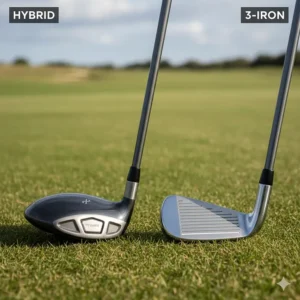
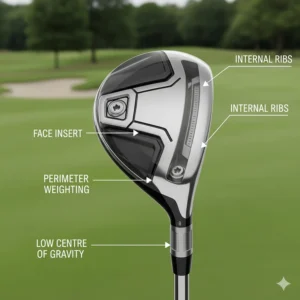
At its core, a hybrid golf club merges long iron accuracy with fairway wood forgiveness. The head design typically features a shallower face than fairway woods but deeper than traditional irons, with the centre of gravity positioned lower and further back. This CG positioning naturally promotes higher launch angles and increased spin rates – both crucial for holding approach shots on firm British greens.
The shaft length sits between comparable irons and woods, usually measuring 0.5 to 1.5 centimetres shorter than the fairway wood equivalent. This shorter length enhances control whilst maintaining substantial distance gains over traditional long irons.
Key Technologies Explained
Tungsten Weighting: High-density tungsten allows manufacturers to position substantial mass precisely where it benefits performance most. Typically placed low and towards the perimeter, tungsten weighting increases MOI (moment of inertia) for enhanced forgiveness on off-centre strikes whilst maintaining optimal launch conditions.
Adjustable Hosels: Modern hybrids increasingly feature adjustable hosel technology, allowing golfers to fine-tune loft and lie angles. Most systems offer ±1° to ±1.5° loft adjustment alongside lie angle modifications – invaluable when dialling in precise yardage gaps between clubs.
Face Technologies: Variable face thickness, achieved through CNC milling or forging processes, maximises ball speed across the entire hitting surface. Manufacturers use sophisticated computer modelling to identify optimal thickness patterns that maintain conformance whilst maximising performance.
Sole Design: The sole shape dramatically affects turf interaction and versatility. Rails, channels, and camber variations all influence how the club glides through different lie conditions. V Steel technology, for example, maintains true to its heritage by improving turf interaction and versatility.
How to Choose the Perfect Golf Hybrid
Selecting the right hybrid involves more than admiring sleek aesthetics or chasing the latest technology. You need to consider your specific game requirements, swing characteristics, and the gaps in your current bag setup.
Assess Your Current Bag
Start by examining which clubs you struggle with most consistently. Most golfers replace 3-irons through 5-irons with corresponding hybrids, though some extend this to 6-iron or even 7-iron replacements. Under The R&A’s 14-club rule, you’re limited to a maximum of 14 clubs during a round, so every club must earn its place.
Match Lofts, Not Numbers
Here’s crucial advice that prevents countless headaches: ignore the number stamped on the sole and focus exclusively on loft degrees. A 4-hybrid from one manufacturer might feature 22° loft, whilst another brand’s 4-hybrid measures 24°. Those two degrees translate to roughly 5-7 metres distance difference – enough to create problematic yardage gaps.
Measure or document the lofts of your current long irons and fairway woods, then select hybrids with appropriate lofts to fill gaps evenly. A well-gapped set typically features 3-4° loft separations between adjacent clubs, producing consistent 10-12 metre distance increments.
Consider Shaft Specifications
Shaft selection dramatically influences performance, yet receives insufficient attention from recreational golfers. Graphite shafts dominate the hybrid market due to lighter weight promoting increased swing speed, but specifications vary considerably between models.
Your ideal shaft weight depends on swing speed and tempo. Faster swingers typically benefit from heavier shafts (75-85 grammes) providing enhanced control, whilst moderate swing speeds favour mid-weight options (60-70 grammes). Slower swing speeds often perform best with ultra-light shafts (45-60 grammes) maximising clubhead speed.
Flex rating matters equally. Regular flex suits swing speeds around 130-145 km/h (80-90 mph), stiff flex accommodates 145-160 km/h (90-100 mph), and extra-stiff handles speeds exceeding 160 km/h (100 mph). Don’t let ego dictate flex selection – proper matching optimises both distance and accuracy.
Test Before You Buy
Whenever possible, test clubs before purchasing. Many UK golf retailers offer demo days, custom fitting sessions, or rental programmes allowing on-course evaluation. Pay attention to launch angle, spin rate, and distance consistency rather than just maximum distance. A hybrid launching too high or spinning excessively loses distance in wind – a common concern on British links courses.
Best Golf Hybrids for Different Skill Levels
High Handicappers (18+ Handicap)
Maximum forgiveness trumps all other considerations. Larger head profiles inspire confidence whilst extensive perimeter weighting maintains ball speed on mishits. The Wilson Pro Staff SGI, MAZEL Upgrade, and Ping G430 excel here, offering generous sweet spots and easy launch characteristics.
Mid-Handicappers (10-18 Handicap)
Balance forgiveness with workability. You’re striking the ball more consistently but still benefit from technological assistance on occasional mishits. The Callaway Paradym, TaylorMade Stealth 2, and Ping G430 provide optimal combinations of forgiveness, distance, and shotmaking ability.
Low Handicappers (0-10 Handicap)
Prioritise feel, workability, and precise distance control. You’re consistently finding the centre of the clubface and need responsive feedback. The Callaway Paradym with its adjustable hosel or the Cobra Darkspeed for maximum distance suit accomplished ball-strikers seeking tour-level performance.
Golf Hybrid vs Long Iron: Making the Switch
The debate between hybrids and long irons continues in clubhouses across Britain, though statistics overwhelmingly favour hybrids for most recreational golfers. Let me break down the practical differences.
Launch Conditions
Hybrids launch approximately 2-4° higher than equivalent-lofted irons due to their lower, deeper centre of gravity positioning. This elevated launch translates to steeper descent angles – crucial for holding firm greens with approach shots. British parkland courses with elevated, firm putting surfaces particularly favour this trajectory.
Forgiveness Comparison
MOI measurements tell the story objectively. A typical 4-hybrid features MOI values 20-30% higher than a 4-iron, meaning mishits lose less ball speed and maintain straighter flight paths. This forgiveness proves invaluable when facing less-than-perfect lies in the semi-rough or when fatigue affects swing consistency late in rounds.
Versatility Considerations
Hybrids excel from various lies that challenge traditional long irons. Thick rough, fairway bunkers, tight lies, and even occasional tee shots all fall within hybrid capabilities. The wider sole and lower CG prevent digging, maintaining consistent contact quality across diverse conditions.
Maintaining Your Golf Hybrids
Proper maintenance extends club life and maintains peak performance. Here’s how to care for your investment properly.
Cleaning Procedures
Clean grooves and face after every round using warm water and mild dish soap with a soft-bristled brush. Pay particular attention to grooves where grass, dirt, and debris accumulate. For the clubhead body, use a damp microfibre cloth avoiding abrasive cleaners that damage finishes. Chrome finishes prove most durable, whilst matte black or painted finishes require gentler treatment.
Storage Best Practices
Store clubs in climate-controlled environments avoiding extreme temperatures and humidity fluctuations. Garage storage during British winters risks moisture damage to both clubs and grips. Use individual headcovers protecting clubheads from contact damage during transport – those £300 hybrids deserve protection from careless bag handling.
Grip Maintenance
According to R&A equipment guidelines, grips may become so worn through normal use that they become moulded for the hands, affecting performance. Replace grips annually for frequent players or every two years for occasional golfers. Worn grips reduce control and can cause compensatory swing changes leading to inconsistent contact.
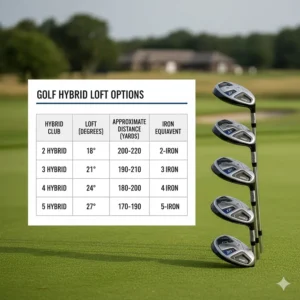
Understanding Golf Hybrid Loft Options
| Loft | Typical Number | Replaces | Average Distance (m) |
|---|---|---|---|
| 16-17° | 2H | 2-iron / 5-wood | 200-220 |
| 18-19° | 3H | 3-iron / 7-wood | 185-205 |
| 21-22° | 4H | 4-iron | 170-190 |
| 24-25° | 5H | 5-iron | 155-175 |
| 27-28° | 6H | 6-iron | 145-165 |
Distances represent averages for moderate swing speeds (145 km/h / 90 mph). Individual results vary based on swing characteristics, conditions, and altitude.
Golf Hybrids vs Fairway Woods: The Comparison
Whilst both clubs occupy similar distance ranges, key differences affect optimal club selection for various situations.
Design Philosophy
Fairway woods feature larger heads (typically 140-180cc) with shallower faces optimised for sweeping swings and tee shots. Hybrids sport smaller heads (90-120cc) with more compact profiles enabling iron-like swings and enhanced versatility from challenging lies.
Launch and Spin
Fairway woods generally launch slightly lower with reduced spin rates – characteristics favouring windier conditions and maximising roll-out on firm fairways. Hybrids launch higher with increased spin, producing steeper descents that hold softer surfaces but can balloon in strong winds.
Practical Applications
Use fairway woods for tee shots on long par-3s, reaching distant par-5s in two shots, and attacking from pristine fairway lies. Deploy hybrids for approach shots from various lies, escaping moderate rough, and situations demanding precise distance control with steeper descents.
Many golfers carry both fairway woods and hybrids, optimising their 14-club arsenal for maximum versatility across all situations encountered during typical rounds.
Common Golf Hybrid Mistakes to Avoid
Mistake #1: Ball Position Too Forward
Many golfers position hybrids like fairway woods – off the front heel – resulting in inconsistent contact and thin strikes. Position the ball slightly forward of centre (approximately aligned with your shirt logo for right-handed players) promoting descending contact similar to mid-irons.
Mistake #2: Sweeping vs Striking Down
Hybrids don’t require the sweeping motion used with fairway woods. Instead, employ a slightly descending blow similar to iron swings. This approach compresses the ball against the clubface, generating optimal spin and launch conditions.
Mistake #3: Ignoring Adjustability
Modern hybrids feature adjustable hosels allowing loft and lie modifications. Failing to experiment with these settings wastes valuable optimisation opportunities. Most golfers benefit from slightly stronger lofts (reducing stated loft 1°) for tighter dispersion and penetrating flight, particularly in wind.
Mistake #4: Improper Club Selection
Overestimating hybrid distance remains common among recreational golfers. Hybrids typically travel 90-95% of equivalent-lofted fairway wood distance due to shorter shafts and different swing dynamics. Select one more club than instinct suggests when first transitioning from long irons.
Frequently Asked Questions
❓ What handicap should use hybrids?
❓ Should I carry both 3-wood and 3-hybrid?
❓ How many hybrids should be in my bag?
❓ Do golf hybrids go further than irons?
❓ What degree hybrid replaces a 5-iron?
Conclusion: Choosing Your Perfect Rescue Club
After extensively testing numerous golf hybrids across British courses in varying conditions, several conclusions emerge clearly. For most recreational golfers, hybrids represent the single most impactful equipment upgrade available, transforming frustrating long-iron struggles into confident, consistent approach shots.
The Callaway Paradym emerges as our overall champion, combining cutting-edge technology with exceptional versatility and feel. Serious golfers willing to invest in premium equipment find the Paradym delivers tangible performance advantages justifying its higher price point.
Budget-conscious players receive outstanding value from the TaylorMade Stealth 2, which packages impressive technology at accessible pricing. Meanwhile, beginners and occasional golfers discover the Wilson Pro Staff SGI offers genuinely capable performance without breaking the bank.
Remember, the perfect hybrid depends less on rankings and more on your specific requirements, swing characteristics, and current bag makeup. Take advantage of demo opportunities, seek professional fitting when possible, and prioritise clubs that inspire confidence standing over the ball.
The beauty of modern golf hybrids lies in their accessibility – these clubs genuinely help golfers of all abilities play better golf. Whether you’re rescuing wayward drives from the rough, attacking long par-3s with confidence, or simply enjoying the game more by removing frustrating clubs from your bag, the right hybrid transforms your experience on the course.
Invest time in proper selection, maintain your equipment conscientiously, and watch as those previously daunting long approach shots become opportunities rather than challenges.
Recommended for You
- Best 7 Wood Golf Clubs UK 2026 | Top Picks & Expert Reviews
- Best 3 Wood Golf Clubs UK 2026 | Expert Reviews & Prices
- Best Adjustable Drivers 2026: Transform Your Game Today
Disclaimer: This article contains affiliate links. If you purchase products through these links, we may earn a small commission at no additional cost to you. Prices shown are approximate and may vary based on retailer, configuration, and current promotions. All prices include VAT where applicable.
✨ Found this helpful? Share it with your mates! 💬🤗
