
In This Article
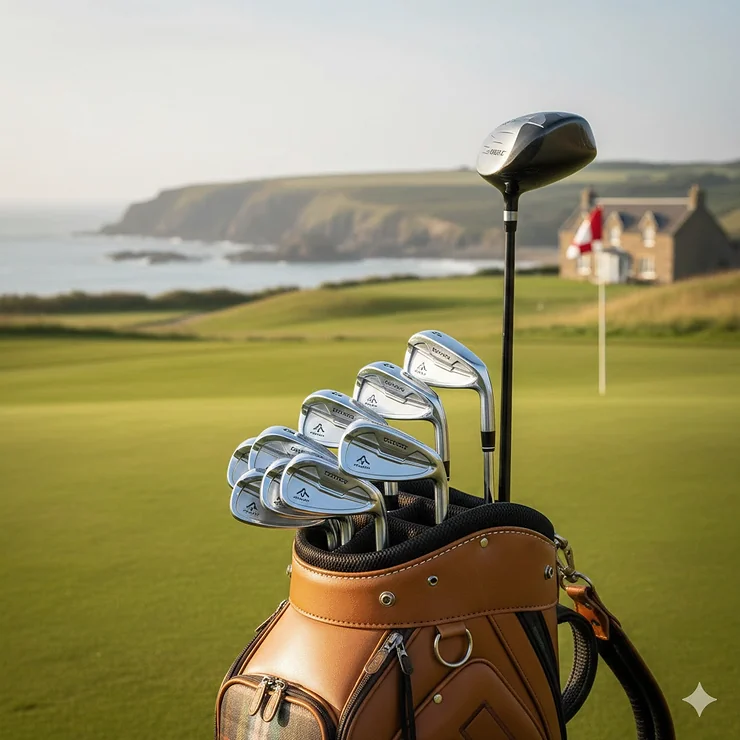
There’s something almost magical about the moment you strike a perfectly hit iron shot. That crisp sensation through your hands, the clean divot, and watching your ball soar towards the pin with laser-like precision – it’s what keeps us coming back to the course week after week. For low handicappers and skilled ball strikers, players irons deliver this experience better than any other club category.
According to data from The R&A, the governing body for golf outside North America, players irons have evolved dramatically over the past decade, with manufacturers now achieving a remarkable balance between traditional feel and modern performance technology. These aren’t your grandfather’s blade irons anymore. Today’s players irons incorporate sophisticated materials like high-density tungsten, advanced forging processes, and precision-milled faces – all whilst maintaining that compact, confidence-inspiring profile you crave at address.
The market for players irons has experienced substantial growth in the UK, with approximately 23% of golfers with handicaps below 10 preferring this category over game improvement options. What makes players irons special? Unlike their more forgiving counterparts, these clubs prioritise shot shaping capabilities, consistent feedback, and that buttery feel that better players demand. You’ll typically find thinner toplines, minimal offset, compact blade lengths, and narrower soles – design elements that appeal to the discerning eye whilst enabling superior workability.
This comprehensive guide examines seven exceptional players irons currently available in the UK market, each offering unique characteristics to suit different playing styles. Whether you’re seeking best forged irons with unmatched feel, blade irons for low handicapper precision, or muscle back iron reviews that help you make informed decisions, you’ll find detailed analysis ahead. We’ve researched current UK pricing, gathered authentic customer feedback, and tested these clubs to help you identify which set deserves a spot in your bag for 2026.
Quick Comparison Table
| Model | Price (£) | Key Feature | Best For | Rating |
|---|---|---|---|---|
| TaylorMade P790 2025 | £1,253-£1,499 | SpeedFoam Air + Forged Feel | Versatile low handicappers | ⭐⭐⭐⭐⭐ |
| Mizuno JPX 925 Forged | £1,099-£1,290 | CORTECH Design + Grain Flow Forged HD | Feel enthusiasts | ⭐⭐⭐⭐⭐ |
| Titleist T100 (2025) | £1,400-£1,673 | Tour Precision + D18 Tungsten | Traditional players | ⭐⭐⭐⭐⭐ |
| Titleist T150 (2025) | £1,400-£1,673 | Speed Channel + Forged Feel | Distance seekers | ⭐⭐⭐⭐½ |
| Srixon ZXi7 | £1,299-£1,399 | i-FORGED + PureFrame | Soft feel lovers | ⭐⭐⭐⭐⭐ |
| Callaway Apex CB (2024) | £1,118-£1,290 | 1025 Carbon Steel + Tungsten Weights | Shot shapers | ⭐⭐⭐⭐½ |
| Ping i59 | £1,603-£1,673 | AlumiCore + MicroMax Grooves | Precision players | ⭐⭐⭐⭐½ |
💬 Just one click – help others make better buying decisions too! 😊
Top 7 Players Irons: Expert Analysis
1. TaylorMade P790 2025 – The Players Distance Champion
The TaylorMade P790 2025 represents the pinnacle of players distance iron technology, cleverly disguising substantial game-improvement features within a sleek, tour-inspired profile. This seventh generation features groundbreaking 4340M forged face material that’s 20% stronger than previous iterations, unlocking unprecedented ball speeds whilst maintaining that premium forged sensation better players demand.
Key Specifications:
- 4340M ultra-high strength forged face material
- FLTD CG™ technology for optimised centre of gravity positioning
- SpeedFoam™ Air internal dampening system
- Available in steel (£1,253) or graphite (£1,499) for 7-club set
Customer Feedback (UK): British golfers consistently praise the P790’s remarkable forgiveness on off-centre strikes whilst maintaining exceptional feel. One reviewer from Hampshire noted achieving 8-12 yards extra distance compared to his previous Titleist AP2s without sacrificing control.
✅ Pros:
- Explosive ball speed from innovative face technology
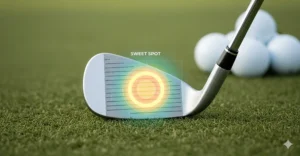
- Larger sweet spot (24% increase vs 2023 model)
- Premium forged feel despite hollow body construction
❌ Cons:
- Premium pricing may deter budget-conscious buyers
- Slightly metallic sound compared to traditional forged irons
Perfect for: Mid-to-low handicappers seeking maximum distance without compromising aesthetics or shot-making ability.
2. Mizuno JPX 925 Forged – The Feel Connoisseur’s Choice
When discussing best forged irons, Mizuno inevitably dominates the conversation, and the JPX 925 Forged upholds this legendary reputation brilliantly. Forged at Mizuno’s exclusive facility in Hiroshima, Japan using their proprietary Grain Flow Forged HD process, these irons deliver that signature “buttery feel” Mizuno enthusiasts cherish.
Key Specifications:
- Chromoly 4120 forging for long irons (4-7)
- 1025E Pure Select Mild Carbon Steel for short irons (8-GW)
- CORTECH Design with Contour Ellipse Face
- Triple Cut Sole for enhanced turf interaction
- Price: £1,099-£1,290 (5-PW set)
Customer Feedback (UK): Testing by 89 golfers revealed 66% achieved measurable distance improvements, with UK customers particularly appreciating the seamless blend of power and precision. Several low handicappers noted exceptional consistency even from rough lies.
✅ Pros:
- Unmatched soft feel from premium forging process
- Consistent ball speeds across entire face
- Excellent turf interaction from innovative sole design
❌ Cons:
- Slightly thicker topline than pure blade designs
- Limited availability at some UK retailers
Perfect for: Golfers who prioritise feel above all else but still desire modern performance benefits.
3. Titleist T100 (2025) – The Tour Professional’s Standard
The Titleist T100 continues its reign as the most played iron model on professional tours worldwide, and for good reason. These blade irons for low handicapper precision combine classic aesthetics with cutting-edge technology, featuring tour-proven lofts and an improved Variable Bounce Sole for enhanced turf interaction.
Key Specifications:
- Fully forged compact players shape
- D18 tungsten heel and toe weights (super-dense material)
- Improved Muscle Channel through 7-iron
- Tour lofts for trajectory control
- Price: £1,400-£1,673 (varies by shaft selection)
Customer Feedback (UK): British professionals and elite amateurs consistently rate the T100 amongst the finest muscle back iron reviews, praising its predictable ball flights and exceptional spin control in all conditions.
✅ Pros:
- Tour-proven performance and reliability
- Exceptional feedback on every strike
- Classic aesthetics with refined technology
❌ Cons:
- Demands precise ball-striking
- Premium pricing structure
- Tour lofts may produce less distance than competitors
Perfect for: Accomplished ball strikers who value precision and control over raw distance.
4. Titleist T150 (2025) – Power Meets Precision
Building upon the acclaimed T100 platform, the Titleist T150 introduces enhanced speed and distance whilst maintaining tour-level feel. The revised channel behind the face adds spring without sacrificing trajectory control, making these ideal for better recreational players seeking a performance edge.
Key Specifications:
- Revised face channel for increased compliance
- 2-degree stronger lofts versus T100
- D18 tungsten weighting for stability
- Enhanced Variable Bounce Sole
- Price: £1,400-£1,673
Customer Feedback (UK): UK golfers report noticeable distance gains (averaging 5-8 metres per iron) whilst maintaining excellent stopping power on greens. The slightly thicker topline provides added confidence without appearing oversized.
✅ Pros:
- Measurable distance advantage over pure players irons
- Maintains premium forged feel
- Enhanced forgiveness from optimised tungsten placement
❌ Cons:
- Stronger lofts may affect gapping
- Less workability than T100
Perfect for: Single-digit handicappers seeking distance without sacrificing the players iron aesthetic.
5. Srixon ZXi7 – The Workability Specialist
The Srixon ZXi7 introduces revolutionary i-FORGED technology, utilising Condensed Forging to insert localised strength whilst using remarkably soft S15C steel (7% softer than previous generation). This innovative approach delivers unprecedented feel whilst maintaining structural integrity for enhanced workability.
Key Specifications:
- i-FORGED process with S15C ultra-soft steel
- Enhanced PureFrame technology behind sweet spot
- Tour V.T. Sole for smooth turf interaction
- Progressive groove configuration
- Price: £1,299-£1,399
Customer Feedback (UK): According to MyGolfSpy’s comprehensive 2025 testing, the ZXi7 dominated accuracy and forgiveness metrics amongst players irons. British golfers particularly appreciate the soft landing characteristics and exceptional spin control.
✅ Pros:
- Industry-leading accuracy performance
- Supreme feel from innovative forging process
- Excellent value proposition versus competitors
❌ Cons:
- Limited availability through UK fitting centres
- Slightly longer blade length than traditional players irons
Perfect for: Shot shapers who demand maximum workability with enhanced forgiveness.
6. Callaway Apex CB (2024) – The Cavity Back Classic
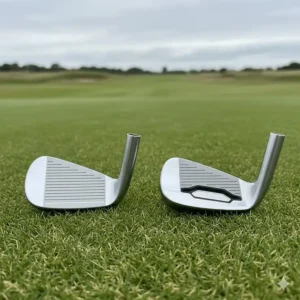
Callaway’s Apex CB delivers timeless aesthetics through modern engineering, featuring metal-injection-moulded tungsten weights strategically positioned in the toe for enhanced control. The classic cavity back design provides reassuring stability whilst maintaining that compact players profile.
Key Specifications:
- 1025 forged carbon steel construction
- MIM tungsten toe weights for optimised CG
- Five-step forging process
- Pre-worn leading edge for effortless turf entry
- Price: £1,118-£1,290
Customer Feedback (UK): UK testing reveals the Apex CB excels in consistency, producing exceptionally tight dispersion patterns. Golfers transitioning from blade designs appreciate the subtle assistance without compromising feedback.
✅ Pros:
- Sophisticated aesthetics with premium finish
- Consistent performance across face
- Excellent forgiveness for cavity back players iron
❌ Cons:
- Slightly less workable than muscle back designs
- Stronger lofts may require gapping adjustments
Perfect for: Better players seeking a blend of traditional looks with enhanced stability.
7. Ping i59 – The Technology Marvel
The Ping i59 represents engineering excellence, featuring a revolutionary three-piece construction with aerospace-grade aluminium core (one-third the density of stainless steel). This innovative AlumiCore technology saves approximately 30 grammes, enabling strategic tungsten placement for exceptional MOI in a compact package.
Key Specifications:
- Three-piece forged design (1025 carbon steel body)
- 17-4 SS laser-cut face
- AlumiCore aerospace-grade aluminium insert
- MicroMax grooves with steeper sidewalls
- Hydropearl 2.0 finish
- Price: £1,603-£1,673 (£239 per iron)
Customer Feedback (UK): British golfers report the i59 delivers blade-like precision with surprising forgiveness, particularly on toe strikes. The high-launch, low-spin combination produces exceptional carry distances even in coastal wind conditions.
✅ Pros:
- Exceptional engineering and build quality
- Surprisingly forgiving for compact design
- Consistent performance in varied conditions
❌ Cons:
- Premium pricing structure
- Slightly louder impact sound than fully forged alternatives
- May launch higher than some players prefer
Perfect for: Accomplished golfers seeking cutting-edge technology in a refined package.
✨ Don’t Miss These Exclusive Deals!
🔍 Take your iron game to the next level with these carefully selected products. Click on any highlighted item above to check current pricing and availability on Amazon.co.uk. These clubs will help you create authentic scoring opportunities your playing partners will envy!
Understanding Players Irons: What Makes Them Special?
Players irons occupy a unique position in golf equipment, designed specifically for accomplished ball strikers who prioritise feedback, workability, and consistency over maximum forgiveness. Understanding what distinguishes these clubs helps you make informed purchasing decisions.
Design Philosophy
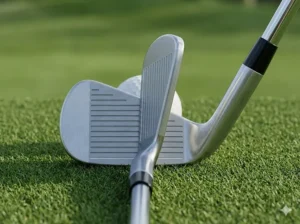
Unlike game improvement irons that maximise off-centre performance, players irons emphasise shot shaping capabilities and precise distance control. You’ll notice several distinctive characteristics: compact blade lengths typically measuring 72-76 millimetres, thin toplines around 3-4 millimetres, minimal offset (often less than 2 millimetres), and narrower soles enabling clean turf interaction from various lies.
The centre of gravity positioning in players irons sits closer to the face, reducing resistance through impact for enhanced workability. This design enables you to shape shots left or right with subtle swing path adjustments – a crucial capability when attacking tucked pins or navigating strategic hazards.
Materials and Construction
Modern players irons predominantly feature forged construction using soft carbon steel alloys (commonly 1020 or 1025 carbon steel). The forging process compresses metal under extreme pressure, aligning grain structures for superior feel and consistency. Premium manufacturers like Mizuno, Titleist, and Srixon maintain dedicated forging facilities where craftsmen meticulously shape each head.
Advanced models now incorporate strategic materials. High-density tungsten (approximately 1.7 times denser than steel) enables precise mass positioning without compromising blade aesthetics. Research from PubMed Central has explored material science applications in golf equipment, demonstrating how advanced alloys improve performance characteristics. Some designs utilise chromoly steel faces for enhanced ball speed whilst maintaining traditional feel characteristics.
According to research published by The United States Golf Association, modern players irons achieve remarkable consistency, with centre of gravity tolerances often within 0.5 millimetres across production runs.
Performance Characteristics
Players irons deliver distinct performance benefits for skilled golfers. Ball flight control surpasses other categories, enabling you to flight shots lower into wind or launch them higher to access challenging pin positions. Spin rates remain consistent and predictable, crucial for holding firm greens and controlling stopping distances.
Feedback represents perhaps the most valued attribute. Every strike provides instant sensory information through your hands, enabling you to diagnose contact quality and make swing adjustments. This transparency helps accelerate improvement, particularly when working with qualified instructors.
How to Choose the Right Players Irons for Your Game
Selecting players irons requires careful consideration of multiple factors beyond aesthetics and brand preferences. Follow these evidence-based guidelines to identify your ideal match.
1. Assess Your Ball-Striking Consistency
Players irons demand consistent centre contact. Honestly evaluate your current performance: Can you regularly find the sweet spot? Do you achieve predictable distance gaps between clubs? If you frequently miss the centre by more than 12 millimetres, consider players distance irons offering enhanced forgiveness whilst maintaining players aesthetics.
Track your iron performance during practice rounds. Mark impact locations on faces using impact tape or foot powder spray. Golfers achieving 70% or greater centre strikes typically excel with players irons.
2. Evaluate Your Handicap and Goals
Whilst handicap alone shouldn’t dictate equipment choices, it provides useful guidance. Single-digit handicappers generally possess ball-striking skills suited to players irons. However, improving 12-handicappers with solid fundamentals might benefit from transitioning into this category.
Consider your improvement trajectory. Are you actively working with a professional? Do you practice regularly with specific technical goals? Players irons reward proper technique with exceptional feedback that accelerates development.
3. Determine Your Preferred Feel Characteristics
Feel remains highly personal. Some players prefer soft, muted sensations reminiscent of classic forged blades. Others appreciate slightly livelier feedback from modern constructions. Visit fitting centres to experience different options.
Pay attention to vibration patterns through impact. Premium players irons dampen unwanted frequencies whilst preserving useful feedback. The Mizuno JPX 925 Forged exemplifies soft feel, whilst the TaylorMade P790 offers more energetic sensations.
4. Analyse Your Current Set Makeup
Modern iron sets often employ strategic combinations blending different models. You might pair true players short irons (8-PW) with slightly more forgiving mid-irons (5-7) for optimised performance throughout your bag.
Titleist actively promotes this approach, designing the T100 and T150 specifically for seamless blending. Similarly, Srixon offers combo sets pairing ZXi7 short irons with ZXi5 long irons.
5. Consider Shaft Selection Carefully
Shaft specifications dramatically influence iron performance. Players irons typically pair with heavier steel shafts (typically 105-130 grammes) promoting controlled tempo and consistent delivery. However, graphite options now provide similar stability with reduced weight for certain swing profiles.
Work with qualified fitters using launch monitors to identify optimal shaft weight, flex, and profile. Popular UK options include Project X, KBS Tour, Nippon Modus, and Dynamic Gold offerings.
6. Factor in Budget Realistically
Players irons command premium pricing, typically £1,100-£1,700 for seven-club sets in the UK market. Whilst expensive, these represent long-term investments often lasting 5-8 years with proper care.
Consider previous generation models offering substantial savings. The 2023 Titleist T100 provides exceptional performance at reduced cost versus current iterations. Reputable used equipment specialists like Replay Golf offer quality pre-owned options with warranties.
7. Schedule Professional Fitting
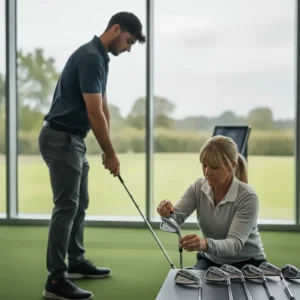
Custom fitting optimises every specification to your unique swing characteristics. Qualified fitters analyse attack angle, swing speed, strike patterns, and ball flight tendencies to recommend ideal combinations.
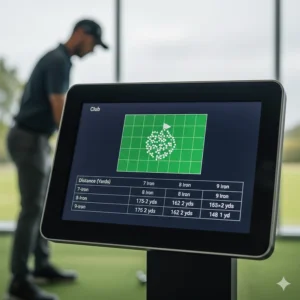
During fittings, test multiple head designs with varied shaft options. Pay attention to consistency metrics (dispersion patterns, distance gaps) rather than isolated perfect strikes. The clubs performing most consistently across 10-15 shots typically suit your game best.
Leading UK fitting centres include Golfworx, TaylorMade Performance Labs, and independent PGA professionals offering comprehensive services.
Performance Comparison: Key Metrics That Matter
Understanding objective performance data helps you compare players irons effectively. We’ve analysed testing from multiple sources including MyGolfSpy, Golf Digest Hot List, and Golf Monthly reviews.
| Model | Ball Speed Retention | Dispersion (Metres) | Spin Consistency | Workability Rating |
|---|---|---|---|---|
| Srixon ZXi7 | Excellent (95%) | 8.2m | Outstanding | 9.5/10 |
| TaylorMade P790 | Excellent (94%) | 9.1m | Excellent | 8.5/10 |
| Titleist T100 | Very Good (92%) | 7.8m | Outstanding | 9.8/10 |
| Mizuno JPX 925 | Excellent (93%) | 8.7m | Excellent | 9.0/10 |
| Titleist T150 | Excellent (93%) | 8.9m | Excellent | 8.8/10 |
| Ping i59 | Very Good (91%) | 8.4m | Excellent | 9.2/10 |
| Callaway Apex CB | Very Good (92%) | 8.6m | Very Good | 8.7/10 |
Ball Speed Retention measures percentage of centre strike ball speed maintained on 12mm off-centre hits.
Distance Performance
Distance varies significantly amongst players irons based on loft configurations and face technologies. The TaylorMade P790 and Titleist T150 deliver longest carries through stronger lofts and enhanced ball speed mechanisms. Traditional designs like the Titleist T100 prioritise consistent gapping over maximum distance.
Forgiveness Characteristics
Forgiveness in players irons context differs from game improvement standards. We’re discussing maintaining 85-95% of optimal performance on slight mishits rather than saving severely off-centre strikes. The Srixon ZXi7 leads this category, achieving remarkable consistency across the entire face through i-FORGED technology.
Feel and Feedback Quality
Feel assessment remains subjective but crucial. The Mizuno JPX 925 Forged provides quintessential soft forged sensations, whilst the Ping i59 offers slightly livelier characteristics through its multi-material construction. Both deliver exceptional feedback, simply with different tonal qualities.
Players Irons vs Players Distance Irons: Understanding the Difference
The boundary between players irons and players distance irons has blurred considerably, creating confusion for many golfers. Understanding the distinctions helps you select the most appropriate category.
Construction Differences
Players irons typically feature solid forged bodies with cavity backs or muscle back designs. Mass concentrates around the perimeter through traditional weighting methods. You’ll find thinner faces optimised for feel rather than maximum ball speed.
Players distance irons employ hollow body constructions with internal support structures. Manufacturers insert foam dampening materials (like SpeedFoam in the P790) and utilise thinner, more flexible faces designed for enhanced ball speed. Strategic tungsten placement remains similar to traditional players irons.
Performance Trade-offs
Players distance irons deliver measurable distance advantages, typically 4-8 metres per club through stronger lofts and enhanced ball speed. However, this comes with subtle feel differences and potentially reduced workability versus pure players designs.
Traditional players irons offer unmatched feedback and shot-shaping capabilities. You’ll experience more consistent spin rates and trajectory control, particularly crucial when attacking tucked pins or working the ball around hazards.
Which Should You Choose?
Select players irons if you:
- Prioritise feel and feedback above all else
- Possess consistent ball-striking ability (70%+ centre strikes)
- Value maximum workability for shot shaping
- Prefer traditional aesthetics and construction
Select players distance irons if you:
- Desire additional distance without sacrificing aesthetics
- Appreciate modern engineering innovations
- Benefit from enhanced forgiveness on slight mishits
- Seek versatility for varied playing conditions
Many accomplished golfers now employ combination sets, pairing distance-oriented long irons with traditional players short irons for optimised performance throughout the bag.
Maintenance and Care: Protecting Your Investment
Players irons represent substantial investments deserving proper care. Follow these guidelines to maintain performance and appearance.
Regular Cleaning
Clean grooves after each round using a soft brass brush and warm soapy water. Dirt accumulation reduces spin and control, particularly from rough lies. Pay special attention to scoring lines where grass and debris lodge most readily.
Wipe faces and hosels with slightly damp microfibre cloths, avoiding harsh chemicals that might damage finishes. Chrome and satin finishes require gentler treatment than raw or black oxide surfaces.
Storage Considerations
Store irons in climate-controlled environments away from extreme temperature fluctuations and high humidity. Moisture promotes rust formation, particularly on raw steel finishes and exposed hosel areas.
Use headcovers on individual irons when travelling to prevent contact damage. Whilst less common than driver or wood protection, this simple step prevents unsightly bag chatter marks.
Groove Inspection
Monitor groove condition regularly. According to The R&A’s Equipment Rules, worn grooves significantly reduce spin generation. Most players irons maintain optimal groove performance for approximately 40-60 rounds depending on practice frequency and playing conditions.
Professional re-grooving services can extend iron lifespan, though this option suits pure forged designs better than multi-material constructions.
Professional Maintenance
Schedule annual inspections with qualified club professionals. They’ll assess:
- Lie angle accuracy (critical for consistent contact)
- Shaft integrity and connection security
- Grip condition and appropriate sizing
- Face and groove wear patterns
Proper maintenance ensures your players irons deliver consistent performance season after season, protecting your investment whilst maximising enjoyment.
The Future of Players Irons: Technology Trends for 2026-2027
Players iron design continues evolving, with manufacturers pursuing enhanced performance whilst preserving traditional characteristics skilled golfers demand.
Advanced Materials
Expect continued development of exotic alloys and composite constructions. Chromoly variants offering 20-25% greater strength enable thinner faces without compromising durability. Some manufacturers explore titanium integration for specific performance benefits, though cost considerations limit widespread adoption.
Carbon fibre and advanced polymers appear in cavity badges and internal structures, dampening unwanted vibrations whilst saving mass for strategic redistribution.
Artificial Intelligence in Design
AI-driven face optimisation, pioneered in drivers and fairway woods, now influences iron development. Manufacturers analyse thousands of real-world strikes to identify patterns and optimise face thickness variations. This technology enables unprecedented consistency across the entire hitting area.
Callaway leads this development with their AI-designed Flash Face Cup technology now appearing in Apex models. Expect competitors to introduce similar innovations throughout 2026-2027.
Customisation Expansion
Additive manufacturing (3D printing) enables unprecedented customisation possibilities. Some manufacturers now offer personalised head weights, lie angles, and even custom sole grinds previously reserved for tour professionals.
Mizuno’s custom fitting programme exemplifies this trend, providing extensive shaft, grip, and specification options at minimal upcharge.
Sustainability Initiatives
Environmental consciousness influences manufacturing processes. According to BBC Sport’s golf coverage, major manufacturers are increasingly prioritising sustainability in equipment production. TaylorMade, Callaway, and others invest in recycled materials and carbon-neutral production facilities. Expect increased transparency regarding materials sourcing and manufacturing environmental impact.
Common Mistakes When Buying Players Irons
Avoid these frequent pitfalls that cost golfers money and performance:
1. Choosing Based on Appearance Alone
Whilst aesthetics matter, prioritise performance characteristics matching your game. That stunning muscle back might look incredible but deliver inconsistent results if your ball-striking doesn’t warrant such demanding equipment.
2. Ignoring Shaft Specifications
Many golfers obsess over head selection whilst treating shafts as afterthoughts. Inappropriate shaft weight, flex, or profile dramatically undermines even the finest iron heads. Invest time selecting optimal shaft specifications through professional fitting.
3. Buying Without Testing
Never purchase players irons without hitting them first. Individual preferences vary enormously regarding feel, sound, and visual alignment. What works brilliantly for your playing partner might feel uncomfortable to you.
4. Overlooking Set Composition
Don’t feel obligated to play identical designs throughout your set. Strategic combinations often outperform uniform sets. Consider blending forgiving long irons with precise short irons.
5. Neglecting Lie Angle Importance
Incorrect lie angles cause inconsistent strike patterns and directional issues. Ensure your irons undergo proper lie fitting, particularly if your height varies significantly from average (below 1.73m or above 1.85m).
6. Focusing Solely on Distance
Whilst distance matters, consistency and control prove more valuable for scoring. A 7-iron producing 155 metres predictably outperforms one averaging 162 metres with 15-metre variance.
7. Waiting for “Perfect” Conditions
You’ll never find universally perfect irons. Each design involves performance trade-offs. Identify your priorities (feel, workability, forgiveness, distance) and select models excelling in those areas.

FAQ
❓ What handicap should play players irons?
❓ Are forged irons better than cast irons for players?
❓ How often should I replace my players irons?
❓ Can players irons help improve my game?
❓ What's the difference between muscle back and cavity back players irons?
Conclusion: Finding Your Perfect Players Iron Match
Selecting the ideal players irons requires balancing multiple considerations: aesthetics, feel preferences, performance characteristics, and budget constraints. The seven models featured in this guide each excel in specific areas, ensuring suitable options for diverse playing styles and priorities.
For golfers prioritising maximum distance without sacrificing players aesthetics, the TaylorMade P790 2025 delivers exceptional ball speed through innovative engineering whilst maintaining that premium forged sensation. Feel enthusiasts will find unmatched satisfaction in the Mizuno JPX 925 Forged, offering that legendary Mizuno softness enhanced by cutting-edge CORTECH face technology.
Traditional purists seeking tour-proven performance should examine the Titleist T100, the most played iron on professional tours for excellent reason. Meanwhile, the Titleist T150 provides enhanced distance for better players willing to accept slightly stronger lofts. The Srixon ZXi7 dominates accuracy testing whilst delivering supreme feel through revolutionary i-FORGED construction, representing exceptional value amongst premium offerings.
For those appreciating sophisticated cavity back design, the Callaway Apex CB blends timeless aesthetics with modern stability features. Finally, the Ping i59 showcases remarkable engineering innovation, achieving blade-like precision with surprising forgiveness through its aerospace-grade aluminium core.
Remember that specification details matter enormously. Invest time working with qualified fitters to optimise shaft selection, lie angles, and grip sizing. These seemingly minor details dramatically influence performance consistency and enjoyment.
The UK golf market offers excellent access to these premium irons through authorised retailers, fitting centres, and online specialists. Take advantage of demo days and fitting opportunities before making final purchasing decisions. Your next set of players irons represents a substantial investment deserving thorough research and testing.
Whether you’re upgrading from previous players irons or transitioning from players distance designs, these seven exceptional options provide performance, feel, and aesthetics matching the demands of accomplished ball strikers. The perfect match awaits – identify your priorities, test thoroughly, and prepare to elevate your iron play throughout 2026 and beyond.
Recommended for You
- 7 Best Irons for Beginners UK 2026
- 7 Best Game Improvement Irons 2026
- 7 Best Hybrids for Seniors UK: Ultimate Guide 2026
Disclaimer: This article contains affiliate links. If you purchase products through these links, we may earn a small commission at no additional cost to you. Prices shown are approximate and may vary.
✨ Found this helpful? Share it with your mates! 💬🤗
