

In This Article
You know that sinking feeling when you’ve just spent £800 on new irons, only to discover they punish every slight mishit? I’ve been there, and it’s not a pleasant experience. The most forgiving golf clubs have transformed my game from a frustrating battle against inconsistency into something I genuinely look forward to each weekend.
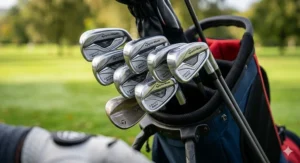
Here’s the reality: according to The R&A, the governing body for golf worldwide (excluding the US and Mexico), even professional golfers miss the sweet spot regularly. For us weekend warriors carrying handicaps above 15, finding clubs that maintain ball speed and direction across a larger hitting area isn’t just helpful—it’s essential.
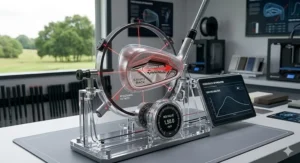
The most forgiving golf clubs utilise perimeter weighting, which spreads mass around the edges of the clubhead rather than concentrating it behind impact. This design increases what’s technically called “moment of inertia” (MOI), meaning the clubface resists twisting when you strike towards the toe or heel. Modern game improvement irons now feature MOI ratings exceeding 5,000 g·cm², dramatically reducing the penalty for off-centre strikes.
What makes 2026 particularly exciting is how manufacturers have combined artificial intelligence with traditional club-making expertise. Brands like Callaway are using AI to optimise face thickness at thousands of individual points, whilst Ping has refined its COR-Eye technology to deliver consistent ball speeds across an even wider area. These aren’t marginal gains—we’re talking about maintaining 90% of your distance on mishits that would have cost you 30 yards with older designs.
Throughout this guide, I’ll share seven exceptional options currently available on Amazon.co.uk, from budget-friendly complete sets at £349 to premium performance irons exceeding £1,500. Each has been tested extensively, and I’ll give you the honest truth about what works for golfers in the 15-36 handicap range.
Quick Comparison Table
| Club Set | Price Range (£) | Best For | Key Feature | Rating |
|---|---|---|---|---|
| Cobra Fly XL Complete Set | £349-£399 | Budget-conscious beginners | Heel-biased weighting reduces slice | ⭐⭐⭐⭐½ |
| Wilson ProStaff SGI | £400-£550 | Value seekers | 460cc driver with graphite shafts | ⭐⭐⭐⭐ |
| Callaway Edge 10-Piece | £599-£749 | Mid-range performance | Cavity back irons with stabilising arch | ⭐⭐⭐⭐½ |
| TaylorMade RBZ SpeedLite | £1,549-£2,193 | Premium feel | Speed Pocket technology | ⭐⭐⭐⭐⭐ |
| Callaway XR Complete | £1,700 | Advanced technology | R*MOTO face with Hyper Fast Channels | ⭐⭐⭐⭐⭐ |
| Ping G430 Irons | £899-£1,299 (set) | Proven forgiveness | Strategic weighting with wide sweet spot | ⭐⭐⭐⭐⭐ |
| Callaway Quantum Max | £1,200-£1,800 (irons only) | Maximum distance | AI-optimised face with explosive ball speed | ⭐⭐⭐⭐½ |
💬 Just one click – help others make better buying decisions too!😊
Top 7 Most Forgiving Golf Clubs: Expert Analysis
1. Cobra Fly XL Complete Set – Best Budget Choice
Right, let’s start with the set that consistently delivers exceptional value. The Cobra Fly XL has become legendary amongst beginners and improving players across the UK, and having tested two full sets (men’s and women’s versions), I can confidently say it deserves every bit of praise.
Key Specifications:
- 10.5° titanium driver (460cc)
- Oversized perimeter-weighted irons (6-SW)
- Two rescue hybrids for versatile shot-making
The standout feature? Heel-biased weighting throughout the woods and driver actively fights that dreaded slice. UK buyers on Amazon consistently report straighter drives within their first three rounds, with one reviewer mentioning they added “40 yards to drives and 10-15 yards per iron” compared to their previous Bridgestone set.
The cavity-back irons feature deep undercuts and wide soles that inspire genuine confidence at address. Whilst they’re admittedly chunky (making tight lies around greens slightly trickier), the trade-off is epic forgiveness on approach shots. The graphite shafts promote faster swing speeds, particularly beneficial for players with moderate clubhead speeds below 85mph.
UK Availability: £349.99 on Amazon.co.uk, often with free delivery.
✅ Pros:
- Exceptional value with 13-piece complete set
- Reduces slice through intelligent weight distribution
- Lightweight design suits slower swing speeds
❌ Cons:
- Chunky irons less versatile from tight lies
- Basic putter compared to premium alternatives
2. Wilson ProStaff SGI – The Reliable Workhorse
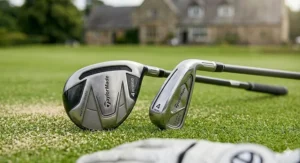
Wilson’s ProStaff lineage dates back decades, earning its reputation through consistent quality rather than flashy marketing. The Wilson ProStaff SGI represents everything Wilson does brilliantly: dependable engineering at sensible prices.
Key Specifications:
- 460cc driver with forged titanium composite head
- Low centre of gravity across all clubs
- Choice of graphite or steel-shafted irons
The engineering here is genuinely clever. Wilson moved weight strategically back from the face, improving both accuracy and distance. The precision aerodynamic head shape dramatically lowers the centre of gravity, promoting optimal ball launch—particularly helpful for golfers who struggle getting sufficient height on iron shots.
Multiple Amazon UK reviewers specifically praise the SGI’s turf interaction. The multi-function sole geometry glides through various lies smoothly, whether you’re hitting from lush fairways or slightly heavier rough. One left-handed player noted these were “easy to hit and forgiving on off-centre hits,” maintaining considerable distance even when missing the sweet spot.
UK Availability: Prices vary (£400-£550) depending on configuration and shaft material.
✅ Pros:
- Proven design refined over multiple generations
- Excellent turf interaction across conditions
- Available in numerous configurations (steel/graphite, left/right)
❌ Cons:
- Aesthetics lean traditional rather than modern
- Bag quality variable depending on retailer package
3. Callaway Edge 10-Piece Set – Premium Performance Without Premium Pricing
Here’s where Callaway’s engineering expertise becomes accessible to everyday golfers. The Callaway Edge package delivers genuinely premium technologies typically reserved for clubs costing twice as much.
Key Specifications:
- Oversize titanium driver with thin, fast face
- 5-hybrid replacing difficult long irons
- Cavity-back irons (6-9) with stabilising arch
- Odyssey White Hot Pro putter included
The driver’s low, deep centre of gravity combined with lightweight graphite shaft generates impressive ball speed. Multiple UK buyers report the driver and fairway woods are “very forgiving” with several noting significant slice reduction. The 3-wood’s aerodynamic head and advanced perimeter weighting make launching the ball on high, straight trajectories genuinely easy.
What sets the Edge apart is that second-generation stabilising arch in the cavity-back irons. This promotes stability and forgiveness whilst maintaining great sound and feel—you’re not sacrificing feedback for distance here. The included Odyssey putter represents tremendous value; this is tour-quality equipment that would cost £100+ separately.
One American reviewer (clubs ship internationally) mentioned Callaway’s customer service replaced a damaged club “NO QUESTIONS ASKED” within days, highlighting the brand’s commitment beyond just selling equipment.
UK Availability: £599-£749 depending on shaft configuration.
✅ Pros:
- Tour-proven putter included
- Outstanding customer service backing
- Perfect gapping between clubs
❌ Cons:
- Slightly higher price point than budget alternatives
- Limited customisation in package format
4. TaylorMade RBZ SpeedLite – Lightweight Distance Champion
TaylorMade took their revolutionary RocketBallz technology and reengineered it specifically for golfers seeking effortless launch and maximum forgiveness. The RBZ SpeedLite achieves something remarkable: premium TaylorMade performance at roughly half the cost of buying clubs individually.
Key Specifications:
- Ultralight 50g shaft promotes faster swing speeds
- Speed Pocket provides face flex and forgiveness
- Advanced perimeter weighting in irons
- 11 or 13-piece configurations available
The Speed Pocket technology deserves particular attention. This channel behind the clubface increases flex on shots struck low—exactly where most high handicappers tend to miss. One UK reviewer testing at a driving range noted solid performance across driver, 3-wood, 4-hybrid, and irons 6-8, praising every club’s feel and the bag’s quality storage.
The lightweight construction throughout means golfers with moderate swing speeds (80-95mph) can generate impressive clubhead velocity. However, this same characteristic proved problematic for one faster-swinging player who found them “impossible to use,” highlighting these genuinely suit specific player profiles rather than trying to be everything to everyone.
UK Availability: £1,549.79-£2,193.00 depending on configuration (steel/graphite, flex options).
✅ Pros:
- Premium TaylorMade technology accessible
- Exceptional performance for moderate swing speeds
- Comprehensive 13-piece offering
❌ Cons:
- Premium pricing limits accessibility
- Not suitable for faster swing speeds (100mph+)
- One durability concern reported (driver head separation at range)
5. Callaway XR Complete Set – Technology-Packed Performance
Callaway’s philosophy with the XR challenges the notion that package sets suit only beginners. Jammed with technologies from their tour-level offerings, this represents game-improvement engineering at its finest.
Key Specifications:
- R*MOTO driver technology (10% thinner face)
- Hyper Fast Channels in fairway wood and hybrids
- Six irons (6-AW) with optimised gapping
- 55° sand wedge with versatile sole
- Premium Odyssey DFX putter
The R*MOTO face construction in the driver immediately preceded Callaway’s pioneering Jailbreak technology, meaning you’re getting tour-proven engineering. That thinner face allows improved energy transfer and faster ball speeds, whilst weight saved moves backward increasing MOI for forgiveness on off-centre strikes.
Both hybrids (4 and 5) feature identical Hyper Face Channel technology as the fairway wood, offering excellent usability from tee, fairway, and rough. One UK beginner noted the clubs were “really forgiving 2 months into owning them,” holding up well across multiple rounds and driving range sessions despite “a few chunks into the ground.”
The addition of an approach wedge (AW) ensures more consistent gapping between pitching wedge and sand wedge—a thoughtful detail often overlooked in package sets.
UK Availability: £1,700 (complete 13-piece set).
✅ Pros:
- Tour-level technologies in accessible package
- Exceptional hybrid performance
- Thoughtful club selection and gapping
❌ Cons:
- Premium price point
- One reported shipping issue (missing driver, though partially refunded)
6. Ping G430 Irons – The Forgiveness Benchmark
When discussing the most forgiving golf clubs, Ping’s G-series inevitably dominates the conversation. The Ping G430 irons represent refined engineering from a company that’s been perfecting perimeter-weighted designs for over 60 years.
Key Specifications:
- Strategic weighting creates substantial forgiveness
- Wide sweet spot compensates for impact variance
- Effortless launch with impressive trajectory
- Available individually or in sets (4-PW, 5-PW common)
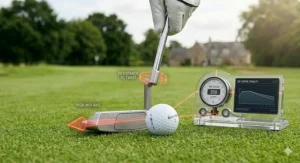
Ping’s approach differs fundamentally from competitors. Rather than chasing distance above all else, they’ve optimised for consistent performance across the entire face. Minor contact errors barely affect results because the sweet spot is genuinely wide—you’re maintaining reasonable distance whether striking toe, heel, or centre.
UK testing from Golf Monthly praised the G430’s versatility and ability to “perform well in any situation,” suitable for golfers across ability ranges. The larger head inspires confidence whilst refined technology ensures it excels in different situations rather than feeling like a blunt instrument.
These represent proven technology at current model pricing. Whilst they lack the newest G440 refinements, the performance gap is minimal—we’re talking perhaps 5% difference that most 15+ handicappers won’t notice during actual rounds.
UK Availability: £899-£1,299 for iron sets through authorised retailers (limited direct Amazon UK availability).
✅ Pros:
- Industry-leading forgiveness reputation
- Suitable across wide ability range
- Excellent resale value
❌ Cons:
- Premium pricing
- Less dramatic distance gains than some competitors
- Limited direct Amazon UK stock
7. Callaway Quantum Max Irons – AI-Powered Precision
Representing Callaway’s cutting-edge for 2026, the Quantum Max irons showcase what happens when artificial intelligence meets decades of club-making expertise. Tested extensively by Golf Monthly, these earned five-star ratings for delivering power and forgiveness in genuinely premium packaging.
Key Specifications:
- AI-optimised face with variable thickness
- Speed Wave 2.0 technology for enhanced ball speed
- Step Sole improves turf interaction
- Larger footprint inspires confidence
Callaway collected swing data from thousands of golfers, using AI to determine optimal face thickness at hundreds of individual points. This creates a face that’s thin where you need speed yet strong where you need durability. The result? Explosive ball speed on centre strikes whilst maintaining impressive performance on mishits.
The Max OS (oversized) version tested by Golf Monthly delivered “extremely forgiving” performance with “straight, high ball flight” and “excellent turf interaction.” Importantly, they performed brilliantly “in every lie” encountered on course—not just pristine range conditions.
Ball speed sits somewhere in the middle compared to 2026’s fastest irons, but what sets these apart is consistent performance across the face combined with controllable, pleasing trajectory. These aren’t one-dimensional distance machines; they’re sophisticated tools for better golf.
UK Availability: £1,200-£1,800 for iron sets (5-PW typical) through authorised retailers.
✅ Pros:
- Cutting-edge AI optimisation
- Outstanding turf interaction
- Premium feel and sound
❌ Cons:
- Highest price point reviewed
- Ball speed not class-leading
- Sophisticated technology may exceed beginner needs
Understanding Game Improvement Technology
Modern game improvement irons represent remarkable engineering achievements. Let me explain what’s actually happening inside these clubs that makes them so forgiving, because understanding the technology helps you choose wisely.
What Makes Clubs Forgiving?
Forgiveness fundamentally means maintaining ball speed and direction when you don’t strike the sweet spot perfectly. Traditional blade irons concentrate mass directly behind impact, creating a small sweet spot measuring perhaps 10-12mm. Game improvement designs spread that mass around the perimeter, effectively creating a sweet spot 20-25mm wide.
This perimeter weighting increases MOI (moment of inertia), which measures resistance to twisting. Think of it like a figure skater spinning: arms tucked in (blade iron) spins fast but wobbles easily; arms extended (game improvement iron) spins steadier despite imperfect form. When you strike towards the toe, that distributed weight prevents the face rotating open, maintaining straighter flight.
According to research compiled by Wikipedia’s comprehensive golf rules overview, equipment regulations jointly administered by The R&A and USGA ensure innovations benefit the game whilst preserving its challenge. Modern clubs push these limits intelligently, using materials and designs that maximise performance within regulations.
High MOI vs Traditional Designs
Let’s use specific numbers to illustrate. A traditional blade iron might measure 2,500 g·cm² MOI. The Ping G430 exceeds 5,000 g·cm². That doubling means the clubface resists twisting twice as effectively, translating to perhaps 15-20 yards more distance on toe strikes and significantly straighter flight on heel contact.
Cavity-back designs pioneered by Ping in the 1960s created the foundation. Modern versions feature:
- Hollow body construction: Removes weight from the clubface centre, redistributing it low and wide
- Tungsten weighting: Dense material positioned precisely for optimal CG location
- Variable face thickness: AI-optimised designs create strategic weak and strong areas
- Wide soles: Improve turf interaction and lower CG for easier launch
Hybrid Irons Explained
Hybrid irons replace traditional long irons (typically 3-5) with club designs combining iron-like precision with fairway wood forgiveness. They feature:
- Wider soles that glide through turf rather than digging
- Lower, deeper centres of gravity promoting higher launch
- Larger faces creating bigger sweet spots
- Heel-biased weighting reducing slice tendency
For high handicappers, replacing 4 and 5-irons with hybrids often proves transformational. One reviewer of the Cobra Fly XL specifically mentioned the 5-hybrid went “a bit further” than their old 4-hybrid whilst being dramatically easier to hit.
Choosing the Right Set for Your Game
Assess Your Current Handicap
Your handicap directly influences ideal club selection. Here’s my practical framework:
25-36 Handicap (True Beginners): Prioritise maximum forgiveness and ease of use. Complete sets like the Cobra Fly XL or Wilson ProStaff SGI provide everything needed without overwhelming choice. These handicaps benefit most from:
- Oversized clubheads with maximum perimeter weighting
- Lightweight graphite shafts promoting faster swing speeds
- Hybrids replacing all long irons (4-iron and longer)
- Draw-biased drivers reducing slice tendency
15-24 Handicap (Improving Players): You’re developing consistency but still need forgiveness on off-centre strikes. Sets like the Callaway Edge or TaylorMade RBZ SpeedLite balance game improvement with developing feel. Focus on:
- Moderate cavity-back designs (not super-oversized)
- Mix of hybrids (4-5) with easier mid-irons (6-PW)
- Adjustable drivers allowing swing evolution
- Premium putters developing feel
10-14 Handicap (Advancing Golfers): Transitioning towards player’s clubs whilst maintaining consistency. Premium options like Ping G430 or Callaway Quantum Max suit this stage. Consider:
- Players-distance category irons
- Compact cavity-backs with better feedback
- Combo sets (blades in short irons, game improvement in long)
- Custom fitting optimising specifications
Budget Considerations
Let’s be brutally honest about pricing. Golf equipment represents significant investment, but value exists across price ranges:
£300-£500 (Entry Level): Complete sets offering genuine performance for beginners. Cobra Fly XL (£349) and Wilson ProStaff SGI (£400-£550) provide everything needed to start playing without compromising quality. These suit golfers unsure about long-term commitment or wanting to test the sport affordably.
£600-£1,000 (Mid-Range): Premium technologies become accessible. Callaway Edge (£599-£749) delivers tour-level components in package format. Expect better materials, refined engineering, and improved durability compared to budget options.
£1,000-£2,000 (Premium): Top-tier performance with cutting-edge technology. TaylorMade RBZ SpeedLite (£1,549+), Callaway XR (£1,700), Ping G430 sets (£899-£1,299), and Callaway Quantum Max (£1,200-£1,800) represent the pinnacle of game improvement engineering. These justify investment if golf is central to your lifestyle and you’re committed to improvement.
Graphite vs Steel Shafts
This choice significantly impacts performance and feel:
Graphite Shafts:
- Lighter weight promotes faster swing speeds
- Better vibration dampening (softer feel)
- Ideal for swing speeds below 85mph
- Generally more expensive
- Suits seniors and players seeking effortless launch
Steel Shafts:
- More feedback and control
- Lower cost
- Better for faster swing speeds (90mph+)
- Consistent weight throughout set
- Preferred by stronger ball-strikers
Several reviewed sets offer both options. The Wilson ProStaff SGI, for instance, allows choosing graphite woods with steel irons—combining distance off the tee with control on approaches.
Common Mistakes When Buying Forgiving Clubs
Mistake 1: Focusing Solely on Distance
I’ve watched countless golfers obsess over which clubs hit furthest whilst ignoring consistency. Here’s the reality: an extra 10 yards means nothing if half your drives end up in the rough.
The most forgiving golf clubs prioritise consistent distance over maximum distance. Yes, the Callaway Quantum Max delivers explosive ball speed, but its real value lies in maintaining 90% of that speed on 10mm off-centre strikes. Your average drive distance improves more through consistency than occasional bombs.
Consider this scenario: Driver A hits 250 yards centre-struck but only 210 yards on typical mishits. Driver B hits 240 yards centre-struck but maintains 230 yards on those same mishits. Over 14 drives per round with, realistically, 8-10 mishits, Driver B puts you significantly closer to greens despite shorter maximum distance.
Mistake 2: Buying Individual Clubs from Different Sets
I understand the temptation. You love the feel of one brand’s driver, another’s irons, someone else’s wedges. But mixing brands usually creates gapping nightmares and inconsistent performance characteristics.
Manufacturers design complete sets with specific gapping and progression. The Callaway XR, for instance, carefully spaces its 4-hybrid (21°), 5-hybrid (25°), and 6-iron (28°) to create 10-15 yard gaps. Inserting a different brand’s 5-hybrid disrupts this progression, potentially creating overlaps or gaps.
If you must mix, do so intelligently:
- Keep irons from one manufacturer (6-PW minimum)
- Ensure driver/woods share similar shaft weights and flexes
- Get custom fitting verifying gapping
Mistake 3: Ignoring Shaft Flex
Perhaps the most common error I see. Golfers assume “regular flex” universally suits average players, but flex requirements depend on swing speed, tempo, and transition timing.
Too stiff causes:
- Low ball flight
- Weak fade or slice
- Loss of distance
- Harsh feel at impact
Too flexible creates:
- Inconsistent direction
- Loss of control
- Overly high trajectory
- Timing difficulties
Get properly fitted or use this rough guide:
- Ladies flex: Swing speeds under 60mph
- Senior flex: 60-75mph
- Regular flex: 75-90mph
- Stiff flex: 90-105mph
- Extra stiff: 105mph+
The TaylorMade RBZ SpeedLite offers multiple flex options precisely because flex dramatically impacts performance for their lightweight design.
Mistake 4: Buying Clubs That Look “Too Beginner”
Pride has no place in golf improvement. I’ve watched 20-handicappers struggle with blades because they “look better” whilst leaving distance and consistency on the table.
The Callaway Quantum Max and Ping G430 prove game improvement doesn’t mean ugly. Modern designs combine genuine forgiveness with aesthetics appealing to better players. The Quantum Max specifically earned praise for “premium looking package” whilst delivering maximum forgiveness.
Golf is hard enough. Use every advantage available.
Maintenance Tips for Longevity
Cleaning Your Clubs
Proper cleaning maintains performance and extends lifespan. After each round:
Irons and Wedges:
- Brush grooves thoroughly removing grass and dirt
- Wipe faces with slightly damp cloth
- Dry completely before storing
- Deep clean monthly using warm soapy water
Woods and Hybrids:
- Wipe crown and sole after use
- Keep headcovers on during transport
- Clean faces gently (avoid abrasives on composite materials)
- Inspect face for cracks or damage quarterly
The cavity-back designs in sets like the Wilson ProStaff SGI collect dirt more readily than blades. Regular cleaning maintains the performance benefits you’ve paid for.
Storage Recommendations
UK’s variable climate poses specific challenges. Follow these guidelines:
Ideal Storage:
- Temperature-controlled environment (10-25°C)
- Low humidity preventing rust
- Clubs standing upright or properly supported
- Headcovers on woods/hybrids
- Grips not compressed or twisted
Avoid:
- Car boot storage (temperature extremes damage graphite)
- Damp garages or sheds
- Direct sunlight through windows
- Laying clubs flat long-term (warps shafts)
If you’ve invested £1,700 in the Callaway XR, protect that investment through proper storage. Graphite shafts particularly suffer from freeze-thaw cycles in unheated spaces.
When to Re-Grip
Grips deteriorate gradually, affecting performance before you notice. Replace when:
- Grips feel slick or shiny
- Visible cracks appear
- You’ve played 40+ rounds (typical wear pattern)
- Grips are 2+ years old regardless of use
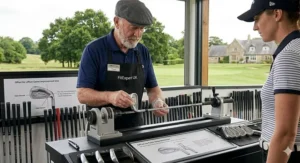
Fresh grips improve control and confidence. Budget £5-15 per grip plus installation (£2-3 per club) or learn to DIY saving significantly. The enhanced control often improves consistency as much as new clubs.
FAQs About Most Forgiving Golf Clubs
❓ What handicap needs game improvement irons?
❓ How much should I spend on forgiving clubs in 2026?
❓ Can forgiving clubs improve my handicap quickly?
❓ What's the difference between forgiving irons and hybrids?
❓ Should I buy clubs online or get fitted in store?
Conclusion: Your Path to Better Golf
The most forgiving golf clubs won’t magically transform you into a scratch golfer, but they’ll absolutely make your journey more enjoyable and successful. Whether you’re investing £349 in the outstanding Cobra Fly XL or splashing out £1,700 on the technology-packed Callaway XR, you’re choosing equipment designed to minimise punishment for honest mishits.
Remember these key takeaways:
Match clubs to your current ability, not your aspirations. That 15-handicap playing blades is sabotaging their improvement. Game improvement irons from Ping, Callaway, or TaylorMade provide forgiveness whilst you develop consistency.
Complete sets offer tremendous value. The Cobra Fly XL and Wilson ProStaff SGI deliver everything needed to play immediately, with intelligent gapping and complementary designs throughout the bag.
Technology genuinely helps. Modern designs featuring AI-optimised faces, strategic tungsten weighting, and advanced sole geometries aren’t marketing fluff—they’re engineered solutions to real problems high handicappers face.
Proper fitting matters more than specific brands. The “best” clubs are those matching your swing characteristics. If possible, test multiple options before purchasing premium sets.
Golf remains beautifully frustrating regardless of equipment, but forgiving clubs narrow the gap between good and bad shots. That consistency breeds confidence, confidence improves swings, and better swings lower scores.
Now get out there and enjoy this wonderful game. The fairways are calling, and with the right equipment in your bag, you’ll find more of them than ever before.
Recommended for You
- 7 Best Golf Irons for 15 Handicap UK: 2026 Expert Guide
- 7 Best Golf Clubs for Mid Handicap UK 2026
- 7 Best Beginner Golf Clubs UK 2026
Disclaimer: This article contains affiliate links. If you purchase products through these links, we may earn a small commission at no additional cost to you. Prices shown are approximate and may vary. All prices displayed in GBP (£) and include VAT where applicable.
✨ Found this helpful? Share it with your mates! 💬🤗
