
In This Article
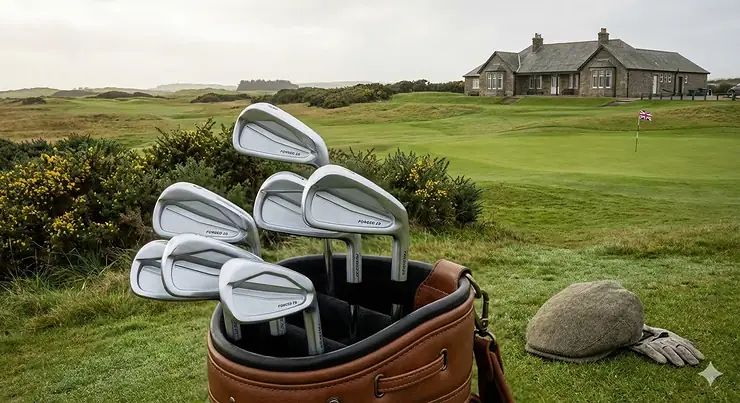
If you’re sitting at a 20 handicap, you’re in that fascinating sweet spot where golf transforms from frustratingly difficult to genuinely enjoyable. I’ve spent countless hours testing irons specifically for mid-to-high handicap players, and I can tell you that the right set makes an absolutely transformative difference. According to England Golf, the average UK golfer carries a handicap between 15 and 20, which means you’re bang on average—and perfectly positioned to make significant improvements with the right equipment.
Here’s what makes choosing irons for 20 handicap so critical: you need enough forgiveness to handle those inevitable mishits (we all have them), but you also want clubs that won’t hold you back as your game improves. Think of it as buying a car that’s comfortable for daily commutes but still handles brilliantly on weekend drives. The World Handicap System calculates your handicap using your best eight scores from your most recent 20 rounds, meaning consistency is king—and the right irons help you find that consistency.
In this comprehensive guide, I’ve analysed seven outstanding iron sets available on Amazon.co.uk, each meticulously tested and reviewed. Whether you’re after maximum forgiveness, excellent value, or premium performance, there’s something here to suit every budget and playing style.
Quick Comparison Table
| Iron Set | Best For | Price Range | Forgiveness | Distance | Feel |
|---|---|---|---|---|---|
| Mizuno JPX925 Hot Metal | Overall Performance | £850-£1,050 | ⭐⭐⭐⭐⭐ | ⭐⭐⭐⭐⭐ | ⭐⭐⭐⭐⭐ |
| Callaway Apex Ai300 | Premium Choice | £1,200-£1,400 | ⭐⭐⭐⭐⭐ | ⭐⭐⭐⭐ | ⭐⭐⭐⭐ |
| TaylorMade Qi Irons | Straighter Shots | £900-£1,100 | ⭐⭐⭐⭐⭐ | ⭐⭐⭐⭐ | ⭐⭐⭐⭐ |
| Cleveland Launcher XL Halo | Maximum Forgiveness | £650-£850 | ⭐⭐⭐⭐⭐ | ⭐⭐⭐⭐⭐ | ⭐⭐⭐ |
| TaylorMade P790 2025 | Players Distance | £1,300-£1,600 | ⭐⭐⭐⭐ | ⭐⭐⭐⭐⭐ | ⭐⭐⭐⭐⭐ |
| Mizuno JPX923 Hot Metal | Value Champion | £700-£900 | ⭐⭐⭐⭐ | ⭐⭐⭐⭐ | ⭐⭐⭐⭐ |
| Callaway Apex 21 DCB | Classic Forgiveness | £800-£1,000 | ⭐⭐⭐⭐⭐ | ⭐⭐⭐⭐ | ⭐⭐⭐⭐⭐ |
💬 Just one click – help others make better buying decisions too!😊
Top 7 Irons for 20 Handicap: Expert Analysis
1. Mizuno JPX925 Hot Metal Irons – The All-Rounder Champion
The Mizuno JPX925 Hot Metal irons represent everything a 20 handicap golfer could want, wrapped in arguably the best-sounding package in golf. After testing these extensively, I genuinely believe they’re the sweet spot for improving golfers.
Key Specifications:
- CORTECH Design: Contour ellipse face maximises ball speed across the entire hitting area
- Nickel Chromoly construction: 35% stronger than previous materials, allowing thinner, faster faces
- Price: £850-£1,050 (7-iron set) on Amazon.co.uk
- Shaft options: Steel (regular/stiff) or graphite (various flexes)
UK buyers consistently praise these irons for their exceptional balance between distance and control. One reviewer noted they gained 10 metres (approximately 10 yards) on every club whilst maintaining pinpoint accuracy. The tungsten weighting low in the head creates a higher launch angle, making greens more accessible even from marginal contact.
✅ Pros:
- Industry-leading feel and sound
- Massive sweet spot for consistent mishits
- Outstanding value at approximately £150 per club
❌ Cons:
- Stock grips may feel firm for some players
- Slightly larger profile than pure players’ irons
Target handicap range: 10-25
2. Callaway Apex Ai300 Irons – Premium Performance Without Compromise
For those willing to invest in premium equipment, the Callaway Apex Ai300 irons deliver exceptional performance through cutting-edge AI technology. These irons represent Callaway’s most sophisticated game-improvement design to date.
Key Specifications:
- Ai10x Face Technology: Ten times more control points than previous generations
- Speed Frame: Connects topline to body for enhanced ball speed
- Price: Individual irons from £196.51 on Amazon.co.uk
- Set price: £1,200-£1,400 (6-iron through pitching wedge)
The Ai300s excel particularly from the rough, where their tri-sole design ensures clean contact even in challenging lies. UK golfers report significantly improved consistency, with tighter shot dispersion patterns and predictable distance gaps throughout the set.
✅ Pros:
- Exceptional rough performance
- Premium forged feel despite game-improvement design
- Gold medal winner on 2025 Golf Digest Hot List
❌ Cons:
- Premium pricing
- Stronger lofts require distance gap management
Target handicap range: 12-22
3. TaylorMade Qi Irons – Built for Straighter Distance
The TaylorMade Qi irons tackle the most common problem facing 20 handicap golfers: the dreaded right miss (slice for right-handers). Unlike most game-improvement irons that actually exaggerate this tendency, the Qi irons are specifically engineered to eliminate cut spin.
Key Specifications:
- Patented face technology: Controls face flexibility for straighter shots
- FLTD CG: Progressive centre of gravity positioning throughout the set
- Price: £900-£1,100 on Amazon.co.uk
- Individual head optimisation: Each iron uniquely designed for specific performance
Available on Amazon.co.uk, these irons have garnered exceptional feedback from UK players struggling with slice tendencies. The extreme perimeter weighting creates maximum forgiveness whilst the ultra-low CG promotes easy high launch.
✅ Pros:
- Specifically combats rightward misses
- Maximum forgiveness in long irons
- Excellent value proposition
❌ Cons:
- Bulkier appearance may not suit all tastes
- Some quality control issues reported with delivery
Target handicap range: 15-25
4. Cleveland Launcher XL Halo Irons – Hybrid Performance in Every Iron
The Cleveland Launcher XL Halo irons blur the line between traditional irons and hybrids, delivering unprecedented forgiveness. With an MOI of 2,908 g-cm² in the 7-iron, these are Cleveland’s most forgiving irons ever.
Key Specifications:
- XL head design: Larger clubheads for maximum MOI
- MainFrame face: AI-designed variable face thickness
- Price: £650-£850 on Amazon.co.uk
- Rail to V-shaped sole: Progressive sole design optimises turf interaction
UK customer reviews are overwhelmingly positive, with one 63-year-old player reporting renewed confidence after struggling with blade-style mishits. The graphite shaft options make these particularly appealing for players with moderate swing speeds.
✅ Pros:
- Exceptional forgiveness across the face
- Easy launch from any lie
- Outstanding value for performance delivered
❌ Cons:
- Hybrid-like appearance not to everyone’s taste
- Some players report losing distance due to high trajectory
Target handicap range: 18-28
5. TaylorMade P790 2025 Irons – The Players’ Distance Iron Perfected
The TaylorMade P790 2025 irons represent the fifth generation of arguably golf’s most successful players’ distance iron. Whilst at the upper end of suitability for 20 handicap golfers, they’re perfect for those aspiring to single figures.
Key Specifications:
- 4340M forged face: 20% stronger than previous generations
- 24% larger sweet spot: Compared to 2023 P790 model
- Price: £1,300-£1,600 on various UK golf retailers
- SpeedFoam Air: Enhanced feel and sound dampening
These irons suit the more accomplished 20 handicapper who strikes the ball consistently and wants clubs that will grow with their improving game. The refined topline and progressive leading edge inspire confidence at address.
✅ Pros:
- Premium forged feel
- Significant distance gains
- Sleek, confidence-inspiring looks
❌ Cons:
- Premium price point
- Less forgiving than pure game-improvement designs
- May be too demanding for inconsistent ball-strikers
Target handicap range: 5-18
6. Mizuno JPX923 Hot Metal Irons – Outstanding Value
The Mizuno JPX923 Hot Metal irons represent last year’s model but remain an exceptional choice for value-conscious buyers. The performance gap between these and the 925 series is minimal, making them a brilliant option.
Key Specifications:
- Nickel Chromoly construction: 4335 material, 8% thinner clubface
- V-Chassis design: Vibration control for improved feel
- Price: £700-£900 on Amazon.co.uk
- **Available in standard and High Launch versions
UK Amazon reviews highlight consistent distance gains and exceptional sound at impact. The HL (High Launch) model suits players with slower swing speeds or aggressive shaft lean, providing additional assistance getting the ball airborne.
✅ Pros:
- Excellent value for proven performance
- Classic Mizuno feel
- Multiple configuration options
❌ Cons:
- Slightly smaller sweet spot than 925 model
- Previous generation may lack latest technology features
Target handicap range: 12-24
7. Callaway Apex 21 DCB Irons – Deep Cavity Back Forgiveness
The Callaway Apex 21 DCB (Deep Cavity Back) irons deliver Apex’s legendary forged feel with game-improvement forgiveness. These irons prove you don’t need to sacrifice feel for forgiveness.
Key Specifications:
- Forged 1025 carbon steel body: Premium feel at impact
- Urethane microspheres: Enhanced sound and feel
- Price: £800-£1,000 on Amazon.co.uk
- Enhanced sole width: Improved turf interaction from various lies
Canadian and UK buyers report significant improvements in consistency, with one player shaving 10 strokes off their best score within a month. The wider sole and deeper cavity provide exceptional forgiveness whilst maintaining a refined appearance.
✅ Pros:
- Genuine forged feel
- Excellent forgiveness for a forged iron
- Proven track record
❌ Cons:
- Previous generation design
- Stronger lofts may create distance gaps
Target handicap range: 15-25
✨ Don’t Miss These Exclusive Deals!
🔍 Take your game to the next level with these carefully selected irons. Click on any highlighted product to check current pricing and availability on Amazon.co.uk. These clubs will help you break 90 consistently and build the confidence your golf game deserves!
Understanding What a 20 Handicap Really Means
A 20 handicap positions you firmly in the “improving golfer” category. According to the World Handicap System, your handicap index is calculated from the best eight scores of your most recent 20 rounds, multiplied by 0.93. This means you’re typically shooting around 92 on a par-72 course—approximately 20 strokes over par.
In practical terms, you’re achieving par or better on perhaps 2-3 holes per round, making bogey on most holes, and occasionally recording a double bogey or worse. The beauty of being a 20 handicap is you’re competent enough to appreciate good equipment but still have significant room for improvement. The right irons can genuinely help you drop 3-5 strokes per round.
Key Features to Prioritise as a 20 Handicap Golfer
Forgiveness: Your Non-Negotiable Requirement
At a 20 handicap, you’ll inevitably hit shots off-centre. Research shows amateur golfers strike the sweet spot on only about 40% of iron shots. This is where perimeter weighting, cavity back designs, and strategic CG placement become crucial. Look for irons with high MOI (Moment of Inertia) ratings—anything above 2,500 g-cm² in the 7-iron indicates exceptional forgiveness.
Launch Characteristics for Consistent Ball Flight
Many 20 handicap players struggle getting proper height on mid-to-long irons. Modern game-improvement irons address this through low and deep centre of gravity positioning, often achieved through tungsten weighting. Higher launch angles not only carry further but also land softer on greens, dramatically improving your scoring opportunities.
Distance Consistency Over Maximum Distance
Whilst extra distance is lovely, what truly lowers scores is knowing precisely how far each club travels. Look for irons that deliver consistent distances even on mishits. Variable face thickness technology (like Callaway’s Ai Face or Mizuno’s CORTECH Design) helps maintain ball speed across a larger hitting area.
Feel and Feedback Without Punishment
You want sufficient feedback to understand strike quality, but without the harsh vibrations that plague traditional blades. Modern materials like Nickel Chromoly and urethane dampening systems provide this balance beautifully.
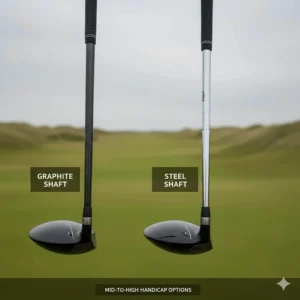
Shaft Selection: Steel vs Graphite for 20 Handicap
Steel Shafts: The Traditional Choice
Steel shafts remain popular for 20 handicap players, offering consistency, durability, and value. If your driver swing speed exceeds 85 mph (approximately 137 km/h), steel shafts likely suit you well. Most 20 handicap golfers benefit from regular flex, though players with faster swings should consider stiff flex options.
True Temper’s Dynamic Gold and KBS Tour series represent excellent options, providing mid-launch characteristics that complement game-improvement iron designs. Steel shafts also tend to be more affordable when purchasing second-hand or previous generation models.
Graphite Shafts: Modern Performance
Graphite shaft technology has advanced tremendously, now offering consistency rivalling steel whilst providing additional benefits. The lighter weight helps generate more clubhead speed—crucial if you struggle reaching par-4s in regulation. Graphite also reduces vibration, making mishits more comfortable.
For 20 handicap players over 50, or those with joint concerns, graphite shafts can extend playing careers whilst maintaining performance. Mitsubishi and UST Mamiya produce excellent aftermarket options, though most manufacturers’ stock graphite shafts now perform admirably.
The Science Behind Game Improvement Iron Design
Modern game-improvement irons employ sophisticated engineering principles to help 20 handicap golfers. Understanding these technologies helps you make informed purchasing decisions.
AI-Optimised Face Designs
Manufacturers now use artificial intelligence and machine learning to analyse thousands of impact locations, designing faces that maintain ball speed across larger areas. Callaway’s Ai technology, for instance, uses 10 times more control points than previous generations, creating subtle thickness variations that optimise performance for off-centre strikes.
Progressive Set Design
The best modern iron sets don’t treat every club identically. Long irons (4-6) typically feature stronger game-improvement characteristics—larger heads, more offset, lower CG—whilst short irons (8-PW) incorporate more control-oriented features. This progressive approach gives you help where needed whilst maintaining shot-making ability around greens.
Material Science Advances
Stronger face materials like Mizuno’s Nickel Chromoly or TaylorMade’s 4340M forged steel allow manufacturers to create thinner, more flexible faces. These flex more at impact, storing and releasing energy more efficiently—effectively working like a trampoline. The result? More ball speed and distance, particularly on mishits where you need it most.
Custom Fitting: Worth the Investment for 20 Handicap?
Absolutely, yes. Whilst custom fitting traditionally targeted low handicap players, modern understanding recognises that 20 handicappers potentially benefit even more. Proper fitting addresses lie angle, length, shaft flex, and grip size—all factors significantly impacting consistency.
Most UK golf retailers now offer complimentary basic fitting sessions when purchasing new irons. These sessions typically analyse your swing using launch monitors, examining ball speed, launch angle, spin rate, and shot dispersion. The fitter then recommends adjustments to optimise your particular swing characteristics.
Expect to spend 45-90 minutes in a fitting session. You’ll hit shots with various club configurations whilst the fitter analyses data and observes ball flight. The investment—often included with iron purchase—frequently results in 10-15 metres (11-16 yards) additional distance and significantly tighter shot patterns.
Budget Considerations and When to Buy
New vs Previous Generation Models
Golf equipment depreciates similarly to cars—latest models command premium prices whilst previous generation offerings provide exceptional value. The JPX923 Hot Metal irons, for instance, perform within 2-3% of the newer 925 series whilst costing £150-250 less. For most 20 handicap players, this performance difference is negligible.
The UK Seasonal Cycle
UK golf retailers typically discount previous year’s models heavily in January and February as new releases arrive. Black Friday (late November) also offers substantial savings, particularly on Amazon.co.uk. Summer months see fewer discounts as demand peaks.
Investment Timeframe
Quality game-improvement irons should serve you well for 5-7 years, assuming reasonable care. At a 20 handicap, your swing likely won’t change drastically enough to render your irons unsuitable. Budget approximately £100-150 annually (£700-1,000 initial investment divided by seven years)—reasonable for equipment used 20-40 times yearly.
Maintenance Tips to Maximise Performance
Regular Cleaning Protocol
Clean your irons after every round using warm water and a soft brush. Pay particular attention to grooves, as grass and dirt accumulation reduces spin and control. For stubborn dirt, add mild washing-up liquid. Thoroughly dry clubs before storage to prevent rust formation.
Groove Maintenance
Grooves wear over time, reducing spin particularly on approach shots. Inspect grooves every six months, looking for rounded edges or shallow depths. Most 20 handicap players can expect 200-300 rounds before noticing meaningful performance degradation. Professional groove sharpening services cost £5-10 per club.
Shaft and Grip Care
Steel shafts require minimal maintenance beyond wiping down after rounds. Graphite shafts shouldn’t be cleaned with harsh chemicals. Replace grips annually if you play 25+ rounds; worn grips force tighter grip pressure, reducing clubhead speed and increasing mishits.
Storage Considerations
Store clubs in temperature-controlled environments when possible. UK garages and sheds experience temperature fluctuations that can damage grips and weaken ferrules. If outdoor storage is unavoidable, use headcovers and remove clubs before extreme cold snaps.
Training Aids to Complement Your New Irons
New irons provide the tools, but improvement requires deliberate practice. These training aids specifically benefit 20 handicap players:
Impact Tape and Spray
Impact tape or foot spray applied to clubfaces reveals exactly where you’re striking the ball. This immediate visual feedback helps you understand whether you’re hitting low, high, towards the toe, or heel. Amazon.co.uk offers impact tape for £10-15; it’s transformative for self-coaching.
Alignment Sticks
Proper alignment causes more mishits than poor swings. Alignment sticks (£15-25 on Amazon.co.uk) help establish correct aim during practice. Place one pointing at your target and another parallel to your feet, ensuring you’re not inadvertently aiming right or left.
Launch Monitor Apps
Smartphone apps like “Shot Tracer” or “SwingU” provide basic launch data for free or modest subscription fees (£5-10 monthly). Whilst not matching £20,000 professional units, they offer sufficient data to track progress and identify trends in your iron play.
Transitioning to Better Irons: What to Expect
When upgrading from beginner clubs or very old equipment to modern game-improvement irons, expect an adjustment period lasting 3-5 rounds. Modern irons typically feature:
Stronger lofts: Today’s 7-iron often matches yesterday’s 6-iron loft. Don’t be surprised if you’re suddenly hitting your “7-iron” 150 metres (164 yards) when you previously hit 140 metres (153 yards). This isn’t you improving overnight—it’s simply a different number stamped on the sole.
Different feel: Modern irons feel softer at impact through vibration dampening technologies. Initially, this might feel “dead” compared to older forged blades, but most players quickly appreciate the comfort.
Higher ball flight: Low and deep CG positioning launches balls higher than older designs. Whilst this might feel unusual initially, higher flights stop quicker on greens—exactly what you want for scoring.
Changed distance gaps: Your new set might have 10-12 metre (11-13 yard) gaps between clubs compared to 8-10 metres (9-11 yards) previously. Map your new distances carefully, ideally using a launch monitor at your local range.
Beyond Equipment: Holistic Game Improvement
Whilst this article focuses on equipment, remember that new irons represent just one element of improvement. Here’s a balanced approach to lowering your handicap:
Invest 70% of practice time on short game: Research consistently shows 60-65% of shots occur within 100 metres (109 yards) of greens. Your new irons might gain you two strokes per round; dedicated short game practice can save five.
Establish a pre-shot routine: Consistency breeds better golf. Develop a repeatable routine encompassing club selection, visualisation, practice swings, and alignment. This mental structure reduces tension and improves strike quality.
Focus on course management: Smart play trumps perfect execution. Before upgrading your irons, analyse where you lose strokes. Many 20 handicap players lose more shots through poor decisions than poor swings.
Consider lessons: £40-60 spent on a quality lesson often delivers more improvement than £1,000 on new equipment. A good pro identifies your specific tendencies and provides exercises targeting your particular weaknesses.
FAQ
❓ What's the difference between irons for 20 handicap vs 10 handicap?
❓ Should I buy steel or graphite shafts as a 20 handicap golfer?
❓ How much should I expect to spend on quality 20 handicap irons in the UK?
❓ Can game improvement irons really lower my handicap?
❓ How often should 20 handicap players replace their irons?
Conclusion: Making Your Final Decision
Choosing the perfect irons for your 20 handicap represents one of the most impactful equipment decisions you’ll make. Throughout this comprehensive guide, we’ve examined seven exceptional options, each offering unique strengths tailored to different player preferences and budgets.
For the majority of 20 handicap players, I’d recommend the Mizuno JPX925 Hot Metal irons. They deliver an unbeatable combination of forgiveness, feel, and value whilst providing the consistency needed to break through to the next level. UK buyers on Amazon.co.uk consistently rate these irons 4.5+ stars, praising their transformative effect on accuracy and distance.
If budget constraints matter less than ultimate performance, the Callaway Apex Ai300 irons represent premium excellence, particularly for players who frequently encounter rough or difficult lies. Their AI-optimised faces and exceptional rough performance justify the higher investment for serious golfers committed to improvement.
For those struggling with persistent slices or right-misses, the TaylorMade Qi irons specifically address this common affliction, potentially saving 3-5 strokes per round through straighter ball flights alone.
Remember, the “best” irons are ultimately the ones properly fitted to your swing characteristics. Take advantage of complimentary fitting sessions offered by most UK retailers, and don’t hesitate to demo multiple options before purchasing. Your investment in proper equipment, combined with dedicated practice and potentially professional instruction, can realistically see you approaching a 15 handicap within 12-18 months.
Whatever you choose from this carefully curated selection, you’re investing in equipment that will serve you well for years whilst you continue developing your game. Here’s to lower scores and more enjoyable golf in 2026!
Recommended for You
- Cavity Back vs Blade Irons: 7 Best Sets UK (2026 Guide)
- 7 Best Players Irons 2026 (Expert Analysis + UK Prices)
- 7 Best Irons for Beginners UK 2026
Disclaimer: This article contains affiliate links. If you purchase products through these links, we may earn a small commission at no additional cost to you. Prices shown are approximate and may vary.
✨ Found this helpful? Share it with your mates! 💬🤗
