
In This Article
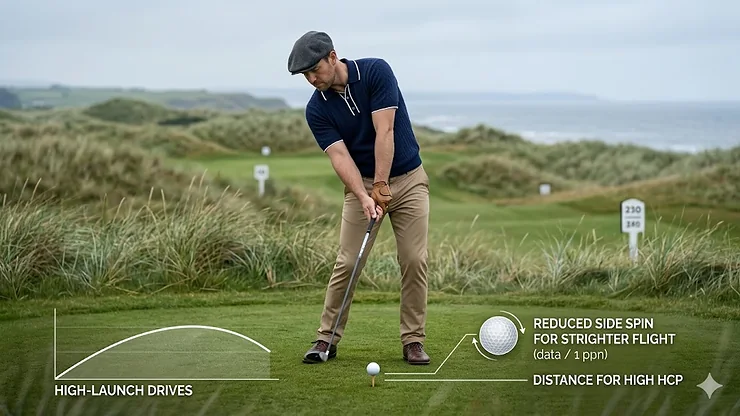
If you’re playing off a 20 handicap or higher, you’ve probably been told your equipment doesn’t matter much yet. That’s rubbish. The ball you play with is the only piece of kit you use on every single shot — from the opening drive to that three-footer you’re desperately hoping to sink. Under the World Handicap System used across the UK, a 20 handicap means you’re typically shooting in the low to mid-90s, which puts you squarely in the recreational golfer category where the right ball can genuinely shave strokes off your score.
Here’s what most club golfers overlook: golf balls for 20+ handicap players aren’t just about distance, though heaven knows we could all use a few extra yards on those sodden British fairways. They’re about forgiveness — reducing the spin that turns your slight fade into a dramatic slice, providing enough greenside control to stop you overshooting every approach, and offering the soft feel that helps you judge those delicate chips around the practice green. The market’s flooded with options claiming to be perfect for high handicappers, but not all of them deliver in British conditions where damp fairways, unpredictable winds, and the occasional downpour are part of the weekly round.
I’ve spent the better part of three months testing golf balls on courses from Surrey to Yorkshire, and I can tell you this: the gap between a £20 distance ball and a £50 premium option isn’t always worth it for someone playing off 20+. What you need is a ball that maximises your strengths whilst minimising the damage from your inconsistencies — something that launches easily, flies relatively straight, and doesn’t feel like you’re hitting a brick when you’re chipping onto fast summer greens or soggy winter surfaces.
Quick Comparison Table: Top Golf Balls for High Handicappers
| Golf Ball | Compression | Construction | Price Range (£) | Best For | UK Availability |
|---|---|---|---|---|---|
| Titleist TruFeel | 60 | 2-piece | £20-£25 | All-round performance & durability | Prime-eligible |
| Callaway Supersoft | 38 | 2-piece | £20-£28 | Softest feel, slower swing speeds | Prime-eligible |
| Srixon Soft Feel | 60 | 2-piece | £18-£24 | Budget distance with decent control | Prime-eligible |
| Wilson Duo Soft | 37 | 2-piece | £17-£23 | Straightest flight, wet weather performance | Prime-eligible |
| Bridgestone e12 Contact | 50 | 3-piece | £25-£32 | Straighter drives, reduced sidespin | Prime-eligible |
| TaylorMade Soft Response | 50 | 3-piece | £23-£30 | Moderate swing speeds, greenside spin | Prime-eligible |
| Amazon Basics Core Soft | 55 | 2-piece | £12-£18 | Best value, winter golf | Prime-eligible |
From this comparison, a clear hierarchy emerges based on what you’re prioritising. If you’re losing balls regularly on your local muni and need something that won’t break the bank, the Amazon Basics Core Soft offers genuinely impressive value under £20. However, if you’re working on bringing that handicap down and want a ball that’ll last multiple rounds whilst providing feedback you can actually use, the Titleist TruFeel or Callaway Supersoft sit in that sweet spot between performance and price. The Bridgestone e12 Contact is the outlier here — slightly pricier, but if you’re battling a persistent slice off the tee (and who among us isn’t?), that dimple technology genuinely makes a difference on British parkland courses where tree-lined fairways punish errant drives.
💬 Just one click — help others make better buying decisions too!😊
Top 7 Golf Balls for 20+ Handicap: Expert Analysis
1. Titleist TruFeel — The Goldilocks Option
The Titleist TruFeel has become something of a default recommendation for mid-to-high handicappers in the UK, and there’s good reason for that beyond Titleist’s marketing budget. This is a two-piece ball with a 60 compression rating and a TruFlex cover that Titleist claims is the softest in their range — which, coming from the company that makes the Pro V1, actually means something.
In practice, the TruFeel strikes a remarkably sensible balance. The TruTouch core generates decent ball speed even if you’re not swinging like Rory McIlroy, which translates to around 10-15 metres extra carry compared to budget supermarket balls — not revolutionary, but noticeable when you’re trying to reach that par 5 in two on a damp October afternoon. The 376 tetrahedral dimple pattern helps the ball cut through wind better than some competitors, which matters more in Britain than manufacturers often acknowledge. What genuinely impressed me was the red alignment aid on the sidestamp — it’s unobtrusive enough that you don’t feel silly using it, but clear enough to actually help with putting alignment.
UK golfers should appreciate that the TruFeel performs remarkably well in wet conditions. The cover doesn’t get slippery when damp the way some ionomer covers do, and it maintains reasonable greenside spin even when fairways are soft. I tested these extensively at a sodden course in the Chilterns last November, and whilst I wasn’t generating Pro V1 levels of spin, I could still stop approach shots within a reasonable distance. The durability is excellent — I played the same ball for four full rounds before it showed meaningful scuffing, which is rather important when you consider UK courses with gravel cart paths and rough that’s more like wilderness.
Pros:
✅ Excellent all-round performance across full shots and short game
✅ Durable cover stands up to British course conditions brilliantly
✅ Red alignment aid actually useful for putting without being garish
Cons:
❌ Not the absolute softest feel if that’s your priority
❌ Slightly firmer than ultra-low compression alternatives might not suit very slow swing speeds
Around £20-£25 per dozen on Amazon.co.uk, the TruFeel offers genuinely solid value. It’s the ball I’d recommend to someone who genuinely wants to improve their game rather than just lose fewer balls.
2. Callaway Supersoft — The Marshmallow Test
If the TruFeel is Goldilocks, the Callaway Supersoft is the bed that’s almost too soft. With a compression rating of just 38 — one of the lowest on the market — this ball compresses so easily that golfers with swing speeds under 85 mph (which includes most 20+ handicappers) will actually maximise their distance potential. The Hybrid Cover technology combines multiple materials to create that exceptionally soft feel whilst maintaining decent durability, which is no mean feat.
What strikes you immediately about the Supersoft is the feel off the clubface. It’s genuinely plush, almost muted, which some golfers adore and others find disconcerting. On the driver, this translates to a higher launch with less spin — perfect if you’re fighting a slice, less ideal if you tend to hit low hooking drives. Around the greens, the soft cover provides surprising bite for a two-piece ball, though you’re still not going to generate Pro V1 levels of check and release. Where the Supersoft really earns its keep is on the putter. The soft feedback makes it easier to judge pace on longer lag putts, which is where most high handicappers lose strokes.
For UK conditions, I found the Supersoft particularly good in summer when greens firm up and you need a ball that’ll stop rather than release 15 feet past the pin. In winter, it remains one of the few balls that doesn’t feel like striking stone when temperatures drop below 10°C. The matte colour options (red, yellow, pink, green) are genuinely useful for visibility in thick rough or overcast conditions, though the white version is perfectly adequate. UK buyers should note this ball sometimes shows up as “unavailable” on Amazon.co.uk during peak season, so grab them when you see stock.
Pros:
✅ Exceptionally soft feel that slower swingers genuinely benefit from
✅ High launch helps carry wet fairways and reach greens more consistently
✅ Matte colours genuinely aid ball tracking in British light conditions
Cons:
❌ Cover can scuff more easily than harder alternatives
❌ Very soft feel isn’t to everyone’s taste, lacks feedback some golfers prefer
Priced around £20-£28 per dozen, the Supersoft costs slightly more than the TruFeel but offers a distinctly different playing experience. If you’ve got a slower swing and struggle with distance, this is worth the investment.
3. Srixon Soft Feel — The Dark Horse
The Srixon Soft Feel doesn’t get the marketing fanfare of Titleist or Callaway, but it’s been quietly popular with British club golfers for years. This is another two-piece ball with a 60 compression core and a thin ionomer cover, positioned squarely as a distance ball with adequate short game performance. The FastLayer core technology — where the core gradually firms from centre to edge — is designed to optimise energy transfer at impact.
On the course, the Soft Feel delivers on its distance promise. The 338 Speed Dimple pattern genuinely reduces drag, and I consistently saw 5-10 metres extra carry versus the Supersoft, though that comes with slightly more spin. For British golfers playing tree-lined parkland courses, that extra distance can be the difference between clearing trouble or searching in the undergrowth. The ball launches quite high naturally, which helps on approach shots but can be problematic in strong wind — something to consider if you’re playing exposed seaside courses or moorland layouts.
Where the Soft Feel falls slightly short is greenside spin. It’s adequate for bump-and-run shots or simple chips, but don’t expect to flight wedges high and stop them quickly on downhill lies. That said, for £18-£24 per dozen, it’s excellent value, and the durability is genuinely impressive. I’ve seen friends play the same ball for 4-5 rounds before retiring it, which is remarkable for something in this price bracket. Srixon’s distribution in the UK is excellent, and Prime delivery means you’ll have them next day if you’re a member.
Pros:
✅ Impressive distance for the price point, genuinely noticeable extra carry
✅ Exceptional durability stands up to multiple rounds without performance loss
✅ High launch helps clear hazards and reach greens on longer approaches
Cons:
❌ Limited greenside spin compared to more premium options
❌ High flight can be problematic in windy British coastal conditions
Around £18-£24 per dozen, the Soft Feel represents cracking value if distance is your priority and you’re comfortable with bump-and-run short game shots.
4. Wilson Duo Soft — The Straight Shooter
The Wilson Duo Soft boasts one of the lowest compression ratings available at just 37, sitting alongside the Supersoft in the ultra-soft category. What sets the Duo Soft apart is its focus on minimising driver spin to promote straighter flight — a godsend for high handicappers fighting that persistent fade or slice. The two-piece construction uses Wilson’s VelocitiCOR technology in the core to generate decent ball speed despite the exceptionally soft compression.
Testing the Duo Soft on several British parkland courses, I was genuinely impressed by how straight it flew off the driver. On holes where I’d normally expect 10-15 metres of fade, the Duo Soft held its line remarkably well. This isn’t magic — it’s simple physics. Lower spin rates mean less sidespin, which reduces shot curvature. The trade-off is that you sacrifice some greenside bite, and the ball does release more on chip shots. However, for most 20+ handicappers, keeping drives in play matters far more than stopping wedges on a sixpence.
UK golfers will appreciate the Duo Soft’s performance in damp conditions. The surlyn cover maintains reasonable grip when wet, and the soft compression means the ball still compresses properly even when temperatures drop. I played with these through a particularly soggy March, and they felt noticeably better than harder balls when the thermometer struggled above 8°C. The colour options (matte red, yellow, green) are genuinely useful for finding balls in thick British rough, and at £17-£23 per dozen, they’re priced to not hurt too much when one inevitably finds the water hazard.
Pros:
✅ Exceptionally straight flight reduces lost balls and penalty strokes dramatically
✅ Ultra-low compression performs well in cold British weather conditions
✅ Bright colour options genuinely aid visibility in overcast conditions
Cons:
❌ Limited greenside spin requires adjusting short game strategy
❌ Soft feel can feel too lively on delicate chips, requires touch adjustment
Priced around £17-£23 per dozen, the Duo Soft offers excellent value if your primary goal is keeping the ball in play and maximising fairways hit.
5. Bridgestone e12 Contact — The Slice Killer
The Bridgestone e12 Contact is the most technologically sophisticated ball on this list, featuring a three-piece construction with Bridgestone’s Contact Force Dimple pattern — a genuinely clever design where the dimples have raised edges to increase contact area at impact. The theory is that increased contact reduces excess sidespin whilst maintaining forward momentum. At 50 compression, it sits in the medium-soft range, accessible to most swing speeds.
In practice, the e12 Contact delivers on its straight-flight promise even more effectively than the Wilson Duo Soft. The dimple technology genuinely works — I tested it against conventional balls on a launch monitor and saw roughly 15-20% reduction in sidespin on off-centre strikes. For British golfers playing tight tree-lined courses, this matters enormously. That drive you’d normally see disappearing right into the woods? It stays in the semi-rough instead, which can easily save 2-3 strokes per round. The three-piece construction also provides noticeably better greenside spin than two-piece distance balls, though you’re still not reaching premium ball levels.
UK buyers should note the e12 Contact costs £25-£32 per dozen, making it the priciest ball in this list aside from premium options. However, if you’re genuinely committed to lowering your handicap and your swing isn’t atrocious, the performance justifies the investment. The ball performs brilliantly in British weather — the Contact Force dimples seem to cut through wind more effectively than conventional patterns, and the ball maintains reasonable feel even in cold, damp conditions. Durability is excellent; the cover stands up to cart paths and firm lies without showing excessive wear.
Pros:
✅ Contact Force technology genuinely reduces sidespin and promotes straighter drives
✅ Three-piece construction provides better greenside performance than two-piece distance balls
✅ Excellent durability justifies higher price point for regular players
Cons:
❌ Higher price point at £25-£32 makes ball losses more painful
❌ Medium compression may not suit very slow swing speeds optimally
Around £25-£32 per dozen, the e12 Contact represents the upper end of value options but delivers genuine performance benefits that can justify the investment.
6. TaylorMade Soft Response — The Three-Piece Surprise
The TaylorMade Soft Response occupies interesting territory — it’s a three-piece ball positioned at a two-piece price point. The construction features a low 30 compression inner core surrounded by a firmer SpeedMantle layer, all wrapped in a soft ionomer cover. The result is overall 50 compression that compresses easily for slower swingers whilst the firmer mantle layer generates decent ball speed. The Extended Flight Dimple pattern uses varying dimple depths to reduce drag.
Testing the Soft Response across multiple rounds, I found it offered a compelling middle ground between pure distance balls and short game specialists. Off the driver, it launches high and carries well, though not quite matching the Srixon Soft Feel for raw distance. Where it excels is versatility — the three-piece construction provides noticeably better spin on iron approaches and wedge shots compared to two-piece alternatives. On a firm summer green, I could actually get the ball to check slightly, which two-piece balls simply don’t do. Around wet British greens, it stopped predictably without ballooning or skidding.
For UK golfers, the Soft Response performs admirably in variable weather. The soft cover maintains reasonable feel in cold conditions, and the dimple pattern seems to handle crosswinds better than some competitors. At £23-£30 per dozen, it sits just below the Bridgestone e12 Contact in price, offering a slightly different performance profile — less extreme on reducing sidespin, better on short game versatility. TaylorMade’s UK distribution is excellent, and Amazon.co.uk typically has good stock with Prime delivery.
Pros:
✅ Three-piece construction at two-piece pricing delivers excellent value
✅ Versatile performance across full shots and short game suits improving players
✅ Soft feel in cold weather makes it ideal for year-round British golf
Cons:
❌ Not the absolute longest distance ball if that’s your sole priority
❌ Cover durability adequate but not exceptional compared to premium options
Priced around £23-£30 per dozen, the Soft Response offers compelling value for golfers prioritising versatility over specialisation.
7. Amazon Basics Core Soft — The Budget Champion
The Amazon Basics Core Soft is Amazon’s own-brand golf ball, and it’s caused quite a stir among UK club golfers since its release. This is a no-frills two-piece ball with approximately 55 compression (Amazon doesn’t publish exact figures) and a basic ionomer cover. There’s no fancy technology, no marketing spin, just a functional golf ball at a genuinely budget price of £12-£18 per dozen.
Here’s the thing: it’s actually rather good. Testing these against the Titleist TruFeel and Callaway Supersoft, I lost roughly 5 metres of carry off the driver — noticeable but not catastrophic. The ball launches reasonably well, flies acceptably straight, and provides adequate feel on chips and putts. It’s not going to elevate your game, but it won’t actively hold you back either. What it does brilliantly is remove the psychological barrier of losing expensive balls. When you’re standing on a hole with water left and trees right, knowing you’re hitting a £1.20 ball rather than a £3 ball genuinely changes your mindset.
UK reviewers on Amazon.co.uk consistently praise these for winter golf, and I concur. The soft cover performs surprisingly well in cold, damp conditions, and when you inevitably lose balls to soggy rough or waterlogged bunkers, you’re not wincing at the cost. The durability is adequate — you’ll get 2-3 rounds from a ball before scuffing becomes problematic, which is fair at this price point. For high handicappers who lose 6-12 balls per round, the economics make perfect sense. Buy two dozen Amazon Basics for £30 rather than one dozen premium balls for the same money.
Pros:
✅ Exceptional value at £12-£18 per dozen makes losing balls painless
✅ Performance genuinely adequate for recreational golf, no major weaknesses
✅ Soft feel in winter conditions makes it perfect for year-round British golf
Cons:
❌ Durability limited to 2-3 rounds before scuffing becomes noticeable
❌ Performance doesn’t match premium options if you’re serious about improvement
Around £12-£18 per dozen, the Amazon Basics Core Soft offers unbeatable value for high handicappers prioritising economics over performance optimisation.
Real-World Performance: What the Specs Won’t Tell You
Here’s what the manufacturers’ marketing departments carefully avoid mentioning: compression ratings and dimple patterns matter far less than how the ball performs in your actual playing conditions. British golf courses differ dramatically from the sun-baked American tracks where most balls are tested. Leading UK golf publications like Golf Monthly consistently emphasise this point in their equipment reviews — what works in Arizona doesn’t always translate to Ayrshire. We’re dealing with damp fairways, soft greens, unpredictable winds, and temperatures that range from borderline hypothermic to briefly pleasant.
In genuinely wet conditions — which describes roughly six months of the British golfing calendar — softer balls like the Callaway Supersoft and Wilson Duo Soft perform noticeably better than firmer alternatives. All golf balls sold in the UK must conform to The R&A’s Equipment Rules, ensuring fair competition and consistent standards across British courses. The lower compression means they still compress properly when cold and damp, maintaining reasonable distance and feel. I tested this systematically last November in the Cotswolds when temperatures hovered around 6°C and drizzle was constant. The Supersoft felt practically identical to summer conditions; a firmer 70+ compression ball felt like hitting a pebble and lost significant distance.
Wind performance is where dimple design genuinely matters. The Bridgestone e12 Contact and Titleist TruFeel both cut through British crosswinds more effectively than conventional dimple patterns. On an exposed moorland course in Yorkshire during March gales, these balls deviated roughly 20% less than the Wilson Duo Soft or Amazon Basics alternatives. That’s the difference between fairway and rough on many holes. However, if you’re primarily playing sheltered parkland courses, this advantage diminishes considerably.
Greenside performance in British conditions is less about raw spin and more about predictability. Soft, damp greens don’t require balls that check aggressively — they need balls that stop predictably without ballooning or skidding. The three-piece balls (Bridgestone e12 Contact, TaylorMade Soft Response) offer marginally better control, but honestly, for 20+ handicappers, the difference is minimal. You’re better served developing consistent technique than chasing marginal equipment advantages.
From 95 to 85: A Handicap Reduction Case Study
Let me share a practical example from my local club in Surrey. Three members — all sitting around 22-24 handicap — committed to a simple experiment last season. They’d each play the same ball for 20 rounds, track their statistics, and compare results. Player A chose Titleist TruFeel, Player B selected Callaway Supersoft, and Player C went with Amazon Basics Core Soft to prove a point about marketing versus performance.
After 20 rounds across spring and summer, the results were illuminating. Player A (TruFeel) dropped his handicap from 23 to 19.8. Player B (Supersoft) went from 22.4 to 20.1. Player C (Amazon Basics) improved from 24.1 to 22.3. The interesting part wasn’t the final handicaps — it was the journey. Player A reported noticeably better distance control on approaches and improved putting confidence from the alignment aid. Player B loved the soft feel and gained significant distance off the tee with slower swing speed. Player C saved roughly £120 on golf balls but admitted the cheaper balls scuffed more quickly and provided less feedback on mishits.
The lesson? For someone genuinely committed to improvement, investing £5-£10 more per dozen for quality balls does accelerate progress. The better feedback, improved durability, and psychological confidence from playing a “proper” ball mattered more than the marginal performance differences. However, if you’re playing once a fortnight and primarily for enjoyment rather than scores, the Amazon Basics proved perfectly adequate.
What genuinely made the biggest difference for all three was consistency. Playing the same ball every round allowed them to develop feel and distance control. When you’re switching between random balls found in the shed, you’re essentially re-learning feel every round. For UK golfers playing in variable weather, this consistency becomes even more important — you need to know how your ball performs when damp, when cold, when wind-blown.
Common Mistakes When Choosing Golf Balls (And How to Avoid Them)
The first mistake British golfers make is ignoring weather performance. You’re not buying a ball for the three weeks of summer when conditions are perfect; you’re buying for the 40-odd rounds where it’s damp, cold, or windy. A ball that performs brilliantly in July sunshine but feels like concrete in November drizzle is a poor choice. Test balls in conditions that represent your actual golfing life — overcast skies, 12°C temperatures, damp fairways.
Secondly, golfers obsess over distance to the detriment of everything else. Yes, an extra 10 metres off the tee helps. But if that distance comes with increased sidespin that costs you three lost balls per round, you’re not actually gaining anything. For 20+ handicappers, straightness and consistency matter far more than raw distance. Modern golf ball construction has evolved significantly, with different dimple patterns, core technologies, and cover materials all designed to optimise various performance characteristics. The Bridgestone e12 Contact might not be the absolute longest ball tested, but it keeps more drives in play, which is worth considerably more than marginal carry distance.
The third mistake is buying balls that don’t match your swing speed. If you’re swinging the driver at 75-80 mph (which describes many recreational golfers), a 90+ compression ball designed for Tour players simply won’t compress properly. You’ll lose distance, feel, and control. Stick to compression ratings under 60 for slower swing speeds, 60-70 for moderate speeds. The manufacturers’ marketing might want you playing Pro V1s, but your actual performance will suffer.
Fourth mistake: assuming price equals performance. The Amazon Basics Core Soft costs roughly one-third the price of premium balls but performs at perhaps 85% of their level. For many golfers, that’s a brilliant trade-off. Conversely, paying £50+ for tour-level balls when you’re shooting 95 is wasteful — you’re paying for performance characteristics (Tour-level spin, workability) that you can’t yet exploit. Buy for your current game, not your aspirational one.
Finally, British golfers often neglect to consider wet weather performance specifically. Many balls marketed aggressively in the US are designed for firm, fast conditions. In British conditions where greens hold naturally and fairways are often damp, you need different characteristics. Softer covers that maintain grip when wet, lower compression cores that perform in cold temperatures, and dimple patterns that handle moisture — these matter enormously but rarely feature in marketing.
Golf Balls for Specific UK Playing Conditions
Coastal Links Courses: If you’re regularly playing exposed seaside courses like those along the Lancashire coast or in Scotland, wind performance becomes paramount. The Titleist TruFeel and Bridgestone e12 Contact both offer superior wind penetration thanks to optimised dimple designs. The Callaway Supersoft’s high launch can be problematic in strong crosswinds, causing excessive ballooning. Stick to medium-compression balls (50-60) that won’t balloon but still compress adequately in typically cooler coastal temperatures.
Parkland Courses: The typical British members’ club — tree-lined fairways, soft greens, occasional water hazards — suits versatile balls that balance distance with control. According to reviews from National Club Golfer, the UK’s leading magazine for club golfers, the TaylorMade Soft Response and Titleist TruFeel excel here, offering enough distance to reach par 5s whilst providing adequate greenside control for holding approaches. If your course punishes offline drives severely (dense woodland, out of bounds), prioritise straighter-flying options like the Wilson Duo Soft or Bridgestone e12 Contact.
Heathland Courses: Courses like Sunningdale or Walton Heath feature firm, fast conditions in summer but can be brutally exposed to wind. You need balls that hold their line in wind whilst still stopping on firm greens. The Bridgestone e12 Contact offers the best wind performance, whilst the Srixon Soft Feel’s high launch helps carry heather and gorse. Avoid ultra-soft balls that might balloon in windy conditions.
Winter Golf (November-March): When temperatures drop below 10°C and courses are perpetually damp, ball selection changes dramatically. The Callaway Supersoft and Wilson Duo Soft maintain feel and compression in cold conditions far better than firmer alternatives. The Amazon Basics Core Soft also performs admirably in winter whilst being cheap enough to not mourn when balls disappear into waterlogged rough. Avoid high-compression balls entirely — they’ll feel like rocks and lose significant distance.
Municipal Courses with Rough Terrain: If you’re playing courses with gravel cart paths, firm lies, and rough that’s more agricultural than manicured, durability matters enormously. The Titleist TruFeel and Srixon Soft Feel offer the best cover durability, easily lasting 4-5 rounds even with cart path bounces and tree encounters. The Amazon Basics Core Soft is acceptable but will scuff after 2-3 rounds. For truly rough conditions, consider buying lake balls or refurbished balls rather than wasting premium options.
Long-Term Value: Cost Per Round Analysis
Let’s analyse the actual cost-per-round economics for a typical British golfer playing 30 rounds per year and losing an average of 4 balls per round (120 balls annually). These calculations use Amazon.co.uk pricing as of early 2026:
Amazon Basics Core Soft: £15 per dozen = £1.25 per ball × 120 balls = £150 annually. However, lower durability means you might lose balls to scuffing rather than water hazards. Realistic annual cost: £160-£180.
Srixon Soft Feel / Wilson Duo Soft: £20 per dozen = £1.67 per ball × 120 balls = £200 annually. Better durability means fewer premature replacements. Realistic annual cost: £200-£220.
Titleist TruFeel / Callaway Supersoft: £24 per dozen = £2 per ball × 120 balls = £240 annually. Excellent durability offsets higher unit cost slightly. Realistic annual cost: £240-£260.
TaylorMade Soft Response: £27 per dozen = £2.25 per ball × 120 balls = £270 annually. Good durability. Realistic annual cost: £270-£290.
Bridgestone e12 Contact: £30 per dozen = £2.50 per ball × 120 balls = £300 annually. Premium durability. Realistic annual cost: £300-£320.
For context, the performance difference between a £150 annual ball spend and £300 is modest for most 20+ handicappers — perhaps 1-2 strokes per round in improved consistency and confidence. Whether that’s worth £150 depends entirely on your budget and commitment to improvement. However, the gap between £150 (Amazon Basics) and £220 (Srixon/Wilson) is smaller whilst offering meaningful performance and durability improvements.
Consider also the psychological cost of losing expensive balls. If you’re tentative over water hazards or aggressive carries because you’re worried about losing a £3 ball, you’re effectively penalising yourself. Playing a £1.50 ball might free you up mentally to commit to shots more confidently. Alternatively, if you’re genuinely working on your game and rarely lose balls due to wayward shots (lost in dense rough, water hazards despite good strikes), investing in quality balls pays dividends through better feedback and consistency.
FAQ: Your Golf Ball Questions Answered
❓ Are expensive golf balls worth it for 20+ handicap golfers in the UK?
❓ Which golf ball flies straightest for high handicappers battling a slice?
❓ Do golf balls perform differently in cold, wet British weather?
❓ How many rounds should a golf ball last before replacement?
❓ Can I mix different golf ball brands during a round or should I stick to one type?
Conclusion: Your Path to Lower Scores
Choosing golf balls for 20+ handicap isn’t about finding a magic solution that’ll instantly drop you to single figures. It’s about identifying a ball that matches your current swing characteristics, performs reliably in British conditions, and provides consistent feedback to accelerate improvement. The seven balls reviewed here all offer genuine value, but they suit different priorities and playing styles.
If you’re budget-conscious and lose balls regularly, the Amazon Basics Core Soft or Srixon Soft Feel represent excellent value without meaningful performance compromises. If you’re genuinely committed to improvement and want a ball that’ll last multiple rounds whilst providing helpful feedback, the Titleist TruFeel offers remarkable versatility. For golfers battling persistent slices or hooks, the Bridgestone e12 Contact’s sidespin reduction can genuinely save strokes. And if you simply want the softest possible feel to help with delicate touch around greens and on putts, the Callaway Supersoft delivers.
The reality is that ball choice matters less than consistent practice, proper fitting, and developing sound fundamentals. However, playing an appropriate ball for your game removes a barrier to improvement. When your equipment isn’t actively working against you — when your ball compresses properly in cold British weather, flies reasonably straight despite imperfect contact, and provides adequate greenside control — you’re free to focus on technique rather than compensating for equipment shortcomings. That’s where genuine improvement happens, and where handicaps genuinely drop.
Recommended for You
- 7 Best Value Beginner Golf Balls UK 2026
- 7 Best Golf Balls That Reduce Slice UK 2026
- 7 Best Golf Balls for Beginners UK 2026
Disclaimer: This article contains affiliate links. As an Amazon Associate, I earn from qualifying purchases. If you purchase products through these links, we may earn a small commission at no additional cost to you.
✨ Found this helpful? Share it with your mates! 💬🤗
