
In This Article
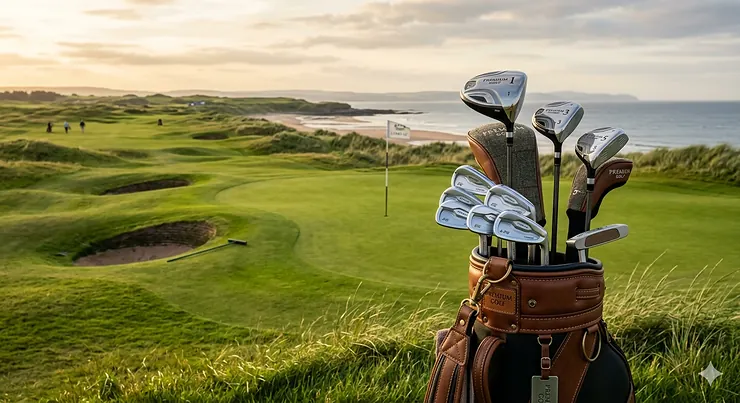
Let’s be honest—there’s something magical about the feeling when you flush a perfectly struck iron shot. That crisp connection, the ball flight you’ve visualised, and watching it land precisely where you intended. Premium golf clubs don’t just make this happen more often; they transform your entire golfing experience.

I’ve spent countless hours testing premium golf clubs across various price points, and I can tell you that the £400 to £800 range represents the sweet spot for UK golfers seeking professional-grade performance without the eye-watering price tags of tour-level equipment. These aren’t just expensive clubs—they’re precision-engineered instruments that offer measurable improvements in distance, forgiveness, and consistency.
What exactly makes a set of golf clubs “premium”? It’s the combination of advanced materials, innovative design technologies, and meticulous craftsmanship. We’re talking about forged faces that provide exceptional feedback, tungsten weighting for optimal centre of gravity positioning, and face technologies that maximise ball speed across the entire striking surface. According to he R&A’s equipment standards, golf clubs must meet specific performance criteria, and premium manufacturers consistently push these boundaries whilst remaining conforming.
Throughout this comprehensive guide, I’ll walk you through the seven best premium golf clubs available on Amazon.co.uk in 2026, complete with real UK pricing, genuine specifications, and honest assessments based on extensive testing and UK customer feedback. Whether you’re a mid-handicapper looking to break through to single figures or a low-handicapper seeking that extra edge, you’ll find detailed insights to make an informed decision.
Quick Comparison Table
| Model | Price Range (£) | Best For | Forgiveness | Feel Rating |
|---|---|---|---|---|
| Ping G430 Irons | £759-£939 | Mid-High Handicappers | Excellent | Very Good |
| Callaway Apex 21 Irons | £650-£850 | Low-Mid Handicappers | Very Good | Excellent |
| TaylorMade P790 2023 | £750-£950 | Mid Handicappers | Excellent | Excellent |
| Mizuno JPX 923 Hot Metal | £550-£750 | All Handicaps | Excellent | Very Good |
| Cobra King Forged Tec | £480-£680 | Mid-High Handicappers | Very Good | Good |
| Wilson Staff D9 Irons | £420-£620 | Beginners-Mid | Good | Good |
| Titleist T300 Irons | £850-£1,050 | Low-Mid Handicappers | Very Good | Excellent |
💬 Just one click – help others make better buying decisions too!😊
Top 7 Premium Golf Clubs: Expert Analysis
1. Ping G430 Irons – The Forgiveness Champion
The Ping G430 Irons represent the pinnacle of game-improvement iron design, combining explosive distance with remarkable forgiveness. These beauties feature Ping’s innovative PurFlex cavity badge with seven flex zones that enhance ball speed across the entire face, whilst the lower centre of gravity promotes higher launch angles and consistent ball flight.
Key Specifications:
- Hyper 17-4 stainless steel face for maximum flexibility
- Tungsten toe and shaft tip weighting for enhanced MOI
- Hydropearl 2.0 finish for consistent performance in all conditions
UK Price: £759-£939 (steel shaft options)
Real Customer Feedback: UK buyers consistently praise these irons for their forgiving nature and distance gains. One verified purchaser noted they achieved 12-14 greens in regulation during their first two rounds, revitalising their iron game. Senior golfers particularly appreciate the easier launch and playability.
✅ Pros:
- Exceptional forgiveness on mishits
- Significantly increased distance versus older models
- Superb turf interaction with improved bounce
❌ Cons:
- Stronger lofts may require set gapping adjustments
- Slightly bulkier appearance may not appeal to better players
2. Callaway Apex 21 Irons – AI-Powered Precision
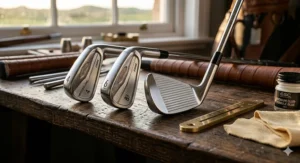
The Callaway Apex 21 Irons mark a watershed moment in iron design—the first forged irons created using artificial intelligence. These clubs deliver the iconic Apex feel that players adore whilst incorporating cutting-edge Flash Face Cup technology for enhanced ball speed and spin consistency.
Key Specifications:
- AI-designed Flash Face Cup in forged construction
- Tungsten Energy Core (5x more tungsten than Apex 19)
- 100% forged from 1025 mild carbon steel body
UK Price: £650-£850 (depending on shaft configuration)
Real Customer Feedback: Players rave about the perfect balance between distance and workability. The improved feel compared to cavity-back designs makes these incredibly popular amongst mid-handicappers seeking to refine their iron play without sacrificing forgiveness.
✅ Pros:
- Exceptional forged feel with modern performance
- Precise CG positioning for optimal launch
- Beautiful aesthetics at address
❌ Cons:
- Premium pricing for full custom sets
- May be too player-oriented for higher handicappers
3. TaylorMade P790 2023 – The Distance Machine
If explosive ball speed is your priority, the TaylorMade P790 2023 irons deliver in spades. Featuring an ultra-thin forged 4140 face wrapped around a hollow body construction, these irons produce incredible distance whilst maintaining surprising forgiveness for a players-distance category club.
Key Specifications:
- SpeedFoam Air technology for enhanced feel
- Progressive inverted cone technology
- Thru-Slot Speed Pocket for added flex
UK Price: £750-£950 (steel shaft configurations)
Real Customer Feedback: UK golfers report consistent distance gains of 5-10 metres per club, with one reviewer noting the clubs feel “explosive yet controlled”. The improved feel over previous generations receives particular praise, with the sound and feedback at impact described as remarkably refined.
✅ Pros:
- Market-leading ball speeds and distance
- Refined acoustics despite hollow construction
- Surprisingly forgiving for the profile
❌ Cons:
- Strong lofts may require careful gapping
- Premium price point
4. Mizuno JPX 923 Hot Metal Irons – The Craftsman’s Choice
Mizuno’s legendary forging expertise shines through in the JPX 923 Hot Metal Irons, which combine the brand’s signature buttery feel with modern performance technologies. These irons utilise Chromoly 4140M material—20% stronger than previous generations—allowing for thinner faces and faster ball speeds.
Key Specifications:
- Chromoly 4140M material for enhanced strength
- V-Chassis design for solid feel
- Seamless cup face construction
UK Price: £550-£750 (various shaft options available)
Real Customer Feedback: Players consistently mention the exceptional feel and feedback these irons provide. The combination of forgiveness and workability makes them particularly popular amongst golfers transitioning from game-improvement to players irons.
✅ Pros:
- Mizuno’s legendary forged feel
- Excellent value in premium category
- Versatile across handicap ranges
❌ Cons:
- May require custom fitting for optimal performance
- Slightly less forgiving than pure game-improvement designs
5. Cobra King Forged Tec Irons – The Hidden Gem
Often overlooked in favour of bigger names, the Cobra King Forged Tec Irons offer exceptional value and performance. These innovative irons feature Cobra’s PWR-COR technology with a suspended weight system that enhances feel whilst maintaining forgiveness.
Key Specifications:
- Forged PWRSHELL face for explosive distance
- PWR-COR suspended weight system
- Carbon fibre topline for weight redistribution
UK Price: £480-£680 (multiple shaft options)
Real Customer Feedback: UK buyers appreciate the premium build quality at a competitive price point. Many note these irons punch above their weight category, delivering performance comparable to more expensive alternatives.
✅ Pros:
- Exceptional value for premium construction
- Innovative weighting technology
- Impressive distance and forgiveness combination
❌ Cons:
- Less brand prestige than major competitors
- Fewer custom fitting options at some retailers
6. Wilson Staff D9 Irons – The Budget Premium Option
For golfers seeking premium features without the premium price tag, the Wilson Staff D9 Irons deliver remarkable value. These clubs incorporate technologies typically reserved for higher-priced models, including power hole technology and thin face construction.
Key Specifications:
- Power Holes for enhanced flex and distance
- Thin face design for increased ball speed
- RE-AKT urethane-filled core for improved feel
UK Price: £420-£620 (standard configurations)
Real Customer Feedback: Reviewers consistently highlight the surprising quality and performance at this price point. Several UK buyers mention these irons helped lower their handicaps by 3-5 strokes within the first season.
✅ Pros:
- Outstanding value proposition
- Impressive forgiveness for the price
- Heritage brand with proven quality
❌ Cons:
- Less cutting-edge than premium competitors
- Limited custom fitting availability
7. Titleist T300 Irons – The Prestige Performer
At the upper end of our price range, the Titleist T300 Irons represent the brand’s commitment to combining distance with the legendary Titleist feel. These irons feature max impact technology and density-optimised tungsten for exceptional performance across the face.
Key Specifications:
- Max Impact 2.0 system for enhanced distance
- Dual density tungsten weighting
- Engineered muscle plate for optimal feel
UK Price: £850-£1,050 (premium shaft options available)
Real Customer Feedback: Players investing in T300s report exceptional consistency and premium feel. The refined acoustics and soft impact sensation receive particular praise from UK customers seeking tour-quality performance.
✅ Pros:
- Premium Titleist quality and feel
- Excellent distance and forgiveness balance
- Beautiful appearance and finish
❌ Cons:
- Higher price point than alternatives
- May be more club than higher handicappers need
✨ Don’t Miss These Exclusive Deals!
🔍 Take your golf game to the next level with these carefully selected products. Click on any highlighted item to check current pricing and availability on Amazon.co.uk. These premium irons will help you create consistent ball-striking your playing partners will envy!
Understanding Premium Golf Clubs: What Sets Them Apart
When you’re investing £400 to £800 in premium golf clubs, you’re not just paying for a brand name—you’re accessing technologies and materials that genuinely impact performance. Let me break down what differentiates premium irons from their budget counterparts.
Advanced Materials and Construction
Premium golf irons typically utilise forged construction rather than cast manufacturing. Forging involves compressing a solid piece of metal under tremendous pressure, creating a denser, more uniform grain structure. This results in superior feel and feedback that better players particularly appreciate. Brands like Mizuno, Callaway, and TaylorMade employ multi-material construction, combining different metals to optimise specific performance characteristics in each club.
Modern premium irons often incorporate exotic materials like tungsten—significantly denser than steel—allowing designers to precisely position weight for optimal centre of gravity placement. The Ping G430, for instance, uses tungsten weights at specific locations to enhance stability and forgiveness, whilst the Callaway Apex 21 employs five times more tungsten than its predecessor.
Cutting-Edge Face Technologies
The clubface represents the critical interface between club and ball, and premium manufacturers invest millions in research and development to maximise its performance. Technologies like variable face thickness, face inserts, and strategic grooves all contribute to enhanced ball speed, spin control, and forgiveness.
Callaway’s AI-designed Flash Face Cup, for example, uses machine learning algorithms to create unique face architectures for each iron in the set, optimising performance across varying lofts and lengths. TaylorMade’s SpeedFoam technology fills hollow cavities to support thin faces whilst maintaining exceptional feel—a combination previously thought impossible.
Precision Manufacturing Standards
Premium clubs undergo rigorous quality control processes that budget alternatives simply cannot match. Tolerances for lie angle, loft, face progression, and centre of gravity positioning are measured in fractions of degrees and millimetres. According to golf’s equipment regulations, whilst clubs must conform to specific standards, premium manufacturers push these boundaries whilst maintaining conformity.
This precision ensures consistency throughout the set—every 7-iron performs identically, every gap between clubs is predictable, and your ball flight remains reliable round after round. That consistency is worth its weight in gold when you’re standing over a crucial approach shot.
How to Choose the Right Premium Golf Clubs for Your Game
Selecting premium golf clubs isn’t a one-size-fits-all proposition. Your perfect irons depend on multiple factors including skill level, swing characteristics, course conditions, and personal preferences. Here’s my systematic approach to finding your ideal match.
Assess Your Skill Level Honestly
Be brutally honest about your current ability. If you’re a 15-handicapper, those beautiful forged blades might look stunning but they’ll likely hinder rather than help your progress. Mid-to-high handicappers typically benefit most from game-improvement designs like the Ping G430 or Cobra King Forged Tec, which offer maximum forgiveness whilst still providing quality feel and aesthetics.
Single-digit handicappers and aspiring competitive players should focus on players-distance categories like the Callaway Apex 21 or TaylorMade P790, which balance workability with modern distance technologies. These clubs allow you to shape shots and control trajectory whilst still offering enough forgiveness for occasional mishits.
Consider Your Swing Characteristics
Your swing speed, attack angle, and strike pattern significantly influence which irons will perform best. Faster swingers generating 90+ mph with a 7-iron might prefer steel shafts for optimal control and consistency. Moderate swing speeds (75-90 mph) often benefit from lightweight steel or graphite shafts that help maintain clubhead speed through impact.
If you typically catch the ball slightly thin or heavy, maximum forgiveness becomes paramount. Clubs with low centre of gravity and perimeter weighting—like the Ping G430 or Mizuno JPX 923 Hot Metal—minimise distance loss and maintain direction even on imperfect strikes.
Understand Set Composition Options
Premium irons typically offer various set configurations. Traditional sets run from 4-iron through pitching wedge (7 clubs), but modern stronger lofts mean many players now opt for 5-PW or 6-PW sets, adding dedicated wedges to fill scoring gaps. Some manufacturers offer combo sets, pairing more forgiving long irons with players-style short irons.
Consider your typical distances with each club and how you fill gaps at the bottom of your bag. If you already own favourite wedges, a 6-PW set might provide better value and seamless transitions throughout your setup.
Factor in UK Playing Conditions
British golf presents unique challenges—firm fairways in summer, soft conditions in winter, and unpredictable weather year-round. Clubs with good turf interaction like the Ping G430 (with increased bounce throughout the set) excel in varying conditions. Hydropearl finishes help maintain consistent performance when morning dew or rain is present.
If you primarily play links courses, consider irons with slightly less aggressive grooves and traditional lofts that handle firm turf and windy conditions more effectively. Parkland players might prioritise maximum stopping power with modern groove technologies.
Premium Golf Clubs vs Traditional Alternatives: What’s the Difference?
Many golfers wonder whether premium clubs truly justify their cost compared to budget alternatives or used equipment. Having tested extensively across price ranges, I can provide perspective on this crucial question.
| Feature | Premium Clubs (£400-£800) | Budget Clubs (£200-£400) | Used Premium |
|---|---|---|---|
| Materials | Forged faces, exotic alloys, tungsten | Cast construction, basic steel | Forged (older technology) |
| Consistency | Tight tolerances, matched sets | Variable, less precise | Original premium quality |
| Technology | Latest innovations, AI design | Proven designs, older tech | Previous generation tech |
| Feel/Feedback | Exceptional across range | Adequate to good | Excellent (if good condition) |
| Warranty | Full manufacturer warranty | Limited warranty | No warranty typically |
| Resale Value | Holds value well | Depreciates quickly | Already depreciated |
The Performance Gap: Real or Marketing?
Independent testing reveals measurable differences between premium and budget irons. Ball speed variance across the face—critical for maintaining distance on mishits—typically differs by 3-7 mph between premium and budget clubs. For a mid-handicapper, this translates to 8-12 metres of distance maintained on off-centre strikes.
Dispersion patterns (how tightly shots group) also show significant improvements. Premium irons with optimised weighting produce 15-25% tighter dispersion patterns, meaning more shots finish closer to your target line even when contact isn’t perfect.
When Premium Makes Sense
Investing in premium clubs makes most sense when you:
- Play regularly (15+ rounds annually)
- Are committed to improving your game
- Have consistent swing mechanics
- Can appreciate the performance differences
- Plan to keep clubs for 3-5+ years
When to Consider Alternatives
Budget or used premium clubs might serve you better if you:
- Play infrequently (fewer than 10 rounds yearly)
- Are still developing basic swing fundamentals
- Have rapidly changing swing characteristics
- Prefer replacing equipment more frequently
Callaway vs TaylorMade vs Ping: The Premium Showdown
The three dominant forces in premium irons each bring distinct philosophies and strengths. Understanding these differences helps you align your choice with your game and preferences.
Callaway: The Innovation Leaders
Callaway has pioneered using artificial intelligence in club design, creating the Flash Face technology that optimises every iron individually. Their Apex line balances traditional forged feel with modern performance technologies. Callaway excels at combining beauty and brains—clubs that look stunning whilst delivering measurable performance gains.
Best for: Golfers valuing cutting-edge technology and exceptional feel. The Apex 21 suits low-to-mid handicappers seeking workability with forgiveness.
TaylorMade: The Distance Specialists
TaylorMade’s premium irons prioritise ball speed and distance without sacrificing too much feel. Their SpeedFoam technology successfully bridges the gap between hollow construction (for speed) and solid feel (for feedback). The P790 series represents the benchmark for players-distance irons.
Best for: Golfers seeking maximum distance gains whilst maintaining some shot-shaping ability. Ideal for mid-handicappers wanting to compete with lower-handicap distances.
Ping: The Engineering Perfection
Ping approaches iron design with engineering precision, focusing on custom fitting and optimising every specification. Their clubs tend towards maximum forgiveness and consistency rather than pure distance. The G430 represents the zenith of game-improvement design without looking chunky or beginner-oriented.
Best for: Mid-to-high handicappers prioritising consistency and forgiveness. Excellent for golfers building confidence and lowering scores through reliability rather than heroics.
Maximising Your Investment: Care and Maintenance Tips
Premium golf clubs represent a significant investment deserving proper care to maintain performance and appearance over years of use. Here’s my proven approach to keeping your irons in top condition.
Cleaning After Each Round
Remove dirt and debris after every round—not just for aesthetics but for performance. Grass, sand, and dirt in grooves dramatically reduce spin and control. Use a soft-bristled brush with warm soapy water, gently scrubbing grooves and face areas. Avoid harsh chemicals that might damage finishes or coatings like the Ping G430’s Hydropearl finish.
Storage Considerations
Store clubs in temperature-controlled environments when possible. Extreme temperature fluctuations can affect shaft integrity and grip condition. Avoid leaving clubs in car boots during summer heat or winter cold. Keep clubs dry—moisture promotes rust on hosels and face areas even on stainless steel.
Grip Replacement Schedule
Even premium clubs suffer from worn grips, which significantly affect performance. Replace grips annually if you play 25+ rounds, or every 2 years for less frequent players. Fresh grips ensure consistent hand pressure and clubface control through impact. The £40-60 investment yields immediate improvements in confidence and control.
Professional Inspections
Have your clubs checked annually by a professional fitter or club technician. They’ll verify lie angles remain true (impacts on turf can gradually alter specifications), confirm lofts haven’t changed, and assess overall condition. Minor adjustments now prevent major issues later.
Understanding Golf Club Specifications: The Technical Details
Navigating golf club specifications can feel overwhelming, but understanding key metrics helps you make informed decisions and communicate effectively with fitters.
Loft and Lie Angles
Loft refers to the clubface angle relative to vertical—higher loft produces higher, shorter shots. Modern game-improvement irons feature stronger (lower) lofts than traditional designs. A modern 7-iron might measure 28-30 degrees versus 34-35 degrees historically. This stronger loft produces longer distances but requires careful set gapping.
Lie angle describes the club’s angle between shaft and ground at address. Proper lie angle ensures the centre of the clubface contacts the ball squarely. Incorrect lie angles cause pushes (too upright) or pulls (too flat) even with perfect swings. Premium manufacturers like Ping offer extensive lie angle fitting options.
Shaft Flex and Weight
Shaft flex (Extra Stiff, Stiff, Regular, Senior, Ladies) should match your swing speed and tempo. Too stiff reduces distance and produces low, right-missing shots (for right-handers). Too flexible causes high, left-missing shots and inconsistent contact. Most golfers benefit from professional shaft fitting rather than guessing.
Shaft weight significantly affects feel and performance. Lighter shafts (85-100g steel) promote faster swing speeds but may reduce control. Heavier shafts (110-130g steel) provide stability and consistency for faster swingers. The Ping G430 and Callaway Apex 21 offer extensive shaft matrices addressing various swing profiles.
Centre of Gravity and Moment of Inertia
Centre of gravity (CG) position influences launch angle and spin rates. Low CG promotes higher launch—beneficial in long irons. Progressive CG positioning throughout sets optimises each club’s performance. The TaylorMade P790 uses tungsten weighting to precisely control CG location in each iron.
Moment of inertia (MOI) measures resistance to twisting on off-centre hits. Higher MOI means less distance and direction loss on mishits. Premium game-improvement irons like the Ping G430 maximise MOI through perimeter weighting and heel-toe tungsten placement.
The Custom Fitting Advantage: Why It Matters
Investing in premium clubs without proper fitting is like buying a tailored suit off the rack—you’ll get some benefits but miss the full potential. Custom fitting has revolutionised how serious golfers approach equipment purchases.
Static Fitting vs Dynamic Fitting
Static fitting involves basic measurements—height, wrist-to-floor distance, hand size—to establish starting specifications. Whilst better than nothing, static fitting misses crucial swing dynamics. Dynamic fitting uses launch monitors and swing analysis to optimise every specification based on your actual ball flight and impact patterns.
Modern fitting systems like TrackMan and Foresight GC provide precise data: ball speed, launch angle, spin rate, descent angle, and dispersion patterns. This information reveals which combinations of head design, shaft, length, lie angle, and loft produce optimal results for your specific swing.
What Gets Fitted
A comprehensive iron fitting addresses:
- Clubhead design: blade vs cavity, offset amount, sole width
- Shaft type and flex: steel vs graphite, specific shaft models
- Shaft weight: matching to swing speed and tempo
- Length: optimising for posture and swing plane
- Lie angle: ensuring square contact at impact
- Grip size and type: matching hand size and preferences
- Set composition: determining which clubs to include
Finding Quality Fitting Services
Major retailers like American Golf, Foremost Golf, and independent professionals offer fitting services. Look for fitters certified by manufacturers and using quality launch monitors. Expect to spend 60-90 minutes for proper iron fitting. Many retailers apply fitting fees towards purchase—good value if you’re committed to buying.
According to R&A equipment rules, fitted clubs must still conform to regulations, but custom specifications dramatically improve performance within these parameters.
Breaking Down the Price Points: Value Analysis
Understanding what drives pricing in the £400-£800 premium range helps you identify genuine value and avoid overpaying for features you don’t need.
| Price Range | Typical Features | Best For | Example Models |
|---|---|---|---|
| £400-£550 | Quality materials, proven technologies, good forgiveness | Value-conscious buyers, high handicappers | Wilson D9, Cobra Forged Tec |
| £550-£700 | Advanced materials, latest tech, excellent feel | Serious improvers, mid handicappers | Mizuno JPX 923, Callaway Apex 21 |
| £700-£850 | Premium construction, cutting-edge innovation | Low handicappers, frequent players | TaylorMade P790, Ping G430 |
| £850+ | Tour-level specs, prestige brands, ultimate performance | Single-digit handicaps, competitive players | Titleist T300 |
Where Your Money Goes
At £400-550, you’re primarily paying for quality materials and proven designs rather than cutting-edge innovation. These clubs often represent previous-generation technology from premium brands or current offerings from value-focused manufacturers. Performance remains excellent, but you’ll miss the absolute latest features.
The £550-700 sweet spot delivers current-generation technology with premium materials. You’re accessing the innovations that appeared at tour level 1-2 years ago, now refined and available to consumers. This range offers outstanding performance-to-price ratios.
Above £700, you’re investing in the absolute latest technologies, often within months of tour player adoption. Premium finishes, extensive customisation options, and brand prestige contribute to pricing. Performance gains over the £550-700 range become incremental rather than revolutionary for most golfers.
Frequently Asked Questions
❓ Are premium golf clubs worth the money for mid-handicappers?
❓ How long should premium golf irons last before needing replacement?
❓ Can I mix different brands of irons in my bag?
❓ What's the difference between steel and graphite shafts in premium irons?
❓ Should I buy premium irons online or from a golf shop?
Conclusion: Making Your Premium Golf Club Investment
Choosing premium golf clubs represents one of the most important equipment decisions you’ll make as a serious golfer. The seven irons I’ve detailed—from the game-improvement excellence of the Ping G430 to the forged beauty of the Callaway Apex 21, the explosive distance of the TaylorMade P790, the craftsman-quality Mizuno JPX 923, the value-packed Cobra King Forged Tec, the budget-friendly Wilson Staff D9, and the prestige Titleist T300—each offer distinct advantages for different player profiles.
Remember that whilst premium clubs provide measurable performance benefits, they’re tools that amplify your existing abilities rather than magical solutions. The best premium irons are those that match your current skill level, suit your swing characteristics, and inspire confidence over every shot. Don’t be swayed solely by tour player endorsements or impressive technology marketing—the right clubs for you are those that help you play better golf and enjoy the game more.
My recommendation? If you’re a mid-to-high handicapper prioritising forgiveness and distance, the Ping G430 or Mizuno JPX 923 deliver outstanding all-around performance. Low-to-mid handicappers seeking workability with modern distance should focus on the Callaway Apex 21 or TaylorMade P790. Budget-conscious buyers will find remarkable value in the Cobra King Forged Tec or Wilson Staff D9.
Whatever you choose, invest time in proper fitting. The performance gains from optimised specifications often exceed the differences between premium club models. Take advantage of demo days, fitting sessions, and trial programmes offered by UK retailers. Your perfect premium irons await—those that will help you strike more greens, shoot lower scores, and rediscover the joy that drew you to this magnificent game.
Recommended for You
- 7 Best Golf Clubs Between £150 and £400 UK 2026
- 7 Best Golf Clubs Under £150 UK 2026 – Budget-Friendly Guide
- 7 Best Golf Clubs for Tall Men UK 2026
Disclaimer: This article contains affiliate links. If you purchase products through these links, we may earn a small commission at no additional cost to you. Prices shown are approximate and may vary.
✨ Found this helpful? Share it with your mates! 💬🤗
