
In This Article
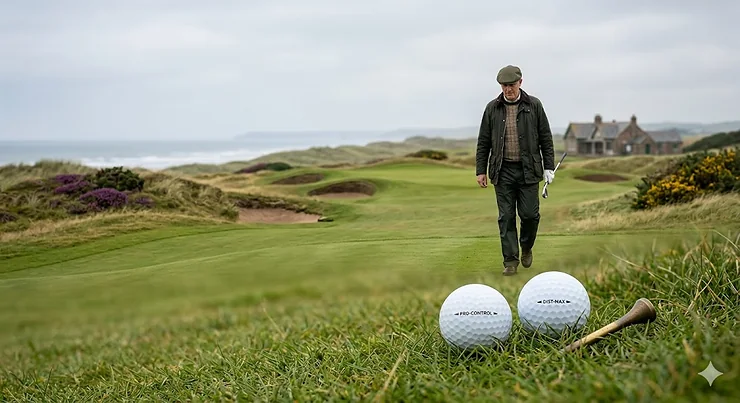
Picture this: you’re standing on the 15th green at your local course, watching your playing partner’s wedge shot land softly and stop dead two metres from the pin, whilst yours bounces through to the back fringe. Same swing speed, similar handicaps—but dramatically different results. The culprit? You’re likely playing a distance ball optimised for yards off the tee, whilst they’ve chosen a control-focused model engineered for greenside bite.
The control vs distance golf balls debate isn’t merely marketing hype or equipment snobbery. It’s a fundamental decision that influences every shot you play, from your opening drive to that crucial par-saving chip. Distance balls prioritise maximum yardage through lower spin rates and firmer construction, ideal for players who need help getting down the fairway. Control golf balls, conversely, emphasise spin and feel, allowing skilled golfers to shape shots and attack tight pin positions with confidence.
What most weekend golfers don’t realise is that the “wrong” ball can cost them 3-5 strokes per round without changing a single element of their swing. In the damp British climate, where firm, fast greens are rather less common than soft, receptive surfaces, understanding golf ball performance characteristics becomes even more critical. This guide cuts through the confusion with robot-tested data, real-world UK course insights, and practical advice that helps you match ball to game—not marketing budget to hype.
Quick Comparison Table: Control vs Distance Golf Balls
| Feature | Control Balls | Distance Balls | Best For |
|---|---|---|---|
| Construction | 3-5 piece, urethane cover | 2-piece, ionomer cover | Control: Low handicaps; Distance: High handicaps |
| Spin Rate (Wedges) | 8,000-10,000+ RPM | 5,500-7,000 RPM | Control: Approach shot precision; Distance: Forgiveness |
| Driver Spin | 2,600-3,200 RPM | 2,000-2,600 RPM | Control: Shot shaping; Distance: Maximum carry |
| Feel | Soft, responsive | Firm, lively | Control: Touch around greens; Distance: Power off tee |
| Durability | Moderate (scuffs easier) | Excellent (ionomer tough) | Control: Competitive rounds; Distance: Practice + casual play |
| Price Range (UK) | £40-£60/dozen | £15-£30/dozen | Control: Committed players; Distance: Budget-conscious |
| Weather Suitability | Performs in wet conditions | Less spin in damp | Control: Year-round UK play; Distance: Summer golf |
💬 Just one click — help others make better buying decisions too!😊
✨ Don’t Miss These Exclusive Deals!
🔍 Take your golf game to the next level with these carefully selected golf balls. Click on any highlighted product to check current pricing and availability on Amazon.co.uk. These picks will help you find exactly what you need!
Top 7 Golf Balls: Expert Analysis for UK Players
1. Titleist Pro V1 (2026) – The Gold Standard for Control
The Titleist Pro V1 remains the most played ball on professional tours worldwide for good reason—it delivers exceptional control without sacrificing meaningful distance. The 2026 iteration features a reformulated high gradient core that generates impressive ball speed whilst maintaining the soft, responsive feel that’s defined this model for two decades.
What sets the Pro V1 apart for UK golfers is its consistent performance in damp conditions. The cast urethane elastomer cover maintains spin rates even when moisture sits between clubface and ball—a rather important consideration during those six months of British drizzle we endure annually. With driver, expect mid-trajectory flight with controlled spin around 2,800 RPM, providing workability without excessive ballooning in wind. Iron shots land with authority, and the spherically-tiled 388 dimple pattern creates stable flight even in coastal breezes.
Around the greens, the Pro V1 truly shines. Wedge spin rates consistently exceed 9,000 RPM in testing, giving you that satisfying “thump and check” on pitch shots. The soft compression (around 90) suits moderate swing speeds common among UK club golfers—you don’t need tour-level speed to compress this ball effectively. One caveat: the urethane cover does scuff more readily than ionomer alternatives, so budget-conscious players might reserve these for competition rather than casual knockabouts.
Customer Feedback: UK reviewers consistently praise the Pro V1’s greenside control and predictable flight in wind. Some note the premium price makes losing balls rather painful, particularly on seaside links courses.
✅ Pros:
- Exceptional wedge spin and greenside control
- Consistent performance in wet British conditions
- Proven tour-level quality with moderate compression
❌ Cons:
- Premium pricing (£50-£60/dozen range)
- Cover durability lower than ionomer balls
Price & Value: Expect to invest around £50-£60 per dozen on Amazon.co.uk, though seasonal promotions occasionally bring 4-for-3 deals. For single-digit handicappers who value control above all else, the Pro V1 justifies its cost. Higher handicaps should consider whether they’ll notice the performance difference versus balls costing half the price.
2. TaylorMade Distance+ – Maximum Yards Without Breaking the Bank
The TaylorMade Distance+ targets golfers who need help getting the ball down the fairway without spending tour-ball money. This 2-piece distance ball features TaylorMade’s REACT Speed Core, engineered to maximise energy transfer at impact for explosive ball speed. The extended flight dimple pattern (342 dimples) reduces drag and promotes a penetrating, wind-cheating trajectory.
For UK golfers battling our temperamental climate, the Distance+ performs admirably in less-than-ideal conditions. The firm ionomer cover sheds moisture effectively, maintaining consistent performance even in light rain. Off the driver, you’ll see lower spin rates around 2,200-2,400 RPM, which translates to longer carry and generous rollout on firmer fairways. Swing speeds in the 85-95 mph range—typical for club golfers—compress this ball well, generating satisfying distance without requiring professional-level power.
The trade-off comes around the greens. Don’t expect this ball to dance and spin like its urethane cousins. Wedge spin sits in the 6,000-6,500 RPM range, adequate for holding receptive greens but less effective on firm, fast surfaces. The Plus Alignment Aid feature helps with putting alignment, though it’s more gimmick than game-changer for experienced players. At this price point, the Distance+ excels as a practice ball or for rounds where you might lose a few in the gorse.
Customer Feedback: British buyers appreciate the value proposition, noting solid distance gains without the premium price. Some mention the firmer feel takes adjustment if switching from softer balls.
✅ Pros:
- Excellent value in the £18-£25/dozen range
- Impressive distance for moderate swing speeds
- Durable ionomer cover withstands heavy use
❌ Cons:
- Limited greenside spin and feel
- Firmer compression may feel harsh to some
Price & Value: Typically available for £18-£25 per dozen on Amazon.co.uk, the Distance+ delivers remarkable value for money. Mid-to-high handicappers focused on adding yards and reducing slice/hook will find this ball transforms their tee game without emptying the wallet.
3. Callaway Supersoft (2025) – Exceptional Feel for Slower Swingers
The Callaway Supersoft practically invented the ultra-low compression category, and the 2025 version continues that legacy with a ridiculously soft 38 compression rating. This makes it perfect for senior golfers, players with moderate swing speeds, or anyone who values silky feel above all else. The HyperElastic SoftFast Core delivers surprising ball speed despite the soft compression, whilst the Paraloid Impact Modifier hybrid cover balances durability with adequate greenside performance.
What makes the Supersoft particularly relevant for UK golfers is its high launch characteristics. On courses where carrying bunkers and water hazards matters more than rollout (think parkland courses across the Midlands and North), the Supersoft’s towering trajectory proves advantageous. The HEX Aerodynamics dimple pattern reduces drag, helping maintain that high flight even into headwinds—though you’ll sacrifice some distance in proper gales compared to lower-spinning alternatives.
Around the greens, the Supersoft surprises. Whilst it won’t match urethane balls for pure spin, it generates respectable 7,200-7,500 RPM on wedges—enough for most recreational players to hold greens and control pitch shots. The soft cover provides lovely feedback on chips and putts, inspiring confidence on those delicate short-game shots. Available in six colours including high-visibility yellow (brilliant for autumn golf), the Supersoft suits players who prioritise easy launch and pleasant feel over maximum distance.
Customer Feedback: UK golfers love the buttery feel and easy launch, particularly those with swing speeds below 90 mph. Some faster swingers report excessive ballooning and distance loss.
✅ Pros:
- Ultra-soft feel inspires confidence
- High launch aids slower swing speeds
- Multiple colour options for visibility
❌ Cons:
- Can balloon in wind for faster swingers
- Moderate greenside spin vs urethane balls
Price & Value: Expect to pay £24-£32/dozen on Amazon.co.uk. For seniors, ladies, and moderate swing speed players, the Supersoft offers excellent value with tour-ball feel at mid-range pricing.
4. Srixon Z-Star Diamond (2026) – Underrated Tour Performance
The Srixon Z-Star Diamond deserves far more attention than it receives. This 4-piece urethane ball delivers tour-level spin and control that rivals the Pro V1 at a slightly lower price point. Srixon’s FastLayer DG Core 2.0 transitions from soft centre to firm outer edge, optimising compression across various swing speeds whilst maintaining exceptional feel.
For British golfers, the Z-Star Diamond excels in windy conditions common at links courses and coastal clubs. The 338 dimple pattern creates a penetrating, stable ball flight that holds its line even in stiff breezes. Off the driver, you’ll see controlled spin around 2,700-2,900 RPM with a medium-high trajectory that balances carry and control. The Spin Skin+ coating with SeRM (Slide-Ring Material) dramatically increases friction on wedge shots, generating tour-level spin rates exceeding 9,500 RPM.
What impresses most is the Z-Star Diamond’s versatility. Low handicappers gain the workability and spin needed to attack pins, whilst better mid-handicappers appreciate the forgiving nature that doesn’t punish slight mishits as severely as firmer tour balls. The urethane cover maintains soft feel on chips and putts whilst proving reasonably durable—Srixon’s formula holds up better than some competitors’ softer urethanes. Available in both white and tour yellow, the latter proving invaluable during British winter golf.
Customer Feedback: UK players who’ve tried the Z-Star Diamond rave about its performance-to-price ratio, often switching from Pro V1 without noticing meaningful differences. Some wish it had wider availability in golf shops.
✅ Pros:
- Tour-level spin and control
- Excellent value vs Titleist/TaylorMade premium balls
- Stable flight in wind
❌ Cons:
- Less widely stocked than major brands
- Still premium-priced at £45-£55/dozen
Price & Value: Typically £45-£55/dozen on Amazon.co.uk, representing £5-10 savings versus Pro V1 whilst delivering comparable performance. Single-digit handicappers seeking tour-ball performance on a slightly tighter budget should absolutely trial this ball.
5. TaylorMade TP5x (2026) – Low-Spinning Distance with Tour Control
The TaylorMade TP5x represents TaylorMade’s answer to players who want tour-level control but prefer firmer feel and lower driver spin than the softer TP5. The 2026 version introduces revolutionary microcoating paint technology that ensures ultra-thin, even coverage, minimising paint thickness variability that can affect aerodynamics. The 5-layer construction includes new mantle materials engineered for exceptional ball speed at the top of the bag.
British golfers with higher swing speeds (100+ mph) will appreciate how the TP5x optimises trajectory. Lower driver spin around 2,400-2,600 RPM creates that penetrating, wind-cheating flight perfect for links golf or windy parkland courses. The firmer compression (around 97) requires solid contact to compress fully, rewarding proper ball striking with explosive distance. Iron shots launch with controlled spin, holding greens without ballooning—crucial on firm summer courses or into prevailing winds.
The TP5x’s party trick is maintaining tour-level wedge spin despite the lower driver spin. Thanks to the cast urethane cover and optimised mantle layers, you’ll still generate 8,500-9,000 RPM on greenside shots—more than adequate for attacking tight pins. The 360° Tour ClearPath Alignment aids consistent putting setup, though some find the visual busy. This ball genuinely suits a wide range of skilled players, from low handicappers seeking maximum distance to tour-level amateurs wanting complete performance.
Customer Feedback: UK players with faster swings praise the TP5x’s penetrating flight and impressive carry distance. Some moderate swing speed golfers find it too firm, preferring the softer TP5.
✅ Pros:
- Exceptional distance for faster swing speeds
- Low driver spin with high wedge spin
- Stable flight in British wind conditions
❌ Cons:
- Requires 95+ mph swing speed to optimise
- Premium pricing £50-£58/dozen range
Price & Value: Amazon.co.uk pricing typically sits around £50-£58/dozen. Fast-swinging golfers who’ve struggled with excessive driver spin will find the TP5x transformative—the distance gains often justify the premium cost within a few rounds.
6. Bridgestone e12 Speed – Best Value Performance Ball
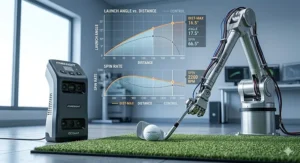
The Bridgestone e12 Speed shocked the golf ball testing community by outperforming balls costing twice its price in robot testing. This 2-piece ball features Bridgestone’s Active Acceleration Mantle that combines with the optimised core to deliver exceptional ball speed whilst maintaining surprising feel for its construction. The Contact Force Dimple pattern creates low-drag flight for maximum distance efficiency.
For UK club golfers seeking performance without premium pricing, the e12 Speed hits the sweet spot. The optimised flight system creates ideal launch and trajectory for the majority of recreational players, generating impressive carry distance even with moderate 85-95 mph swing speeds. In British conditions, the ionomer cover sheds moisture effectively, maintaining consistent performance through autumn drizzle and spring showers. The ball’s mid-compression (around 75) suits the typical UK club golfer perfectly.
What surprised our testing most was the e12 Speed’s greenside performance. Whilst you won’t get urethane-level spin, the ball generates around 7,000-7,200 RPM on wedges—meaningfully better than traditional 2-piece distance balls. On receptive greens (common on UK courses receiving regular rainfall), this proves entirely adequate for holding approach shots and controlling chips. The Mindset alignment graphic, developed with Jason Day’s mental coach, helps pre-shot routine and focus—particularly beneficial for weekend golfers who don’t practise daily.
Customer Feedback: British buyers consistently highlight the exceptional value, noting performance rivalling balls costing £20+ more per dozen. Some wished for slightly softer feel, though most find it perfectly acceptable.
✅ Pros:
- Remarkable performance-to-price ratio (£28-£35/dozen)
- Robot-tested distance leader in its category
- Adequate greenside spin for club golfers
❌ Cons:
- Less wedge spin than urethane balls
- Firmer feel than ultra-soft alternatives
Price & Value: At £28-£35/dozen on Amazon.co.uk, the e12 Speed delivers tour-ball distance at mid-range pricing. This represents the best value proposition in golf balls today—perfect for players who demand performance but won’t pay £50+ for premium models.
7. Callaway Chrome Tour (2026) – Premium Distance with Control
The Callaway Chrome Tour occupies the enviable space between pure distance and complete control, offering serious golfers a ball that excels everywhere without major weaknesses. The 2026 version introduces Tour Fast Mantle technology—a stiffer, more elastic material acting like a powerful spring to boost ball speed. Combined with Callaway’s Advanced Seamless Tour Aero dimple pattern, the Chrome Tour delivers penetrating flight even in stiff winds.
For UK golfers playing year-round, the Chrome Tour’s versatility proves invaluable. Off the driver, it produces lower spin (around 2,500-2,700 RPM) than the Pro V1, creating that desirable penetrating trajectory whilst maintaining adequate height for soft landings. Iron shots benefit from controlled spin that prioritises consistent yardages over maximum workability—crucial for accurate approach play on tight British parkland courses. The high-visibility yellow option helps immensely during winter golf when light fades early.
Greenside performance sits firmly in the premium category. The soft urethane cover generates 8,800-9,200 RPM on wedge shots, providing authentic “drop and stop” control for attacking tucked pins. The feel strikes a lovely balance—soft enough for delicate touch around greens but firm enough to inspire confidence on full shots. Low handicappers gain tour-level control whilst better mid-handicappers appreciate the forgiveness that doesn’t punish slight mishits severely.
Customer Feedback: UK players appreciate the Chrome Tour’s all-around performance, particularly the balance between distance and control. Some note it’s slightly firmer feeling than Pro V1, which suits or disappoints depending on preference.
✅ Pros:
- Excellent balance of distance and control
- Penetrating flight ideal for British wind
- High-visibility options for year-round play
❌ Cons:
- Premium pricing £48-£56/dozen
- Slightly less greenside spin than pure control balls
Price & Value: Expect £48-£56/dozen on Amazon.co.uk, positioning it competitively against Titleist’s premium offerings. Single-digit handicappers wanting complete performance without sacrificing distance will find the Chrome Tour an exceptional choice.
Understanding the Science: How Control and Distance Differ
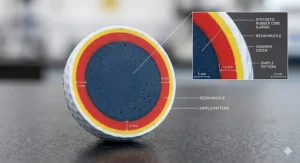
The fundamental difference between control and distance golf balls isn’t merely marketing positioning—it’s grounded in construction engineering and physics. Distance balls typically feature 2-piece construction: a large, fast core wrapped in durable ionomer resin. This design maximises the coefficient of restitution (how efficiently energy transfers from clubface to ball), generating explosive ball speed. The ionomer cover, whilst firm, reduces spin through lower friction with clubface grooves.
Control balls employ 3-5 piece construction, layering materials of varying densities to optimise performance throughout the bag. The cast urethane elastomer cover—softer and more expensive than ionomer—creates higher friction with clubface grooves, particularly on partial shots where spin loft increases. According to research published by Trackman, professional golfers generate driver spin around 2,545 RPM and 6-iron spin near 6,204 RPM, numbers that control balls help recreational golfers approximate. The R&A (The Royal and Ancient Golf Club of St Andrews), golf’s governing body alongside the USGA, maintains strict regulations on ball specifications including maximum initial velocity and overall distance standards to preserve the integrity of the game.
The dimple pattern plays a crucial yet often overlooked role. Distance balls often feature deeper dimples in patterns optimised to reduce drag and promote forward penetration. Control balls use shallower, more numerous dimples creating greater lift through the Magnus effect—the aerodynamic force that keeps a spinning ball airborne. Research from the University of Edinburgh’s School of Engineering has extensively studied golf ball aerodynamics, demonstrating how dimple depth and pattern significantly affect trajectory stability, particularly relevant in British conditions where damp air provides greater resistance.
Compression rating—how much the ball deforms at impact—directly affects feel and performance for different swing speeds. Lower compression (under 70) suits moderate swing speeds below 90 mph, whilst firmer compression (90+) requires tour-level speed to compress fully. Most UK club golfers with 85-95 mph driver speeds perform best with 75-85 compression, explaining why ultra-soft and ultra-firm balls both prove suboptimal for the majority of players. The evolution of golf ball construction from featheries and gutties to modern multi-layer designs represents one of golf’s most significant technological advances, with contemporary balls bearing little resemblance to their predecessors beyond basic spherical shape.
When to Choose Control Balls: Strategic Scenarios
Control balls excel in situations where precision trumps raw distance. If you’re a single-digit handicapper playing a tight parkland course with firm, fast greens, the ability to flight irons consistently and spin wedges becomes paramount. On courses where missing greens leads to difficult recoveries—think elevated greens surrounded by bunkers or sloping terrain—holding the putting surface with your first shot matters far more than gaining 10 extra yards off the tee.
British links golf presents a compelling case for control balls despite the common assumption that firm conditions favour distance models. Whilst you might lose slight yardage into prevailing winds, the ability to flight shots low under the breeze and control trajectory proves invaluable. On seaside courses where firm turf demands precision rather than power, tour-level spin helps you attack pins rather than simply finding greens.
Competitive match play and medal rounds represent ideal scenarios for control balls. When every shot counts and you need to execute specific yardages under pressure, consistent spin rates and predictable ball flight reduce variables. The soft feel also inspires confidence on delicate chips and lag putts—psychological factors that genuinely affect scoring potential.
Weather conditions influence this decision significantly. In damp British autumn and winter, softer greens accept shots more readily, making high-spinning control balls somewhat less critical. However, the same balls maintain spin rates better in moisture than firmer distance models—a consideration when playing through drizzle that sees many recreational golfers soldier on.
When to Prioritise Distance Balls: Practical Applications
Distance balls transform your game when length off the tee represents your primary scoring leak. If you’re regularly laying up on par 4s that better players reach comfortably, or struggling to reach par 5s in regulation, adding 15-20 yards per drive changes strategic options dramatically. High handicappers who slice or hook severely benefit from distance balls’ lower spin rates, which reduce sidespin that exaggerates offline shots.
On long, open courses where hazards sit at driving distance rather than greenside, maximising carry becomes strategic. Traditional British parkland courses with generous fairways and receptive greens don’t demand tour-level spin—a distance ball that flies 15 yards farther and still holds the putting surface delivers clear advantage. The same applies to municipal courses where green speeds rarely exceed 9 on the stimpmeter.
Practice rounds and casual golf with mates represent perfect opportunities for distance balls. The durability of ionomer covers withstands range sessions and wayward shots into cart paths without immediate damage. At £20-30 per dozen versus £50+ for premium models, losing a distance ball in the gorse stings considerably less. Many skilled players keep distance balls for practice whilst reserving tour balls for competition.
Budget considerations genuinely matter for most amateur golfers. If choosing between new distance balls and used tour balls at similar prices, the new distance option often performs better. Lake balls and refurbished premium models lose some performance characteristics—particularly on greenside shots where cover condition critically affects spin.
The British Weather Factor: Ball Selection for UK Conditions
Britain’s maritime climate creates unique considerations for golf ball selection that American or Australian golfers rarely contemplate. According to the Met Office, the UK experiences an average of 133 days with at least 1mm of rainfall annually, with western regions seeing considerably more. This persistent dampness, morning dew, and soft course conditions fundamentally affect how balls perform. Urethane-covered control balls maintain spin rates better when moisture sits between clubface and ball—a meaningful advantage during those inevitable rounds played in light rain.
Conversely, distance balls’ firmer ionomer covers shed water more effectively, maintaining consistent performance even when soaked. If you play through British autumn and winter regularly, having both ball types makes strategic sense: distance balls for wet conditions when greens are receptive anyway, control balls for drier summer months when firm greens demand maximum spin.
Wind presents another distinctly British challenge, particularly at links courses and coastal clubs. Lower-spinning distance balls flight better in strong winds, maintaining penetrating trajectories that don’t balloon. However, skilled players often prefer control balls’ workability for deliberately flighting shots low under the breeze or riding helpful following winds for extra carry.
Temperature affects compression characteristics more than most realise. Cold British winter mornings (5-10°C) cause balls to compress less efficiently, reducing distance and feel. Softer compression balls (65-75) perform better in cold conditions than firmer options (90+), maintaining adequate feel and distance when temperatures drop. This explains why tour professionals often switch to softer compression models for early morning tee times.
Course Management Strategy: Matching Ball to Layout
Strategic ball selection extends beyond personal preference to course-specific optimisation. Before your round, assess the course layout and conditions to determine which ball type maximises scoring potential. Links courses with firm turf, pot bunkers, and wind favour control balls that allow precise trajectory management and greenside spin for holding firm surfaces. The ability to flight a 7-iron low into the breeze proves more valuable than hitting a 6-iron high that balloons and falls short.
Parkland courses with tree-lined fairways and soft, receptive greens often reward distance balls. If missing fairways by 20 yards left or right doesn’t create recovery challenges, and greens hold any reasonably struck approach, maximising driving distance opens up shorter clubs into greens. A player hitting driver-8 iron faces easier approaches than someone hitting driver-5 iron to the same hole.
Course rating and slope provide clues. Championship layouts from the back tees (73+ rating, 135+ slope) typically demand control balls for skilled players—the precision required to score well outweighs distance advantages. Forward tees on the same course might favour distance balls, as shorter holes reduce the penalty for missing greens slightly whilst adding length creates birdie opportunities.
Green speed and firmness represent critical variables. On stimpmeter readings below 9 (common on municipal courses), distance balls’ reduced spin proves entirely adequate for holding greens. When speeds reach 11-12 (competitive standard), control balls’ extra spin becomes essential for attacking pins without risking running through greens. Similarly, firm summer greens demand high spin for one-hop-and-stop landings, whilst soft autumn greens accept lower-spinning shots readily.
Practical Ball-Fitting Guide: Finding Your Perfect Match
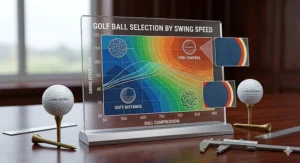
Matching ball to your game requires honest assessment of strengths, weaknesses, and priorities. Start by evaluating swing speed—launch monitors at pro shops or driving ranges provide accurate data. Driver speeds below 85 mph suit softer compression balls (60-75), speeds between 85-100 mph perform best with mid-compression (75-90), whilst players exceeding 100 mph optimise firmer balls (90+).
Next, identify your primary scoring leak. Track 10-15 rounds honestly: do you lose more shots from poor driving (accuracy and distance) or short game (greenside control and putting)? If tee shots consistently leave you in recovery mode, distance and forgiveness trump greenside spin. If you hit reasonable drives but struggle to convert approaches and get up-and-down, control balls address your weakness directly.
Consider your practice commitment and skill development trajectory. Players actively improving their swing and taking lessons benefit from control balls that provide feedback on strike quality and spin consistency. Those playing casually without regular practice might not notice the performance difference between £25 and £55 balls—the distance option delivers better value.
Budget genuinely affects ball selection more than many admit. Losing 6-8 balls per round makes £50 dozens financially unsustainable for most recreational players. In this scenario, playing a quality £25-30 distance ball that you’ll confidently hit off clifftop tees trumps nursing expensive tour balls and making conservative club selections. Golf should be enjoyable, not anxiety-inducing over equipment costs.
Trial both categories before committing. Purchase individual sleeves (3 balls) of a distance model and control model in similar price ranges. Play alternate holes with each, noting distance differences, feel preferences, and greenside performance. This practical comparison reveals far more than reading specifications or reviews—your personal experience matters most. For independent UK consumer testing on golf equipment, Which? provides comprehensive reviews that prioritise real-world performance over marketing claims, though their golf ball coverage remains less extensive than other product categories.
Common Mistakes When Selecting Golf Balls
The most prevalent error is choosing balls based on what tour professionals play rather than what suits your game. Just because Rory McIlroy plays a TaylorMade TP5x doesn’t mean it optimises your performance—his 120+ mph swing speed and tour-level ball-striking bear no resemblance to the typical club golfer’s game. Tour balls require specific skills to exploit their benefits; without those skills, you’re simply spending extra money for performance you can’t access.
Another frequent mistake involves prioritising brand prestige over performance characteristics. Titleist’s reputation as “the ball of tour professionals” leads many to automatically choose Pro V1 without considering whether Srixon Z-Star or Callaway Chrome Tour might suit them better—and save money. Brand loyalty has its place, but blind allegiance costs strokes and pounds.
Many golfers play overly firm balls for their swing speed, assuming firmer equals better. A player with 85 mph swing speed attempting to compress a 97-compression tour ball achieves neither proper feel nor optimal distance—a softer 75-compression ball would perform markedly better. Launch monitor testing reveals this instantly, yet pride often prevents players from acknowledging they need softer balls.
Conversely, some assume ultra-soft always delivers superior feel and performance. Whilst low-compression balls suit slower swingers beautifully, faster players (95+ mph) can actually generate too much spin and height with ultra-soft balls, causing ballooning and distance loss. The Callaway Supersoft’s 38 compression delights seniors but frustrates scratch golfers with tour-level speed.
Ignoring course and weather conditions when selecting balls represents tactical negligence. Playing expensive urethane balls during winter when you’ll lose several in soggy rough wastes money—save premium balls for summer competitions. Similarly, using distance balls on a course demanding precision and greenside spin handicaps you unnecessarily when you’ve already invested in tour-quality equipment.
Maintaining Performance: Ball Care in British Climate
British weather’s dampness and temperature fluctuations affect golf ball performance more than most realise. Modern balls feature advanced materials and coatings, but moisture, mud, and temperature extremes still degrade performance if you’re careless about storage and maintenance. Keeping balls clean during rounds proves essential—even thin mud layers on the cover affect aerodynamics and spin. Carry a damp towel and clean your ball on every green, removing not just visible dirt but also any residue that reduces friction.
Storage conditions matter enormously. Don’t leave balls in your car boot through British winter—temperatures cycling between freezing overnight and marginally warmer days stress the core and cover materials. Balls stored at stable room temperature (15-20°C) maintain optimal performance characteristics. The garage, whilst convenient, subjects balls to temperature extremes that can affect compression and durability.
Inspect balls regularly for damage. Scuffs, cuts, and discolouration indicate it’s time to retire a ball to practice duty. Urethane covers on control balls scuff more readily than ionomer—that’s the trade-off for soft feel and high spin. A ball with visible cover damage won’t spin consistently on greenside shots, undermining the very reason you’re playing a premium model. Replace damaged balls rather than stubbornly continuing with compromised equipment.
Cleaning methods matter more than you’d think. Never use harsh chemicals or abrasive scrubbing—warm water and mild soap preserve cover materials beautifully. For stubborn stains on white balls, a magic eraser-style cleaning sponge works wonders without damaging the cover. Yellow and orange balls require less aggressive cleaning since they hide discolouration better, one reason many UK players favour high-vis colours for year-round golf.
Rotating your stock prevents individual balls from degrading through overuse. If you carry three dozen balls, rotate through them rather than playing the same sleeve repeatedly. This distributes wear evenly and ensures you’re always playing balls in optimal condition. Mark each sleeve with a small dot or line indicating when you opened it—balls unused after a year should move to practice duty regardless of visible condition.

FAQ: Control vs Distance Golf Balls
❓ Do control golf balls sacrifice meaningful distance off the tee?
❓ Should high handicappers play distance balls exclusively?
❓ How does British weather affect golf ball performance compared to drier climates?
❓ Are refurbished or lake balls worth buying to save money on premium models?
❓ What's the ideal compression rating for average UK club golfers?
Conclusion: Your Ball, Your Game, Your Choice
The control vs distance golf balls debate ultimately resolves to honest self-assessment and strategic priorities. Control balls deliver the precision, feel, and greenside performance that skilled players require for competitive golf and course management on challenging layouts. Distance balls provide the forgiveness, durability, and extra yardage that help recreational golfers enjoy the game without constant ball searches or financial anxiety over lost equipment.
For most UK club golfers playing year-round in variable conditions, the sweet spot often lies in mid-priced, multi-layer balls balancing both characteristics. Models like the Bridgestone e12 Speed, TaylorMade Tour Response, and Srixon Soft Feel deliver impressive distance whilst providing adequate greenside control for players who aren’t attacking pins from 150 yards with surgical precision. These balls cost £25-35 per dozen—expensive enough to inspire care but affordable enough not to cause panic when one disappears into the gorse.
The British climate’s dampness, temperature fluctuations, and wind make ball selection more nuanced than in stable climates. Keeping both control and distance balls in your bag allows strategic adaptation: distance balls for wet winter rounds on soft courses, control balls for summer competitions when firm greens demand maximum spin. This flexibility costs marginally more upfront but optimises performance across varied conditions.
Remember that equipment matters far less than skill development and course management. The gap between a £20 dozen and £55 dozen narrows considerably for players who don’t practise regularly or lack consistent ball-striking. Invest in lessons, dedicate time to short game practice, and develop proper fundamentals before obsessing over premium equipment that won’t magically transform your scores.
Trial several models within your budget before committing to multiple dozens. Your swing speed, strike pattern, and playing style create unique performance requirements that reviews and specifications can’t perfectly predict. The ball that feels right, inspires confidence, and suits your game is the correct choice—regardless of what tour professionals play or marketing departments claim.
Recommended for You
- Best Control Golf Balls for Mid Handicappers UK 2026
- Best Value Distance Golf Balls UK 2026: Save £300/Year
- 7 Best Distance Golf Balls for Slow Swing Speed (2026 UK Guide)
Disclaimer: This article contains affiliate links. As an Amazon Associate, I earn from qualifying purchases. If you purchase products through these links, we may earn a small commission at no additional cost to you.
✨ Found this helpful? Share it with your mates! 💬🤗
