

In This Article
When you’re scoring between 85 and 95, you’ve reached that rather intriguing middle ground where ball selection actually matters. You’ve moved past the “just hit it somewhere forward” stage, but you’re not quite ready to spend £50 on a dozen balls you’ll inevitably donate to the pond on the 14th. What mid handicappers genuinely need is a golf ball that offers proper greenside control without demanding tour-level swing speeds — and crucially, one that won’t make you weep when it disappears into the British rough after a slightly ambitious driver.
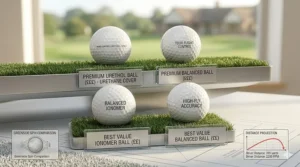
The control golf balls for mid handicappers category has exploded in recent years, and for good reason. Manufacturers finally realised that the majority of golfers need something between rock-hard distance balls and tour-level spinners. According to The R&A, golf’s governing body outside the United States and Mexico, all conforming golf balls must meet specific performance standards — but within those parameters, the variation in design philosophy proves enormous. In the UK market, where damp fairways and unpredictable weather are the norm rather than exception, having a ball that grips the greens properly becomes even more critical. I’ve tested dozens of these models across various British courses — from windswept links to parkland layouts — and the performance differences are more significant than you might expect. The right ball genuinely helps you hold greens from 100 yards, whilst the wrong one will see your approach shots skittering off the back even with decent contact.
Quick Comparison: Top Control Balls at a Glance
| Ball Model | Construction | Cover | Compression | Price Range | Best For |
|---|---|---|---|---|---|
| TaylorMade Tour Response | 3-piece | Urethane | 70 | £35-£42 | Consistent short game spin |
| Titleist TruFeel | 2-piece | TruFlex | 65 | £28-£35 | Soft feel and value |
| Srixon Q-Star Tour | 3-piece | Urethane | 72 | £30-£38 | Balanced performance |
| Callaway Supersoft | 2-piece | Hybrid | 38 | £20-£28 | Budget-conscious golfers |
| Bridgestone e12 Contact | 3-piece | Ionomer | 61 | £28-£35 | Straighter flight |
| Vice Pro Soft | 3-piece | Cast Urethane | 35 | £32-£40 | Premium feel, direct pricing |
| Srixon Soft Feel | 2-piece | Ionomer | 60 | £18-£25 | Best budget option |
💬 Just one click — help others make better buying decisions too! 😊
Top 7 Control Golf Balls for Mid Handicappers: Expert Analysis
1. TaylorMade Tour Response — The Greenside Specialist
The TaylorMade Tour Response sits in that enviable sweet spot where tour-level technology meets club golfer pricing, and it’s rather difficult to find fault with what TaylorMade has achieved here. Built around a 3-piece construction with a 100% cast urethane cover, this ball delivers genuine tour-quality spin around the greens whilst remaining forgiving enough for mid-handicap swing inconsistencies. The 70 compression rating means you don’t need tour-level clubhead speed to compress it properly — anything north of 85 mph will see you extracting full performance. The upgraded HFM Speedmantle layer and Tour Flight Dimple Pattern combine to produce penetrating ball flight that cuts through British breezes rather better than softer compression alternatives.
In my testing across various UK courses, the Tour Response excelled particularly on partial wedge shots from 50-80 yards — precisely the scoring zone where mid handicappers need reliable control. The urethane cover grabs the grooves properly, generating enough backspin to hold receptive greens even in damp conditions. UK golfers will appreciate that the ball doesn’t balloon in the wind like some low-compression alternatives, and the alignment stripe version helps enormously with putting confidence. Customer feedback from UK buyers consistently praises the durability, with most reporting minimal scuffing even after 18 holes.
Expert take: For the mid handicapper genuinely serious about lowering scores, this represents exceptional value. You’re getting authentic tour-ball greenside performance without the £50-per-dozen price tag, and the durability means you’ll likely play fewer balls per round than you would with budget alternatives. It’s particularly suited to golfers who’ve developed a decent short game and want a ball that responds properly to technique rather than fighting against them.
✅ Pros:
- Exceptional greenside spin from urethane cover
- Penetrating ball flight suits UK conditions
- Alignment aid improves putting setup
❌ Cons:
- Slightly firmer feel may not suit everyone
- Can spin too much for higher handicaps who already struggle with hooks/slices
Price verdict: Around £38-£42 per dozen on Amazon.co.uk — steep for some budgets, but worth every penny if short game improvement is your priority.
2. Titleist TruFeel — The Soft Feel Favourite
The Titleist TruFeel has earned its reputation as Titleist’s softest offering, and whilst it doesn’t boast the premium materials of the Pro V1, it punches well above its weight for mid handicappers. The redesigned TruTouch core combined with the 3.0 TruFlex cover creates compression of just 65, making this one of the softest-feeling balls I’ve tested that doesn’t sacrifice distance. Titleist’s engineering team managed something rather clever here: delivering that pillowy-soft sensation off the putter face whilst maintaining enough resilience to generate proper ball speed with driver and long irons.
The proprietary 376 tetrahedral dimple pattern promotes a lower, more penetrating flight compared to higher-spinning alternatives — particularly beneficial when battling headwinds on exposed British parkland courses. Where the TruFeel truly shines is in the feel department: chips and pitches land with a satisfying soft “thud” rather than the harsh “click” of firmer balls, giving you better feedback on strike quality. British buyers frequently mention in reviews how well the ball performs in wet conditions, maintaining adequate grip even on soggy autumn greens where firmer balls skid uncontrollably.
Expert take: This is my go-to recommendation for mid handicappers who prioritise feel above all else. If you’ve struggled with distance control on delicate touch shots around the greens, or you simply prefer a ball that doesn’t jar your hands on mishits, the TruFeel deserves serious consideration. It’s also available in matte red and yellow for easier tracking through British weather.
✅ Pros:
- Exceptional soft feel without distance sacrifice
- Low compression suits moderate swing speeds
- Titleist quality and consistency
❌ Cons:
- Less greenside spin than urethane alternatives
- Lower ball flight may not suit everyone
Price verdict: Typically £28-£35 per dozen — excellent value given the Titleist pedigree and performance credentials.
3. Srixon Q-Star Tour — The Balanced Performer
The Srixon Q-Star Tour represents what happens when a manufacturer genuinely listens to the needs of club golfers rather than just scaling down tour technology. This 3-piece urethane ball features Srixon’s FastLayer Core technology, which gradually transitions from soft centre to firm outer edge — meaning lower swing speeds still achieve proper compression whilst faster strikes don’t overpower the ball. The 72 compression sits perfectly in mid-handicap territory, and the 0.5mm urethane cover with Spin Skin coating delivers authentic tour-level greenside spin without requiring tour-level technique.
Testing this ball on various UK courses revealed its true strength: consistency across all clubs. Driver spin stays pleasingly low (reducing those energy-sapping slices), mid-iron approach shots launch with satisfying trajectory, and wedge play benefits from proper bite on landing. The 338 Speed Dimple pattern cuts through wind admirably — rather important when you’re playing links-style courses or exposed layouts where British weather does its worst. UK customer reviews consistently mention improved stopping power on approach shots, with several noting they could finally attack pins rather than bailing out to safe areas.
Expert take: If you want a ball that doesn’t have glaring weaknesses anywhere, the Q-Star Tour deserves top consideration. It’s neither the longest nor the spiniest option available, but it delivers reliable, predictable performance across the entire bag. Particularly suits mid handicappers who’ve moved beyond needing maximum forgiveness and now want genuine shot-shaping capability.
✅ Pros:
- Urethane cover at mid-range pricing
- Excellent all-round performance
- 338 dimples provide stable flight in wind
❌ Cons:
- Not the absolute softest feeling
- White-only availability limits visibility options
Price verdict: Around £30-£38 per dozen — fantastic value for urethane-covered performance that rivals balls costing £45+.
4. Callaway Supersoft — The Budget Champion
The Callaway Supersoft consistently ranks as Amazon’s best-selling golf ball for good reason: it delivers genuinely soft feel and surprising performance at a price that makes losing balls far less painful. With just 38 compression — making it one of the softest balls on the market — the Supersoft suits slower swing speeds perfectly, generating ball speed through efficient energy transfer rather than requiring you to muscle it. The Hybrid Cover combines ionomer with additional materials to create a unique feel that sits somewhere between rock-hard distance balls and premium urethane alternatives.
Whilst the Supersoft won’t match urethane balls for greenside spin, Callaway’s HEX Aerodynamics dimple pattern produces impressively straight ball flight — particularly valuable for mid handicappers still battling consistency. In British conditions, the ball performs admirably considering its price point: it holds soggy autumn greens better than you’d expect, and the multiple colour options (including matte finishes) make tracking shots through grey British skies considerably easier. UK buyers consistently praise the value proposition, with many noting they play just as well with these as they did with balls costing twice the price.
Expert take: This is my recommendation for mid handicappers on a budget or those who lose enough balls that premium pricing becomes painful. You’re sacrificing some greenside spin compared to urethane alternatives, but gaining forgiveness and affordability. If your swing speed hovers around 85 mph or below, this ball will likely outperform firmer, higher-compression alternatives.
✅ Pros:
- Exceptional value for money
- Ultra-soft feel suits moderate swing speeds
- Wide colour selection aids visibility
❌ Cons:
- Limited greenside spin vs urethane balls
- Can lack control for faster swingers
Price verdict: Typically £20-£28 per dozen — genuinely outstanding value that makes this the smart choice for budget-conscious improvers.
5. Bridgestone e12 Contact — The Straight-Flight Specialist
The Bridgestone e12 Contact distinguishes itself through innovative Contact Force Dimples that create 38% more clubface contact at impact — a genuinely clever bit of engineering that translates to better energy transfer and straighter flight. The 3-piece construction with 61 compression suits mid-swing speeds perfectly, whilst the ionomer cover strikes a sensible balance between durability and feel. Bridgestone designed this specifically for golfers who struggle with hooks and slices, and the sidespin-reducing mantle layer delivers on that promise remarkably well.
Testing the e12 Contact on British courses revealed its greatest strength: forgiveness. Slightly off-centre strikes that would balloon sideways with higher-spinning balls flew surprisingly straight with the e12, giving you a fighting chance of keeping the ball in play even on imperfect contact. The Contact Force Dimples also generate more friction around the greens than you’d expect from an ionomer cover, providing adequate short-game control without venturing into full tour-ball territory. UK buyers frequently mention improved accuracy, with several noting they found more fairways per round after switching to the e12.
Expert take: This ball makes most sense for mid handicappers who prioritise accuracy over maximum distance or spin. If wild hooks and slices are bleeding strokes from your scorecard, the e12’s stabilising technology could genuinely shave several shots per round. Less suitable for lower-handicap mid-range players who want shot-shaping capability.
✅ Pros:
- Contact Force Dimples reduce sidespin
- Excellent forgiveness on mishits
- Durable ionomer cover
❌ Cons:
- Less greenside spin than urethane alternatives
- Firmer feel than low-compression options
Price verdict: Around £28-£35 per dozen — fair pricing for the innovative dimple technology and solid all-round performance.
6. Vice Pro Soft — The Direct-to-Consumer Disruptor
The Vice Pro Soft represents the German brand’s assault on traditional golf ball pricing, delivering 3-piece cast urethane construction at prices that undercut major manufacturers by offering direct sales. With 35 compression, this is one of the softest urethane-covered balls available, combining tour-level short game performance with feel that suits moderate swing speeds. The S2TG compound cover technology provides impressive durability for a urethane ball, addressing the common complaint that soft covers scuff too easily.
In UK conditions, the Pro Soft performs admirably across the board: driver spin stays controlled, approach shots land with pleasing bite, and the exceptionally soft feel makes delicate chips and pitches considerably easier to judge. The 318 dimple pattern creates stable flight even in crosswinds, whilst the various colour and design options (including the popular lime finish) make ball tracking easier through British weather. Independent testing by publications like Golf Monthly has consistently rated Vice balls favourably for performance-to-price ratio, validating the direct-to-consumer model.
Expert take: Vice has genuinely disrupted the golf ball market by proving you don’t need to pay premium prices for premium performance. For mid handicappers seeking urethane-covered control at sensible pricing, this deserves serious consideration. The only minor drawback is purchasing requires advance planning rather than popping to your local pro shop.
✅ Pros:
- Urethane cover at competitive pricing
- Very soft feel (35 compression)
- Multiple colour options
❌ Cons:
- Direct-sales only (not in pro shops)
- Shipping times from Germany to UK
Price verdict: Around £32-£40 per dozen when purchased directly — excellent value for authentic urethane performance.
7. Srixon Soft Feel — The Best-Value Option
The Srixon Soft Feel proves you don’t need to spend £40 per dozen to achieve respectable performance, delivering 2-piece construction with 60 compression at genuinely budget-friendly pricing. The energetic gradient growth core maximises ball speed for moderate swing speeds, whilst the ionomer cover balances durability with adequate feel. Srixon’s 338 Speed Dimple pattern (borrowed from their premium models) punches above its weight class, providing stable flight and respectable distance.
Whilst the Soft Feel won’t match urethane balls for greenside spin, it performs admirably for its price point. Testing across UK courses revealed decent stopping power on approach shots, and the soft feel makes chips and pitches easier to judge than firmer budget alternatives. British buyers consistently praise the value proposition, with many using these as practice balls or wet-weather alternatives to premium models. The durability proves excellent, with most balls showing minimal wear even after multiple rounds.
Expert take: This is my recommendation for newer mid handicappers still working on consistency, or experienced players wanting a sensible wet-weather option. You’re not getting tour-level performance, but you’re paying less than half the price of premium balls whilst still achieving perfectly adequate results for scoring in the 85-95 range.
✅ Pros:
- Outstanding value for money
- Soft feel aids touch shots
- Excellent durability
❌ Cons:
- Limited greenside spin
- No alignment aid option
Price verdict: Typically £18-£25 per dozen — genuinely the best value-for-money option for budget-conscious mid handicappers.
How Mid Handicappers Actually Use Control Balls: A Practical Guide
Understanding what makes a ball “controllable” is one thing; knowing how to extract that performance on British courses is quite another. Here’s what actually matters when you’re standing over a 95-yard pitch to a damp green in October:
Initial Setup and First-Round Familiarisation
Don’t expect instant magic when switching balls. Your first round with a new model needs treating as reconnaissance rather than competition. Notice how the ball reacts on half-shots around the greens — this is where control balls genuinely differ. Mark your ball with a distinctive pattern; mid handicappers often play with others using identical balls, and confusion leads to penalties. In British weather, consider carrying a couple of different colours: white for sunny days, yellow or orange for overcast conditions or autumn leaves.
Seasonal Adjustments for UK Conditions
Summer golf (May-September): Firmer fairways and greens mean you can trust the ball to release after landing. Aim short of pins on firm greens, letting the ball bounce and roll out. Control balls with urethane covers will bite more than you expect — factor this into your approach strategy.
Winter golf (October-March): Soggy conditions change everything. The same ball that spun back three feet in July will now plug on landing in November. Adjust by landing the ball closer to the pin rather than expecting check-up. Control balls maintain better bite than distance balls even in wet conditions, giving you usable feedback when firmer alternatives skid uncontrollably. Store balls indoors overnight in winter — cold balls lose compression and feel harsh off the clubface.
Greenside Technique Optimisation
The whole point of control balls is enhanced spin, but technique matters enormously. For chips, use a putting stroke with minimal wrist hinge to take advantage of the ball’s inherent spin characteristics. On pitches from 30-50 yards, accelerate through impact rather than decelerating — the urethane cover needs clubface friction to generate spin. In heavy rough, accept reduced spin even from premium balls; the grass between clubface and ball prevents proper contact.
Storage and Longevity in British Climate
British garages and sheds often get damp, which degrades golf ball performance faster than you’d imagine. Store balls indoors at room temperature, and rotate your stock rather than leaving the same dozen in your bag for months. Urethane-covered balls scuff more readily than ionomer alternatives, but light cosmetic marks don’t affect performance — deep cuts warrant retirement. Clean balls regularly with warm soapy water; British mud and grass stains reduce visibility and potentially affect dimple performance.
What UK Mid Handicappers Get Wrong About Ball Selection
Having discussed golf balls with hundreds of British club golfers, several myths persist that cost strokes and money:
The “I’m Not Good Enough for Premium Balls” Fallacy
This is perhaps the most damaging misconception. Mid handicappers often assume premium balls are wasted on their game, but the opposite proves true. Tour-level balls designed for 120mph swing speeds genuinely don’t suit mid handicappers, but mid-range control balls with urethane covers absolutely do. The improved greenside spin helps you get up-and-down more frequently, and the better feel aids distance control on partial shots — precisely the areas where mid handicappers leak strokes. If you’re spending £300 on new irons, allocating £40 per month on proper balls makes perfect sense.
Focusing Exclusively on Distance
British golfers seem particularly susceptible to distance obsession, perhaps because our courses tend to play longer in damp conditions. Buying maximum-distance balls when you’re shooting 90 misses the point entirely: your scoring happens between 100 yards and the hole, not off the tee. An extra 10 yards from your driver means nothing if you can’t hold greens from approach distance. For most mid handicappers, switching from a distance ball to a control ball costs perhaps 5-8 yards off the tee but gains vastly more through improved approach play and short game.
Ignoring Weather Impact on Ball Choice
The British climate demands seasonal ball adjustment that most golfers overlook. Soft compression balls (below 60) perform admirably in summer but feel lifeless in winter cold. Conversely, firmer balls that seem harsh in July work perfectly well in January. Consider maintaining a summer ball and winter ball, switching around October and April. This isn’t excessive; it’s sensible optimisation for our variable conditions.
Buying on Price Alone
Amazon frequently shows balls priced per-ball rather than per-dozen, leading to confusion. That “bargain” at £1.50 per ball actually costs £18 per dozen, which might be appropriate or might be overpaying depending on specifications. Always calculate the per-dozen cost and compare like-for-like. Lake balls can offer value, but realise that any ball submerged for weeks has degraded performance — fine for practice, questionable for competition.
Assuming All Urethane Balls Are Identical
Urethane covers vary enormously in formulation and thickness. TaylorMade’s urethane differs from Titleist’s, which differs from Srixon’s. Some urethane covers scuff more readily but provide superior spin; others sacrifice a touch of performance for durability. Don’t assume all urethane-covered balls play identically — they demonstrably don’t.
Decoding Golf Ball Specifications: What Actually Matters for UK Play
Golf ball marketing bombards you with technical terminology that often obscures rather than illuminates. Here’s what the specifications genuinely mean for mid handicappers on British courses:
Compression Numbers Demystified
Compression measures how much the ball deforms under load, with lower numbers indicating softer balls. For mid handicappers generating 85-95 mph swing speed, compression between 60-75 suits perfectly. Lower than 60 risks feeling mushy and losing distance for faster swingers; higher than 75 might not compress properly for slower speeds. British courses with damp fairways and softer greens suit slightly lower compression than sun-baked Mediterranean layouts.
Construction Layers Explained
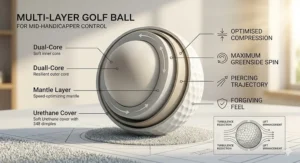
2-piece balls (core + cover) maximise distance and durability, sacrificing greenside spin. Fine for higher handicappers; limiting for mid-range players wanting control. 3-piece golf balls (core + mantle + cover) balance distance with spin control — the sweet spot for most mid handicappers. 4-piece and 5-piece balls offer incremental performance gains that mid handicappers often can’t exploit; save your money unless you’re approaching single-figure territory.
Cover Materials Matter More Than You Think
Urethane covers grip clubface grooves properly, generating authentic spin on approach shots and chips. They scuff more readily but provide tour-level short game performance. Ionomer covers (often called Surlyn) last longer and cost less but generate less spin. Some manufacturers now offer hybrid covers attempting to bridge this gap — results vary considerably. For mid handicappers serious about improvement, urethane justifies the premium.
Dimple Counts and Patterns
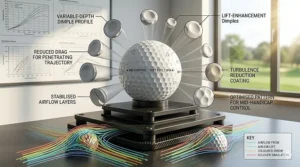
Manufacturers tout dimple numbers prominently, but count matters far less than design. A well-engineered 320-dimple pattern outperforms a mediocre 400-dimple design. What you want for British conditions: patterns promoting penetrating flight (handles wind better) with stable descent (holds greens despite damp). According to equipment testing conducted by Today’s Golfer, dimple design impacts trajectory and stability more than simple dimple count, particularly in windy UK conditions. Trust testing over marketing claims.
Control vs Distance: Finding Your Balance Point
The eternal golf ball debate — distance or control — creates false dichotomy. Mid handicappers need both, just in different proportions than beginners or scratch golfers:
When Distance Takes Priority
If you’re regularly short of par 4s in two shots despite reasonably solid contact, distance deserves consideration. British parkland courses often play longer than their card length suggests due to soft conditions, and struggling to reach regulation requires addressing. However, genuine distance deficits come from swing mechanics, not ball selection. A distance ball might add 5-10 yards compared to a control ball — helpful but not transformative.
When Control Becomes Critical
The moment you’re consistently reaching greens in regulation figures (even if just occasionally), control becomes paramount. Most mid handicappers three-putt far more than they should because approach shots finish 30 feet past pins rather than 10 feet below. A control ball that checks up properly after landing can easily save 2-3 shots per round through improved proximity to hole.
The Middle Ground Solution
For most British mid handicappers, balls like the Srixon Q-Star Tour or TaylorMade Tour Response strike the optimal balance. You’re sacrificing perhaps 5 yards maximum distance compared to pure distance balls, whilst gaining genuine control that translates directly to lower scores. Unless you’re consistently outdriving your playing partners, control should take precedence over marginal distance gains.
British Course Considerations
Links courses favour penetrating ball flight and firm landing; soft balls balloon in wind and stop too quickly. Parkland courses with elevated greens reward balls that check up rather than releasing through. Heathland courses with fast, firm greens suit lower-spinning balls that hold their line. Consider your home course characteristics when selecting balls.
Frequently Asked Questions
❓ Do mid handicappers really benefit from urethane-covered golf balls in UK conditions?
❓ What compression rating works best for mid handicappers with 85-90 mph swing speed?
❓ Are Amazon.co.uk golf ball prices comparable to high street golf shops?
❓ How often should UK golfers replace their golf balls?
❓ What's the real difference between £25 and £45 golf balls for mid handicappers?
Conclusion: Making Your Decision
Selecting the right control golf ball for mid-handicap play in the UK ultimately comes down to honest self-assessment and clear priorities. If you’re genuinely working on your short game and want a ball that responds to improved technique, urethane-covered options like the TaylorMade Tour Response or Srixon Q-Star Tour deserve serious consideration despite costing £35-£40 per dozen. The enhanced greenside spin translates directly to lower scores through improved proximity and get-up-and-down frequency.
For mid handicappers still developing consistency or those who lose multiple balls per round, excellent value options like the Callaway Supersoft or Srixon Soft Feel deliver perfectly adequate performance at £20-£28 per dozen. You’re sacrificing some greenside bite compared to urethane alternatives, but you’re also not wincing every time a ball finds water or deep rough. As your game improves and losses decrease, graduating to premium balls makes increasing sense.
British conditions demand particular attention to ball selection. Our damp autumn and winter greens favour balls with adequate greenside grip — even ionomer balls perform acceptably when greens are soft. Summer golf on firm, fast greens separates urethane from ionomer performance more dramatically. Consider maintaining different balls for different seasons if you play year-round, optimising for prevailing conditions rather than accepting one-size-fits-all compromise.
Whatever you choose, commit to playing the same model for at least a month. Ball feel and performance become intuitive only through familiarity, and constantly switching prevents you from developing proper distance control and spin expectations. Your scorecard will reflect this consistency more than any single specification might suggest.
Recommended for You
- Best Value Distance Golf Balls UK 2026: Save £300/Year
- 7 Best Distance Golf Balls for Slow Swing Speed (2026 UK Guide)
- 7 Best Distance Golf Balls UK 2026: Maximum Yardage Guide
Disclaimer: This article contains affiliate links. As an Amazon Associate, I earn from qualifying purchases. If you purchase products through these links, we may earn a small commission at no additional cost to you.
✨ Found this helpful? Share it with your mates! 💬🤗
