
In This Article
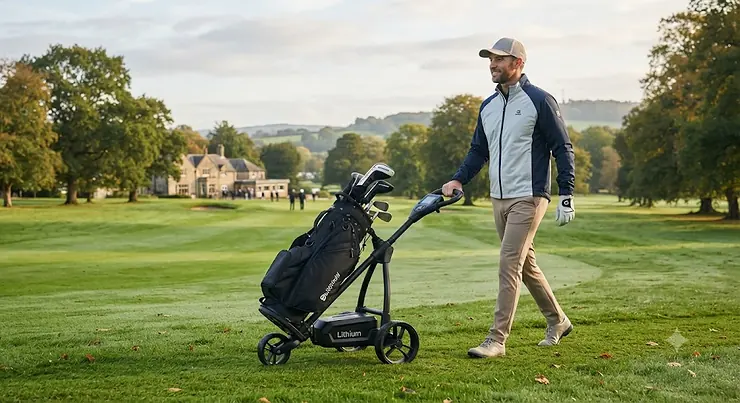
There’s a particular kind of dread that comes with heaving a lead-acid battery out of a trolley boot compartment on a cold Saturday morning, fingers slipping on a case that weighs roughly the same as a bag of cement. If you’ve done it more than twice, you already understand why the lithium battery golf trolley has quietly taken over the UK electric trolley market. It isn’t a gimmick or a marketing flourish tacked onto an old design — it’s a genuine shift in what these machines can do, how long they last, and how little they ask of you between rounds.

This guide exists because most “best trolley” round-ups skim past the one component that actually determines whether you’ll enjoy owning the thing: the battery. We’ve dug into real specifications, aggregated genuine owner and retailer feedback, and the current UK market to bring you seven trolleys worth your money, plus the honest analysis Amazon listings never give you. Under the Rules of Golf, electric trolleys are permitted at club level unless a committee’s local rule says otherwise, so for the vast majority of British club golfers, the only real decision left is which battery-and-trolley combination suits your game, your car boot, and your bank balance.
We’ll cover budget, mid-range and premium options, explain what separates a genuinely long-life lithium cell from a mediocre one, and walk through charging times, weight trade-offs, and 18-hole versus 36-hole capacity in plain English. No fluff, no invented five-star reviews — just what the spec sheets mean once you’re stood on the first tee.
Quick Comparison Table
Before the deep dives, here’s the shape of the market at a glance. Prices are shown as ranges because retailer pricing shifts constantly — always check current pricing before buying.
| Trolley | Battery | Weight | Price Range | Best For |
|---|---|---|---|---|
| PowaKaddy CT12 GPS | 36-hole lithium | 9.9 kg | £1,200-£1,300 range | GPS and touchscreen fans |
| Motocaddy M5 GPS DHC | Ultra lithium (36-hole) | 10.5 kg | Around £1,000-£1,100 | Hilly courses, serious golfers |
| Navee Birdie 3 | 36-hole lithium | 17.2 kg | £750-£850 range | Remote-control convenience |
| PowaKaddy FX1 | 36-hole lithium | 9.9 kg | £500-£550 range | Best all-round value |
| Motocaddy SE Ultra | 27-36 hole lithium | 9.3 kg | Under £550 | Lightweight simplicity |
| Ben Sayers 18-Hole Lithium | 18-hole lithium | 13 kg (combined) | Low-to-mid £300s | Tightest budget |
| Hillbilly Scout Lithium | 18-hole LiFePO4 | Around 8.8 kg | Check current price | Absolute lightest option |
A quick read of this table tells its own story: weight and price don’t move in lockstep with battery capacity the way they used to with lead-acid trolleys. The Hillbilly Scout Lithium proves you can get a genuinely light trolley without a flagship price tag, while the PowaKaddy CT12 GPS shows what happens when you stack GPS, dual motors and a bigger lithium pack onto one chassis. If your only criterion is holes-per-charge, several models here comfortably clear 36 holes, which simply wasn’t realistic with lead-acid packs of a similar size.
💬 Just one click — help others make better buying decisions too!😊
Top 7 Lithium Battery Golf Trolleys: Expert Analysis
We’ve picked these seven to cover the full spread of what “lithium battery golf trolley” actually means in 2026 — from remote-control flagships to the lightest push-and-fold options a lithium cell can power. Every product name below stays bold throughout the article so you can scan and find it again.
1. PowaKaddy CT12 GPS — 5-inch touchscreen flagship
The standout here is obvious the moment you switch it on: a 5-inch colour touchscreen built directly into the handle, something no lead-acid trolley from a decade ago could have supported without draining itself flat by the 9th. Underneath, a dual 30V 230W motor setup drives a 36-hole lithium battery, with an optional EBS electronic braking system for genuinely steep courses. In practice, that dual-motor arrangement means smoother, straighter tracking on cambered fairways than single-motor trolleys typically manage — the trolley corrects itself rather than drifting toward the rough.
Based on the spec comparison, this is a trolley built for golfers who already know they’ll play year-round and want the GPS distance data folded into the same device they’re pushing anyway, rather than juggling a separate rangefinder. Reviewers and retailers covering the CT12 line consistently flag the Simple-2-Fold mechanism as a genuine improvement over older PowaKaddy folding systems, cutting the packed footprint by roughly a third.
Pros:
- ✅ 36-hole lithium battery with genuine round-to-round consistency
- ✅ 5-inch GPS touchscreen removes the need for a separate device
- ✅ Compact “Simple-2-Fold” system saves boot space
Cons:
- ❌ Among the priciest trolleys on this list
- ❌ Touchscreen adds another component that can fail out of warranty
At around £1,200-£1,300, the PowaKaddy CT12 GPS only makes sense if you’ll actually use the GPS features weekly — otherwise you’re paying a premium for a screen that duplicates your phone.

2. Motocaddy M5 GPS DHC — best for hilly UK courses
What most buyers overlook about this model is the DHC (Downhill Control) system — it isn’t a marketing badge, it’s a genuinely useful braking feature that lets the trolley hold its line on a slope without you wrestling the handle. Paired with an Ultra lithium battery rated for 36 holes and 40,000-plus pre-loaded UK and international courses, this is Motocaddy’s answer for golfers whose home course has more undulation than a links map suggests.
The LED display (rather than a full touchscreen) keeps things simple: distance to the green, battery percentage, speed setting, nothing more. Based on the spec comparison against PowaKaddy’s touchscreen rivals, that’s a deliberate trade-off — Motocaddy is betting that reliability and battery efficiency matter more to most buyers than screen size, and for anyone who’s had a touchscreen die in the rain, that’s a defensible bet.
Pros:
- ✅ DHC downhill braking genuinely useful on undulating courses
- ✅ 40,000+ pre-loaded courses with no subscription required
- ✅ Ultra lithium option comfortably covers 36 holes
Cons:
- ❌ Standard (non-Ultra) battery is an 18-hole-focused unit, so check which version you’re buying
- ❌ LED display feels dated next to full-colour touchscreens
Priced around £1,000-£1,100, the Motocaddy M5 GPS DHC earns its keep on hillier terrain where DHC genuinely reduces arm fatigue — flatter parkland courses won’t notice the difference as much.
3. Navee Birdie 3 — best remote-control lithium trolley
The standout feature is right there in how you use it: a handheld remote (and companion app) drives the trolley alongside you, no handle-pushing required. Dual 120W motors and a 36-hole lithium battery give it enough torque to follow you reliably across rough terrain, though at 17.2 kg it’s noticeably heavier than the push trolleys on this list — that weight buys stability and independent wheel control rather than raw speed.
What the spec sheet won’t tell you, but reviewers note, is that remote trolleys like this reward golfers who play with a trolley and no partner to help lift it — the app-based follow mode genuinely changes how a solo round feels, since you’re not managing a handle at all. Aggregated feedback across current UK buying guides places remote trolleys like the Birdie 3 as strong value against pricier remote flagships from Stewart Golf, without matching their absolute build quality.
Pros:
- ✅ True remote and follow-mode control, no handle needed
- ✅ 36-hole lithium range from dual motors
- ✅ Strong value against premium remote-control rivals
Cons:
- ❌ At 17.2 kg, it’s the heaviest trolley on this list
- ❌ Follow mode needs a clear line of sight to work reliably
At £750-£850, the Navee Birdie 3 sits well below dedicated remote-control flagships while still delivering genuine hands-free convenience — a smart pick for golfers prioritising ease over portability.
4. PowaKaddy FX1 36 Hole Lithium — best all-round value
The standout advantage here is restraint: PowaKaddy stripped away the touchscreen, the dual motors and the GPS, and kept a 30V 230W motor that matches the output of trolleys costing hundreds more. This is the 36-hole lithium version specifically, which matters — the 18-hole variant exists at a similar price point, and paying the small premium for 36-hole capacity removes any anxiety about running flat on the back nine.
Here’s what to weigh: the FX1 uses a simple on/off speed controller rather than PowaKaddy’s more granular dial, and the display is basic rather than colour. For golfers who just want a trolley that starts, walks the course reliably, and folds down without drama, that simplicity is a feature rather than a compromise. Reviewers consistently note this as the trolley they’d recommend to a first-time electric buyer specifically because there’s so little to go wrong.
Pros:
- ✅ 30V 230W motor output matching pricier rivals
- ✅ 36-hole battery removes range anxiety entirely
- ✅ Genuinely beginner-friendly controls
Cons:
- ❌ No downhill control or electronic braking
- ❌ Basic monochrome display rather than colour
In the £500-£550 range, the PowaKaddy FX1 is the trolley we’d point most first-time buyers toward — it does exactly what an electric trolley needs to do without charging you for features tied to courses you may never play.
5. Motocaddy SE Ultra Lithium — best lightweight simplicity
The standout feature is the Plug’n’Play lithium battery, which — unlike many rivals — never needs removing from the trolley, even for charging. At 9.3 kg, this is genuinely one of the lighter full-size electric trolleys in the UK market, built around a 28V 230W motor and offered with either a standard or “Ultra” lithium pack, the latter stretching comfortably from 27 to 36 holes depending on terrain and speed setting.
Based on the spec comparison, the SE’s appeal is less about features and more about friction reduction: no lifting a battery in and out, no separate charging cable to misplace, and a nine-speed dial that most golfers settle into within a single round. It represents Motocaddy’s entry point, but the brand hasn’t cut corners on the motor or the lithium cell quality to hit that price — the compromises are cosmetic (display, colour options) rather than mechanical.
Pros:
- ✅ Plug’n’Play battery never needs removing to charge
- ✅ Genuinely lightweight at 9.3 kg
- ✅ Ultra battery option extends range to 36 holes
Cons:
- ❌ Basic LED display compared with GPS-equipped siblings
- ❌ Ultra lithium upgrade adds roughly £50 to the base price
Sitting in the high-£400s to mid-£500s depending on the battery chosen, the Motocaddy SE Ultra Lithium is the trolley we’d recommend to anyone whose priority is “start it, forget it, fold it away.”

6. Ben Sayers 18-Hole Lithium — best budget pick with extras
The standout advantage is what’s included: around £100 worth of free accessories (rain cover, carry bag, umbrella holder, scorecard holder) bundled with a 200W motor and a 14.4V lithium battery rated for 18 holes. Combined trolley-and-battery weight sits at roughly 13 kg, heavier than the premium picks here but still a fraction of what an equivalent lead-acid Ben Sayers trolley would weigh.
Reviewers consistently note that Ben Sayers — one of the oldest names in British golf, dating to 1873 — positions this trolley squarely at golfers taking their first step into electric trolleys, and the nine-speed dial plus preset auto-distance function (10m, 20m or 30m bursts) genuinely deliver features you’d expect on pricier machines. Based on the spec comparison, the trade-off is capacity: this is the 18-hole model, so golfers who regularly play 36 holes in a day, or who forget to charge overnight, should budget for the 36-hole variant instead.
Pros:
- ✅ Around £100 of accessories bundled in as standard
- ✅ Preset auto-distance function on a budget trolley is unusual
- ✅ Lithium pack a fraction of the weight of the lead-acid equivalent
Cons:
- ❌ 18-hole capacity only — no margin for a second loop
- ❌ Combined weight higher than the lighter premium trolleys here
At low-to-mid £300s, the Ben Sayers 18-Hole Lithium delivers more genuine value per pound than almost anything else on this list, provided 18 holes is genuinely all you need.
7. Hillbilly Scout Lithium — lightest trolley on the market
The standout feature is sheer portability: at around 8.8 kg complete with battery, the Hillbilly Scout Lithium is genuinely one of the lightest electric push trolleys sold in the UK, built around a whisper-quiet 200W motor and a LiFePO4 (lithium iron phosphate) cell — the same broadly recognised lithium-ion phosphate chemistry prized in other applications for its stability and long cycle life. The unique three-way fold system is designed to collapse the trolley small enough for a hatchback boot without dismantling anything.
Here’s what to weigh: because the battery genuinely is that light (around 2.3 kg on its own), Hillbilly has kept the 18-hole capacity as standard rather than chasing a bigger pack that would undo the weight advantage. Aggregated retailer feedback on the Hillbilly range has historically praised the folding mechanism and simplicity, while noting the absence of a distance-tracking or auto-stop feature that GPS-equipped rivals include — a fair trade for golfers whose priority is carrying as little dead weight to the car as possible.
Pros:
- ✅ Among the lightest complete lithium trolleys sold in the UK
- ✅ LiFePO4 chemistry known for stability and long cycle life
- ✅ Unique three-way fold designed for tight boots
Cons:
- ❌ No distance-tracking or auto-stop functionality
- ❌ 18-hole capacity as standard, with no larger pack readily available
Pricing on the Hillbilly Scout Lithium varies by retailer, so check current pricing directly — but for golfers who’d rather carry a rucksack than a trolley if it came to it, this is about as close as electric assistance gets to disappearing.
Practical Usage Guide: Getting the Most From Your Lithium Trolley Battery
Buying the trolley is the easy part. Getting five-plus years out of the lithium pack inside it comes down to habits most golfers never think about until the battery underperforms. First, charge fully before first use — most manufacturers recommend an initial full cycle even if the battery arrived partially charged, since it lets the built-in Battery Management System (BMS) calibrate properly. Second, avoid leaving the battery at 0% for extended periods; unlike old lead-acid packs, lithium cells don’t need a “full drain” and actually prefer sitting somewhere between 20% and 80% charge when stored for more than a few weeks.
A common mistake in the first 30 days is charging after every single hole-count regardless of remaining capacity — this doesn’t damage a modern lithium cell the way it would have with nickel-based chemistries, but it does mean you’re not learning your trolley’s real range. Let it run down naturally a few times to understand genuine 18-hole or 36-hole performance on your home course’s terrain. Third, store the trolley somewhere frost-free where possible; lithium cells lose efficiency in sustained sub-zero temperatures far more than they’re damaged by it, so a cold garage is fine, but leaving a trolley in a car boot through a hard winter isn’t ideal.
Finally, check the charger’s connector and cable annually for wear, particularly if the battery is a removable Plug’n’Play type that gets handled every round — a frayed cable is a far more common failure point than the battery cell itself.
Real-World Scenarios: Which Trolley Suits Your Game
The weekend social golfer plays roughly once a fortnight, drives a hatchback, and doesn’t want to think about the trolley between rounds. For this profile, the Ben Sayers 18-Hole Lithium or PowaKaddy FX1 make the most sense — low upfront cost, minimal maintenance, and 18-36 hole capacity that easily covers a single round with charge to spare.
The three-times-a-week member who plays competitively and walks hilly terrain needs range security and braking confidence more than gadgets. The Motocaddy M5 GPS DHC fits here specifically because DHC reduces the physical toll of controlling a trolley on descents over dozens of rounds a season — a detail that matters far more at round 40 of the year than round four.
The golfer managing a shoulder or back issue who still wants to walk rather than ride a buggy benefits most from raw lightness. The Hillbilly Scout Lithium, at under 9 kg complete, minimises the lifting and manoeuvring that aggravates joint issues, while the Navee Birdie 3‘s remote-control mode removes handle-pushing from the equation entirely for those who can manage the extra weight in the car.

What Is a Lithium Battery Golf Trolley?
A lithium battery golf trolley is an electric or push golf trolley powered by a rechargeable lithium-ion (or lithium iron phosphate) battery pack rather than a traditional sealed lead-acid battery. Lithium packs are typically 60-75% lighter for equivalent capacity, charge in a fraction of the time, and last considerably longer across hundreds of charge cycles.
That weight difference is the whole story for most buyers. A lead-acid battery delivering 18-hole range can weigh 8-9 kg on its own; a lithium equivalent covering the same distance can weigh under 2 kg. Multiply that across a golf bag, trolley frame and accessories, and the difference between lifting a lithium-powered trolley into a boot versus a lead-acid one becomes obvious after a single round.
How to Choose a Lithium Battery Golf Trolley
- Match battery capacity to how you actually play — an 18-hole battery is genuinely enough for the majority of golfers playing a single round; only pay extra for 36-hole capacity if you regularly play twice in a day or forget to charge overnight.
- Weigh the trolley with the battery fitted, not just the frame — some listings quote frame-only weight, which flatters lighter-looking trolleys that become heavy once the battery’s added.
- Check whether the battery is removable or fixed (Plug’n’Play) — fixed-in-place batteries reduce handling but mean charging happens with the trolley connected, which matters if storage space near a power socket is tight.
- Confirm the warranty terms on the battery specifically, not just the trolley frame — lithium packs often carry a separate, shorter warranty (commonly two to five years pro-rated) than the mechanical components.
- Consider motor wattage against your local terrain — a 200W motor comfortably handles most parkland courses, but hillier or heavier clay-based courses benefit from 230W-plus motors with downhill control.
- Decide whether GPS or remote control genuinely adds value, or whether it’s an expensive feature you already get from a phone app or a caddy partner.
- Factor in replacement battery cost before you buy, since lithium replacement packs for popular brands typically run £200-£320 — a real cost of ownership figure worth knowing upfront.
Lithium vs Lead Acid Golf Trolley Battery: The Full Breakdown
This is the comparison that actually decides most purchases, so it deserves more than a bullet list. Lead-acid batteries were the industry standard for decades because they were cheap to manufacture and simple to maintain, but the trade-offs were significant: heavy (typically 8-11 kg for full 36-hole capacity), slow to charge (8-14 hours is common), and prone to a shortened lifespan if regularly deep-discharged or left flat between uses.
| Factor | Lithium Battery | Lead-Acid Battery |
|---|---|---|
| Typical weight (36-hole capacity) | 2-3 kg | 9-11 kg |
| Charging time | 3-5 hours | 8-14 hours |
| Cycle life | 500-1,000+ full cycles | 200-400 full cycles |
| Storage requirement | Tolerates partial charge | Needs regular full charging |
| Typical price premium | Higher upfront cost | Lower upfront cost |
| Best For | Regular golfers wanting range and convenience | Occasional golfers on a strict budget |
Looking at the comparison above, lithium wins decisively on every practical, day-to-day metric — weight, charge speed and longevity — which is exactly why every major UK trolley manufacturer has shifted their lineup toward lithium as standard. The one scenario where lead-acid still makes sense is a genuinely occasional golfer replacing a battery on an older trolley chassis where a lithium upgrade isn’t compatible, since a basic lead-acid replacement remains the cheaper upfront purchase even though it costs more in the long run through shorter lifespan.
✨ Don’t Miss These Exclusive Deals!
🔍 Take your golf game to the next level with these carefully selected lithium trolleys. Click on any highlighted model to check current pricing and availability — these are the upgrades regular golfers actually notice on the course.
Lightweight Lithium Golf Trolleys: Why Weight Matters
Trolley weight sounds like a minor spec until you’re lifting one out of a boot in the rain after 18 holes, tired, with a golf bag in the other hand. The difference between a 9 kg trolley and a 17 kg one isn’t abstract — it’s the difference between a one-handed lift and a genuine two-handed effort, repeated every time you play.
Lighter trolleys like the Hillbilly Scout Lithium and Motocaddy SE Ultra benefit golfers with smaller cars, those managing existing joint or back issues, and anyone who simply values speed getting from car park to first tee. The trade-off is usually stability on rough terrain — heavier, more substantial frames like the Navee Birdie 3 track more predictably across uneven ground precisely because that extra mass keeps the wheels planted. Reviewers consistently note that golfers who prioritise weight above all else rarely regret it, provided they’re playing on reasonably well-maintained courses rather than genuinely rugged terrain.
Long-Life Batteries and 18-Hole vs 36-Hole Capacity
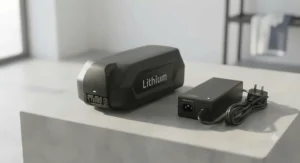
“Long-life” on a lithium golf trolley battery genuinely means something measurable: cycle life. A quality lithium pack is typically rated for 500 to over 1,000 full charge-discharge cycles before capacity noticeably degrades, compared with 200-400 for a well-maintained lead-acid equivalent. Played once a week, that’s the practical difference between replacing a battery every two to three years versus potentially seven to ten.
Capacity — the 18-hole versus 36-hole question — is really a question about margin, not raw distance. An 18-hole battery, properly charged, comfortably covers a standard round with charge to spare in good conditions; the margin shrinks on hilly courses, in cold weather (which reduces effective lithium capacity), or on higher speed settings. A 36-hole battery isn’t about playing 36 holes every time — it’s insurance against those variables, and it typically extends a battery’s effective useful life since it’s rarely discharged anywhere near empty. Buyers genuinely torn between the two should lean toward 36-hole capacity if their course has significant elevation change or if they routinely forget to charge the night before.
Battery Charging Time Explained
Charging time is one of the clearest lithium-versus-lead-acid differences and one of the most commonly misunderstood specs on a listing. Most 18-hole lithium packs from mainstream UK brands charge from empty to full in roughly 3 to 5 hours, while 36-hole packs — carrying roughly double the capacity — typically take closer to 4 to 6 hours, depending on the charger’s output and the battery’s state of health.
A few practical points worth knowing: lithium chargers use automatic cut-off, so leaving a battery on charge overnight won’t overcharge it the way an old lead-acid trickle charger sometimes could. Partial top-up charges (topping up from 60% rather than waiting for a full drain) are genuinely fine for lithium and won’t shorten its lifespan the way partial charging habits could affect older chemistries. And critically — always use the charger supplied with the specific lithium battery, never a lead-acid charger from another trolley, since the voltage and charging profile differ enough to risk damaging the cell’s Battery Management System.
Common Mistakes When Buying a Lithium Battery Golf Trolley
The most frequent mistake is buying based on trolley frame price alone and only later discovering the battery is sold separately or is a lower-capacity option than expected — always confirm whether the advertised price includes the battery and which hole-capacity it covers. The second is ignoring folded dimensions; a trolley that’s genuinely lightweight can still be awkward if it doesn’t fold down small enough for your specific boot shape, so checking folded measurements against your car matters more than most buyers realise.
A third common error is underestimating motor wattage needs for a specific course — a 200W motor that feels fine on flat parkland can labour noticeably on a genuinely hilly links course, so it’s worth being honest about your home course’s terrain rather than buying on price alone. Finally, many first-time buyers overlook replacement battery availability and cost entirely, only to discover years later that a discontinued model’s battery is hard to source — sticking with well-established brands like Motocaddy, PowaKaddy or Ben Sayers meaningfully reduces this risk given their scale and dedicated replacement battery ranges.
Safety, Regulations & Battery Disposal in the UK
Lithium batteries are safe when used and charged as intended, but they do carry specific end-of-life obligations that differ from old lead-acid packs. Under UK law, lithium batteries cannot simply be thrown away with general household waste — the Waste Batteries and Accumulators Regulations require retailers supplying more than 32kg of portable batteries a year to offer free take-back collection, and most golf retailers selling lithium trolley batteries fall under this obligation. In practice, that means your local golf shop or the manufacturer should be able to take a spent battery back for proper recycling rather than leaving you to dispose of it yourself.
Day-to-day, a few sensible habits reduce risk further: never charge a lithium trolley battery unattended overnight in an enclosed space with no ventilation, avoid charging in direct sun or extreme heat, and inspect the casing periodically for swelling or damage, which should prompt immediate retirement of the battery rather than continued use. None of this makes lithium trolley batteries dangerous in normal use — millions are in daily circulation across UK golf clubs without incident — but treating the charging and disposal process with the same care you’d give any rechargeable battery is simply sensible ownership.
Frequently Asked Questions
❓ How long does a lithium golf trolley battery charging time actually take?
❓ Is a lithium vs lead acid golf trolley battery really worth the extra cost?
❓ How much does trolley weight matter if I have a small car?
❓ Is 18-hole battery capacity enough, or should I buy 36-hole?
❓ What is a lightweight lithium golf trolley actually made from?
Conclusion
The right lithium battery golf trolley genuinely comes down to how you play, not which trolley has the longest feature list. If you’re playing a handful of rounds a month on manageable terrain, the Ben Sayers 18-Hole Lithium or PowaKaddy FX1 deliver real value without paying for capability you won’t use. If your course fights back with hills, the Motocaddy M5 GPS DHC‘s downhill control earns its keep round after round. And if portability trumps everything else — a small car, a bad shoulder, a genuine dislike of lifting anything heavier than necessary — the Hillbilly Scout Lithium is about as close to effortless as an electric trolley currently gets.
What all seven share is the underlying shift that makes 2026 a genuinely good time to buy: lithium has stopped being a premium add-on and become the sensible default, with charging times, cycle life and weight savings that lead-acid simply can’t match anymore. Whichever model you land on, you’re buying into a battery technology that’s already proven itself across millions of rounds on UK courses.
Recommended for You
- Remote Control Golf Trolley: 7 Best Picks (2026)
- Motocaddy vs Powakaddy Electric Trolley: 7 Best Picks (2026)
- Electric Golf Trolley Under £500: 7 Brilliant Picks for 2026
Disclaimer: This article contains affiliate links. As an Amazon Associate, I earn from qualifying purchases. If you purchase products through these links, we may earn a small commission at no additional cost to you.
✨ Found this helpful? Share it with your friends! 💬🤗
