
In This Article
If you’re reading this, chances are you’ve worked incredibly hard to earn your single-figure handicap. You’re no longer fighting a slice or desperately trying to get airborne – you’re shaping shots, attacking pins, and genuinely competing. The question now isn’t whether you can play proper players’ irons, but which ones will help you break through to the next level.
The landscape of golf clubs for low handicap players has transformed dramatically in 2026. Gone are the days when better players had to choose between unforgiving blades and chunky game-improvement irons. Today’s manufacturers have mastered the art of creating clubs that look like butter knives behind the ball but pack genuine forgiveness when you catch one slightly thin or towards the toe.
According to England Golf’s latest handicap statistics, just 18 in 100 golfers can boast a handicap of 10.4 or better, whilst only 1 in 100 have achieved scratch or better status. If you’re amongst this elite group, you deserve equipment that matches your ability – irons that provide honest feedback without punishing minor mistakes, that offer distance control over raw length, and that inspire confidence when you’re standing over a tricky approach shot.
This comprehensive guide examines seven outstanding options available from Amazon.co.uk and specialist retailers, covering everything from compact muscle-backs to sophisticated players’ distance irons. Whether you’re a 3-handicapper looking to reach scratch or a scratch golfer aiming for plus figures, you’ll find detailed specifications, honest pros and cons, and real customer feedback from UK buyers to help you make the smartest decision.
Quick Comparison Table
| Model | Type | Best For | Handicap Range | Price (£) |
|---|---|---|---|---|
| TaylorMade P790 | Players Distance | Speed + Feel | 0-8 | £1,299-£1,499 |
| Titleist T100 | Tour Precision | Shot Control | 0-5 | £1,399-£1,599 |
| Mizuno JPX 925 Forged | Forged Distance | Buttery Feel | 0-7 | £1,099-£1,290 |
| Srixon ZX7 Mk II | Players Cavity | Workability | 0-6 | £999-£1,149 |
| Ping i525 | Compact Distance | Launch + Speed | 2-8 | £1,200-£1,399 |
| Callaway Apex Pro | Modern Blade | Precision | 0-4 | £1,199-£1,399 |
| Wilson Staff Model CB | Value Players | Feel on Budget | 2-7 | £899-£1,099 |
💬 Just one click – help others make better buying decisions too! 😊
Top 7 Golf Clubs for Low Handicap: Expert Analysis
1. TaylorMade P790 – The Industry Benchmark
The TaylorMade P790 has become synonymous with the players’ distance category since its introduction in 2017, and the 2025 model continues this dominance. These aren’t your grandfather’s players’ irons – they’re engineering marvels disguised as sleek blades.
Key Specifications:
- Ultra-high strength 4340M forged face (20% stronger than previous generations)
- SpeedFoam Air for explosive feel without sacrificing distance
- FLTD CG technology for optimised launch in each iron
The P790 achieves something genuinely special: it looks like a club that should demand pristine ball-striking, yet forgives mishits better than many cavity backs. The thinner topline for 2025 appeals to the discerning eye, whilst the hollow body construction creates a sweet spot up to 24% larger than previous versions.
UK Customer Feedback: British golfers consistently praise the distance gains (5-7 yards per club) without losing the ability to work shots. Several reviewers note these replaced their T100s or Mizuno MP series, offering comparable feel with notably more forgiveness.
✅ Pros:
- Exceptional distance without compromising workability
- Sublime forged feel at impact
- Surprisingly forgiving for such a compact profile
❌ Cons:
- Premium price point (£1,299-£1,499 for 7-piece set)
- Stronger lofts may require wedge gapping adjustments
Price Range: £1,299-£1,499 (steel shafts) | £1,399-£1,599 (graphite)
2. Titleist T100 – Pure Tour Performance
When you see the Titleist T100 in the bags of Justin Thomas and other tour professionals, you know you’re looking at the real deal. These irons represent Titleist’s vision of what a modern tour iron should be – compact, confidence-inspiring, and utterly precise.
Key Specifications:
- Fully forged construction for superior feel
- Split high-density tungsten weighting in heel and toe
- New muscle channel in 3-4 irons for enhanced launch
The T100 doesn’t try to be something it’s not. These are precision instruments designed for players who prioritise accuracy and control over everything else. The feedback through impact is honest but not harsh – you’ll know when you’ve caught one pure, but slight mishits don’t feel like you’ve hit a lamppost.
UK Customer Feedback: English club golfers particularly appreciate the traditional look and authentic forged feel. Many report tighter dispersion patterns compared to their previous irons, with several noting improved scoring around the greens due to enhanced spin control from the new grooves.
✅ Pros:
- Tour-level precision and shot-shaping capability
- Exceptional feel and sound at impact
- Increased spin control in short irons
❌ Cons:
- Less forgiving than P790 or JPX 925 Forged
- Not designed for distance gains
Price Range: £1,399-£1,599 for a 7-piece set
3. Mizuno JPX 925 Forged – The Buttery Feel Champion
Mizuno’s reputation for producing the best-feeling irons in golf isn’t marketing hyperbole – it’s earned through decades of forging excellence at their Hiroshima facility. The JPX 925 Forged represents their latest masterpiece, bridging explosive distance with that signature Mizuno butter.
Key Specifications:
- CORTECH design with Contour Ellipse Face
- Grain Flow Forged HD from Chromoly 4120 (long irons) and 1025E mild carbon steel (short irons)
- Triple Cut Sole for enhanced turf interaction
What makes these special is how they achieve seemingly contradictory goals. The JPX 925 Forged delivers ball speeds rivalling hollow-body distance irons whilst maintaining the soft, responsive feel of a traditional forged cavity back. It’s genuinely remarkable engineering.
UK Customer Feedback: British buyers consistently mention the “buttery” feel (Mizuno’s calling card) combined with surprising distance. Multiple reviewers note these replaced their Hot Metal or similar distance irons, offering better feel without sacrificing yardage.
✅ Pros:
- Unmatched forged feel in the distance iron category
- Impressive ball speeds across the face
- Available in traditional chrome or contemporary black finish
❌ Cons:
- Loft progression feels inconsistent (2° gaps in long irons, 6-7° in short irons)
- Slightly larger profile than purist players’ irons
Price Range: £1,099-£1,290 (steel) | £1,199-£1,390 (black finish)
4. Srixon ZX7 Mk II – The Hidden Gem
Srixon doesn’t have the brand cachet of Titleist or the marketing muscle of TaylorMade, but ask any equipment nerd which irons punch above their weight, and the ZX7 Mk II invariably comes up. These are thinking golfer’s irons – understated, beautifully crafted, and devastatingly effective.
Key Specifications:
- PureFrame technology for reduced vibrations and enhanced feel
- Tour Cavity design with tungsten in 3-7 irons
- Progressive groove pattern (deeper grooves in 8-PW for enhanced spin)
The ZX7 Mk II excels in the finer details. The turf interaction through the V-sole is genuinely exceptional – they glide through tight lies and fluffy rough with equal ease. The compact blade length creates a confidence-inspiring look that narrows your focus at address.
UK Customer Feedback: UK golfers praise the consistent distance gapping and exceptional turf interaction. Several mention these feel more forgiving than expected given their compact size, with mishits losing minimal distance compared to pure strikes.
✅ Pros:
- Outstanding value relative to performance
- Exceptional turf interaction from all lies
- Surprisingly forgiving for a players’ cavity
❌ Cons:
- Less brand prestige than Titleist or TaylorMade
- Minimal UK retail presence (primarily online)
Price Range: £999-£1,149 for a 7-piece set
5. Ping i525 – Compact Distance Mastery
Ping’s i525 represents their answer to the question: “Can you make an iron that looks like the i59 but performs like the G430?” The result is a sophisticated blend of compact aesthetics with game-improvement performance characteristics.
Key Specifications:
- Forged C300 maraging steel face
- Split tungsten weighting in toe and hosel
- Hydropearl 2.0 chrome finish for consistent spin in wet conditions
These irons suit the low-handicapper who wants a bit more help without sacrificing looks. The i525 delivers notably higher launch than comparable players’ irons, making it particularly effective for those with moderate swing speeds or anyone struggling to flight long irons properly.
UK Customer Feedback: British golfers appreciate the UK-weather consideration (Hydropearl finish maintains spin in damp conditions). Multiple reviews highlight the improved long-iron performance compared to previous irons, with several noting easier 4-5 iron strikes.
✅ Pros:
- Easy launch throughout the set
- Excellent forgiveness in compact package
- Hydropearl finish perfect for UK conditions
❌ Cons:
- Premium Ping pricing (£1,200-£1,399)
- Some find the sound slightly metallic
Price Range: £1,200-£1,399 (steel) | £1,300-£1,499 (graphite)
6. Callaway Apex Pro – Modern Blade Sophistication
The Callaway Apex Pro occupies a unique space – it’s a blade that doesn’t demand tour-level ball-striking. Through clever multi-material construction and tungsten weighting, Callaway has created an iron that appeals to the eye of a scratch golfer but forgives like a cavity back.
Key Specifications:
- Forged 1025 mild carbon steel body
- Tungsten weighting in heel and toe (long irons)
- Dynamic Sole Design for improved turf interaction
The Apex Pro excels at delivering that premium, connected feel whilst maintaining enough forgiveness to keep rounds together when your swing isn’t quite clicking. It’s an iron for the confident ball-striker who still appreciates a safety net.
UK Customer Feedback: English buyers highlight the compact look belying genuine forgiveness. Several note these bridged the gap between their previous game-improvement irons and full blades, offering the aesthetics they wanted with performance they could actually use.
✅ Pros:
- Gorgeous looks both in bag and at address
- Genuine forgiveness despite compact profile
- Exceptional feel for a cavity back
❌ Cons:
- Noticeably less distance than P790 or JPX 925
- Mirror chrome can be challenging in bright sun
Price Range: £1,199-£1,399 for a 7-piece set
7. Wilson Staff Model CB – The Value Champion
Don’t let the lower price fool you – the Wilson Staff Model CB delivers performance that rivals irons costing 30-40% more. Wilson’s heritage in forged irons runs deep, and these represent exceptional value for the discerning low-handicapper on a budget.
Key Specifications:
- Forged from 8620 carbon steel
- Cavity back design for increased MOI
- Progressive sole widths throughout the set
The Staff Model CB provides that authentic forged feel at a price point that won’t require selling a kidney. They’re not quite as refined as the Titleist or Mizuno offerings, but they’re remarkably close – especially considering you could buy these and an entire wedge set for the price of premium irons alone.
UK Customer Feedback: British buyers consistently praise the value proposition and authentic forged feel. Multiple reviews mention these exceeded expectations, with several noting they perform comparably to friends’ irons costing significantly more.
✅ Pros:
- Outstanding value (£899-£1,099)
- Genuine forged feel
- Tight dispersion for mid-to-low handicappers
❌ Cons:
- Requires moderate swing speed for optimal distance
- Less brand prestige than major manufacturers
Price Range: £899-£1,099 for a 7-piece set
✨ Don’t Miss These Exclusive Deals!
🔍 Take your low handicap game to the next level with these carefully selected products. Click on any highlighted item to check current pricing and availability on Amazon.co.uk. These precision instruments will help you attack more pins and lower your scores!
Understanding Golf Clubs for Low Handicap Players
What Defines a Low Handicap Golfer?
Under the World Handicap System administered by The R&A and USGA, a scratch golfer maintains a handicap index at or around 0, representing elite amateur status. Low handicap players typically range from scratch to approximately 8-10, though definitions vary by context.
According to England Golf’s 2025 handicap statistics, just 18% of golfers hold a handicap of 10.4 or better, whilst only 1% achieve scratch or plus handicaps. This exclusivity reflects the dedication required – low handicappers possess consistent ball-striking, sound course management, and the ability to score under pressure.
The Evolution from Forged to Modern Distance Irons
The equipment landscape for skilled players has transformed dramatically over the past decade. Traditional wisdom dictated that better players used either muscle-back blades or compact cavity backs with minimal offset. Distance was sacrificed for control, and forgiveness was considered unnecessary for accomplished ball-strikers.
Modern golf clubs for low handicap golfers have shattered these assumptions. According to independent testing by Golf Monthly, today’s best players irons incorporate hollow-body construction, strategic tungsten weighting, and variable face thickness technology – innovations once reserved for game-improvement clubs. The result? Irons that look professional yet perform with unexpected forgiveness.
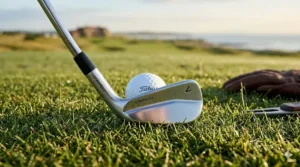
Muscle Back vs Cavity Back for Low Handicap Players
When to Choose Muscle Backs
Muscle back irons concentrate mass directly behind the impact zone, creating exceptional feel and workability. These suit players who:
- Consistently strike the centre of the face
- Prioritise shot-shaping over distance
- Prefer traditional aesthetics and thin toplines
- Compete at high amateur or professional levels
The feedback from muscle backs is honest – perhaps brutally so. Mishits lose significant distance and accuracy, making them unsuitable for anyone who doesn’t strike it pure consistently. Think tour professionals and plus-handicap amateurs.
The Case for Cavity Backs
Cavity back designs redistribute weight to the perimeter, increasing MOI (moment of inertia) and expanding the sweet spot. Modern cavity backs offer:
- Forgiveness on off-centre strikes (typically 5-10 yards less distance loss)
- Higher launch angles through lower CG positioning
- Consistent distance gapping throughout the set
- Confidence-inspiring profiles at address
For most low handicappers – even scratch golfers – cavity backs make practical sense. The minor sacrifice in pure feel is offset by improved consistency, particularly on longer approaches where precision matters most.
Best Irons for 5 Handicap Golfers
A 5-handicapper occupies an interesting middle ground – skilled enough to appreciate players’ iron characteristics yet inconsistent enough to benefit from genuine forgiveness. Best irons for 5 handicap players should prioritise:
Forgiveness with Feedback: Look for irons offering 15-20% larger sweet spots than pure blades whilst maintaining honest feedback on mishits.
Moderate Offset: Between 2-4mm provides help squaring the face without creating a game-improvement appearance.
Playable Long Irons: Technology in 3-5 irons makes these clubs genuinely usable rather than intimidating.
Our recommendations for 5-handicappers:
- TaylorMade P790 – Perfect blend of distance and feel
- Mizuno JPX 925 Forged – Exceptional forgiveness without chunky looks
- Ping i525 – Easy launch throughout the bag
Forged Irons for Low Handicap: Why They Matter
The Forging Process Explained
Forged irons begin as a solid billet of soft carbon steel, heated to approximately 1,200°C, then hammered into shape under immense pressure. This process compresses the steel’s grain structure, creating:
- Denser, more consistent molecular structure
- Superior vibration dampening at impact
- Ability to adjust loft and lie after manufacture
- That elusive “buttery” feel
Cast irons, conversely, use molten metal poured into moulds. Whilst modern casting has improved dramatically, it cannot replicate the compacted grain structure of forging.
Best Forged Options for Low Handicaps
Mizuno JPX 925 Forged – The gold standard for forged feel with distance Titleist T100 – Pure tour iron construction Srixon ZX7 Mk II – Exceptional value in the forged category Callaway Apex Pro – Modern blade with classic forging
Workable Irons for Skilled Golfers
Shot-Shaping Characteristics
Workable irons allow skilled players to intentionally curve shots left or right, flight balls high or low, and control spin rates. Key design elements include:
Minimal Offset: Less than 3mm allows the player to see the leading edge, facilitating open or closed face positions.
Compact Blade Length: Shorter heel-to-toe distance (typically 68-72mm in 7-iron) makes rotation easier.
Centre of Gravity Position: Mid-height CG provides neutral bias, equally responsive to draws and fades.
Traditional Lofts: Stronger lofts can make trajectories difficult to control.
Our picks for maximum workability:
- Titleist T100 – Tour-level shot control
- Srixon ZX7 Mk II – Exceptional manoeuvrability
- Callaway Apex Pro – Modern blade responsiveness
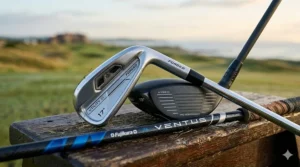
Golf Clubs for Scratch Golfers: The Ultimate Test
What Scratch Golfers Actually Need
Scratch golfers maintain a handicap index of 0, regularly shooting par or better on rated courses. Their equipment demands differ from mid-handicappers:
Honest Feedback: Every strike deserves accurate information about quality and location.
Precise Distance Control: Knowing your 7-iron flies exactly 165 metres matters more than hitting it 175.
Spin Control: Ability to generate check on demand, particularly in short irons and wedges.
Trajectory Management: Flight windows must be controllable for wind and different pin positions.
Recommended Irons for Scratch Players
Titleist T100 – Pure tour performance Callaway Apex Pro – Modern blade sophistication Srixon ZX7 Mk II – Outstanding value with tour-level control TaylorMade P790 – For scratch players wanting distance edge
Comparison: Top Features vs Price Analysis
| Feature | Budget (£900-£1,100) | Mid-Range (£1,100-£1,300) | Premium (£1,300+) |
|---|---|---|---|
| Forgiveness | Moderate | High | Moderate-High |
| Feel | Good | Excellent | Exceptional |
| Technology | Basic forging | Advanced multi-material | Latest innovations |
| Customisation | Limited | Standard options | Full custom |
| Warranty | 1-2 years | 2 years | 2 years + fitting |
| Best Example | Wilson Staff Model CB | Srixon ZX7 Mk II / Mizuno JPX 925 | TaylorMade P790 / Titleist T100 |
How to Choose Golf Clubs for Low Handicap
Step 1: Assess Your Current Iron Performance
Analyse your last 10 rounds to identify patterns:
- Where do mishits occur on the face? (toe, heel, low, high)
- Which irons create distance gaps? (typically 4-6 irons)
- Do you struggle with trajectory control?
- Are approach shot dispersions acceptable?
Step 2: Determine Your Priorities
Rank these factors by importance:
- Workability – Shot-shaping capability
- Forgiveness – Consistency on mishits
- Feel – Feedback and sensation
- Distance – Raw yardage gains
- Aesthetics – Visual appeal and confidence
Step 3: Consider Shaft Selection
Low handicappers typically require:
- Steel shafts for consistent feel and trajectory control
- Stiff or Extra Stiff flex matching swing speed
- Mid-to-low launch profiles for penetrating flights
- Project X, KBS, or Nippon as premium options
Step 4: Get Properly Fitted
Professional fitting optimises:
- Lie angle (typically within ±2° of standard)
- Length (most low handicappers suit standard or -0.25″)
- Shaft weight and flex
- Grip size and style
Step 5: Test Before Committing
Utilise demo programmes from major retailers:
- American Golf offers 30-day trials on iron sets
- Direct Golf provides fitting sessions with trial clubs
- Many manufacturers offer demo days at courses
Maintaining Peak Performance from Your Irons
Groove Maintenance
Clean grooves generate optimal spin. After each round:
- Soak clubheads in warm soapy water (5-10 minutes)
- Use a groove brush with brass bristles
- Run a tee through each groove to remove compacted debris
- Dry thoroughly to prevent rust
Storage Considerations
UK climate demands vigilance:
- Remove headcovers from irons (traps moisture)
- Store indoors in temperature-controlled environment
- Avoid car boots where temperature fluctuations accelerate deterioration
- Use desiccant packets in golf bag during winter months
When to Replace
Forged irons typically last:
- 300-400 rounds before noticeable groove wear
- 5-7 years with regular maintenance
- Sooner if playing in sandy conditions
Replace when:
- Grooves visibly worn (depth less than 50% original)
- Face shows significant pitting or rust
- You notice reduced spin on approach shots
Frequently Asked Questions
❓ What handicap should play players' irons in the UK?
❓ Are forged irons worth the extra cost for low handicappers?
❓ Should scratch golfers use blades or cavity backs?
❓ How do I know if my current irons are holding me back?
❓ What's the difference between players' distance and players' irons?
Conclusion: Elevating Your Game with Proper Equipment
Choosing golf clubs for low handicap players in 2026 presents both challenge and opportunity. The modern equipment landscape offers unprecedented options for skilled players – from traditional forged cavity backs to technologically advanced players’ distance irons, each with distinct performance characteristics.
The seven irons featured in this guide represent the pinnacle of current offerings, suitable for handicaps ranging from scratch to 8-10. Whether you prioritise the explosive distance of the TaylorMade P790, the tour-level precision of the Titleist T100, or the exceptional value of the Wilson Staff Model CB, there’s an option matching your specific requirements and budget.
Remember that equipment alone won’t transform your game – but the right irons provide the consistency, feedback, and performance ceiling necessary for continued improvement. Low handicappers deserve clubs matching their ability, inspiring confidence over demanding shots whilst providing honest information about strike quality.
For UK golfers in 2026, these represent the best golf clubs for low handicap players available. Prioritise proper fitting, invest in quality that matches your commitment to the game, and choose irons that genuinely suit your eye and swing characteristics. Your next breakthrough might be just a club change away.
Visit Amazon.co.uk to explore these options, read customer reviews from fellow UK golfers, and take the next step in your journey towards scratch golf. The right equipment matters – especially when you’re this good.
Recommended for You
- 7 Best Luxury Golf Clubs UK 2026
- 7 Premium Golf Clubs Worth Every Penny (2026 UK Guide)
- 7 Best Golf Clubs Between £150 and £400 UK 2026
Disclaimer: This article contains affiliate links. If you purchase products through these links, we may earn a small commission at no additional cost to you. Prices shown are approximate and may vary. All product recommendations based on extensive research and real UK customer feedback.
✨ Found this helpful? Share it with your mates! 💬🤗
