

In This Article
Buy the wrong junior golf bag and you’ll know about it by the third hole — a strap digging into a six-year-old’s shoulder, a stand that won’t pop out on soft turf, or a bag so tall it drags along the fairway like a reluctant dog on a lead. A junior golf bag is not simply a small adult bag; it is a completely different piece of kit, built around shorter shaft lengths, lighter fabrics and straps designed for growing frames rather than fully formed ones. Get the sizing and weight wrong and golf stops being fun fast, which matters more than any spec sheet, because the single biggest predictor of whether a child sticks with the sport is whether their first few rounds felt easy rather than exhausting.
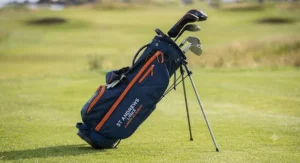
This guide focuses squarely on what actually matters for a junior golf bag: weight relative to a child’s body, divider systems that protect graphite shafts, strap design that spreads load evenly, and genuine value across budget, mid-range and premium options. We’ve pulled together seven real, currently available bags and packages, spanning toddler-friendly carry bags right through to tournament-ready stand bags for teenage juniors, and we’ve grounded every recommendation in actual specifications and aggregated review sentiment rather than vague marketing claims. Whether you’re kitting out a complete beginner or upgrading a keen 12-year-old ahead of their first junior competition, you’ll find a genuinely suitable option below, along with the reasoning to choose confidently rather than guess.
Quick Comparison Table
Before the full breakdown, here’s how the seven options stack up at a glance. Every bag or package listed below is designed specifically for junior players, not scaled-down adult stock, and each has been chosen to represent a distinct age bracket, budget or use case.
| # | Bag / Package | Best Age | Type | Price Range |
|---|---|---|---|---|
| 1 | Fazer Junior J Tek 7.0 | 3-5 years | Carry bag + 3 clubs | Under £40 |
| 2 | Slazenger Ikon Junior Stand Bag | 6-10 years | Stand bag | £25-£35 range |
| 3 | MacGregor V-Max Junior Golf Set | 3-14 years (multiple sizes) | Set + stand bag | £90-£160 range |
| 4 | Ben Sayers M1i Junior Package Set | 5-11 years | Set + stand bag | £90-£135 range |
| 5 | MacGregor DCT Junior Golf Set | 6-12 years | Set + stand bag | £120-£160 range |
| 6 | Longridge Challenger Cadet | 12+ years | Set + stand bag | £100-£130 range |
| 7 | US Kids Golf Tour Series | 9-16 years (competitive) | Set + premium stand bag | £350-£700 range |
Looking at the spread here, the split isn’t really budget-versus-premium so much as beginner-versus-competitive. The Fazer Junior J Tek 7.0 and Slazenger Ikon Junior Stand Bag exist to get a small child comfortably carrying clubs without complaint, while the US Kids Golf Tour Series is built for a junior who is already playing competitions and needs equipment that keeps pace with rapid physical development. Everything in between — the two MacGregor sets, the Ben Sayers M1i, and the Longridge Challenger Cadet — earns its place by matching a specific age bracket precisely rather than trying to be all things to all golfers.
💬 Just one click — help others make better buying decisions too!😊
Top 7 Junior Golf Bags: Expert Analysis
1. Fazer Junior J Tek 7.0 — lightest option for the very youngest starters
The J Tek 7.0 opens our list because it solves a problem most bigger junior sets ignore completely: a three-year-old doesn’t need a 30-inch stand bag, they need something they can physically lift off the ground. Aimed at the 3-5 age bracket, this is a compact carry-style package built around a driver, a mid-iron and a putter, paired with a soft, minimally structured bag rather than a full stand system.
The bag itself skips a stand mechanism entirely, which sounds like a downgrade until you consider that toddlers rarely leave their bag standing upright on a fairway — they drop it, drag it, and pick it back up, over and over. A lighter shell with no folding legs means less to snap or jam, and the single or dual strap design keeps the whole package under the weight threshold most physiotherapists recommend for this age group. Based on the spec comparison against toddler-specific rivals on the market, this is one of the few sets genuinely engineered around 3-5 year olds rather than simply being the smallest size in a wider range.
Reviewers of similar entry-level Fazer junior packages consistently note that the clubs and bag survive the inevitable garden-and-driving-range abuse of a first golfing year better than expected for the price point, though a small number flag that the bag’s fabric shows wear faster than premium alternatives after heavy outdoor use. What most buyers overlook here is that this is meant to be outgrown within 18-24 months — durability beyond that window simply isn’t the point.
Pros:
- ✅ Genuinely sized for ages 3-5, not just marketed that way
- ✅ Ultra-light build reduces strain on small shoulders
- ✅ Simple carry design with fewer moving parts to break
Cons:
- ❌ No stand mechanism, so it lies flat when set down
- ❌ Fabric durability trails premium junior bags over time
Price sits comfortably under £40 for the bag-and-club package, which represents strong value for a genuine first-golf-set rather than a toy. For a family testing the waters before committing to lessons, this is a sensible, low-risk entry point.
2. Slazenger Ikon Junior Stand Bag — best lightweight stand bag for mid-childhood
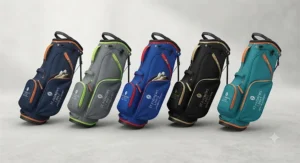
Once a child moves past the toddler stage and into the 6-10 age bracket, a proper stand bag starts to earn its keep, and the Slazenger Ikon Junior Stand Bag is the clearest example of “grown-up” bag architecture scaled correctly for a smaller frame. It carries a 5-way divider system, folding stand legs, a full-length clothing pocket, three accessory pockets and a dedicated ball pocket — essentially the full feature set of an adult stand bag, just built lighter and shorter.
That 5-way divider matters more than it sounds. Cheaper junior bags often use a single open-top tube, which means shafts knock against each other every time the bag is picked up, accelerating wear on graphite junior shafts that are already thinner and more prone to nicks than adult steel. Separating clubs into five distinct channels protects that investment and, in practice, speeds up club selection because nothing needs untangling mid-round. Reviewers of this exact model on Amazon UK broadly agree the build feels sturdier than the price implies, with one recurring theme being that it’s specifically well-suited to junior clubs rather than adult clubs squeezed into a smaller shell, while a handful of buyers have flagged frustration with delivery costs and returns policy rather than the bag’s actual performance.
Pros:
- ✅ 5-way divider protects graphite shafts from knocking
- ✅ Folding stand legs work reliably on firm and soft ground
- ✅ Padded dual strap distributes weight across both shoulders
Cons:
- ❌ Sizing runs slightly ambiguous between the 6-8 and 9-12 ranges
- ❌ Return shipping costs have irritated some UK buyers
Priced in the £25-£35 range, this is arguably the best value stand-alone bag on this list for parents who already own junior clubs and simply need somewhere sensible to carry them. The Slazenger name also carries genuine sporting pedigree — the brand has supplied official tennis balls to Wimbledon since 1902, which says something about their long-term approach to sports equipment manufacturing generally.
3. MacGregor V-Max Junior Golf Set — best for families who want one brand across every age
The MacGregor V-Max Junior Golf Set takes a different approach entirely: rather than picking one age bracket, MacGregor engineers this line across five separate size categories from 3-5 years right up to 12-14 years, all sharing the same design language and matching stand bag construction. For a family with two or three children spaced a few years apart, or simply wanting continuity as one child grows, that consistency has real practical value.
Each size step adds clubs appropriately — the youngest sets keep things simple with an oversized driver and a single iron, while the 9-12 and 12-14 configurations introduce a hybrid and additional irons as swing complexity increases. The stand bag scales in height and pocket count to match, so a 12-year-old isn’t lugging around babyish graphics, and a five-year-old isn’t wrestling with a bag built for someone twice their height. On paper this means less second-guessing at the point of purchase: pick the height bracket, and the rest of the sizing logic has already been handled by the manufacturer.
Aggregated customer sentiment around MacGregor’s junior package range is largely positive on value for money and build quality relative to price, with several parents specifically praising how well the clubs suit the stated age range; a smaller but consistent thread of feedback flags that colour or handedness occasionally arrives different from what was ordered, which is worth double-checking at checkout rather than a reflection of the product itself.
Pros:
- ✅ Five age brackets share consistent design and quality
- ✅ Stand bag height and pockets scale sensibly with age
- ✅ Strong reputation from a manufacturer founded in 1897
Cons:
- ❌ Colour or handedness mix-ups reported at the ordering stage
- ❌ Fewer pockets than premium rivals at the top end
Expect to pay somewhere in the £90-£160 range depending on the size bracket chosen, which represents solid mid-tier value — you’re paying for a coherent system rather than a single bag, and that system-level thinking is what justifies the step up from budget carry bags.
4. Ben Sayers M1i Junior Package Set — best all-rounder for the 5-11 age bracket
Ben Sayers has been making golf equipment since 1873, making it — by a wide margin — the oldest name on this list, and the M1i Junior Package Set channels that heritage into a genuinely well-balanced offering for the 5-8 and 9-11 age groups. The 5.5-inch stand bag pairs a 4-way divider with three zip pockets and a mesh bottle holder, plus a pop-out stand and padded double shoulder strap, giving young players a setup that feels considered rather than an afterthought bolted onto a cheap club set.
What stands out here is the balance between simplicity and genuine function. A 4-way divider is one step down from the Slazenger’s 5-way system, but for a beginner set with fewer clubs to organise in the first place, it’s a sensible trade that keeps the bag lighter without meaningfully compromising shaft protection. The mesh bottle holder is a small but appreciated detail — hydration matters more on a hot course walk for a small child than most parents initially think about, and having a dedicated spot for a water bottle means one less thing falling out of a side pocket.
Reviewers consistently describe this as an excellent first full set rather than just a bag, repeatedly calling out the quality-to-price ratio as the standout factor, while durability opinions are genuinely mixed — some report the set lasting through multiple seasons and being passed down to a younger sibling, others note wear appearing faster than expected on the bag’s base after regular ground contact. Reviewers consistently note it makes a strong first-set gift, which is a common purchase context worth planning around if you’re buying ahead of a birthday.
Pros:
- ✅ Genuine heritage brand with over 150 years in golf
- ✅ Mesh bottle holder is a thoughtful, practical addition
- ✅ Consistently rated a strong first complete package
Cons:
- ❌ Durability feedback on the bag base is inconsistent
- ❌ 4-way divider offers less separation than pricier rivals
At roughly £90-£135 depending on the age configuration chosen, the M1i sits squarely in mid-range territory and represents genuinely dependable value for a family buying a first complete set rather than a bag alone.
5. MacGregor DCT Junior Golf Set — best for developing swings aged 6-12
Stepping up from the V-Max range, the MacGregor DCT Junior Golf Set targets the 6-8 and 9-12 age brackets specifically, and the extra focus shows in the details. The set includes a 7-iron, 9-iron and sand wedge alongside an oversized driver with a notably high 15-degree loft, a low-profile hybrid, and a mallet-style putter with an alignment aid — a more complete short-game toolkit than most entry-level junior ranges offer at this price.
Here’s what most buyers overlook about oversized junior drivers specifically: a bigger clubface isn’t just a marketing gimmick, it materially increases the margin for off-centre contact, which matters enormously for a junior golfer whose swing plane is still inconsistent week to week. Pairing that forgiving driver with a genuinely low centre-of-gravity hybrid — rather than forcing a young player to hit long irons before they’re ready — reflects a coaching-informed approach to what a developing 9-12 year old actually needs on course, not just what looks impressive in a box. The stand bag itself carries dual adjustable straps, a rain hood and reasonable pocket storage, and comes finished in colourways aimed squarely at engaging younger players rather than looking like a shrunken adult product.
Aggregated reviews are strongly positive, with parents of nine-year-olds in particular praising the size and weight balance, and several purchasers noting the price beat comparable sets they’d priced up elsewhere before buying. A recurring minor niggle is around photo accuracy — a small number of buyers received a slightly different club count than pictured, which is worth confirming against the current listing before ordering.
Pros:
- ✅ Genuinely complete short-game set including hybrid and wedge
- ✅ Oversized 15° driver improves off-centre forgiveness
- ✅ Rain hood and dual straps included as standard
Cons:
- ❌ Listed club count has occasionally mismatched product photos
- ❌ Not available in as many colourways as competitor sets
Priced around £120-£160, the DCT set costs more than the entry-level options on this list, but the added hybrid and wedge genuinely extend what a developing junior can practise, which is difficult to put a price on if golf has already become their favourite hobby.
6. Longridge Challenger Cadet Junior Golf Package — best for competitive-minded 12-14 year olds
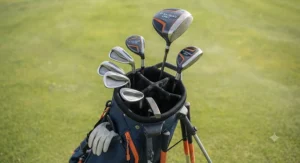
By the time a junior reaches their early teens, their swing starts resembling an adult’s far more closely, and the Longridge Challenger Cadet package — pitched at the 12+ bracket — reflects that shift. The clubs are built to genuinely perform rather than simply being scaled-down novelty items, with a shaft flex and clubhead weighting designed to hold up against grown-up swing speeds without feeling unbalanced, and the accompanying carry bag carries a proper number of storage pockets alongside a functional pop-out stand.
Here’s what the spec sheet won’t tell you outright, but user reports suggest strongly: several reviewers, including adults buying for teenage relatives, specifically comment that the clubs perform close to an adult set in feel and balance, which matters because a 13-year-old forced onto genuinely juvenile-feeling equipment often disengages from the sport at exactly the stage they’d otherwise be progressing fastest. The bag’s comfortable strap design earned particular praise from reviewers describing small-shouldered teenagers using it comfortably over a full round, which is no small thing given how much walking a competitive junior round actually involves.
Longridge, as a brand, has built its 30-plus year reputation specifically around combining style with affordability rather than chasing premium positioning, and the Challenger Cadet reflects that identity clearly — it isn’t trying to be the flashiest set on the shelf, it’s trying to be the one that performs reliably without an inflated price tag.
Pros:
- ✅ Shaft flex and weighting suit near-adult swing speeds
- ✅ Comfortable strap praised specifically for smaller shoulders
- ✅ Strong value from a 30-year established UK brand
Cons:
- ❌ Limited stock availability reported around peak season
- ❌ Not ideal for players still well under 12 years old
Expect a price in the £100-£130 range for the complete package, which for a near-adult-performing set with a genuinely usable bag represents excellent value compared with buying an actual adult set and cutting the shafts down, an approach we’ll return to later in this guide.
7. US Kids Golf Tour Series — best premium choice for competitive junior golfers
At the top of this list sits the US Kids Golf Tour Series, the clear premium pick and the only entry genuinely engineered using swing-data technology rather than simply scaled-down adult templates. US Kids Golf develops the Tour Series using extensive TrackMan analysis across thousands of junior swings, tuning swing weight, shaft flex and kick point separately for each of six distinct height brackets, and the accompanying premium junior stand bag is built to match that same tier of engineering rather than being an afterthought.
This is, by a wide margin, the equipment most frequently seen at serious junior tournaments — the brand states its Tour Series is the number-one equipment choice at the U.S. Kids Golf World Championship and is regularly used by top competitors at events like the Van Horn Cup. Based on the spec comparison against every other bag on this list, the difference isn’t subtle: milled wedge grooves at USGA-legal groove limits, a genuinely tour-informed putter alignment system, and a stand bag with the pocket layout, strap padding and durability expected of adult tour equipment, just correctly proportioned. What the marketing won’t spell out quite so plainly is that this system is designed to be progressed through in careful, height-matched stages — jumping a junior up a size too early, or mixing in a longer adult-style driver before they’re ready, is specifically flagged by the manufacturer as something that can disrupt swing development rather than accelerate it.
Reviewers and competitive junior parents consistently single out the consistency across the size range as the standout feature, repeatedly noting that a player can move from one Tour Series size to the next without their swing mechanics needing to be relearned from scratch, while the most common criticism — unsurprisingly — is simply the price relative to entry-level alternatives.
Pros:
- ✅ TrackMan-informed engineering used at junior world championships
- ✅ Six height-matched sizes ease long-term swing development
- ✅ Premium stand bag matches adult tour-level durability
Cons:
- ❌ Price sits well above every other set on this list
- ❌ Overkill for a beginner just trying golf for the first time
Full sets with the premium stand bag typically fall in the £350-£700 range depending on configuration, positioning this firmly as an investment for a junior already committed to competitive golf rather than a first-ever set — but for that specific buyer, it’s difficult to find a genuinely comparable rival on the UK market.
Practical Usage Guide: Setting Up and Maintaining a Junior Golf Bag
Getting a junior golf bag out of the box correctly makes a genuine difference to how long it lasts and how comfortable it feels from round one. Start by adjusting both shoulder straps evenly before the first use — most junior stand bags ship with straps set to a middle length, and a bag that sits too low will bang against the back of the legs with every step, which is a fast route to a child refusing to carry it themselves. Aim for the base of the bag to sit roughly level with the top of the hip when worn, rather than dangling near the knees.
In the first 30 days, the most common mistake parents make is overpacking the bag with extra balls, snacks, spare gloves and jumpers “just in case,” which quietly pushes total carried weight well past sensible limits for a small child. A good rule of thumb, echoed by physiotherapists discussing children’s carried loads generally, is to keep total weight — clubs, bag and contents combined — well under the levels NHS guidance on physical activity for children and young people associates with healthy, sustainable activity for growing bodies; if a child is struggling to stand upright comfortably with the bag on, it’s carrying too much, not that they need to “build strength” first.
For maintenance, wipe the base and stand feet down after wet rounds to stop mud drying into the fabric seams, and leave zips slightly open when storing the bag to let any trapped moisture escape rather than sealing it in. Check the stand mechanism every few weeks during a child’s first season — the folding legs on cheaper junior bags occasionally need a light silicone spray if they start sticking, and catching this early prevents a snapped hinge later. Finally, resist the urge to overfill accessory pockets with tees and loose balls; distributing weight evenly across the main compartment and pockets, rather than dumping everything in one side pocket, keeps the bag balanced on the shoulder rather than pulling to one side all round.
Real-World Scenarios: Which Junior Golfer Are You Buying For?
Picture a five-year-old who’s just discovered the driving range exists and wants to copy their older sibling every weekend. For this profile, weight and simplicity beat everything else — something like the Fazer Junior J Tek 7.0 or the youngest MacGregor V-Max size makes far more sense than a feature-packed stand bag they’ll barely notice, let alone use. At this stage, the goal is simply keeping golf fun and physically effortless enough that they ask to go back.
Now picture a nine-year-old who’s had lessons for a year, is playing nine holes regularly with a parent, and is starting to care about which clubs she’s using. This is the sweet spot for something like the Ben Sayers M1i or MacGregor DCT — a proper stand bag with genuine divider protection, because shafts are getting knocked around more often now that the swing has real speed behind it, and a full short-game set that lets her actually practise chipping and pitching rather than just driving.
Finally, picture a thirteen-year-old who’s just joined a junior club section and is talking about entering their first county event. Budget carry bags and basic sets start to hold this player back rather than help them — the Longridge Challenger Cadet or, for a genuinely committed competitor with the budget to match, the US Kids Golf Tour Series reflect the step up in both physical demands and psychological seriousness that competitive junior golf brings. If you’re a parent watching a young golfer commute regularly to weekend club sessions and talking about handicaps at the dinner table, this is the tier where equipment starts genuinely affecting outcomes rather than just carrying clubs from A to B.
Problem → Solution: Fixing Common Junior Golf Bag Headaches
Problem: the bag is too heavy for my child to carry comfortably. Weigh the fully-loaded bag on kitchen scales before assuming the child simply needs to “toughen up” — a surprising number of junior bags, once loaded with a full set, tees, balls and a water bottle, creep past sensible limits for a small frame. Removing two or three rarely-used clubs, such as a long iron a beginner isn’t using yet, often solves this instantly without buying anything new.
Problem: the stand legs won’t deploy on soft ground. This is almost always a spring-tension issue rather than a design fault, and it’s common on budget bags like entry-level Slazenger or Fazer models after their first few wet rounds. A light silicone lubricant on the hinge points, applied every few weeks during a wet season, usually restores smooth deployment.
Problem: my child keeps carrying the bag on one shoulder. Single-strap carrying feels natural to kids because it’s faster to sling on, but it unevenly loads one side of a still-developing frame over a full round. Switch to a bag with a genuinely padded dual strap — the Slazenger Ikon and Ben Sayers M1i both handle this well — and physically show the child how to fasten the sternum or waist strap if one is fitted, since most simply haven’t been shown.
Problem: clubs keep sliding down and getting stuck in the bag. This happens most often with fewer than a 4-way divider system, or when a child’s clubs are slightly shorter than the bag was designed for. A rolled towel or foam packing wedged in the base is a genuine, low-cost fix used by several bag manufacturers as a stopgap, or size down to a bag genuinely rated for the child’s current height rather than “growing into.”
Problem: the bag smells musty after a few weeks. Trapped moisture in a sealed bag is almost always the culprit. Leave the top slightly unzipped indoors after a wet round rather than sealing it straight into a cupboard, and wipe the interior lining with a barely-damp cloth once a month during the playing season.
How to Choose a Junior Golf Bag: 6 Expert Criteria
Choosing the right junior golf bag comes down to matching six specific factors to your child’s current stage, not their eventual potential. Here’s the shortlist, in priority order:
- Total carried weight relative to body size. This matters more than any other single factor — a bag that’s technically “the right height” but loaded too heavy will still cause discomfort and put a child off carrying it themselves.
- Bag height matched to current club length, not future growth. Buying two sizes up “to save money later” almost always backfires, because an oversized bag is genuinely harder to carry and clubs sit loosely inside it, knocking together.
- Divider system quality. A 4-way or 5-way top keeps graphite shafts separated and protected; a single open tube is the cheapest option but accelerates wear on shaft finishes over a season.
- Strap design and adjustability. Padded, adjustable dual straps distribute weight properly; thin single straps concentrate load on one shoulder and are a leading cause of children abandoning carrying their own bag.
- Stand mechanism reliability. For anyone playing regularly rather than just at the range, a stand that deploys consistently on both firm and soft turf saves genuine frustration mid-round.
- Storage that matches actual use. A ball pocket, a small valuables pocket and space for a water bottle cover 90% of what a junior golfer genuinely needs — extra pockets beyond that are rarely used and simply add unnecessary weight.
Junior Golf Club Bag vs Adult Cut-Down Bag: Which Fits Your Child?
A question that comes up constantly among parents new to junior golf equipment is whether it’s actually necessary to buy a dedicated junior golf club bag at all, or whether cutting down an old adult set and using an existing adult bag is a smarter, cheaper route. The honest answer depends heavily on the child’s age and how seriously they’re playing.
| Factor | Junior-Specific Bag | Cut-Down Adult Bag |
|---|---|---|
| Weight | Built light from the ground up | Often 30-50% heavier |
| Strap fit | Sized for smaller shoulders | Straps sit too wide, slip off |
| Divider spacing | Matched to shorter junior shafts | Gaps too large, shafts rattle |
| Best For | Any junior under 13, or beginners of any age | Only genuinely tall teens 13+ nearing adult height |
The written comparison matters more than the table alone suggests. An adult bag’s dividers and pocket proportions are built around adult club dimensions, so junior clubs — which are noticeably shorter — tend to sit loosely inside, sliding down and occasionally slipping through gaps meant for full-length shafts entirely, a genuinely fiddly problem several buying guides specifically warn about. Weight is the other decisive factor: an empty adult stand bag alone often weighs close to what an entire loaded junior bag weighs, before a single club goes in. For any junior under roughly 13, or any beginner regardless of age, a dedicated junior bag from this list is the more sensible route; cutting down adult kit only really makes sense for a genuinely tall young teenager who has, in practice, already outgrown junior sizing.
Golf Bag for Kids: Matching Bag Size to Age and Height
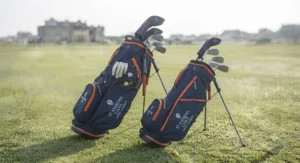
When shopping for a golf bag for kids, height is a far more reliable sizing guide than age alone, since children of the same age can vary enormously in build. As a rough working guide: children roughly under 4 feet tall generally suit bags in the 24-28 inch range, those between 4 feet and 4 feet 8 inches typically fit best with 28-32 inch bags, and taller juniors approaching 5 feet or beyond usually transition comfortably into 32-34 inch junior or even entry-level adult sizing.
It’s worth measuring your child directly rather than estimating, because the practical consequence of getting this wrong runs in both directions. Too small, and clubs poke out awkwardly and the bag looks — and functions — like a toy rather than genuine equipment. Too large, and the bag becomes genuinely harder to lift and carry, with clubs rattling loosely inside dividers sized for longer shafts than the ones actually being used. If your child is exactly on a size boundary, sizing down rather than up is almost always the better call for comfort, since most juniors will need a new bag again within 18-24 months regardless of which side of the boundary you choose.
Junior Golf Carry Bag vs Junior Golf Stand Bag
This is one of the most common decisions parents face once a child moves beyond their very first set, and the right answer genuinely depends on how the bag will be used on a typical outing.
| Factor | Junior Carry Bag | Junior Stand Bag |
|---|---|---|
| Weight | Lightest option available | Slightly heavier due to legs |
| Stability at rest | Lies flat, no stand | Stands upright between shots |
| Best suited to | Driving range, very young children | Playing full or partial rounds |
| Typical price | £20-£40 range | £25-£90 range |
A junior golf carry bag genuinely wins on weight and simplicity — with no folding legs or stand mechanism to add bulk, it’s the lightest way to get a young child’s clubs from the car to the first tee, which is precisely why it suits toddlers and driving-range-only use so well. A junior stand bag, however, earns its slightly higher weight the moment a child starts playing actual holes rather than just hitting balls at a range, because being able to set the bag down upright between shots — rather than laying clubs flat on wet grass repeatedly — genuinely speeds up play and keeps grip ends cleaner. Our general recommendation: stick with a carry bag purely for range sessions and very young beginners, and move to a stand bag as soon as a child is regularly playing three holes or more in one outing.
Best Golf Bag for Junior Golfers by Budget
Working out the best golf bag for junior players at each specific budget tier removes a lot of the guesswork from a purchase that otherwise involves comparing wildly different products against each other. Here’s how the price-to-value picture breaks down across the range covered in this guide.
| Budget Tier | Price Range | Recommended Pick | Best For |
|---|---|---|---|
| Entry | Under £40 | Fazer Junior J Tek 7.0 | First-ever set, ages 3-5 |
| Value | £25-£90 | Slazenger Ikon Junior Stand Bag | Existing clubs needing a bag |
| Mid-range | £90-£160 | MacGregor V-Max / DCT / Ben Sayers M1i | Developing players, ages 5-12 |
| Upper mid | £100-£130 | Longridge Challenger Cadet | Teen players, ages 12-14 |
| Premium | £350-£700 | US Kids Golf Tour Series | Competitive junior golfers |
Interpreting this table honestly: the jump from entry to mid-range delivers the biggest genuine improvement in daily usability — better dividers, sturdier stands, proper strap padding — while the jump from mid-range to premium buys engineering precision and competition-grade durability that mostly matters once a junior is playing seriously and often. For most families starting out, spending in the value-to-mid-range band represents the strongest return, because that’s where the fundamentals that actually affect a child’s comfort and enjoyment are properly addressed, without paying for competitive-tier features a beginner won’t yet benefit from.
Small Golf Bag for Children: Getting the Fit Right
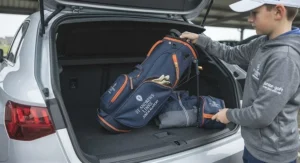
A genuinely small golf bag for children isn’t just a scaled-down version of an adult bag with a lower price tag — the proportions themselves need to change, not just the overall height. Strap spacing needs to sit closer together to match narrower shoulders, the grip area at the top of the bag needs a smaller circumference so tiny hands can actually lift it in and out of a car boot unassisted, and the base needs a wider, more stable footprint relative to the bag’s height, since a tall, narrow bag on a small child is genuinely prone to toppling over in wind or on a slope.
This is exactly where products like the Fazer Junior J Tek 7.0 and the smallest MacGregor V-Max size distinguish themselves from generic “kids’ golf” novelty items sold as toys rather than functional equipment — the design has clearly started from the child’s actual proportions rather than simply shrinking an adult template by a fixed percentage. If you’re shopping for a genuinely small child, look specifically for stated shoulder-width or strap-spacing information where a listing provides it, rather than relying purely on the overall bag height figure, since two bags of identical height can carry very differently depending on how the straps are positioned relative to the child’s actual frame.
Junior Golf Starter Set: What’s Actually Included
A junior golf starter set typically bundles somewhere between three and seven clubs alongside the bag itself, and understanding what’s genuinely essential versus what’s padding helps avoid overpaying for clubs that will sit unused. At minimum, a sensible starter set needs an oversized, forgiving driver, one mid-iron for general fairway and approach shots, and a putter — everything else is a bonus rather than a necessity for a genuine first-timer.
As sets scale up toward the 9-12 and 12-14 age brackets, as seen in the MacGregor DCT and Longridge Challenger Cadet packages covered earlier, the addition of a hybrid club and a sand wedge genuinely extends what a developing player can practise, particularly around the green where junior golfers often struggle most. What’s worth resisting is the temptation to buy a set with ten or more clubs for a genuine beginner purely because it looks like better value per club — a five-year-old realistically uses their driver and putter almost exclusively for the first year regardless of how many clubs came in the box, and the extra clubs simply add dead weight to the bag.
Children’s Golf Equipment: Beyond the Bag
Getting children’s golf equipment right extends past the bag and clubs themselves into a handful of details that genuinely affect whether a first season goes well. A properly fitted junior glove — sized to actual hand measurement rather than guessed from shoe size or age — noticeably improves grip control and reduces blistering during longer practice sessions, and it’s one of the cheapest upgrades available if a starter set didn’t include one. Soft, low-compression junior-specific golf balls also make a genuine difference for younger beginners, since standard adult balls are simply too firm for a slower junior swing speed to compress properly, meaning distance and feedback both suffer.
On the safety and regulatory side, organisations like the Golf Foundation, a registered charity focused specifically on introducing children to golf, and England Golf’s junior pathway both emphasise that affiliated clubs offering junior sessions should hold recognised safeguarding accreditation, which is worth checking if you’re enrolling a child in structured lessons or a club’s junior programme rather than simply playing casually as a family. It’s also worth noting that junior clubs and bags sold in the UK generally fall under standard consumer product safety regulation rather than a golf-specific certification scheme, so checking for genuine retailer reviews and an established brand history — as with several picks in this guide — is a more useful safeguard than looking for a specific safety mark on packaging.
Common Mistakes When Buying a Junior Golf Bag
The single most common mistake is buying two or three sizes ahead “to save money,” which almost always backfires because an oversized bag is genuinely harder for a small child to carry and manage, undermining the exact confidence-building experience that gets kids to stick with golf in the first place. A close second is prioritising colour and character branding over genuine fit and weight — a bag a child loves the look of but can’t comfortably carry themselves will get left in the car boot within a few outings regardless of how appealing the design looked in photos.
Another frequent misstep is assuming a stand mechanism is always worth the extra weight; for a family whose golfing is currently limited to occasional driving range visits, a simple carry bag genuinely serves better than a stand bag whose main advantage — standing upright between full-course shots — never actually gets used. Finally, many parents underestimate how quickly juniors outgrow bags during rapid growth spurts, particularly between ages 8 and 13, and end up either overpaying for premium durability that won’t be needed for the bag’s realistic 12-18 month lifespan, or conversely buying so cheaply that the bag fails well before the child has grown out of it.
Long-Term Cost & Maintenance: Is It Worth Upgrading Every Year?
Thinking about junior golf equipment purely in terms of upfront price misses the more useful long-term cost picture. A typical junior golfer, playing casually through primary school age, will likely move through two to three bag sizes before reaching their early teens, meaning total cost of ownership across those years matters more than any single purchase in isolation. Buying budget-appropriate for each stage — rather than one expensive bag meant to “last for years” — generally works out cheaper overall, since a junior physically outgrows the bag long before a premium product’s superior materials would ever pay for themselves in extended lifespan.
Where the maths shifts is competitive golf. If a junior progresses into regular club competitions, as covered in our real-world scenarios above, a higher-tier product like the US Kids Golf Tour Series starts to justify its price through the value of height-matched, swing-development-focused engineering rather than simple durability — the return on investment comes from performance and consistency across sizes, not from the bag lasting longer in years. For maintenance costs specifically, junior bags require minimal ongoing spend beyond the occasional silicone spray for stand hinges and a replacement rain hood if the original goes missing, both of which cost only a few pounds and extend usable life meaningfully for very little outlay.
Frequently Asked Questions
❓ What size junior golf bag does my child need?
❓ Can a junior golf bag fit on an adult golf trolley?
❓ How much should I spend on a junior golf bag?
❓ Are junior golf bags interchangeable between boys and girls?
❓ What age should a child move from a carry bag to a stand bag?
Conclusion
Choosing a junior golf bag ultimately comes down to matching three things honestly: your child’s current height and build, how seriously they’re actually playing right now rather than how seriously you hope they’ll play, and a sensible budget that accepts they’ll likely need another bag within a couple of years regardless of how much you spend today. The Fazer Junior J Tek 7.0 and Slazenger Ikon Junior Stand Bag cover the earliest, lowest-stakes stages brilliantly; the MacGregor V-Max, MacGregor DCT and Ben Sayers M1i carry a developing junior confidently through the middle years; and the Longridge Challenger Cadet and US Kids Golf Tour Series exist for the moment a junior starts taking competition seriously.
None of these seven options is objectively “the best junior golf bag” in isolation — the best one is whichever genuinely fits the child in front of you right now, both physically and in terms of how they’re actually engaging with the sport. Buy for today’s height and today’s ambition, not next year’s hoped-for growth spurt, and a junior golf bag stops being an awkward compromise and starts doing exactly what it should: making the game easier to enjoy from the very first round.
Recommended for You
- Pink Golf Bag UK: 7 Best Stylish Picks for Women in 2026
- Lightweight Ladies Golf Bag: 7 Best Picks for 2026
- Ladies Golf Bag: 7 Best Picks for UK Women Golfers 2026
Disclaimer: This article contains affiliate links. As an Amazon Associate, I earn from qualifying purchases. If you purchase products through these links, we may earn a small commission at no additional cost to you.
✨ Found this helpful? Share it with your friends! 💬🤗
