

In This Article
There’s a very particular kind of golfing indignity reserved for anyone who’s wrestled a wonky three-wheeler down a side slope, watched it veer into the rough, and chased after it like a man trying to catch an escaped shopping trolley in a Tesco car park. If that scene sounds familiar, you’ll understand why the mgi golf trolley range has quietly become one of the most talked-about names on UK fairways. Born in Australia in 1993, MGI built its reputation on a single, stubborn engineering obsession: making a trolley go where you point it, on any terrain, without you having to think about it twice.

What is an MGI golf trolley? It’s an Australian-designed electric or remote-controlled golf caddy that carries your clubs around the course using a rechargeable lithium battery, gyroscope-guided steering, and — on the higher-end models — built-in GPS course mapping and smartphone app integration.
Since American Golf became MGI’s official UK retail partner, the brand has expanded from four entry-level Zip models into a full lineup spanning budget push-button trolleys right up to touchscreen GPS caddies that practically drive themselves. This guide breaks down seven genuine MGI models — real specs, real aggregated review sentiment, honest comparisons — so you can work out which one actually earns a spot in your boot, rather than which one has the flashiest marketing photo.
Quick Comparison Table
Before we get into the detail, here’s a snapshot of where each model sits in the range, from the no-frills starter option through to the tech-laden flagship.
| Model | Control Type | Standout Feature | Price Range | Best For |
|---|---|---|---|---|
| MGI Zip X1 | Manual/electric | Lightest, simplest fold | around £549-£749 | Beginners & budget buyers |
| MGI Zip X3 | Electric with panel | Lockable rotating front wheel | around £650-£850 | Casual weekly golfers |
| MGI Zip X5 | Electric with brakes | Electronic downhill braking | around £750-£999 | Hillier home courses |
| MGI Zip Navigator | Full remote | Gyroscope straight-tracking | around £950-£1,200 | Golfers who want hands-free walking |
| MGI Zip Navigator AT | Full remote, all-terrain | Bigger wheels, anti-tip rear wheel | around £1,049-£1,600 | Hilly, uneven UK courses |
| MGI Ai 500 | Electric, GPS touchscreen | One-button all-terrain fold | around £1,399 | Golfers who want GPS without a remote |
| MGI Ai Navigator GPS+ / Halo | Full remote + GPS | Touchscreen, Geo Protect hazard tech | around £1,200-£1,700 | Tech-focused, hilly-course regulars |
Looking at the spread, there’s a clear pattern: every jump in price buys you either more automation (remote control, gyroscope tracking) or more information (GPS, course mapping), rarely both at the cheap end. The MGI Zip X1 and MGI Zip X3 are essentially “trolley does the pushing, you do the steering,” while the MGI Ai Navigator GPS+ and MGI Zip Navigator AT hand over steering entirely. Buyers on a tight budget shouldn’t feel short-changed by the entry models, though — the same folding chassis and battery technology filters down from the flagship range, just without the remote or screen.
💬 Just one click — help others make better buying decisions too! 😊
Top 7 MGI Golf Trolleys: Expert Analysis
Below are seven genuine, currently available MGI models, ordered roughly from entry-level to flagship. Every product mention keeps the name in bold so you can scan the article and jump straight to the model that interests you.
1. MGI Zip X1 — lightest and most affordable in the range
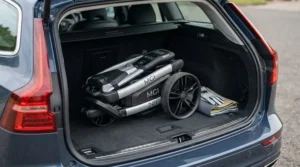
The standout here is simplicity: no remote, no touchscreen, just a lightweight electric trolley that takes the weight off your shoulders for well under the price of most rivals’ entry models. Under the hood, the MGI Zip X1 runs on a lithium battery with an LED control display and a fourth rear stability wheel — a small addition that matters more than it sounds, since it stops the trolley tipping backwards on a downhill lie when you let go to find a ball in the rough. The Zip fold engineering (MGI’s own term for its collapsible one-piece frame) makes this around 25% more compact folded than older-generation trolleys, which is genuinely useful if your car boot is already fighting for space with kids’ sports kit.
Based on the spec sheet, this is squarely aimed at golfers upgrading from a manual push cart who want power-assistance without paying for remote steering or GPS they’ll rarely use. Reviewers consistently frame the Zip X1 as a no-nonsense entry point rather than a feature-rich flagship, and the trade-off is honest: you get MGI’s build quality and battery reliability, minus the bells and whistles.
Pros:
- ✅ Genuinely lightweight and easy to fold one-handed
- ✅ Most accessible price point in the MGI range
- ✅ Lithium battery outlasts older lead-acid trolleys
Cons:
- ❌ No remote control or automated steering
- ❌ Basic LED display lacks GPS or course data
At around £549-£749, the MGI Zip X1 represents strong value for anyone who mainly wants relief from carrying, not full automation — check current price and stock before heading to the till, as MGI regularly runs promotional bundles on this model.

2. MGI Zip X3 — added rotating, lockable front wheel
What sets the MGI Zip X3 apart from its cheaper sibling is a small mechanical upgrade with an outsized real-world effect: a rotating, lockable front wheel. On paper this means better manoeuvrability weaving between bunkers and buggy paths; in practice, it also lets you lock the wheel straight for stability on a steep fairway, which the fixed-wheel Zip X1 simply can’t do. The trolley also adds MGI’s “Controlled Distance Advance” electronics and an anti-tip wheel, both of which nudge this model from “basic assist” toward “properly capable electric trolley.”
Here’s what to weigh: the Zip X3 sits in an awkward but sensible middle ground. It’s not automated like the Navigator models, but the extra electronics and wheel control make it noticeably easier to live with on a course that isn’t billiard-table flat — which, let’s be honest, covers most of Britain. Aggregated customer feedback across UK retailers tends to praise the trolley’s stability and simple set-up, though as with most mid-tier electric trolleys, some buyers note the plastic components feel a touch less premium than the price might suggest.
Pros:
- ✅ Lockable front wheel improves stability on slopes
- ✅ Controlled Distance Advance smooths out speed changes
- ✅ Still folds down to a compact, boot-friendly size
Cons:
- ❌ No remote control — you walk behind it, not beside it
- ❌ Sits in an in-between price bracket versus the X1 and X5
Priced around £650-£850 at UK retailers, the MGI Zip X3 is the trolley to pick if you want a genuine upgrade over entry-level without committing to remote-control pricing — as ever, prices vary, so it’s worth checking current listings.
3. MGI Zip X5 — electronic brakes and downhill speed control
The MGI Zip X5 introduces electronic braking and dedicated downhill speed control, and this is where things start getting genuinely clever for the price. Rather than relying purely on motor resistance, the electronic brake system actively manages your descent on steep fairways — something that matters a great deal more on undulating parkland courses than most buyers realise until they’ve chased a runaway trolley down a hill once. Powered by a lithium battery rated for a full round (and then some), the Zip X5 keeps MGI’s signature compact Zip fold while adding this extra layer of control electronics.
What most buyers overlook about this model is that downhill speed control isn’t just a comfort feature — it’s a genuine safety upgrade on links-style or hilly courses where a heavy bag plus gravity can turn a trolley into a hazard for other players. Reviewers who’ve compared it against the cheaper Zip models generally agree the braking system is the single biggest quality-of-life improvement in the mid-tier range, even without remote steering.
Pros:
- ✅ Electronic downhill braking adds real safety on hills
- ✅ Lithium battery comfortably covers 18-36 holes
- ✅ Still compact enough for smaller car boots
Cons:
- ❌ No GPS or remote — purely an assisted push trolley
- ❌ Sits close in price to entry-level remote models when discounted
Expect to pay in the region of £750-£999, though MGI and its UK retailers run frequent promotions, so the MGI Zip X5 can often be found meaningfully under its MRRP — always worth checking current pricing before you commit.
4. MGI Zip Navigator — gyroscope-guided full remote control
This is where the mgi golf trolley range shifts from “assisted” to genuinely automated. The MGI Zip Navigator hands you a fully directional handheld remote — forward, reverse, left, right, speed — and lets the trolley do the actual walking while you stroll alongside, club in hand, thinking about your next shot instead of your next push. The headline technology is MGI’s patented Gyroscope Straight Tracker, first patented back in 2001 and refined ever since, which automatically corrects the trolley’s line if it hits a divot or starts drifting on a cambered fairway.
Under the bonnet, twin 230-watt calibrated motors provide the muscle, paired with a 24V lithium battery MGI rates for up to 36 holes depending on conditions. The rear wheels use an all-terrain tread pattern, and there’s a fully foldable rear fourth wheel for extra stability when stationary. Based on the spec comparison with the cheaper Zip models, the jump here isn’t subtle — this is the point where you stop being a trolley operator and start being a trolley supervisor.
Pros:
- ✅ Full directional remote frees you to walk unencumbered
- ✅ Patented gyroscope tech keeps it tracking straight on slopes
- ✅ Twin motors and 36-hole battery handle demanding rounds
Cons:
- ❌ Noticeably heavier than the Zip X-series trolleys
- ❌ No built-in GPS — that’s reserved for the Ai range
Typically priced from around £950 up to roughly £1,200 depending on retailer promotions, the MGI Zip Navigator is the natural entry point into MGI’s remote-control automation without stretching to all-terrain or GPS pricing.
5. MGI Zip Navigator AT — built for hilly, uneven UK courses
Take everything in the standard Navigator and reinforce it for genuinely rough terrain, and you get the MGI Zip Navigator AT — the “AT” standing for All Terrain. This model adds an integrated anti-tip rear wheel specifically engineered to handle steep inclines without you having to manually brace the chassis, plus inverting rear wheels and a tuck-away front wheel that together create a notably more compact folded footprint than you’d expect from a trolley this capable.
Aggregated reviewer sentiment from UK golf publications is consistently positive on the fundamentals: testers highlight simple set-up and collapse, a dependable battery connection system, and a remote that conveniently charges from the trolley itself rather than needing a separate cable. The most commonly repeated criticism is that it doesn’t stand upright unassisted for storage — a minor gripe if you’ve got a garage hook or wall bracket, more annoying if you’re working with tight utility-room space. On balance, Today’s Golfer’s testing rated it highly for stability on undulating terrain, which tallies with MGI’s own positioning of this as the go-to model for genuinely hilly home courses.
Pros:
- ✅ Anti-tip rear wheel tackles steep inclines confidently
- ✅ Compact one-piece fold despite the rugged build
- ✅ Remote charges directly from the trolley — no separate lead
Cons:
- ❌ Doesn’t stand upright for storage without a bracket
- ❌ Among the heavier trolleys in the range to lift into a boot
UK pricing runs from around £1,049 up to roughly £1,600 at full MRRP, with regular retailer discounts — the MGI Zip Navigator AT is worth watching for sale periods given how often it appears discounted from its original list price.
6. MGI Ai 500 — GPS touchscreen without the remote
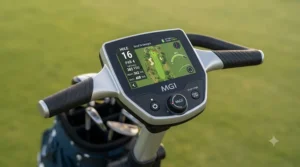
If you like the idea of GPS course data but aren’t fussed about remote steering, the MGI Ai 500 GPS All Terrain trolley is MGI’s answer. Its centrepiece is a 4-inch high-resolution, all-weather touchscreen preloaded with over 40,000 courses worldwide, delivering hole layouts and distance data at a glance. Golf Monthly named it their pick for “Best folding mechanism” in their 2026 electric trolley round-up, praising the one-button fold, robust all-terrain wheels, and the integrated anti-tip rear wheel that handles steep inclines without needing manual support.
What the spec sheet won’t tell you, but testers note, is how the little details add up: inverting rear wheels and a tuck-away front wheel combine for a genuinely compact fold despite the trolley’s premium feature set, and the complimentary MGI App layers in interactive maps and scoring on top of the onboard screen. Bluetooth connectivity pipes phone notifications — calls, texts, emails — straight to the display, which sounds like a gimmick until you’re mid-round and don’t want to dig your phone out of a zipped pocket. At 14.2kg, it’s not the lightest trolley here, but that weight buys a genuinely sturdy chassis.
Pros:
- ✅ Sharp 4-inch touchscreen with 40,000+ preloaded courses
- ✅ Award-recognised folding mechanism from independent UK testers
- ✅ Bluetooth notifications keep you connected without distraction
Cons:
- ❌ No remote control — you still push or walk it manually
- ❌ At 14.2kg, one of the heavier trolleys to carry up steps
At around £1,399, the MGI Ai 500 sits firmly in premium territory, but for golfers who value GPS and build quality over remote automation, it’s a genuinely justified spend.
7. MGI Ai Navigator GPS+ / Halo — remote control meets GPS and hazard awareness
Sitting at the top of the mgi golf trolley range, the MGI Ai Navigator GPS+ (also sold as the Halo variant) combines everything from the Zip Navigator’s remote automation with the Ai 500’s touchscreen GPS, then adds a feature none of the cheaper models offer: Geo Protect. This uses mapped hazard data to automatically slow or stop the trolley as it approaches bunkers, water, or designated no-go zones — genuinely useful if you’ve ever had a remote-control trolley trundle merrily toward a lake while your attention was on your swing.
The 4-inch touchscreen again covers 40,000+ courses, the fully directional remote works from well over 100 metres away, and the same patented gyroscope straight-tracking technology from the Navigator range keeps things on line across sloped terrain. The complimentary MGI App adds interactive maps, digital scorecards, and — on this model — SureShot rangefinder functionality accessible from your phone. This is the trolley for golfers who’ve decided that if they’re spending premium money, they want every piece of automation MGI currently offers, not just some of it.
Pros:
- ✅ Geo Protect hazard tech adds a genuine safety layer
- ✅ Combines full remote control with GPS touchscreen mapping
- ✅ MGI App unlocks SureShot rangefinder functionality
Cons:
- ❌ The most expensive model in the MGI UK range
- ❌ More features mean more to learn during your first few rounds
Pricing typically ranges from around £1,200 up to roughly £1,700 depending on bundle and retailer promotion — the MGI Ai Navigator GPS+ / Halo rewards golfers who want the full technology package and are prepared to pay flagship prices for it.
Top 7 MGI Trolleys: Full Spec Comparison
| Model | Remote Control | GPS Touchscreen | Battery Life | Weight | Price Range | Best For |
|---|---|---|---|---|---|---|
| MGI Zip X1 | No | No | Standard round | Lightest in range | £549-£749 | Absolute beginners |
| MGI Zip X3 | No | No | Standard round | Light | £650-£850 | Casual weekly players |
| MGI Zip X5 | No | No | 18-36 holes | Light-medium | £750-£999 | Hillier home courses |
| MGI Zip Navigator | Yes | No | Up to 36 holes | Medium | £950-£1,200 | Hands-free walkers |
| MGI Zip Navigator AT | Yes | No | Up to 36 holes | Medium-heavy | £1,049-£1,600 | All-terrain, hilly courses |
| MGI Ai 500 | No | Yes | Standard round | 14.2kg | around £1,399 | GPS without remote |
| MGI Ai Navigator GPS+/Halo | Yes | Yes | Standard round | Medium-heavy | £1,200-£1,700 | Full-tech flagship buyers |
Reading across the table, the clearest divide in the range isn’t price — it’s whether a model prioritises automation (remote steering) or information (GPS mapping), since only the MGI Ai Navigator GPS+ / Halo offers both simultaneously. For golfers who mainly want relief from pushing, the MGI Zip X5 offers the best electronic braking for its price bracket, while anyone prioritising course data over hands-free steering should look straight at the MGI Ai 500 rather than paying extra for remote functionality they won’t use.
Benefits vs Traditional Push and Pull Trolleys
| Factor | Manual Push/Pull Trolley | MGI Electric Trolley |
|---|---|---|
| Physical effort | You provide all the propulsion | Motor does the work; you steer or walk alongside |
| Hill performance | Entirely dependent on your strength | Motor-assisted or fully automated braking/climbing |
| Typical cost | £100-£300 | £549-£1,700 |
| Weight to carry into boot | Usually lighter | Heavier due to motor and battery |
| Best For | Budget-conscious, fitness-focused golfers | Golfers managing fatigue, injury, or longer courses |
The trade-off here is straightforward once you spell it out: a manual trolley costs less and weighs less, but every ounce of propulsion comes from your own legs and shoulders over what can be five to seven kilometres of walking. An electric MGI trolley costs considerably more upfront and adds weight to lift into your boot, but it removes the physical strain entirely — which matters enormously if you’re managing a bad back, recovering from injury, or simply playing later in life than you used to. Neither option is objectively “better”; it genuinely comes down to whether you’re trying to add exercise to your round or subtract fatigue from it.
Practical Usage Guide: Getting the Most From Your MGI Trolley
Unboxing an electric trolley for the first time can feel more like assembling flat-pack furniture than starting a round of golf, so here’s what MGI’s manuals and experienced owners generally recommend during those crucial first few outings.
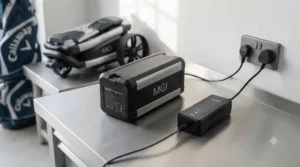
Charge the battery fully before your first round — most lithium packs ship partially charged, and running one flat in its first few cycles can shorten long-term capacity. When setting up the remote-control models, spend ten minutes in an open car park or garden getting a feel for the directional controls before you’re navigating a live fairway with other golfers watching. A surprisingly common first-30-days mistake is folding the trolley with the battery still attached and the power switched on, which drains charge unnecessarily between rounds — always power down fully before folding.
For maintenance, wipe down the wheels and frame after wet rounds to stop grass and mud building up in the folding joints, and store the trolley somewhere dry rather than in a damp shed, since this protects both the electronics and the battery’s lifespan. If you’ve bought a gyroscope-guided model, don’t be alarmed by an occasional drift correction on your first outing — the system is learning your walking rhythm as much as reading the terrain, and most owners report it smooths out within a round or two.
Real-World Scenarios: Which MGI Trolley Suits Your Game
The weekend beginner. Say you’re a 32-year-old playing twice a month at a flattish municipal course, still finding your feet with the rules and the swing. The MGI Zip X1 or MGI Zip X3 makes far more sense than anything remote-controlled — you don’t yet know if golf is a lifelong habit, and there’s no point paying flagship prices to find out.
The retiree managing a bad hip. If you’re playing three or four times a week on a hilly parkland course and walking is non-negotiable for your fitness but pushing a heavy bag isn’t comfortable anymore, the MGI Zip Navigator AT earns its higher price tag. Full remote control plus all-terrain stability means you get the walking benefit without the physical strain of steering and pushing.
The tech-curious low-handicapper. If you’re chasing every marginal advantage — accurate distances, hazard data, a record of your rounds — the MGI Ai Navigator GPS+ / Halo or MGI Ai 500 deliver genuine course-management value alongside the convenience, turning the trolley into part of your strategy rather than just transport for your clubs.
How to Choose an MGI Golf Trolley
Working out which model earns its place in your golf bag boils down to a handful of practical questions. Here’s the framework worth running through before you spend anything.
- Assess your typical course terrain. Flat, well-drained courses rarely need all-terrain wheels or anti-tip features — save your money for a standard Zip model instead.
- Decide if you actually want remote control. It’s genuinely liberating for some golfers and an unnecessary complication for others; if you enjoy the rhythm of pushing a trolley, don’t pay extra to remove it.
- Weigh up GPS versus your existing rangefinder. If you already use a dedicated GPS watch or laser rangefinder, paying extra for an Ai-series touchscreen may be duplicating a tool you own.
- Check your car boot dimensions. MGI’s compact Zip fold helps, but remote and GPS models are heavier and bulkier — measure before you buy, not after.
- Factor in how often you’ll actually play. A £1,600 flagship makes far more sense played weekly than gathering dust after three rounds a year.
- Consider resale and warranty terms. UK retailers typically offer a two-year warranty on MGI trolleys, which is worth checking before purchase, particularly on higher-value remote models.
- Set a realistic budget band and stick close to it. The jump from a Zip model to a Navigator model is substantial — decide in advance whether automation is worth roughly double the outlay.
MGI Trolley Technology Explained: Gyroscope, Remote & Automation
The technical heart of mgi trolley technology is the Gyroscope Straight Tracker system, patented by MGI back in 2001 and steadily refined since. In plain terms, it’s an “anti-deviation” system: if the trolley hits a divot, a raised sprinkler head, or simply starts drifting on a cambered fairway, onboard sensors detect the deviation and automatically correct the steering back to a straight line, rather than requiring you to manually intervene with the remote. This is genuinely different from older compass-guided systems, which reacted more slowly and struggled more visibly on undulating terrain.
Golf trolley automation on the higher-end MGI models goes beyond straight-line tracking, too. Downhill speed control automatically manages the trolley’s pace as it descends a slope, preventing the classic runaway-trolley scenario that gives push-cart golf its worst reputation among nervous beginners. On the Ai Navigator Halo specifically, Geo Protect layers a further safety net on top, using mapped course hazard data to intelligently slow or halt the trolley as it nears bunkers or water — a feature genuinely unique to MGI within this price bracket at the time of research. Twin independently driven motors on the premium models also mean each wheel can adjust its output separately, which matters more than it sounds when one wheel is on firmer ground than the other.
The MGI App: Features That Matter On and Off the Course
Every Ai-series MGI trolley pairs with the complimentary MGI App, available on both iOS and Android, and it’s worth understanding what you’re actually getting rather than assuming it’s a throwaway companion app. Trolley app features include interactive course maps synced to the onboard touchscreen, digital scorecard tracking so you’re not scribbling on a soggy paper card mid-round, and — on the GPS+ and Halo models — SureShot rangefinder functionality that effectively turns your phone into a handheld distance-measuring device independent of the trolley itself.
Bluetooth connectivity between the app and trolley also routes phone notifications — calls, texts, emails — onto the trolley’s own screen, which sounds unnecessary until you’re three holes in without having checked your phone once, yet still haven’t missed anything important. Based on the spec comparison across the range, the app genuinely adds most value on the Ai Navigator GPS+ / Halo, where SureShot integration gives you rangefinding away from the fairway line the trolley is already tracking — useful when you’ve hit a wayward shot into the trees and the trolley’s own GPS reference point is no longer where you’re standing.
MGI vs PowaKaddy and Motocaddy: How the Australian Challenger Compares
Both PowaKaddy and Motocaddy are long-established UK electric trolley brands, and it’s worth being honest about how MGI stacks up rather than pretending the Australian brand has no serious competition. PowaKaddy was founded in 1983 by Joe Catford, predating MGI by a full decade, and both British brands have deep roots in the UK market with extensive dealer networks and locally-tuned after-sales support.
Where MGI genuinely differentiates itself is the gyroscope straight-tracking technology and its comparatively aggressive remote-control pricing — the MGI Zip Navigator undercuts several comparable remote trolleys from British rivals while offering similar automation. On the flip side, buyers sometimes report that PowaKaddy and Motocaddy’s longer UK presence translates into slightly more readily available spare parts and service centres, which is a genuine consideration if you’re the sort of golfer who wants a repair sorted within days rather than weeks. Australian golf brands like MGI have built their reputation on rugged, all-terrain engineering suited to the demanding courses found across Australia’s varied landscape, and that DNA shows clearly in models like the Zip Navigator AT, which arguably handles genuinely hilly UK parkland courses as capably as anything from its British competitors.

Compact & Travel-Friendly: Best MGI Trolleys for Boot Space and Flights
If boot space or air travel is a genuine constraint, not every MGI model is created equal on this front. A compact mgi trolley for travel purposes generally means prioritising the standard Zip series over the Navigator or Ai range — the MGI Zip X1 and MGI Zip X3 fold down smallest and weigh least, which matters both for small hatchback boots and for anyone considering flying with their trolley in a travel bag.
MGI’s own Zip fold engineering claims around 25% more compact folding and roughly 12% lighter builds compared with previous-generation trolleys, a genuinely useful upgrade if storage space is tight in a shared household garage. For golfers who want remote control but still care about folded size, the MGI Zip Navigator AT deserves a mention too — its inverting rear wheels and tuck-away front wheel were specifically engineered to keep the folded footprint compact despite the trolley’s rugged, heavier-duty build. If you’re planning to fly with any electric trolley, always check your airline’s specific policy on lithium battery transport well in advance, since restrictions on battery capacity for checked luggage vary considerably between carriers.
Common Mistakes When Buying an Electric Golf Trolley
Even golfers who’ve done their homework tend to trip over a handful of recurring pitfalls when buying an electric trolley, MGI or otherwise.
Buying purely on remote control without considering weight is a common misstep — automation adds genuine convenience, but it also adds several kilograms you’ll be lifting in and out of a boot every single round, which matters more over a season than it does in the showroom. Underestimating your course’s terrain is another frequent error; golfers on genuinely flat, well-maintained courses often over-spec with all-terrain features they’ll rarely stress-test, while golfers on undulating parkland sometimes under-spec and regret skipping the anti-tip wheel on the standard Navigator. Skipping the warranty comparison is worth flagging too — UK retailers typically offer around two years on MGI trolleys, and it’s worth checking this explicitly rather than assuming it matches whatever you’ve seen advertised for a competitor brand. Finally, ignoring battery charge-cycle habits early on — repeatedly running a lithium pack to empty in its first few uses — can measurably shorten its usable lifespan over several seasons.
Long-Term Cost & Maintenance: What an MGI Trolley Really Costs
The purchase price is only part of the total cost of ownership picture, and it’s worth being upfront about what comes afterwards. Lithium batteries in electric trolleys typically last several hundred charge cycles before capacity noticeably degrades — for a golfer playing weekly, that’s commonly several years of use before a replacement battery becomes a consideration, though heavy year-round players will reach that point sooner than occasional weekend golfers.
Replacement remote handsets, spare wheels, and accessory bundles (seats, umbrella holders, travel bags) represent the other ongoing cost, and MGI’s accessory ecosystem is broad enough that most buyers end up spending at least a little extra beyond the initial trolley price over their first season. Cost-per-round is where electric trolleys generally win out over time, though: spread a £1,000 trolley across three seasons of weekly golf, and the effective cost per round drops well below what many golfers spend on balls lost to water hazards in the same period. The genuine long-term value case for a mgi golf trolley rests less on the sticker price and more on how many rounds you realistically expect to play over its working life.
Features That Actually Matter (And Those That Don’t)
Marketing copy tends to flatten every feature into equal importance, but a bit of honest filtering saves buyers money. Downhill speed control and the anti-tip rear wheel genuinely matter if your course has any meaningful elevation change — this isn’t a marginal nice-to-have, it’s a real safety and usability feature that shows up every single round. Gyroscope straight-tracking matters enormously if you’re buying a remote-control model at all, since a remote trolley that constantly drifts off-line defeats the entire purpose of automation.
Conversely, some headline features matter less than the marketing suggests for most golfers. Bluetooth phone notifications on the touchscreen models are a pleasant convenience rather than a genuine reason to upgrade — most golfers manage perfectly well checking their phone the old-fashioned way between holes. Similarly, the sheer number of preloaded courses (40,000+) sounds impressive, but unless you’re a frequent traveller playing unfamiliar courses regularly, you’ll likely only ever use the handful near home — worth remembering before that figure alone tips your decision toward a pricier GPS model.
Frequently Asked Questions
❓ How long does an MGI golf trolley battery last per round?
❓ Is the MGI Zip Navigator AT worth the extra cost over the standard Navigator?
❓ Can you fly with an MGI electric golf trolley?
❓ Does MGI offer a warranty on UK trolleys?
❓ Is an MGI golf trolley better than PowaKaddy or Motocaddy?
Conclusion
Choosing between seven capable trolleys ultimately comes down to being honest with yourself about how you actually play golf, not how you’d like to imagine playing it. If you’re a casual once-a-month golfer on a flat course, the MGI Zip X1 or MGI Zip X3 will serve you brilliantly without the expense of features you’ll rarely touch. If your home course throws genuine hills at you every round, the MGI Zip Navigator AT earns its higher price through real-world stability rather than spec-sheet bragging rights. And if you’re the sort of golfer who wants every scrap of course data and automation available, the MGI Ai Navigator GPS+ / Halo delivers a genuinely complete package, Geo Protect hazard awareness included.
What ties the whole mgi golf trolley range together is that stubborn Australian engineering philosophy — build something that tracks straight, folds compact, and does the physical work so you can focus on the game. Whichever model ends up in your boot, that’s a fairly solid foundation to build a season around.
Recommended for You
- Stewart Golf Trolley: 7 Best British Picks (2026)
- Compact Electric Golf Trolley For Small Car Boot: 7 Best Picks for Small Boot (2026)
- Lithium Battery Golf Trolley: 7 Best UK Picks for 2026
Disclaimer: This article contains affiliate links. As an Amazon Associate, I earn from qualifying purchases. If you purchase products through these links, we may earn a small commission at no additional cost to you.
✨ Found this helpful? Share it with your friends! 💬🤗
