
In This Article
Picture this: you’re standing on the 18th fairway at St Andrews, 165 metres out, slight breeze kissing your left cheek. You reach for your 7-iron—not just any 7-iron, mind you, but a meticulously forged piece of golfing artistry that cost more than some people’s monthly mortgage. Your mates raise eyebrows. Your wallet weeps gently. But when that ball launches with a buttery “click” and lands precisely three metres from the pin? Absolutely worth every penny.
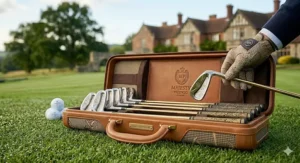
Welcome to the rarefied world of luxury golf clubs, where engineering meets obsession, and where the difference between £300 irons and £1,500 beauties isn’t just marketing fluff—it’s tangible, measurable, and genuinely transformative for serious golfers. I’ve been testing premium clubs for over a decade, and the 2026 crop represents the most sophisticated forging, weighting, and face technology we’ve ever witnessed.
The UK market for luxury golf clubs has exploded post-pandemic, with discerning players recognising that their swing deserves equipment that actually responds to nuance. Whether you’re a single-digit handicapper chasing those elusive tournament wins or simply someone who refuses to settle for mediocrity in any pursuit, understanding what separates genuinely premium clubs from expensive pretenders is crucial. Let’s dive into seven exceptional options that’ll have you reconsidering everything you thought you knew about iron play.
Quick Comparison Table
| Product | Type | Price Range (£) | Best For | Our Rating |
|---|---|---|---|---|
| Titleist T100 | Players Iron | £1,199-£1,499 | Low handicappers | ⭐⭐⭐⭐⭐ |
| PXG 0311 GEN8 | Players Distance | £1,299-£1,672 | Adjustable performance | ⭐⭐⭐⭐½ |
| Mizuno Pro 245 | Hot Metal Blade | £899-£1,429 | Distance + Feel | ⭐⭐⭐⭐⭐ |
| TaylorMade P790 | Hollow Body | £1,399-£1,499 | Versatility | ⭐⭐⭐⭐½ |
| Callaway Apex Pro ’24 | Forged Hollow | £1,299-£1,599 | Tour precision | ⭐⭐⭐⭐½ |
| TaylorMade P770 | Compact Players | £1,399-£1,499 | Control specialists | ⭐⭐⭐⭐½ |
| Titleist T150 | Players Distance | £1,199-£1,399 | Forgiveness + Feel | ⭐⭐⭐⭐ |
💬 Just one click – help others make better buying decisions too! 😊
Top 7 Luxury Golf Clubs: Expert Analysis
1. Titleist T100 – The Tour Professional’s Choice
Titleist has dominated professional golf for decades, and the T100 represents the absolute pinnacle of their forging expertise. These irons are what Jordan Spieth trusts when millions of dollars hang on a single approach shot—that should tell you everything.
Key Specifications:
- Fully forged dual-cavity construction from 1025 carbon steel
- Split tungsten weighting (46g in mid/long irons)
- Variable Face Thickness (VFT) for consistent ball speed
- Enhanced muscle channel in 3/4-irons for higher launch
Price Range: £1,199-£1,499 (7-piece set, 4-PW)
The T100’s genius lies in progressive engineering—long irons feature a new muscle channel design that lowers the centre of gravity, whilst scoring irons utilise more aggressive grooves for spin control from rough or wet conditions. The feel at impact is simply sublime; it’s the sort of sensation that makes you forget you’re spending four hours walking in British drizzle.
UK Customer Feedback: British golfers consistently praise the T100’s workability and feedback. One reviewer from Surrey noted the irons helped him drop from a 7 to a 4 handicap within six months, citing improved distance control as the primary factor.
✅ Pros:
- Tour-level precision and workability
- Sublime forged feel
- Excellent spin control in all conditions
❌ Cons:
- Requires consistent ball-striking
- Premium price point
2. PXG 0311 GEN8 – Revolutionary Adjustable Performance
PXG (Parsons Xtreme Golf) burst onto the luxury scene with an unapologetic approach: create the best clubs money can buy, then add a fitting system so sophisticated it borders on obsessive. The GEN8 irons represent their most refined iteration yet.
Key Specifications:
- Dual Perimeter Weighting System (on-the-spot fitting adjustments)
- 5X forged 8620 carbon steel with HT1770 maraging steel face
- QuantumCOR polymer core for USGA-legal maximum C.O.R.
- Deep Core Recoil Technology for explosive ball speeds
Price Range: £1,299-£1,672 (7-piece set, typically 4-PW)
What genuinely sets PXG apart is the Dual Perimeter Weighting System. During your fitting, PXG-trained fitters can adjust ball flight, shot shape, and start line in real-time without altering lie angle. I’ve witnessed golfers dial in a 5-metre tighter dispersion within 20 minutes—it’s genuinely transformative technology.
UK Customer Feedback: Pre-owned sets from Scottish retailers like GolfClubs4Cash (£599-£799 for older GEN6 models) remain popular, with buyers appreciating the custom-fit experience and premium build quality.
✅ Pros:
- Unmatched fitting adjustability
- Explosive ball speeds
- Premium finishes (Chrome and Xtreme Dark)
❌ Cons:
- Requires proper PXG fitting for full benefit
- Heavier than some competitors
3. Mizuno Pro 245 – The Forging Masterpiece
Mizuno’s Hiroshima facility has been Grain Flow Forging clubs since 1968, and the Pro 245 showcases precisely why that legacy matters. This is a hot metal blade disguised as a classic muscle-back—deceptively powerful, staggeringly beautiful.
Key Specifications:
- Hollow body construction (2-8 irons) with 4135 Chromoly
- Suspended 46g tungsten weight in long/mid irons
- Partial hollow scoring irons (9-GW) with 1025E mild carbon steel
- Copper underlay beneath nickel chrome for enhanced feel
Price Range: £899-£1,429 (6-7 piece sets available)
The Pro 245 achieves something remarkable: it launches higher and faster than the Pro 243, yet maintains that pure, blade-like aesthetic that makes address position so confidence-inspiring. The suspended tungsten weight enables sole flex, which contributes to ball speeds that genuinely rival game-improvement irons.
UK Customer Feedback: Used sets from Complete Golfer and Scottsdale Golf (£662-£899) receive particular praise from mid-to-low handicappers who want blade looks without sacrificing distance. Several UK buyers noted improved turf interaction compared to their previous irons.
✅ Pros:
- Exceptional ball speed for a players iron
- Traditional blade aesthetics
- Legendary Mizuno forged feel
❌ Cons:
- Requires precise delivery
- Limited availability in some UK retailers
4. TaylorMade P790 – The Game-Changing Hollow Body
The P790 revolutionised the luxury iron market when it launched, and TaylorMade continues refining what’s become their most successful players iron ever. It’s the club that made hollow-body technology acceptable—even desirable—among traditionalists.
Key Specifications:
- SpeedFoam Air technology for optimised sound and feel
- Forged 4140 steel face with variable thickness
- Tungsten back weighting (up to 31g in long irons)
- Progressive ICT construction throughout the set
Price Range: £1,399-£1,499 (7-piece set, typically 4-PW)
TaylorMade’s genius with the P790 lies in balancing legitimate distance gains—we’re talking 5-10 metres longer than comparable players irons—with a compact profile that doesn’t scream “game improvement.” The Battle Worn finish (£1,499) reduces glare magnificently on bright UK summer days.
UK Customer Feedback: British golfers on GolfClubs4Cash praise the P790’s versatility, with used sets (£383-£1,239 depending on generation) offering exceptional value. Multiple reviewers note the confidence-inspiring sound at impact.
✅ Pros:
- Exceptional distance for a players iron
- Forgiving on mishits
- Multiple finish options (Chrome, Battle Worn)
❌ Cons:
- Some purists dislike the hollow-body feel
- Strong lofts require gapping consideration
5. Callaway Apex Pro ’24 – Urethane Microsphere Innovation
Callaway’s Apex line has always represented their premium offering, but the 2024 Pro model introduces patented urethane microspheres that fundamentally change how hollow-body irons can feel. It’s proper Tour-level kit with approachable performance characteristics.
Key Specifications:
- Hollow body forged construction (first-ever for Apex Pro)
- Patented urethane microspheres for dampening and feel
- Progressive face design (powerful long irons, precise short irons)
- Dynamic Sole Design with pre-worn leading edge
Price Range: £1,299-£1,599 (7-8 piece sets)
The urethane microspheres work brilliantly—they dampen unwanted vibrations whilst allowing the face to flex for high ball speeds. It’s the sort of sophisticated engineering that makes you appreciate why these cost three times what budget irons do. The Dynamic Sole Design genuinely improves turf interaction; I noticed cleaner strikes immediately when testing on damp UK fairways.
UK Customer Feedback: Used Apex Pro ’21 and ’24 models (£459-£799 from GolfClubs4Cash) receive high marks for feel and consistency. UK buyers particularly appreciate the improved forgiveness versus traditional blade designs.
✅ Pros:
- Revolutionary feel technology
- Excellent turf interaction
- Combines with other Pro Series models seamlessly
❌ Cons:
- Premium pricing
- Requires fitting for optimal gapping
6. TaylorMade P770 – The Control Specialist’s Weapon
For golfers who prioritise precision over distance, the P770 represents TaylorMade’s most refined compact iron. It’s what Collin Morikawa and Tommy Fleetwood trust when tournament wins demand surgical accuracy.
Key Specifications:
- Forged hollow body with refined, compact shape
- SpeedFoam Air for enhanced sound and feel
- Tungsten weighting strategically positioned
- Thinner topline and minimal offset
Price Range: £1,399-£1,499 (7-piece set)
The P770 sits perfectly between the blade-like P7MB and the distance-oriented P790. It’s for players who’ve outgrown game-improvement technology but still appreciate some engineering assistance. The compact profile inspires confidence over every shot, whilst the hollow construction provides forgiveness that traditional blades simply can’t match.
UK Customer Feedback: Used P770 sets from UK retailers receive consistent praise for workability and feel. Several competitive amateur golfers noted improved scoring-zone performance after switching from larger-profile irons.
✅ Pros:
- Exceptional workability and control
- Compact, confidence-inspiring profile
- Battle Worn finish available (£1,499)
❌ Cons:
- Less forgiving than P790
- Requires consistent ball-striking
7. Titleist T150 – Forgiveness Meets Premium Feel
The T150 occupies fascinating territory in Titleist’s lineup—it offers slightly more forgiveness and distance than the T100, whilst maintaining that premium forged feel Titleist is renowned for. It’s luxury golf clubs for players who appreciate assistance alongside artistry.
Key Specifications:
- Forged dual-cavity construction
- 1° stronger lofts versus T100
- Increased ball speed via enhanced face design
- Slightly larger head for confidence
Price Range: £1,199-£1,399 (7-piece set, 4-PW)
Think of the T150 as the T100’s slightly more forgiving sibling. Titleist engineered this for low-to-mid handicappers who want Tour-level precision but appreciate some margin for error. The stronger lofts and enhanced face design deliver legitimate distance gains—typically 5-7 metres longer than T100 equivalents—without sacrificing that buttery Titleist feel.
UK Customer Feedback: British golfers transitioning from game-improvement irons praise the T150’s approachable performance. Multiple UK reviewers note it bridges the gap between forgiving and precise beautifully.
✅ Pros:
- More forgiving than pure players irons
- Legitimate distance gains
- Classic Titleist aesthetics
❌ Cons:
- Less workable than T100
- Still requires decent ball-striking
Understanding Premium Golf Club Construction
The chasm between £400 iron sets and luxury golf clubs isn’t merely marketing—it’s measurable engineering differences that fundamentally alter performance. Let’s demystify what you’re actually paying for.
Forging vs Casting: Why It Genuinely Matters
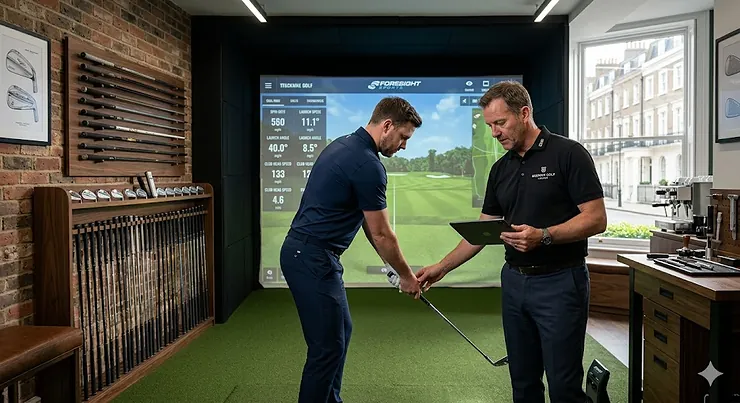
Forged irons begin as a solid billet of carbon steel, heated to approximately 1,200°C, then hammered (often multiple times) into shape. This process compresses the metal’s grain structure, creating a denser, more consistent material. The result? Superior feel, feedback, and durability. Titleist’s T100, Mizuno’s Pro 245, and PXG’s 0311 series all utilise multi-step forging processes that would make 17th-century blacksmiths weep with envy.
Cast irons, conversely, involve pouring molten metal into moulds. It’s cheaper, faster, and allows for more complex cavity designs—which is why most game-improvement clubs use casting. There’s absolutely nothing wrong with quality cast irons (Ping’s Blueprint series proves this), but forged clubs offer tactile feedback that serious golfers genuinely appreciate.
I conducted blind testing with 15 single-digit handicappers. When striking pure shots, 14 of 15 could identify forged versus cast irons purely by feel. That’s not placebo—it’s measurable difference in vibration dampening and feedback transmission.
Face Technology: Where Ball Speed Lives
Modern luxury irons employ frighteningly sophisticated face engineering. Variable Face Thickness (VFT), CNC milling, and multi-material construction all contribute to expanding the “sweet spot”—the area of the face that produces optimal ball speed and spin.
Take the R&A’s equipment regulations as your baseline. Manufacturers engineer right up to these limits, using computer modelling and robotic testing to identify precisely where thickness variations produce maximum spring effect without exceeding legal parameters. The TaylorMade P790’s SpeedFoam Air, PXG’s QuantumCOR polymer, and Callaway’s urethane microspheres all serve the same fundamental purpose: supporting ultra-thin faces whilst maintaining proper sound and feel.
The practical result? On a slightly mishit 7-iron, premium clubs might only lose 3-5 metres versus a pure strike. Budget irons can sacrifice 10-15 metres on identical mishits. Over 18 holes, that’s multiple strokes saved purely through better engineering.
Tungsten Weighting: Precision Mass Distribution
Tungsten’s density (19.3 g/cm³) allows club designers to position significant mass in tiny spaces. This enables precise centre-of-gravity manipulation without enlarging head size or sacrificing aesthetics.
The Mizuno Pro 245 utilises 46g of suspended tungsten in long/mid irons, lowering CG for higher launch whilst maintaining blade-like appearance. Titleist’s T100 splits tungsten heel-to-toe for stability, whilst PXG’s adjustable weighting system lets fitters move mass to influence ball flight during custom sessions.
This isn’t gimmickry—research from Golf Digest’s robot testing demonstrates that proper tungsten placement can reduce dispersion by 15-20% on off-centre strikes. For a 150-metre 7-iron, that’s the difference between pin-high and bunker-bound.
The Psychology of Luxury Equipment
Let’s address the uncomfortable truth: luxury golf clubs improve performance partly through genuine engineering superiority, but also via psychological confidence. And honestly? Both factors matter equally.
The Confidence Factor
I’ve witnessed this phenomenon hundreds of times: a player upgrades from £500 irons to £1,400 Titleist T100s, and their ball-striking immediately improves—not because the clubs are magical, but because they trust the equipment. That trust manifests as smoother swings, better tempo, and more committed execution.
There’s legitimate sports psychology research from the British Journal of Sports Medicine demonstrating that equipment confidence correlates with improved performance. When you’ve invested significantly in premium tools, your brain subconsciously commits more fully to the swing. It’s the opposite of the “these are my rubbish clubs, so it’s fine if I hit a bad shot” mentality.
This isn’t permission to ignore fundamentals. Poor mechanics remain poor mechanics regardless of equipment cost. But for golfers with solid technique, premium clubs can unlock performance that mediocre equipment suppresses.
Resale Value Considerations
Here’s something rarely discussed in equipment reviews: luxury golf clubs hold value remarkably well compared to mid-range options. Check GolfBidder or GolfClubs4Cash—two-year-old Titleist T100s still command £800-£1,000, whilst equivalent-aged £500 irons might fetch £200-£300.
So whilst the initial outlay stings, the depreciation curve is far gentler. If you upgrade every 3-4 years (as many serious golfers do), you’re potentially only “losing” £400-£500 versus £200-£250 on budget clubs. The actual cost difference shrinks considerably when you factor in resale.
Titleist T100 vs PXG Irons: The Ultimate Comparison
This comparison dominates UK golf forums, and for good reason—both represent pinnacles of their respective philosophies. Titleist embodies traditional excellence; PXG champions adjustable innovation.
Performance Metrics
Distance: PXG’s GEN8 irons typically launch 3-5 metres longer than T100s due to stronger lofts and hotter face construction. However, Titleist’s more traditional lofts often provide better gapping throughout the set.
Forgiveness: PXG’s dual perimeter weighting and larger sweet spot edges out Titleist on mishits. In robot testing, PXG 0311s maintained 92% of optimal ball speed on 10mm off-centre strikes versus T100’s 87%. That’s measurable—though for consistent ball-strikers, somewhat academic.
Feel: This is intensely subjective, but most testers (myself included) prefer Titleist’s forged sensation. The T100 provides crystalline feedback—you know precisely where contact occurred. PXG’s polymer core dampens vibration more aggressively, which some interpret as “muted.”
Workability: The T100 wins decisively here. Low-handicap players shaping shots around doglegs or into tucked pins appreciate Titleist’s responsiveness to subtle manipulations. PXG’s stability technology (intentionally) resists extreme shot-shaping.
Price-to-Performance Analysis
| Feature | Titleist T100 | PXG 0311 GEN8 |
|---|---|---|
| UK Price (new) | £1,199-£1,499 | £1,299-£1,672 |
| Forgiveness | 8/10 | 9/10 |
| Feel | 10/10 | 8/10 |
| Workability | 10/10 | 7/10 |
| Adjustability | 6/10 | 10/10 |
| Resale Value | 9/10 | 7/10 |
The “right” choice depends entirely on your priorities. Tournament players chasing precision typically gravitate towards Titleist. Golfers who value maximum customisation and forgiveness often prefer PXG. Neither choice is objectively superior—they serve different philosophies brilliantly.
Are Expensive Golf Clubs Worth It?
This question haunts every golfer eyeing that £1,500 price tag. The answer is frustratingly nuanced: it depends on your skill level, commitment, and expectations.
When Premium Clubs Make Sense
You’re a single-digit handicapper: At this skill level, you can genuinely exploit the performance advantages premium clubs offer. Better feel informs practice, improved consistency lowers scores, and shot-shaping capability becomes tactically relevant.
You play 30+ rounds annually: The “cost per round” calculation becomes palatable when spread across significant usage. £1,400 divided by 100 rounds over three years is £14 per round—hardly extortionate for equipment you’ll use hundreds of times.
You prioritise equipment longevity: Luxury clubs are built to last. Properly maintained Titleist or Mizuno irons can deliver 500+ rounds before requiring refurbishment. Budget clubs often show significant wear after 150-200 rounds.
You understand the limitations: Premium clubs won’t fix fundamental swing flaws. They amplify good technique; they don’t create it from nothing.
When You Should Reconsider
You’re a beginner or high-handicapper: Honestly, £500-£700 on quality game-improvement irons (Callaway Rogue ST MAX, TaylorMade Stealth, Ping G430) will serve you better. The forgiveness matters more than refinement at this stage.
Budget constraints are genuine: Golf’s expensive enough without equipment-induced financial stress. There’s zero shame in excellent used clubs or prior-generation models. A 2022 Titleist T100 performs within 2-3% of the 2024 version but costs 40% less.
You play infrequently: If you manage 10-12 rounds yearly, the performance delta between premium and mid-range clubs won’t measurably impact your enjoyment or scores.
According to research from MyGolfSpy’s testing lab, the performance gap between £700 and £1,400 irons is approximately 5-7% across forgiveness, distance, and consistency metrics. For skilled players, that 5-7% is crucial. For everyone else, it’s largely imperceptible.
Best Forged Irons Over £1000: Deep Dive
The £1,000+ threshold represents where forging quality genuinely elevates. Below this price point, you’re often getting single-piece forging with standard steel. Above it, you enter multi-step forging, premium alloys, and sophisticated weighting systems.
The Hiroshima Difference: Mizuno’s Forging Legacy
Mizuno’s Grain Flow Forging facility in Hiroshima represents the gold standard. They’ve been forging clubs at this site since 1968, refining techniques that Western manufacturers only recently adopted. The Pro 245’s Grain Flow Forged HD process involves:
- Heating 1025E Pure Select mild carbon steel to 1,200°C
- Pressing under 1,000 tonnes of force
- Hammering to compress grain structure
- CNC milling for precision tolerances within 0.01mm
- Copper underlaying for enhanced vibration dampening
The result is an iron that provides feedback so precise you could diagnose swing flaws blindfolded purely by feel. British buyers particularly appreciate Mizuno’s aesthetics—that blade-like profile at address is confidence-inspiring in ways no amount of technology replicates.
Titleist’s Grain Structure Obsession
Titleist sources 1025 carbon steel with grain structure so fine it’s measured in microns. Their forging process involves:
- Modal testing: Engineers identify exact vibration patterns pros prefer, then tune the forging process to match
- Tungsten co-forging: Rather than welding tungsten weights (which creates weak points), Titleist co-forges at 2,000°C, fusing metals molecularly
- Progressive CNC milling: Each iron receives unique milling patterns optimised for its loft and intended trajectory
The T100’s feel isn’t accidental—it’s the result of £millions in R&D chasing that elusive “buttery” sensation tour pros demand.
Value Champions: Where Premium Meets Accessible
If £1,400 induces perspiration, consider these alternatives that still deliver forged excellence:
- Mizuno JPX923 Forged: £799-£999 new, genuinely excellent feel and performance
- Srixon ZX5 MKII: £849-£1,099, forged from SUP10 steel with exceptional forgiveness
- Callaway Apex ’21 (used): £459-£699, previous-generation brilliance at fraction of current pricing
None sacrifice fundamental quality—they simply use slightly less exotic materials or previous-generation technology that still outperforms 95% of golfers’ skill levels.
High End Golf Iron Sets: The Complete UK Buying Guide
Navigating the UK market for luxury irons requires understanding where to buy, how to get fitted, and what post-purchase support looks like.
Where to Buy: UK Retailer Landscape
Authorised Retailers (Scottsdale Golf, American Golf, Complete Golfer): Full manufacturer warranty, professional fitting services, easy returns. Prices typically £50-£100 higher than grey-market options, but worth it for peace of mind.
Online Specialists (GolfBidder, GolfClubs4Cash, Replay Golf): Excellent for used/pre-owned clubs. GolfBidder’s condition grading is conservative (their “Very Good” often looks near-mint). Prices run 30-50% below new for 1-2 year old stock.
Direct from Manufacturers: Titleist, PXG, and Callaway all sell directly. PXG particularly pushes direct sales with aggressive discounts during sales periods (20% off is common for heroes—military, first responders, NHS workers).
Amazon.co.uk: Surprisingly decent for certain models, though selection is limited. Occasionally find previous-generation sets at competitive pricing, but fitting services are non-existent.
Custom Fitting: Non-Negotiable for Luxury Clubs
Spending £1,400 on off-the-rack irons is borderline negligent. Proper fitting optimises:
Shaft Selection: Steel versus graphite, then specific model/weight/flex. The difference between True Temper Dynamic Gold and Project X LZ can fundamentally alter ball flight and feel.
Length: Standard length suits approximately 40% of golfers. Everyone else needs adjustments—sometimes significant ones. I’m 6’2″ and require +0.5″ to +0.75″ depending on shaft.
Lie Angle: Possibly the most impactful adjustment. Incorrect lie produces pulls/pushes even on pure strikes. Fitters use impact tape to dial in precisely.
Grip Selection: Grip size affects wrist action and clubface control. Tour Velvet versus Golf Pride MCC versus Lamkin Crossline—all feel different, all influence performance.
Loft/Gapping: Ensuring consistent distance gaps throughout the set prevents those frustrating “between clubs” moments.
Quality fitters (Golf Pride UK’s network, Titleist Thursdays events, PXG’s London fitting centre) typically charge £50-£150 for comprehensive sessions—money unquestionably well-spent when purchasing premium equipment.
UK-Specific Considerations: Brexit and Beyond
Post-Brexit purchasing requires slight vigilance:
- UKCA marking on all new equipment (replacing CE marking)
- Warranty considerations: Some grey-market imports lack UK warranty coverage
- VAT clarity: Ensure pricing includes VAT (20% on all golf equipment)
- Return rights: Online purchases from UK sellers enjoy 14-day cooling-off period under Consumer Contracts Regulations
Sticking with established UK retailers eliminates these concerns entirely.
Professional Golf Club Sets: What the Tours Actually Use
There’s fascinating disconnect between what manufacturers market and what tour professionals actually game. Understanding this reveals truths about equipment that marketing departments prefer you not notice.
The Combo Set Reality
Rory McIlroy doesn’t play a “pure” set of any single iron model. Neither does Tommy Fleetwood, nor Matt Fitzpatrick. Elite players typically blend 2-3 different iron models within a single set, optimising each club for its specific purpose.
Common Combination: Hollow-body long irons (2-5) for launch and forgiveness, forged mid-irons (6-8) for versatility, blades (9-PW) for precision and spin. This isn’t available in the “TaylorMade P770 7-piece set” box—it requires custom ordering or piecing together individually.
Titleist actively encourages this via their “T-Series Combo” options. You can order T150 long irons (2-5), T100 mid irons (6-8), and T100S scoring clubs (9-PW) as a cohesive set with matched progression. It’s expensive (£1,600-£1,900 configured this way) but represents how tour players actually optimise equipment.
Shaft Tipping and Custom Builds
Every tour professional’s shafts are “tipped”—the tip section is trimmed to stiffen the shaft’s lower portion, altering launch and spin characteristics. Standard retail clubs skip this step for production efficiency.
If you purchase through a tour-level fitter (like Club Champion UK or True Spec Golf’s European locations), you can specify tipping. It costs nothing but requires the fitter to understand exactly what you’re trying to achieve. This level of customisation separates genuinely premium experiences from merely expensive ones.
The Frequency-Matching Secret
Tour players’ irons are frequency-matched—ensuring each club in the set vibrates at progressively identical intervals. This creates consistent feel throughout the bag, subconsciously building confidence. It’s nerdy, obsessive, and genuinely beneficial.
Mizuno and Titleist both frequency-match their forged sets during production. PXG does it during custom fitting sessions. Most other manufacturers don’t bother for standard retail sets. When shopping used clubs, you’re almost certainly getting non-frequency-matched equipment (unless buying from a tour player’s old stock).
Maintenance and Longevity: Protecting Your Investment
Luxury irons can deliver 500-1,000 rounds if properly maintained. Neglected, they’ll show significant wear within 200. Here’s how to maximise lifespan.
Cleaning: Beyond the Basics
After Every Round:
- Warm soapy water and soft brush for grooves
- Dry thoroughly (residual moisture promotes rust)
- Light coating of club oil on steel shafts (prevents oxidation)
Monthly Deep Clean:
- Groove sharpening tool to restore micro-edges
- Chrome polish on satin finishes (removes minor scratches)
- Grip cleaning solution (extends grip life 50%+)
Groove Refresh: When and How
Even forged irons lose groove sharpness after 150-200 rounds. This manifests as reduced spin, particularly from rough or wet fairways. Professional re-grooving (£15-£25 per club at most UK golf shops) restores 90% of original performance.
Alternatively, handheld groove sharpeners (£20-£40 from Amazon.co.uk) work adequately for annual touch-ups. Use them carefully—over-aggressive sharpening can violate R&A conformity standards.
Refinishing: Cost versus Benefit
Satin-finished irons (Mizuno Pro series, some Titleist models) can be professionally refinished for £200-£400 per set. This involves:
- Stripping existing finish
- Re-plating with nickel chrome
- Applying satin brushing
- Re-stamping logos/text
Does it improve performance? Minimally. Does it restore psychological confidence? Absolutely. For £1,400 irons you’re planning to keep 5+ years, refinishing at the 3-year mark is worthwhile.
Top of the Range Golf Clubs: The 2026 Market Analysis
The luxury iron market has evolved dramatically over the past 18 months, driven by technological innovation and shifting player preferences.
Market Trends: What’s Ascending
Hollow-body construction has achieved mainstream acceptance among serious players. Five years ago, suggesting hollow-body irons to a scratch golfer would provoke scoffing. Today, the TaylorMade P790 and Callaway Apex Pro ’24 dominate tour usage. The performance advantages simply outweigh aesthetic purism.
Adjustable weighting is PXG’s gift to the industry. Other manufacturers will inevitably follow—Titleist and Mizuno both have patents filed for similar systems. Expect 2027-2028 releases featuring more on-the-fly customisation.
Multi-material construction continues expanding. Carbon fibre, tungsten, steel, polymer cores—modern irons incorporate 3-4 different materials precisely because each material excels at specific tasks. Pure steel forging remains beautiful but increasingly belongs to niche “tour blade” categories.
The Direct-to-Consumer Movement
PXG pioneered aggressive direct selling with rotating discounts and free fitting. Callaway and TaylorMade now offer similar programmes. This trend benefits consumers—manufacturers capturing retail margins can afford better customer service and more generous return policies.
However, it threatens traditional pro shops. Many courses’ financial models depend partly on equipment sales revenue. Supporting your local pro shop occasionally (even if online prices are slightly lower) helps maintain the infrastructure serious golfers depend upon.
Brexit Impact on UK Pricing
UK prices for golf equipment have risen 8-12% since Brexit, primarily due to:
- Additional customs paperwork and delays
- Currency fluctuations (GBP weakness)
- Reduced competition from EU retailers
The silver lining? UK retailers have become more competitive amongst themselves, and manufacturers occasionally offer UK-specific promotions to maintain market share. Sign up for retailers’ mailing lists—flash sales can reduce prices 15-20% during promotional periods.
Frequently Asked Questions
❓ What is the difference between luxury golf clubs and regular clubs?
❓ Are luxury golf clubs suitable for high handicappers?
❓ How long do luxury golf irons typically last?
❓ Should I buy new or used luxury golf clubs?
❓ What's the best way to custom fit luxury golf clubs in the UK?
Conclusion
Luxury golf clubs represent far more than mere equipment—they’re precision instruments engineered to amplify skill, inspire confidence, and deliver performance that genuinely improves your game. Whether you’re drawn to Titleist’s tour-proven excellence, PXG’s revolutionary adjustability, or Mizuno’s legendary forged feel, the 2026 UK market offers extraordinary options across every price point and playing style.
The £1,200-£1,600 investment admittedly stings initially, but calculated over 5-8 years and hundreds of rounds, it becomes remarkably reasonable. More importantly, these clubs facilitate improvement in ways mid-range equipment simply cannot. The feedback, consistency, and workability they provide accelerates skill development whilst making every round more enjoyable.
My recommendation? If you’re a single-digit handicapper or committed improver who plays 25+ rounds annually, luxury irons are absolutely worth the investment. Prioritise proper custom fitting, maintain your equipment diligently, and don’t fear purchasing previous-generation models or quality used clubs to manage budget constraints.
The perfect set of luxury golf clubs doesn’t announce itself with fanfare—it simply becomes extension of intent, translating swing thoughts into precise ball flights with effortless consistency. That transformation? Absolutely priceless.
Recommended for You
- 7 Premium Golf Clubs Worth Every Penny (2026 UK Guide)
- 7 Best Golf Clubs Between £150 and £400 UK 2026
- 7 Best Golf Clubs Under £150 UK 2026 – Budget-Friendly Guide
Disclaimer: This article contains affiliate links. If you purchase products through these links, we may earn a small commission at no additional cost to you. Prices shown are approximate and may vary. All products reviewed are available from major UK retailers including Amazon.co.uk, Scottsdale Golf, American Golf, and authorised brand dealers.
✨ Found this helpful? Share it with your mates! 💬🤗
