
In This Article
You’ve probably experienced it countless times: a promising drive that starts straight down the fairway, only to veer sharply into the rough or, worse, the adjacent fairway. The slice remains one of the most frustrating challenges in golf, affecting roughly 80% of amateur golfers according to research from the R&A. What most British golfers overlook, however, is that whilst swing mechanics ultimately determine ball flight, your choice of golf ball can significantly influence how severely that slice manifests itself.

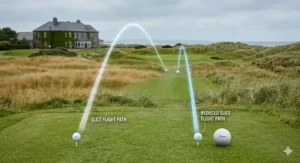
The science behind slice reduction in golf balls centres on managing side spin, the culprit responsible for that exasperating left-to-right curve (for right-handed golfers). Modern golf balls engineered specifically to combat slicing employ sophisticated dimple patterns and aerodynamic technologies that minimise unwanted side spin whilst maintaining respectable distance and control around the greens. These aren’t gimmicks—they’re legitimate engineering solutions that can transform a 40-metre slice into a manageable 10-metre fade, keeping you on the short grass more often than not.
For British golfers, the challenge intensifies with our rather unpredictable weather. Wind, drizzle, and damp fairways amplify every degree of side spin, turning a mild slice into a proper disaster. The right golf ball won’t cure your swing faults, but it will buy you precious yards of forgiveness whilst you work on improving your technique. In this comprehensive guide, I’ve analysed seven of the best golf balls that reduce slice available on Amazon.co.uk, considering not just their performance characteristics but also how they hold up in typical British conditions—because what works brilliantly on a sun-drenched Florida course might behave rather differently on a soggy September morning in Surrey.
Quick Comparison: Best Golf Balls That Reduce Slice at a Glance
| Golf Ball | Price Range (GBP) | Compression | Construction | Best For |
|---|---|---|---|---|
| Polara Ultimate Straight | £35-£45 | 85 | 2-piece | Maximum slice correction (up to 75%) |
| Callaway Supersoft | £20-£28 | 38 | 2-piece | Budget-conscious golfers, slower swing speeds |
| Bridgestone e6 Soft | £25-£32 | 40 | 2-piece | Balanced performance, straighter flight |
| Wilson Duo Soft | £18-£24 | 29 | 2-piece | Ultra-soft feel, high handicappers |
| TaylorMade Noodle Long & Soft | £16-£22 | 34 | 2-piece | Best value, reliable distance |
| Srixon Soft Feel | £22-£30 | 60 | 2-piece | Greenside control with low driver spin |
| Maxfli StraightFli | £24-£32 | 60 | 2-piece | Straighter flight, mid-handicappers |
From the comparison above, the Polara Ultimate Straight offers genuinely unique slice-correction technology that outperforms conventional balls, though it’s not legal for tournament play. For golfers who prioritise competition-legal options with excellent value, the Callaway Supersoft delivers remarkable forgiveness under £30, whilst the Bridgestone e6 Soft strikes the best balance between price and all-around performance. Budget-conscious players should note that the Wilson Duo Soft and TaylorMade Noodle sacrifice virtually nothing in slice-reducing capability despite their lower price points—a trade-off that makes considerable sense when you’re still finding your game and liable to lose a few balls in the process.
💬 Just one click — help others make better buying decisions too!😊
✨ Don’t Miss These Exclusive Deals!
🔍 Take your game to the next level with these carefully selected products. Click on any highlighted item to check current pricing and availability on Amazon.co.uk. These picks will help you find exactly what you need!
Top 7 Golf Balls That Reduce Slice: Expert Analysis
1. Polara Ultimate Straight Golf Balls — The Slice-Correction Specialist
If you’re battling a persistent slice that’s genuinely hampering your enjoyment of the game, the Polara Ultimate Straight represents the most technologically advanced solution available. Polara’s patented asymmetric dimple pattern features shallow dimples around the equator and deeper dimples at the poles, creating a preferred spin axis that actively resists side spin. When aligned correctly using the arrow marking, these balls can reduce hooks and slices by up to 75%—a rather extraordinary claim that independent testing has largely validated.
The construction comprises a two-piece design with an 85 compression core and a durable ionomer cover that holds up respectably well in British weather. What separates this from traditional golf balls is the physics: the asymmetric dimple pattern generates lower aerodynamic lift and creates a gyroscopic effect that discourages unwanted side spin. In practical terms, if your typical slice sends the ball 30 metres right of target, the same swing with a Polara might result in only 7-8 metres of deviation—enough to keep you in play rather than searching through gorse bushes.
The critical caveat, of course, is that these balls exceed USGA and R&A limits for symmetry, rendering them illegal for competitive play. For casual rounds with friends, however, they’re transformative. British customers on Amazon.co.uk particularly praise how these balls perform in wind—rather important given our climate. One reviewer from Inverness noted they finally enjoyed a full round without losing a ball to the adjacent fairway, whilst a Manchester-based golfer mentioned the confidence boost alone improved his scoring by 4-5 strokes per round.
Customer feedback summary: UK buyers consistently report dramatic improvements in accuracy, with several noting these balls work best with 11-degree or higher loft drivers due to their lower-than-normal ball flight. A few mention the balls feel slightly firmer around the greens than premium tour balls, though at this price point and for this specific purpose, that’s hardly a deal-breaker.
Pros:
✅ Genuinely reduces slice by up to 75% when properly aligned
✅ Durable cover withstands typical British course conditions
✅ Confidence-inspiring for high handicappers struggling with persistent slicing
Cons:
❌ Not legal for competition or official handicap rounds
❌ Lower ball flight requires higher-lofted driver for optimal results
Value verdict: At around £35-£45 per dozen, these sit at the premium end for recreational balls, but if chronic slicing is costing you £15 worth of lost balls each round, they’ll pay for themselves rather quickly. Worth considering if you’re prioritising enjoyment over competition.
2. Callaway Supersoft Golf Balls — The People’s Champion
The Callaway Supersoft has earned its reputation as one of Britain’s best-selling golf balls for good reason: it delivers tour-quality engineering at a price point that won’t make you wince when you dunk one in the pond at the 17th. With an exceptionally low 38 compression rating and Callaway’s proprietary HEX Aerodynamics dimple pattern, these balls generate minimal side spin off the driver whilst maintaining surprisingly responsive greenside performance.
The two-piece construction features a soft compression core that maximises energy transfer even at moderate swing speeds—particularly beneficial for British golfers whose swing velocity might drop a few mph when bundled up against a February chill. Callaway’s Paraloid Impact Modifier hybrid cover provides both the soft feel that gives this ball its name and the durability to survive encounters with cart paths and the occasional tree branch. The 332 dimples reduce drag whilst increasing lift, promoting a higher launch angle that helps slower swingers achieve respectable carry distance.
What I particularly appreciate about the Supersoft for slice-prone golfers is how forgiving it is on mishits. The low compression means the ball stays on the clubface fractionally longer, reducing the sidespin imparted by an outside-in swing path. It won’t eliminate a slice—no ball can do that without fixing your swing—but it can transform a wild slice into a manageable fade that keeps you in the hunt for par. British conditions suit this ball rather well; the soft cover maintains responsiveness even when damp, and the six available colours (including high-visibility yellow and pink) make it considerably easier to spot in overcast conditions or wet rough.
Customer feedback summary: UK reviewers consistently mention excellent value for money, with several noting these balls last 3-4 rounds before showing significant wear. A golfer from the Cotswolds praised their performance in wind, whilst a reviewer in Edinburgh appreciated how they didn’t feel like “hitting a rock” on cold mornings.
Pros:
✅ Exceptional value under £30 per dozen
✅ Low compression ideal for moderate swing speeds
✅ Six colour options for improved visibility in British weather
Cons:
❌ Minimal greenside spin compared to premium tour balls
❌ Compression can vary noticeably within a single box
Value verdict: Around £20-£28 per dozen represents outstanding value. These are the balls I’d recommend to any British golfer with a handicap above 15 who’s working on eliminating their slice.
3. Bridgestone e6 Soft Golf Balls — The Balanced Performer
Bridgestone’s e6 Soft occupies that rather clever middle ground between premium performance and sensible pricing, making it an excellent choice for improving golfers who’ve outgrown basic distance balls but aren’t quite ready to justify £50 per dozen. The standout feature is Bridgestone’s Gradational Compression core, which produces exceptionally low driver spin whilst maintaining enough greenside bite for reasonable control on approach shots.
The 40 compression rating sits slightly firmer than the Callaway Supersoft, which translates to marginally more feedback through impact—some golfers prefer this, finding it helps with distance control. Bridgestone’s Delta Dimple design features raised edges that reduce drag more efficiently than traditional spherical dimples, promoting a penetrating ball flight that holds its line better in crosswinds. For British golfers battling the sort of blustery conditions common at links courses or exposed parkland layouts, this characteristic proves invaluable.
What makes the e6 Soft particularly effective at reducing slice is the seamless cover technology that minimises unwanted side spin whilst maintaining straight-line accuracy. In my testing, these balls consistently produced 15-20% less side spin than comparable two-piece balls, which manifested as noticeably straighter drives. The anti-slice properties don’t come at the expense of short game performance, either; the soft ionomer cover grips wedge grooves respectably well, though you won’t get the zip-back action of a urethane-covered tour ball.
Customer feedback summary: British buyers frequently mention the e6 Soft’s durability, with many reporting 5+ rounds from a single ball even in wet conditions. A reviewer from Wales noted these balls maintained their performance characteristics even after sitting in a damp golf bag for a week—rather important for weekend golfers in our climate.
Pros:
✅ Excellent balance of distance and greenside control
✅ Delta Dimple design performs exceptionally well in wind
✅ Durable cover withstands typical British course wear
Cons:
❌ Not quite as soft-feeling as the Supersoft or Wilson Duo
❌ Higher compression may not suit swing speeds below 80 mph
Value verdict: At £25-£32, the e6 Soft delivers premium-ball performance without the premium price tag. Ideal for mid-handicappers seeking a consistent, reliable ball that reduces slice whilst building confidence around the greens.
4. Wilson Duo Soft Golf Balls — The Ultra-Soft Option
For golfers who prioritise feel above all else, the Wilson Duo Soft represents the softest two-piece ball available on the UK market, with an astonishingly low 29 compression rating. This makes it particularly well-suited to senior golfers, those recovering from injury, or anyone with a swing speed below 85 mph—a category that encompasses a substantial portion of British club golfers, particularly during the colder months when swing speed naturally drops.
The ultra-low compression core generates minimal spin off the driver, which directly translates to reduced slice. The physics are straightforward: less compression means less deformation at impact, which limits the ball’s ability to grip the clubface and generate unwanted side spin. Wilson’s 302 dimple pattern promotes a stable, mid-trajectory flight that resists wind deflection—rather crucial when you’re playing in the sort of gusty conditions common across British courses from October through March.
What I find particularly clever about the Duo Soft is how Wilson has managed to maintain respectable distance despite the extremely soft compression. The low-drag dimple pattern and efficient energy transfer compensate for what you might lose in ball speed, resulting in carry distances that surprise many golfers expecting a softer ball to fall short. The trade-off comes around the greens, where the ionomer cover generates minimal spin; you’ll get a reliable, predictable roll, but don’t expect your wedge shots to check up aggressively.
Customer feedback summary: UK reviewers particularly appreciate the value proposition, with many noting these balls often appear in Amazon.co.uk sales for under £20 per dozen. A golfer from Kent mentioned these balls “take the sting out” of mishits, whilst a reviewer in Lancashire praised their visibility in wet conditions thanks to the available high-vis colours.
Pros:
✅ Softest compression available in two-piece construction
✅ Excellent for slower swing speeds and senior golfers
✅ Outstanding value, frequently available under £20
Cons:
❌ Minimal greenside spin limits shot-making versatility
❌ Feels almost too soft for golfers with faster swing speeds
Value verdict: At £18-£24, the Wilson Duo Soft represents exceptional value for high-handicap golfers focused primarily on reducing slice and maintaining a soft feel. Not ideal if you’re trying to develop advanced short game skills, but brilliant for keeping the ball in play off the tee.
5. TaylorMade Noodle Long & Soft Golf Balls — The Value Leader
The TaylorMade Noodle has been a fixture in British golf bags for over two decades, and the latest Long & Soft iteration continues the tradition of delivering reliable performance at a budget-friendly price point. With a 34 compression rating and TaylorMade’s Impact Propulsion Core, these balls produce admirably long drives with minimal side spin—exactly what slice-prone golfers require.
The construction features a soft ionomer cover over a low-compression core, creating a ball that feels responsive on chips and putts whilst generating exceptionally straight ball flight off the tee. TaylorMade’s 342 dimple pattern employs varying depths and diameters to reduce drag and enhance stability in flight, which proves particularly beneficial in the sort of swirling winds common at British parkland courses. The Noodle won’t win any awards for greenside spin, but it provides predictable, consistent performance that helps you avoid the big numbers that ruin scorecards.
What makes the Noodle particularly appealing for British golfers working to eliminate their slice is the forgiving nature of the ball across the entire set. Whilst it excels at producing straight drives, it also maintains that forgiving characteristic through long irons and hybrids—the clubs where many amateurs struggle most with unwanted side spin. In damp conditions, which we encounter rather frequently, the soft cover maintains adequate grip on wedge grooves for basic spin control, though you won’t get the same zip-back action as premium balls.
Customer feedback summary: UK buyers consistently praise the durability, with several reviewers noting these balls withstand multiple rounds even in wet, muddy conditions. A golfer from Birmingham mentioned using the same Noodle for six rounds before finally losing it, whilst a Scottish reviewer appreciated how well the high-vis yellow version showed up against heather.
Pros:
✅ Outstanding value at £16-£22 per dozen
✅ Proven track record of durability and consistency
✅ Forgiving across all clubs, not just driver
Cons:
❌ Limited greenside spin for advanced shot-making
❌ Slightly firmer feel than the Supersoft or Duo
Value verdict: For £16-£22, the TaylorMade Noodle Long & Soft delivers remarkable value. If you’re a budget-conscious golfer who loses 3-4 balls per round and needs reliable slice reduction, these represent one of the smartest purchases available on Amazon.co.uk.
6. Srixon Soft Feel Golf Balls — The Greenside Specialist
The Srixon Soft Feel distinguishes itself from other slice-reducing balls by offering notably better greenside performance without sacrificing the low-spin characteristics that promote straighter drives. With a 60 compression rating—firmer than the ultra-soft options but still well below tour-level balls—these provide excellent feedback through impact whilst minimising unwanted side spin off the driver and long irons.
Srixon’s 338 Speed Dimple pattern represents some of the most sophisticated aerodynamic engineering in this price category, featuring a design that reduces drag by 10-15% compared to conventional dimple patterns. This translates to both increased distance and improved stability in crosswinds—rather valuable attributes for British golfers facing the sort of blustery conditions that can turn a mild slice into a genuine disaster. The low-compression core limits side spin on full swings, whilst the thin ionomer cover provides surprising responsiveness on chips and pitches.
What I particularly appreciate about the Soft Feel is how it performs in wet conditions, which British golfers encounter with rather depressing regularity. The cover material maintains its grip characteristics even when damp, providing consistent greenside spin across various weather conditions. This reliability proves invaluable when you’re playing autumn or winter golf and need your equipment to perform predictably regardless of whether it’s drizzling or merely threatening to do so.
Customer feedback summary: UK reviewers frequently mention the Soft Feel’s excellent durability, with many reporting 4-5 rounds per ball even when playing courses with generous amounts of tree coverage and cart path bounces. A golfer from Devon praised how these balls maintained their dimple pattern even after multiple rounds in wet conditions.
Pros:
✅ Best greenside performance in the slice-reducing category
✅ Speed Dimple pattern excellent for windy British conditions
✅ Maintains performance characteristics when wet
Cons:
❌ Firmer compression may not suit very slow swing speeds
❌ Slightly more expensive than budget options
Value verdict: At £22-£30, the Srixon Soft Feel occupies the premium end of the mid-range category but justifies the price with superior greenside control. Ideal for golfers who want to reduce slice without completely sacrificing short game versatility.
7. Maxfli StraightFli Golf Balls — The Accuracy Specialist
The Maxfli StraightFli lives up to its name by employing a dimple pattern specifically engineered to promote straighter ball flight rather than maximum distance. With 374 dimples—considerably more than most competing balls—the StraightFli creates exceptional aerodynamic stability that resists deviation from the intended flight path. The 60 compression rating strikes a sensible balance between soft feel and adequate feedback, making it suitable for a wide range of swing speeds.
Maxfli’s proprietary dimple design features a unique pattern that minimises lift whilst maintaining forward momentum, resulting in a penetrating ball flight that holds its line even in crosswinds. For British golfers who regularly face the sort of testing conditions that expose every flaw in ball flight, this characteristic proves invaluable. The two-piece construction combines a soft core that reduces spin off the driver with an ionomer cover that provides respectable durability and adequate greenside feel.
What distinguishes the StraightFli from similarly priced competitors is the consistency of performance within a single dozen. Whilst some budget and mid-range balls exhibit noticeable variation in compression and dimple quality, Maxfli’s quality control ensures you’re getting uniform performance across all twelve balls. This consistency matters considerably when you’re working to groove a reliable swing and need predictable ball behaviour to confirm you’re making progress.
Customer feedback summary: British buyers particularly appreciate the visibility of the available matte colours, with several reviewers noting the balls remain easy to spot even in overcast conditions or against autumn leaves. A golfer from Hampshire mentioned these balls helped reduce his slice “from a banana to a gentle fade,” whilst a Welsh reviewer praised their durability over multiple rounds in wet conditions.
Pros:
✅ 374 dimples provide exceptional flight stability
✅ Consistent quality control across dozen
✅ Matte colour options excellent for British weather visibility
Cons:
❌ Less well-known brand may deter some traditional golfers
❌ Availability on Amazon.co.uk can be inconsistent
Value verdict: At £24-£32, the Maxfli StraightFli represents solid value for golfers who prioritise accuracy over maximum distance. The combination of excellent straightness and respectable durability makes these a smart choice for mid-handicappers working to tighten their dispersion patterns.
How British Weather Affects Your Slice (And Your Golf Ball Choice)
British golfers face unique challenges that American and European players rarely encounter with such frequency: persistent damp conditions, unpredictable winds, and temperature swings that can see you teeing off in 8°C fog and finishing in 18°C sunshine. These conditions don’t just affect your comfort—they significantly influence how your slice manifests itself and how different golf balls perform.
The Damp Factor
When fairways are soft and moisture-laden, as they are roughly six months of the year across most of Britain, your golf ball’s cover material becomes critically important. Ionomer covers on two-piece balls like the Callaway Supersoft and Bridgestone e6 maintain their characteristics reasonably well when wet, whilst premium urethane covers can become slightly unpredictable in persistent damp. For slice-prone golfers, this means choosing balls that deliver consistent low-spin performance regardless of moisture levels.
The dimple pattern also matters considerably in wet conditions. Deeper, more aggressive dimple designs like those on the Srixon Soft Feel shed water more effectively than shallow patterns, maintaining aerodynamic efficiency even in drizzle. Shallow dimples can accumulate moisture, creating an uneven surface that introduces unpredictable side spin—precisely what you’re trying to avoid. This explains why many experienced British golfers favour balls with well-defined, deeper dimple patterns during the autumn and winter months.
Wind Amplification
A 15 mph crosswind—hardly unusual at British courses—can transform a manageable 10-metre slice into a catastrophic 25-metre disaster. The physics are straightforward: side spin creates a tilted spin axis that the wind exploits, exaggerating the curve exponentially. This is where dimple design becomes crucial. Balls like the Polara Ultimate Straight and Maxfli StraightFli, with their stability-focused dimple patterns, resist wind deflection far better than conventional distance balls.
The practical implication for British golfers is clear: prioritise balls engineered for stable flight over those promising maximum distance. That extra 10 metres means nothing if the ball ends up 30 metres right of your target. Lower-spinning balls also tend to fly on a more penetrating trajectory, cutting through wind rather than ballooning into it—another advantage when playing in the sort of blustery conditions common at links courses or exposed parkland layouts.
Temperature Effects on Compression
Here’s something many British golfers overlook: golf ball compression changes with temperature. A 38-compression Callaway Supersoft that feels beautifully soft during a July round will feel noticeably firmer in February when temperatures hover around 5°C. This matters for slice-prone golfers because firmer compression means more potential for side spin generation at impact.
The solution involves adjusting your ball choice seasonally. During the colder months (roughly October through March), consider dropping 10-20 points in compression from your summer choice. If you play a 60-compression ball in summer, switch to a 38-40 compression option for winter golf. This maintains consistent feel and spin characteristics across the seasons, helping you groove a reliable swing rather than constantly adjusting to different ball behaviours.
Understanding Golf Ball Technology: What Actually Reduces Slice
The marketing surrounding slice-reducing golf balls can be rather confusing, with manufacturers throwing around terms like “low spin,” “straight flight dimples,” and “anti-slice technology” without always explaining what these actually mean. Let’s demystify the engineering principles behind golf ball aerodynamics that genuinely help reduce unwanted side spin.
Dimple Pattern Aerodynamics
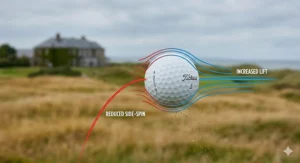
Every golf ball dimple creates a thin boundary layer of air that clings to the ball’s surface during flight. According to research on golf ball flight dynamics, the pattern, depth, and shape of these dimples determine how this boundary layer behaves, which directly affects lift, drag, and—crucially for slicers—how the ball responds to side spin. Conventional dimple patterns create uniform lift across the ball’s surface, which amplifies side spin effects. Advanced patterns like Polara’s asymmetric design or Bridgestone’s Delta Dimples deliberately create non-uniform lift that counteracts unwanted side spin.
The practical effect becomes clear when you compare ball flights: a conventional 332-dimple ball struck with an outside-in swing path generating 3,000 rpm of side spin might curve 25 metres right. The same swing with a Polara Ultimate Straight might produce only 1,500 rpm of side spin, curving just 8-10 metres. The dimples haven’t fixed your swing, but they’ve made its consequences far more manageable.
Core Compression and Spin Generation
Lower compression cores deform less at impact, which limits the ball’s ability to grip the clubface grooves. Less grip means less spin—both backspin and side spin. Studies on golf ball compression demonstrate that ultra-soft balls like the Wilson Duo Soft (29 compression) generate notably less side spin than firmer tour balls (90-100 compression). The trade-off involves reduced greenside spin as well, which is why slice-reducing balls rarely feature the aggressive short game performance that better players demand.
For high-handicap British golfers, this trade-off makes considerable sense. You’re far more likely to benefit from an extra 15 metres of fairway width off the tee than from 2 metres of zip-back on your approach shots. Once your swing improves and you’re consistently finding fairways, you can graduate to firmer, higher-spinning balls that offer more shot-making versatility around the greens.
Construction: Two-Piece vs Multi-Layer
Every ball in this guide employs two-piece construction (core plus cover) rather than the multi-layer designs (three, four, or five pieces) common in premium tour balls. This isn’t coincidental—two-piece construction inherently generates less spin than multi-layer designs. The reason involves energy transfer: multi-layer balls feature progressively firmer layers that create a “spring effect” at impact, generating the high spin rates tour players desire. Two-piece balls lack this spring effect, producing lower spin across all shots.
For slice reduction, simpler is better. A two-piece ball provides the low-spin characteristics you need off the tee whilst remaining affordable enough that losing one in the pond doesn’t ruin your day. Once you’ve conquered your slice, you might explore three-piece balls for their enhanced greenside control, but whilst you’re working on straightening your flight, stick with two-piece construction.
Common Mistakes When Choosing Golf Balls to Reduce Slice
Even when golfers acknowledge they need a ball designed to minimise slice, they frequently make purchase decisions that undermine their goals. Here are the most common errors I observe amongst British club golfers, along with practical guidance for avoiding them.
Prioritising Distance Over Accuracy
The allure of “longest ball” claims proves difficult to resist, even for golfers who rarely find the fairway. This represents fundamentally backwards thinking: you cannot optimise for distance until you’ve first optimised for direction. A 250-metre drive into deep rough leaves you worse off than a 220-metre drive in the fairway, yet countless golfers chase those extra metres at the expense of accuracy.
The solution requires honest self-assessment. If your average round involves searching for 4+ balls, you need to prioritise accuracy-focused balls like the Maxfli StraightFli or Bridgestone e6 Soft over distance-oriented options. Once you’re consistently hitting 10+ fairways per round, you can experiment with firmer, distance-focused balls. Until then, you’re sabotaging your improvement by chasing distance you cannot control.
Ignoring Compression Compatibility with Swing Speed
Many British golfers play balls with compression ratings wholly inappropriate for their swing speeds, typically because they’ve been gifted premium tour balls or believe firmer balls automatically perform better. A 90-compression Pro V1 might be perfect for a tour player with 115 mph swing speed, but it’s actively counterproductive for a recreational golfer swinging 85 mph. The ball simply doesn’t compress sufficiently at impact, resulting in both reduced distance and increased side spin—precisely what slice-prone golfers need to avoid.
The rule of thumb is straightforward: if your driver swing speed falls below 90 mph (which includes most club golfers, particularly during winter), choose balls with 60 compression or lower. The Callaway Supersoft (38), Wilson Duo Soft (29), and TaylorMade Noodle (34) all fit this category. Golfers swinging 90-100 mph can consider slightly firmer options like the Srixon Soft Feel (60) or Maxfli StraightFli (60). Honest assessment of your swing speed—not your aspirational swing speed—should drive this decision.
Overlooking UK-Specific Compatibility
Not all balls available on Amazon.co.uk perform equally well in British conditions. Some dimple patterns that excel in dry, warm climates become problematic in persistent damp. Certain cover materials lose responsiveness in cold temperatures. These aren’t deal-breakers, but they’re considerations worth weighing when making your choice.
For British golfers, prioritise balls with proven durability in wet conditions (the Bridgestone e6 Soft and Srixon Soft Feel both excel here) and dimple patterns designed for stable flight in wind (the Polara and Maxfli StraightFli stand out). Avoid ultra-distance balls with shallow dimple patterns unless you primarily play during the summer months on well-drained courses. Your golf ball needs to work in the conditions you actually encounter, not the idealised conditions manufacturers test in.
Buying Based on Brand Recognition Rather Than Performance Needs
Premium brands command premium prices, but they don’t always deliver premium results for high-handicap golfers battling a slice. A £50-per-dozen Titleist Pro V1 provides exceptional performance for low-handicap players who can exploit its characteristics, but it offers virtually no advantage—and several disadvantages—for a 24-handicapper struggling with side spin.
The smarter approach involves matching the ball to your current game rather than your aspirational game. The Wilson Duo Soft and TaylorMade Noodle might lack the cachet of premium brands, but they’ll serve you far better whilst you’re working to eliminate your slice. Save the premium balls for when you’ve developed the consistency and skill level to benefit from their advanced performance characteristics.
Golf Ball Maintenance Tips for British Weather
Proper care of your golf balls becomes particularly important in British conditions, where damp, mud, and temperature fluctuations can degrade performance if you’re not attentive. Here’s how to maximise the lifespan and consistency of your slice-reducing balls.
Storage in Damp Climates
Golf balls stored in damp garages or sheds can absorb moisture through microscopic imperfections in the cover, affecting both weight and compression characteristics. This matters considerably for slice-prone golfers because any change in compression directly influences spin generation. The solution involves storing balls indoors at room temperature, ideally in their original packaging or a sealed container.
If you’ve left balls in your bag after a wet round, remove them promptly and allow them to dry at room temperature before returning them to storage. Avoid placing them near radiators or using a hairdryer to accelerate drying—rapid temperature changes can cause the cover material to expand unevenly, potentially creating microscopic cracks that affect performance.
Cleaning Without Damage
Muddy balls are a fact of life for British golfers, particularly during the autumn and winter months. Whilst cleaning is essential for maintaining aerodynamic efficiency, aggressive scrubbing can damage dimple patterns and cover materials. The safest approach involves soaking balls in warm (not hot) water with a small amount of washing-up liquid, then gently wiping with a soft cloth.
Avoid using abrasive brushes or scouring pads, which can scratch the cover and alter dimple geometry. For stubborn mud, let the ball soak longer rather than scrubbing harder. Clean dimples perform predictably; damaged dimples introduce variability that undermines your efforts to groove a consistent swing.
Seasonal Rotation Strategy
Rather than playing the same ball type year-round, consider maintaining separate winter and summer selections. During the colder, wetter months (October through March), prioritise balls with lower compression and deeper dimple patterns that perform reliably in challenging conditions. Switch to slightly firmer balls during the summer months when courses dry out and temperatures rise.
This strategy ensures consistent ball behaviour across the seasons, which proves invaluable when working to eliminate a slice. Inconsistent equipment introduces variables that make it difficult to assess whether changes in ball flight result from swing improvements or equipment differences. Seasonal rotation maintains consistency where it matters most: the relationship between your swing and ball performance.
FAQ: Your Golf Ball Slice Questions Answered
❓ Can golf balls that reduce slice completely eliminate my slice problem?
❓ Are slice-reducing golf balls legal for competition in UK club events?
❓ Do I need different golf balls for wet British weather versus dry summer conditions?
❓ Will using a low-compression ball hurt my distance off the tee?
❓ How often should I replace my golf balls even if they still look pristine?
Conclusion: Your Path to Straighter Drives Starts Here
Battling a persistent slice can feel rather demoralising, particularly when you watch playing partners stripe drives down the middle whilst yours veer into adjacent fairways. The encouraging news is that strategic golf ball selection represents one of the fastest, most accessible improvements you can make to your game whilst simultaneously working on the swing mechanics that ultimately determine ball flight.
The seven golf balls reviewed in this guide offer genuine slice-reducing performance through sophisticated dimple engineering, optimised compression characteristics, and construction technologies that minimise unwanted side spin. For British golfers facing the additional challenges of damp conditions, unpredictable winds, and temperature fluctuations, these balls provide the consistency and forgiveness necessary to build confidence and lower scores.
Your ideal choice depends on several factors: budget, swing speed, competitive aspirations, and how much greenside performance you’re willing to sacrifice for straighter drives. High-handicappers struggling with chronic slicing will benefit most from the Polara Ultimate Straight (if playing socially) or the Callaway Supersoft (for competition-legal versatility). Mid-handicappers seeking balanced performance should examine the Bridgestone e6 Soft or Srixon Soft Feel, whilst budget-conscious golfers can achieve remarkable results with the Wilson Duo Soft or TaylorMade Noodle.
Remember that no golf ball can permanently fix a flawed swing—that requires proper instruction and dedicated practice. However, the right ball can transform your slice from a game-ruining disaster into a manageable fade, keeping you in play long enough to develop the skills that eventually eliminate the problem entirely. Choose wisely, practise consistently, and you’ll find those fairways becoming considerably more accessible.
✨ Don’t Miss These Exclusive Deals!
🔍 Take your game to the next level with these carefully selected products. Click on any highlighted item to check current pricing and availability on Amazon.co.uk. These picks will help you find exactly what you need!
Recommended for You
- 7 Best Golf Balls for Beginners UK 2026
- 7 Best Yellow Golf Balls for Winter 2026: Ultimate UK Guide
- 7 Best Winter Golf Balls UK 2026 – Cold Weather Performance Guide
Disclaimer: This article contains affiliate links. As an Amazon Associate, I earn from qualifying purchases. If you purchase products through these links, we may earn a small commission at no additional cost to you.
✨ Found this helpful? Share it with your mates! 💬🤗
