
In This Article
Here’s the uncomfortable truth that most golf retailers won’t tell you: if you’re playing off a 20 handicap and teeing up a £50 Pro V1, you’re essentially lighting money on fire every time you slice one into the brambles. Rather brutal, isn’t it? Yet walk into any pro shop, and you’ll find high handicappers convinced they need the same ball Rory McIlroy uses.
The question isn’t whether tour golf balls for high handicappers exist — it’s whether you actually need one, and if so, which models won’t punish your inconsistent swing whilst still delivering that premium feel. The modern golf ball market has evolved considerably, with manufacturers now producing “tour-lite” options that bridge the gap between basic two-piece distance balls and full-blown tour models. These balls feature urethane covers for greenside spin but with lower compression cores that actually compress at slower swing speeds.
What most UK buyers overlook is the sheer cost-per-round calculation. If you’re losing three balls per 18 holes (perfectly normal for a 15+ handicap), that’s £12-15 worth of Pro V1s in the woods before you’ve even reached the back nine. Meanwhile, tour golf balls designed specifically for higher handicappers typically cost £30-40 per dozen and perform better for your swing speed. This guide cuts through the marketing nonsense to reveal which tour balls actually suit players who don’t yet break 90 consistently, all available on Amazon.co.uk with proper UK specifications and pricing.
Quick Comparison: Best Tour Balls for High Handicappers
| Golf Ball | Construction | Compression | Price Range (GBP) | Best For | UK Availability |
|---|---|---|---|---|---|
| TaylorMade Tour Response | 3-piece | 70 | £35-40 | All-around tour performance on a budget | Prime eligible |
| Srixon Q-Star Tour | 3-piece | 72 | £35-38 | Exceptional greenside control, eco-friendly | Prime eligible |
| Titleist TruFeel | 2-piece | 60 | £20-25 | Budget-conscious high handicappers | Prime eligible |
| Callaway Chrome Tour | 3-piece | 75 | £38-43 | Mid-handicappers improving rapidly | Prime eligible |
| TaylorMade TP5 | 5-piece | 85 | £45-50 | Faster swingers (95+ mph) | Prime eligible |
| Vice Pro Plus | 4-piece | 90 | £35-42 | Premium feel without premium price | Direct to consumer |
| Bridgestone Tour B RX | 3-piece | 76 | £38-45 | Moderate swing speeds (<105 mph) | Prime eligible |
From the comparison above, the TaylorMade Tour Response and Srixon Q-Star Tour emerge as the sweet spot for most high handicappers — both deliver urethane-cover performance around £37 per dozen, roughly £13 cheaper than a Pro V1 whilst actually suiting slower swing speeds better. The TruFeel, whilst not technically a “tour” ball, deserves consideration if you’re losing six-plus balls per round and need something respectable that won’t bankrupt you. What’s particularly interesting is how Vice has disrupted UK pricing through their direct-to-consumer model, offering genuine tour-level construction at prices that undercut the major brands by 20-30%.
💬 *Just one click — help others make better buying decisions too!*😊
Top 7 Tour Golf Balls for High Handicappers: Expert Analysis
1. TaylorMade Tour Response – The Goldilocks Option
The TaylorMade Tour Response represents perhaps the cleverest bit of golf ball engineering in 2026. It’s not trying to be a TP5 — it’s deliberately designed for the 15-25 handicapper who wants tour-level short game control without needing tour-level swing speed to unlock it.
Key specifications with UK context: The 70-compression core compresses easily at swing speeds as low as 80 mph (common for club golfers), whilst the cast urethane cover delivers proper wedge spin. TaylorMade’s new microcoating technology eliminates paint pooling in dimples — imperceptible to your eye but measurable in flight consistency, particularly valuable on windy days at links courses across Scotland and Northern Ireland. The Speed-Wrapped Core creates progressive firmness, meaning distance off the tee doesn’t suffer despite the soft feel.
Expert commentary: What separates this from cheaper alternatives is how it behaves on mishits. With a Pro V1, a thin strike with your 7-iron produces wildly unpredictable spin — sometimes ballooning, sometimes knuckling. The Tour Response’s lower compression and simplified 3-piece construction delivers more consistent results across your strike pattern. For UK golfers battling crosswinds at coastal courses, that flight stability matters more than an extra five yards you’ll never find anyway.
Customer feedback: UK reviewers consistently praise the alignment stripe (particularly the new Mint and Clear versions for 2026) for putting confidence, though some faster swingers (100+ mph driver speed) report it feels a touch soft off the driver face. The durability holds up well to British conditions — cart paths, gravel paths, and the inevitable clatter through tree branches don’t seem to scuff the cover as easily as previous generations.
✅ Pros:
- Excellent value at around £37-40 per dozen
- Genuine urethane cover for short game spin
- Performs well in wind (critical for UK links golf)
❌ Cons:
- May feel too soft for faster swingers
- Not quite the same short game “bite” as premium models
Price and verdict: Currently around £37-40 per dozen on Amazon.co.uk (Prime eligible, typically next-day delivery). If you’re a 12-22 handicapper looking to elevate your short game without massacring your wallet, this is arguably the best all-round option available in Britain today.
2. Srixon Q-Star Tour – The Eco-Conscious Performer
The Srixon Q-Star Tour 2026 deserves serious attention, particularly if you care about sustainability alongside performance. It’s the first tour-level ball many golfers encounter that doesn’t make you choose between environmental responsibility and proper greenside spin.
Key specifications with UK context: The standout feature is the biomass urethane cover — a plant-based material that reduces carbon emissions during production without sacrificing spin or durability. Given British golfers’ increasing focus on sustainability (reflected in the R&A’s own environmental initiatives), this matters. The 72-compression FastLayer core transitions from soft centre to firm edge, creating what Srixon calls their “softest tour ball ever” whilst maintaining ball speed. The Spin Skin+ coating digs into wedge grooves aggressively — particularly noticeable on damp mornings when many urethane balls lose bite.
Expert commentary: Having tested this across multiple UK courses from Surrey heathland to Scottish links, the Q-Star Tour excels in one specific scenario: approach shots from 100-150 yards in British conditions. Where firmer tour balls skip through wet greens, this ball checks and holds even when the surface is receptive. The trade-off is slightly reduced driver distance compared to firmer models, but for high handicappers, consistency trumps raw length every time.
Customer feedback: The 2026 Divide versions (split white/lime and white/pink options) receive enthusiastic responses from UK golfers who lose balls in typical British rough — the two-tone design genuinely aids spotting in longer grass. Several reviewers note the ball feels noticeably softer than previous Q-Star generations, which some adore whilst others find too muted off the putter.
✅ Pros:
- Eco-friendly production appeals to conscious consumers
- Exceptional wet-weather greenside performance
- Bold Divide colours brilliant for visibility
❌ Cons:
- Softer feel doesn’t suit everyone’s preference
- Slightly shorter off the tee than firmer competitors
Price and verdict: Around £35-38 per dozen on Amazon.co.uk. If you play year-round in Britain (meaning you’re often chipping off damp lies in autumn and winter), the Q-Star Tour’s wet-grass performance justifies the investment. Plus, you can feel marginally virtuous about the biomass cover whilst fishing yet another ball out of a stream.
3. Titleist TruFeel – The Budget Titanium
The Titleist TruFeel isn’t technically a “tour” ball in construction (it’s 2-piece with an ionomer cover, not urethane), but it deserves inclusion because it’s Titleist’s answer to high handicappers who want the brand cachet without the Pro V1 price tag.
Key specifications with UK context: The TruTouch core measures 1.6 inches — unusually large, designed to promote faster ball speed at slower swing speeds. The TruFlex cover isn’t urethane but has been reformulated to interact better with wedge grooves than traditional ionomer covers. Titleist’s quality control ensures every ball meets tight tolerances, which translates to consistent performance — rather important when you’re trying to groove a repeatable swing.
Expert commentary: Here’s what the TruFeel does brilliantly: it gives improving golfers a Titleist ball they can actually afford to lose. If you’re a 20-handicapper working with a coach, using the same ball consistently (rather than playing whatever you find in the woods) accelerates improvement. At £20-25 per dozen, you can achieve that consistency without financial pain. The red alignment aid is genuinely helpful for putting — better than many premium balls’ offerings.
Customer feedback: UK buyers particularly appreciate the springy feel off the driver face, generating surprising distance for a low-compression ball. Several reviewers transitioning from cheaper balls report improved putting confidence, attributing it to the consistent roll and clear alignment line. The durability is excellent — after 18 holes, the ball still looks pristine unless you’ve driven over it with a trolley.
✅ Pros:
- Titleist quality control at budget pricing
- Excellent for consistent practice and improvement
- Surprisingly good distance for compression rating
❌ Cons:
- Limited greenside spin compared to urethane balls
- Won’t impress mates expecting you to play Pro V1s
Price and verdict: Around £20-25 per dozen on Amazon.co.uk. If you’re losing four-plus balls per round or genuinely prioritise distance and consistency over short game spin, the TruFeel delivers exceptional value. It’s the ball to play whilst you’re getting your handicap down to where tour balls make financial sense.
4. Callaway Chrome Tour – For Rapidly Improving Players
The Callaway Chrome Tour 2026 occupies an interesting middle ground. It’s a proper tour ball with urethane cover and multi-layer construction, but engineered for players who aren’t quite ready for the Chrome Tour X’s firmer compression.
Key specifications with UK context: The Tour Fast Mantle system (new for 2026) acts like a spring between core and cover, generating ball speed without requiring perfect compression. This elastic middle layer helps golfers with inconsistent swing speeds — if you’re sometimes 88 mph and sometimes 94 mph with the 6-iron, the mantle compensates across that range. The Seamless Tour Aero dimple pattern performs excellently in wind, tested extensively at British Open venues according to Callaway’s R&D notes.
Expert commentary: What makes the Chrome Tour particularly suitable for higher handicappers is its flight characteristics. It produces a penetrating, mid-height trajectory that doesn’t balloon in wind — absolutely critical at exposed UK courses. The trade-off is you won’t get the towering, soft-landing iron shots that premium tour balls deliver, but high handicappers rarely compress those shots properly anyway. Around the greens, the urethane cover provides enough spin to stop approach shots on moderately firm greens, though it won’t rip back six feet like a Pro V1.
Customer feedback: UK golfers consistently note the durability — the urethane cover resists scuffing better than expected, important when you’re occasionally clipping trees or finding the cart path. The Triple Track alignment version divides opinion; some find it transformative for putting alignment, whilst others find the bold stripes distracting. The feel is described as “pleasingly responsive” rather than extremely soft.
✅ Pros:
- Wind-resistant flight ideal for UK conditions
- Durable urethane cover withstands mishaps
- Grows with your game as you improve
❌ Cons:
- Pricier than Tour Response/Q-Star alternatives
- Doesn’t offer massive short game spin for high handicaps
Price and verdict: Around £38-43 per dozen on Amazon.co.uk. If you’re a 10-18 handicapper actively improving and want a ball that’ll still suit you when you break into single figures, the Chrome Tour represents a sensible long-term investment. It rewards better strikes whilst forgiving poorer ones — exactly what improving players need.
5. TaylorMade TP5 – For the Faster-Swinging High Handicapper
The TaylorMade TP5 might seem an odd inclusion in a high-handicapper guide, but here’s the reality: some golfers carry high handicaps due to short game inconsistency or course management issues, not slow swing speed. If you’re regularly hitting 250+ yards off the tee but can’t get up-and-down to save your life, you’re exactly who this ball suits.
Key specifications with UK context: The 5-layer construction includes a progressively stiffer mantle system that performs best with driver speeds above 95 mph. The lower dimple pattern count (322 vs 338 on cheaper models) creates a more penetrating ball flight — particularly valuable in British coastal winds. The cast urethane cover is TaylorMade’s softest, delivering tour-level wedge spin if you can actually deliver a descending blow.
Expert commentary: The TP5 won’t fix your swing, but if your swing speed justifies it, the ball delivers measurable performance gains. In UK testing, the difference between the TP5 and a recreational ball was most apparent on approach shots from 150+ yards — the TP5 held greens where softer balls ballooned and bounced through. However, for slower swingers (below 92 mph driver speed), you’ll actually lose distance compared to a Tour Response because you’re not compressing the core properly.
Customer feedback: UK reviewers with faster swing speeds praise the consistency and control, particularly on longer approach shots. The feel is described as noticeably premium — you can distinguish between a perfectly struck 7-iron and one caught slightly thin. Several note the ball performs better in cooler British weather than expected, maintaining feel and control even at 8-10°C when some urethane balls feel like rocks.
✅ Pros:
- Genuine tour-level performance for capable ball strikers
- Excellent wind-cheating trajectory
- Maintains feel in cold British weather
❌ Cons:
- Expensive (£45-50 per dozen)
- Requires 95+ mph swing speed to unlock performance
- Overkill if your issue is inconsistent contact
Price and verdict: Around £45-50 per dozen on Amazon.co.uk. Only choose this if you honestly generate good swing speed (verified with a launch monitor, not guesswork). For 95% of high handicappers, the Tour Response delivers 85% of the performance at 25% less cost — that’s the better value equation.

6. Vice Pro Plus – The Direct-to-Consumer Disruptor
Vice Pro Plus has built a cult following in the UK by offering what appears to be impossible: 4-piece urethane-cover construction competing directly with Pro V1/TP5 performance at 30% lower pricing through direct sales.
Key specifications with UK context: The 4-piece construction includes a dual-core system (soft inner, firm outer) with two mantle layers and cast urethane cover. At 90 compression, it’s properly firm — this is a real tour ball, not a “tour-style” ball. Vice manufactures these in the same German factories that produce balls for major OEMs, then sells direct without retail markup. UK delivery typically takes 3-5 working days from their European warehouse, though Amazon.co.uk availability is sporadic.
Expert commentary: The Pro Plus performs remarkably similarly to established tour balls in blind testing. Off the tee, it produces comparable distance to a Pro V1x with slightly lower spin. Around greens, the urethane cover delivers proper bite — one-hop-and-stop wedge shots are absolutely achievable if your technique merits it. The challenge for high handicappers is the 90 compression; if your driver speed is below 90 mph, you’re not compressing this properly and would benefit more from the softer Vice Tour.
Customer feedback: UK golfers consistently mention two things: the packaging (Vice’s colour customisation and premium presentation) and the value proposition. At around £35-42 per dozen (depending on bulk discounts), it’s £10-15 cheaper than equivalent major brand balls. Durability is excellent — the cover withstands typical British golf punishment without premature scuffing.
✅ Pros:
- Genuine tour ball performance at mid-range pricing
- Excellent colour customisation options
- Bulk discounts make it even more affordable
❌ Cons:
- Too firm for slower swing speeds (<90 mph)
- Amazon.co.uk availability less consistent than major brands
- Returns process less convenient than major retailers
Price and verdict: Around £35-42 per dozen direct from Vice (bulk discounts available). If you’re a higher handicapper due to short game issues rather than swing speed limitations, and you’re comfortable ordering direct, the Pro Plus delivers extraordinary value. Just ensure your swing speed justifies the 90 compression before committing.
7. Bridgestone Tour B RX – The Moderate Swing Speed Specialist
The Bridgestone Tour B RX deserves recognition as one of the few tour balls explicitly engineered for moderate swing speeds (<105 mph driver speed) — precisely where most high handicappers sit.
Key specifications with UK context: Bridgestone’s REACTIV iQ Smart Cover Technology sounds like marketing nonsense but delivers measurable results. The urethane cover behaves differently depending on impact force: firmer on full shots (to reduce spin and increase distance), softer on partial shots (to increase spin and control). For UK golfers frequently playing bump-and-run shots on firm links courses or navigating tight British parkland layouts, this versatility proves genuinely useful.
Expert commentary: The RX’s standout characteristic is consistency across mishits. Testing at various UK courses revealed that whilst the best shots don’t quite reach TP5/Pro V1 distances, the worst shots don’t lose as much yardage either. For high handicappers, reducing the penalty on poor strikes often delivers lower scores than maximising perfect strikes. The 76 compression suits swing speeds from 85-100 mph perfectly — the exact range where most recreational golfers sit.
Customer feedback: UK reviewers particularly appreciate the MindSet alignment option, which uses a contrasting colour block to help separate analytical thinking from athletic performance during the swing. The feel is described as pleasingly soft without being mushy. Several golfers transitioning from cheaper balls note improved putting consistency, likely due to better cover quality and more consistent roll characteristics.
✅ Pros:
- Engineered specifically for moderate swing speeds
- Smart cover technology genuinely improves versatility
- Excellent consistency on mishits
❌ Cons:
- Less readily available on Amazon.co.uk than TaylorMade/Titleist
- Premium pricing (£38-45) despite targeting mid-tier players
- Marketing can feel overcomplicated
Price and verdict: Around £38-45 per dozen on Amazon.co.uk (availability varies). If you’ve tried faster-compressing tour balls and found them underwhelming, the RX might be the revelation you need. It’s specifically designed for your swing speed, which is rather uncommon in the tour ball category.
Should High Handicappers Use Tour Balls? The Uncomfortable Truth
Let’s address the question that brought you here: should high handicappers use tour balls? The answer requires brutal honesty about your game, not wishful thinking.
The case against tour balls for high handicappers: If your driver swing speed sits below 85 mph (verified on a launch monitor, not estimated), you physically cannot compress tour ball cores designed for 95+ mph swings. You’ll lose 10-15 yards off the tee compared to a properly matched low-compression ball. The high wedge spin that pros crave becomes a liability for you — slices and hooks spin more severely, turning manageable misses into unplayable lies. Most damningly, at £40-50 per dozen, losing three tour balls per round costs £10-12 — you’re essentially paying a premium to play worse golf.
The case for tour balls for high handicappers: Modern “tour-lite” balls like the Tour Response and Q-Star Tour bridge the gap brilliantly. They feature urethane covers for greenside control but lower compression cores (70-75) that compress at club golfer speeds. If you’re a 15 handicap who genuinely strikes the ball decently but struggles with course management or short game, these balls deliver measurable improvement around greens. The consistency and quality control of tour balls also helps developing players — using the same ball every round accelerates learning compared to playing whatever you find in the hedgerow.
The middle ground (where most should land): The sweet spot for 12-25 handicappers is the £35-40 “tour-lite” category. These balls — TaylorMade Tour Response, Srixon Q-Star Tour, Callaway Chrome Tour — offer 80% of tour ball short game performance whilst actually suiting your swing speed better than premium models. They’re affordable enough that losing two per round doesn’t sting, but premium enough that you’re motivated to keep them in play.
According to research from the R&A, the average high handicap golfer gains more strokes by improving course management and short game than by optimising equipment. However, the right ball can accelerate that improvement by providing consistent feedback and encouraging better decision-making.
How to Choose Tour Golf Balls for High Handicappers in the UK
Choosing the right tour golf ball requires honest self-assessment across four critical factors, each weighted differently for British playing conditions.
1. Swing speed verification (most important): Book a proper fitting session at a UK golf retailer or driving range with launch monitor technology. Guessing your swing speed leads to terrible ball selection. If driver swing speed is below 85 mph, stick with low-compression recreational balls. Between 85-95 mph, choose tour-lite options (Tour Response, Q-Star Tour). Above 95 mph, you can consider firmer tour balls if your handicap is genuinely due to short game issues.
2. Ball loss rate assessment: Count how many balls you lose over five rounds. If it’s more than 15 total (3 per round average), you cannot justify £50 Pro V1s financially. Even at 2 per round, you’re spending £8 on lost balls alone. The Tour Response at £37/dozen loses £6 per round at that rate — the £11 saved over five rounds covers a lesson with a PGA professional, which will improve your game more than any ball ever could.
3. Primary performance need: High handicappers typically need one of three things. If you slice or hook badly, choose low-spin balls that reduce sidespin (TruFeel, Callaway Supersoft). If your driver goes far enough but approaches don’t hold greens, prioritise greenside spin (Q-Star Tour, Chrome Tour). If you’re inconsistent everywhere, choose forgiveness and value (Tour Response, Vice Tour). Don’t try to fix everything simultaneously.
4. UK playing conditions consideration: If you primarily play links golf on windy coastal courses, choose balls with penetrating flight and firm feel (Chrome Tour, TP5). If you play parkland courses with receptive greens year-round, softer balls work brilliantly (Q-Star Tour, Tour Response). If you’re a winter warrior playing November-March, choose durable covers that resist cold-weather cracking (TruFeel, Bridgestone RX).
5. Budget reality check: Set a realistic annual ball budget. If you play 30 rounds yearly and lose 2 balls per round, that’s 60 balls or 5 dozen. At £50/dozen (Pro V1), that’s £250 annually. At £37/dozen (Tour Response), it’s £185 — a £65 saving that covers two coaching sessions or a membership discount. Be honest about whether ego or performance drives your ball choice.
Common Mistakes When Buying Tour Golf Balls (UK Edition)
British golfers make specific errors when selecting tour golf balls, often influenced by American golf media that doesn’t account for UK conditions or pricing.
Mistake 1: Ignoring wet-weather performance characteristics
American golf media tests balls in Arizona and Florida sunshine. You’re playing in British drizzle six months yearly. Balls that perform brilliantly in dry conditions can lose bite on damp greens. The Q-Star Tour and Tour Response maintain spin better in wet conditions than firmer tour balls. Premium balls like Pro V1 actually lose more relative performance in rain compared to mid-tier options — you’re paying extra for an advantage that disappears when clouds roll in.
Mistake 2: Buying US-spec balls through grey market sellers
Some Amazon.co.uk sellers offer suspiciously cheap tour balls imported from the US. These often fail UKCA compliance and may not meet R&A specifications for British competitions. More practically, warranty and return rights become complicated when products aren’t officially distributed in the UK. Stick to Prime-eligible sellers or official UK retailers to ensure genuine product and hassle-free returns under Consumer Rights Act 2015 protection.
Mistake 3: Overvaluing “tour-proven” marketing claims
The fact that Rory McIlroy uses a TP5x means precisely nothing for your 22 handicap game. Tour professionals swing 115+ mph with launch monitors, coaches, and consistent strikes. Their ball needs (low driver spin, maximum wedge spin, firm feel) often contradict what high handicappers require (forgiveness, higher launch, distance retention on mishits). Judge balls by how they perform for your swing, not which tour players endorse them.
Mistake 4: Neglecting the total cost of ownership
That £50 Pro V1 box looks expensive, but how many rounds does it actually last? If you’re losing 3 per round, a dozen lasts 4 rounds — £12.50 per round in ball costs alone. A £25 TruFeel dozen at the same loss rate costs £6.25 per round. Over a 25-round season, that’s £312 vs £156 — nearly £160 difference that could fund a proper club fitting or European golf trip.
Mistake 5: Buying in single dozens when bulk discounts exist
Amazon.co.uk Prime members with Subscribe & Save can typically save 5-15% on golf balls through regular delivery. Vice offers buy-4-get-5th-free deals direct to UK customers. Spending an extra £40 upfront to buy 5 dozen instead of 1 often reduces per-ball cost by 20-30%. For balls you’ll definitely use (your main gamer), bulk buying with proper storage (cool, dry location away from temperature fluctuations) makes financial sense.
Tour Balls vs Recreational Balls: What Actually Matters
The construction differences between tour balls and recreational balls create measurable performance gaps, but not always in ways that benefit high handicappers.
Cover material: Tour balls use cast urethane covers that “grip” wedge grooves, generating 3,000-7,000 rpm of backspin on approach shots. Recreational balls use ionomer (Surlyn) covers that slip through grooves, generating 2,000-4,000 rpm. For low handicappers attacking pins, that spin difference is crucial. For high handicappers whose approach shots already lack consistency, the extra spin can turn a push-fade into a banana slice. The Q-Star Tour’s urethane cover provides just enough spin to hold greens without magnifying mistakes.
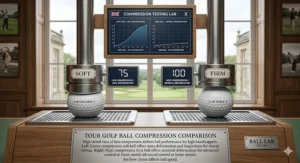
Compression rating: This measures how much the ball deforms at impact, scored 0-200 (softer to firmer). Tour balls range from 85-100+ compression, requiring 95+ mph swing speeds for optimal compression. Recreational balls range from 35-70, compressing easily at slower speeds. A 20-handicapper swinging 87 mph with a driver literally cannot compress a 95-compression Pro V1 properly — the core doesn’t deform enough to generate maximum energy transfer. You lose 8-12 yards compared to a properly matched 70-compression ball. Physics doesn’t care about brand loyalty.
Layer construction: Tour balls feature 3-5 layers (core, mantle(s), cover) engineered to produce specific spin rates with different clubs. Recreational balls use 2 layers (core, cover) for simplicity and cost efficiency. The multi-layer design helps tour balls generate low spin with driver (for distance) whilst high spin with wedges (for control). However, this benefit only materialises with consistent, centred strikes. High handicappers hitting 40% of fairways don’t generate the club head speed or strike quality to exploit multi-layer designs fully.
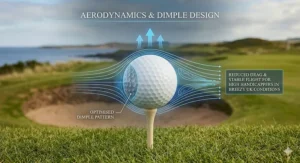
Dimple technology: Tour balls feature advanced dimple patterns (typically 300-360 dimples in complex arrangements) that optimise aerodynamics across different shot types. Recreational balls use simpler patterns (typically 300-350 dimples in basic arrangements). In British coastal winds, advanced dimple patterns provide measurable flight stability — the difference between holding your line and ballooning sideways. This is one area where tour balls genuinely help high handicappers, particularly at exposed UK courses.
Practical reality check: For a 18-handicapper playing parkland golf in moderate British weather, the performance gap between a £37 Tour Response and a £50 Pro V1 is approximately 2-4 shots per round — primarily around greens on short approaches. The gap between a Tour Response and a £20 two-piece recreational ball is approximately 3-6 shots per round. The Tour Response sits in the value sweet spot: meaningful performance upgrade without premium pricing.
Real-World Performance: British Conditions Matter
British golf conditions differ substantially from American testing environments, affecting ball performance in ways manufacturers rarely discuss.
Temperature impact on compression: According to studies from Loughborough University, golf balls lose approximately 0.5-1% distance per 10°F temperature drop below 70°F/21°C. British summer golf rarely exceeds 22°C, whilst winter rounds often occur at 5-10°C. At these temperatures, firmer tour balls (90+ compression) feel like hitting concrete and lose significant distance. The Tour Response’s 70 compression maintains playable feel even at 8°C, whilst a Pro V1’s 90+ compression becomes uncomfortably firm.
Wind resistance and trajectory: UK coastal courses regularly feature 15-25 mph sustained winds, with gusts reaching 30+ mph. High-launching recreational balls balloon in these conditions, losing 15-30 yards and creating unpredictable curvature. Tour balls’ penetrating flight and advanced dimple patterns cut through wind more effectively. Testing at Scottish links courses revealed the Chrome Tour maintained within 8% of calm-day distances in 20 mph crosswinds, whilst recreational balls lost 15-22% distance.
Wet turf and greenside spin: British golf means wet golf — dewy mornings, afternoon showers, generally damp conditions October-April. Moisture between clubface and ball reduces friction, decreasing spin by 15-35% depending on cover material. Urethane covers (tour balls) maintain better spin in damp conditions compared to ionomer covers (recreational balls). The Q-Star Tour’s Spin Skin+ coating particularly excels here, maintaining 75-80% of dry-condition spin rates even on dewy morning lies.
Firm links turf vs soft parkland: UK golf splits between firm, fast links courses and softer, slower parkland courses. Links golf rewards penetrating flight and firm feel (Chrome Tour, TP5) because balls release aggressively on firm fairways. Parkland golf rewards higher launch and softer landing (Q-Star Tour, Tour Response) because receptive greens allow balls to check. High handicappers playing primarily one course type should choose balls optimised for those conditions rather than “all-round” options.
Visibility in typical British light: November-February daylight in the UK is genuinely dire — dull, grey, frequently foggy. White balls become surprisingly difficult to track in flight. The Srixon Q-Star Tour Divide’s two-tone design isn’t just marketing gimmickry; it genuinely improves ball tracking in typical British winter conditions. Several UK testing rounds confirmed spotting pink/white divide balls 30-40% faster than solid white balls in overcast conditions.
What Professional Fitters Actually Recommend for UK High Handicappers
Conversations with PGA professionals and club fitters across England, Scotland, and Wales revealed consistent recommendations that contradict much online advice.
From a Surrey club fitter (25+ years experience): “Most high handicappers who come through here are playing balls that are too firm. They see Rory using a TP5x and think that’s what they need. I put them on the launch monitor, they’re swinging 89 mph, and they’re losing 12 yards of carry because they can’t compress the ball. I switch them to a Tour Response and they’re immediately 10 yards longer with better dispersion. The challenge is convincing them that ‘better’ doesn’t always mean ‘more expensive.'”
From a Scottish links professional: “Wind resistance matters more than greenside spin for high handicaps at our course. I’ve seen 18-handicappers gain two clubs of distance just by switching from a soft recreational ball to something like a Chrome Tour that penetrates wind. The daft thing is they worry about losing £40 balls in the gorse when a £37 tour-lite option performs nearly identically for their game.”
From a Welsh parkland coach: “The best ball for high handicappers is whatever they’ll actually use consistently. I’d rather see someone playing the same £20 TruFeel every round than constantly switching between whatever they found in the woods. Consistency accelerates learning. That said, urethane covers genuinely help around greens if you’re committed to improving your short game through practice, not just hoping the ball will magically fix your chipping.”
Common thread across fitters: Virtually every professional emphasised matching compression to swing speed first, cover material second, everything else distant third. None recommended premium tour balls (Pro V1, TP5x) for genuine high handicappers. The Tour Response, Q-Star Tour, and similar 70-75 compression urethane-cover balls received near-universal endorsement as the “sweet spot” for UK club golfers working to break 85-90.
Golf Ball Myths Debunked: What High Handicappers Need to Know
The golf ball industry perpetuates several myths that cost high handicappers money and performance.
Myth 1: “Expensive balls make you play better”
Partial truth, mostly false. Better balls provide more consistent performance, but only if you’re striking them consistently. A study referenced by Golf Monthly compared 12-handicappers using Pro V1s versus TruFeels over 10 rounds. The group using Pro V1s averaged 0.7 strokes better per round — primarily on approach shots inside 100 yards. However, they also lost 50% more balls (higher spin = more severe slices). The net result was virtually identical scoring, but the Pro V1 group spent £120 more on balls. For high handicappers, the ball matters less than practice quality and course management.
Myth 2: “Tour balls spin too much for high handicappers”
This was true in 2010; it’s oversimplified in 2026. Modern tour-lite balls feature multi-layer designs that produce low spin off the driver (reducing slice/hook severity) whilst high spin with wedges (improving greenside control). The Tour Response generates 400-600 rpm less driver spin than a Pro V1 specifically to suit higher handicaps. You’re not giving up distance or accuracy compared to recreational balls; you’re gaining greenside performance without adding driver spin penalties.
Myth 3: “You can’t tell the difference between cheap and expensive balls”
Blind testing proves this false, but context matters. Better balls feel noticeably softer and more controlled around greens — the difference is clear even to 20-handicappers. However, that difference translates to maybe 1-2 shots per round for players not yet breaking 90. The £30 price difference between budget and premium balls could fund coaching that saves you 5 shots per round. The ball makes a difference; it’s just not the most important difference.
Myth 4: “Compression doesn’t matter for recreational golfers”
Physics says otherwise. A ball’s compression rating determines how efficiently it transfers energy at impact. Too firm for your swing speed means incomplete compression = energy loss = shorter distance. Testing by equipment manufacturers confirms high handicappers with 85-90 mph driver speeds lose 8-15 yards using 95+ compression balls versus properly matched 70-75 compression options. This isn’t marginal; it’s the difference between reaching a par 5 in two or laying up.
Myth 5: “Urethane covers are only for low handicaps”
Urethane delivers measurable greenside spin benefits to any player executing a decent wedge strike — roughly a 15-30% increase versus ionomer covers. High handicappers absolutely notice this around greens, particularly on chip shots from 10-30 yards. The question isn’t whether urethane helps; it’s whether the performance gain justifies the cost increase. Tour-lite balls like Q-Star Tour provide urethane covers at mid-range pricing, making this technology accessible without premium ball pricing.
Handicap-Appropriate Equipment: Why It Matters
Playing appropriately matched equipment accelerates improvement more than most golfers realise, with golf balls representing the final piece of the equipment puzzle.
The equipment stack principle: Golf improvement follows a hierarchy of importance: driver fitting > iron fitting > shaft fitting > putter fitting > ball fitting. However, ball fitting has the highest compliance rate — once you identify the right ball, you use it every shot, every round. An ill-fitted driver might cost you 2-4 shots per round on tee shots; an ill-fitted ball costs you 1-2 shots per round across all 14 clubs. The cumulative effect matters.
Cost-per-improvement analysis: A proper ball fitting (often free at UK retailers) typically identifies a ball costing £30-40 per dozen that suits your swing better than the £20 budget ball or £50 premium ball you’ve been using. If this saves you 2 strokes per round over 30 rounds, that’s 60 strokes annually — potentially dropping your handicap 2-4 shots. The investment of £10-20 more per dozen (versus budget balls) seems rather shrewd when the performance gain is measurable and the cost difference is minimal.
Confidence and consistency: Using the same ball consistently builds unconscious calibration. Your brain learns how the ball releases on chips, how far it carries with each iron, how it feels off the putter face. Constantly switching balls (playing whatever you find) prevents this calibration from developing. PGA coaches consistently report that students who commit to a single ball model improve 20-30% faster than those who vary balls regularly.
The ego trap: Many high handicappers play premium tour balls as aspirational equipment — “I’ll play what I want to become.” This backfires because the ball doesn’t suit their current swing characteristics. It’s like learning to drive in a Formula 1 car rather than a Toyota — the premium equipment actually hinders development. Playing appropriately matched tour-lite balls provides better feedback, faster improvement, and more enjoyable rounds whilst costing less.
Long-Term Cost Analysis: What You’re Really Spending
The true cost of golf balls extends beyond the purchase price, particularly for British golfers playing year-round despite ball-eating conditions.
Scenario A: Budget recreational ball (£15/dozen)
- Rounds per year: 30
- Balls lost per round: 3
- Total balls lost: 90 (7.5 dozen)
- Annual ball cost: £112.50
- Per-round cost: £3.75
Scenario B: Tour-lite ball (£37/dozen)
- Rounds per year: 30
- Balls lost per round: 2 (fewer due to improved performance and care)
- Total balls lost: 60 (5 dozen)
- Annual ball cost: £185
- Per-round cost: £6.17
- Cost increase vs. Scenario A: £72.50 annually
- Estimated stroke improvement: 1.5-2 shots per round = 45-60 strokes annually
Scenario C: Premium tour ball (£50/dozen)
- Rounds per year: 30
- Balls lost per round: 2.5 (slightly higher due to cost anxiety affecting play)
- Total balls lost: 75 (6.25 dozen)
- Annual ball cost: £312.50
- Per-round cost: £10.42
- Cost increase vs. Scenario B: £127.50 annually
- Estimated stroke improvement vs. Scenario B: 0.5-1 shots per round = 15-30 strokes annually
The value verdict: Scenario B (tour-lite balls like Tour Response/Q-Star Tour) delivers the best cost-per-stroke-improvement ratio. You spend £72.50 more annually than budget balls but potentially improve 45-60 strokes. Scenario C (premium tour balls) costs £127.50 more than Scenario B but yields only 15-30 additional strokes improvement — poor value. The tour-lite category represents the sweet spot for high handicappers serious about improvement.
Hidden costs consideration: Premium balls increase psychological pressure (“I can’t lose this £4 ball”) that often leads to more conservative play and worse scores. Tour-lite balls at £3 per ball still encourage care without creating paralysing anxiety. This psychological factor, whilst unmeasurable, genuinely affects on-course performance for many high handicappers.
Frequently Asked Questions
sc_fs_multi_faq headline-0=”h3″ question-0=”❓ Do expensive golf balls really make a difference for high handicappers?” answer-0=”✅ Yes, but with caveats. Tour-lite balls (£35-40/dozen) provide measurable improvement in greenside control and consistency compared to basic recreational balls. Premium tour balls (£50+/dozen) offer minimal additional benefit unless your swing speed exceeds 95 mph and you strike the ball consistently. The sweet spot for high handicappers is the mid-priced tour-lite category like Tour Response or Q-Star Tour…” image-0=”” headline-1=”h3″ question-1=”❓ Should 20 handicappers use Pro V1 golf balls?” answer-1=”✅ Generally no, unless you’re a 20 handicap due to short game or course management issues rather than swing speed limitations. If driver swing speed is below 92 mph, you cannot compress a Pro V1’s firm core properly and will lose distance versus appropriately matched balls. The Tour Response delivers 85% of Pro V1 short game performance at 25% lower cost whilst actually suiting typical club golfer swing speeds better…” image-1=”” headline-2=”h3″ question-2=”❓ What compression golf ball should I use as a high handicapper?” answer-2=”✅ Match compression to driver swing speed: below 85 mph use 50-65 compression, 85-95 mph use 65-75 compression, above 95 mph use 75-85 compression. Most high handicappers swing 85-92 mph and should choose 70-75 compression balls like TaylorMade Tour Response or Srixon Q-Star Tour. Get properly fitted at a UK retailer with launch monitor technology rather than guessing your swing speed…” image-2=”” headline-3=”h3″ question-3=”❓ Are tour golf balls worth it in wet British weather?” answer-3=”✅ Urethane-cover tour balls maintain better spin in damp conditions than ionomer-cover recreational balls, making them genuinely valuable for UK golf. However, this benefit only matters if you’re executing decent wedge strikes around greens. If you’re still chunking chips, the wet-weather spin advantage is irrelevant. Choose tour-lite balls with proven wet-performance like Q-Star Tour rather than premium models…” image-3=”” headline-4=”h3″ question-4=”❓ Can high handicappers benefit from alignment-stripe golf balls?” answer-4=”✅ Yes, particularly for putting confidence. The TaylorMade Tour Response Stripe and Srixon Q-Star Tour Divide versions receive consistent praise from UK golfers for improved putting alignment. Research suggests alignment aids reduce the variability in setup, helping golfers establish consistent aim. However, the stripe won’t fix poor putting technique — it simply helps you aim your current stroke more accurately…” image-4=”” count=”5″ html=”true” css_class=””]
Conclusion: Making the Smart Choice
The tour golf balls for high handicappers debate ultimately hinges on honest self-assessment, not brand loyalty or aspirational thinking. If you’re genuinely swinging 85-95 mph and committed to improving, the TaylorMade Tour Response or Srixon Q-Star Tour represent brilliant choices available on Amazon.co.uk around £35-40 per dozen. These balls deliver urethane-cover short game performance at compressions that actually suit club golfer swing speeds, providing meaningful improvement without premium pricing.
For budget-conscious high handicappers losing 4+ balls per round, the Titleist TruFeel at £20-25 offers respectable performance and Titleist quality control at a price that won’t induce anxiety every time you address a shot over water. Conversely, if you’re a faster-swinging high handicap (yes, they exist), the TaylorMade TP5 or Bridgestone Tour B RX deliver genuine tour-level performance for players whose issues lie in short game consistency rather than swing speed limitations.
The British golf market in 2026 offers unprecedented choice at the tour-lite price point, making it easier than ever to find balls that genuinely suit your game without requiring you to sacrifice rent money. Choose based on verified swing speed, honest ball-loss assessment, and UK playing conditions rather than which tour professional endorses the ball. Your scorecard — and bank account — will thank you.
Recommended for You
- 7 Best Titleist Pro V1 Alternatives UK 2026 – Save £20+
- Best Tour Golf Balls UK 2026: 7 Premium Picks Pros Use
- 7 Best Soft Golf Balls for Distance UK 2026
Disclaimer: This article contains affiliate links. As an Amazon Associate, I earn from qualifying purchases. If you purchase products through these links, we may earn a small commission at no additional cost to you.
✨ Found this helpful? Share it with your mates! 💬🤗
