
In This Article
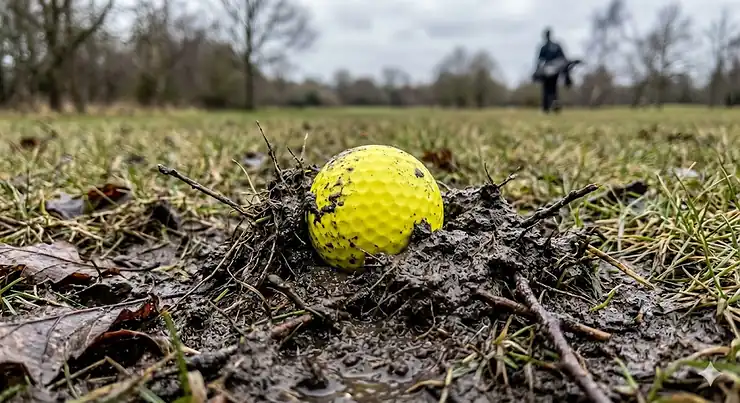
Picture this: it’s a crisp November morning on a Berkshire golf course, frost clinging stubbornly to the rough, and your standard white ball has vanished into the gloom after what you thought was a decent drive. Sound familiar? If you’re tired of spending half your winter rounds on search-and-rescue missions rather than actual golf, you’re in precisely the right place.
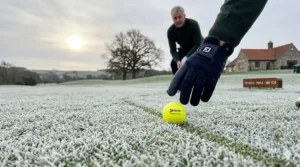
Yellow golf balls for winter aren’t just a cosmetic choice — they’re a practical necessity for anyone who refuses to let British weather dictate when they can play. During the darker months when daylight is rationed and frost transforms fairways into monochrome landscapes, that vivid yellow sphere becomes your most reliable playing partner. The science is straightforward: yellow creates exceptional contrast against both grey skies and frost-covered grass, making ball tracking dramatically easier from tee to green.
What most golfers overlook about yellow balls is that modern technology has evolved far beyond those painted budget offerings from years past. Today’s premium yellow golf balls feature enriched urethane covers that resist chipping and maintain their vibrant colour throughout dozens of rounds — even after encounters with cart paths and bunker rakes. Whether you’re a 5-handicapper demanding tour-level spin or a weekend warrior prioritising visibility and value, there’s a yellow ball engineered specifically for your winter game. This comprehensive guide examines seven exceptional options available on Amazon.co.uk, helping you navigate everything from compression ratings to real-world performance in proper British conditions: rain, wind, and the occasional biblical downpour.
Quick Comparison Table: Top Yellow Golf Balls for Winter
| Ball Model | Best For | Price Range | Compression | Winter Visibility |
|---|---|---|---|---|
| Titleist Pro V1 Yellow | Tour performance | £45-£55 | 90 | Excellent |
| Callaway Supersoft Yellow | Budget-friendly visibility | £20-£28 | 38 | Outstanding |
| TaylorMade TP5 Yellow | Premium players | £45-£55 | 85 | Excellent |
| Srixon Z-Star Yellow | All-round performance | £40-£50 | 90 | Excellent |
| Volvik Vivid Yellow | Maximum visibility | £22-£30 | 75 | Outstanding |
| Srixon Q-Star Tour Divide | Alignment & visibility | £25-£35 | 72 | Outstanding |
| Seed SD-01 YellowAF | Neon brightness | £30-£40 | 80 | Exceptional |
Looking at this comparison, three distinct patterns emerge. The Callaway Supersoft and Volvik Vivid dominate the value segment, offering exceptional visibility at prices that won’t sting when you inevitably donate one to the water hazard on the 14th. Mid-handicappers chasing both performance and practicality should gravitate toward the Srixon Q-Star Tour Divide, which pairs excellent greenside spin with that clever two-tone design. Meanwhile, single-digit handicappers who demand tour-calibre performance needn’t compromise — the Pro V1, TP5, and Z-Star deliver identical specs to their white counterparts, just wrapped in that high-visibility yellow urethane.
💬 Just one click — help others make better buying decisions too! 😊
Top 7 Yellow Golf Balls: Expert Analysis
1. Titleist Pro V1 Yellow — The Gold Standard Goes High-Vis
The Titleist Pro V1 Yellow remains the benchmark by which all other premium golf balls are measured, and the yellow variant delivers identical performance to its famous white sibling. This 2025 iteration features Titleist’s reformulated core technology that increases ball speed whilst maintaining that distinctively soft feel around the greens.
With a 90 compression rating and 352-dimple spherical design, the Pro V1 Yellow launches mid-trajectory with penetrating flight characteristics — rather useful when battling December headwinds on exposed links courses. The enriched yellow urethane cover isn’t merely painted on; it’s infused throughout the material, meaning no chipped paint and consistent colour retention even after repeated cart path encounters. What sets this apart in British winter conditions is that slightly greenish-yellow tinge Titleist engineered specifically for contrast against damp, glossy grass. On frosty mornings when standard white balls virtually disappear into the landscape, this Pro V1 stands out like a beacon.
UK golfers consistently praise the Pro V1’s durability in wet conditions — the cast urethane cover maintains excellent friction with wedge grooves even when soaked, translating to reliable spin control on soggy approach shots. Worth noting: in the damp British autumn and winter, expect roughly 5-8 yards less carry than the manufacturer’s summer claims, simply due to denser air and reduced ball temperature.
Pros:
- Tour-level performance with exceptional greenside spin
- Enriched urethane cover resists chipping and maintains brightness
- Excellent visibility in low-light and overcast UK conditions
Cons:
- Premium pricing (around £50 per dozen)
- May feel too firm for golfers with slower swing speeds
Price & Verdict: In the £45-£55 range on Amazon.co.uk, the Pro V1 Yellow justifies every penny if you’re a skilled player who refuses to compromise performance for visibility. Prime members typically receive next-day delivery.
2. Callaway Supersoft Yellow — Best Value for Visibility
The Callaway Supersoft Yellow has earned legendary status amongst mid-to-high handicappers, and rightly so. With an ultra-low 38 compression rating, this is Callaway’s softest ball ever — specifically engineered for golfers with swing speeds under 90 mph, which describes the vast majority of British club golfers.
The HyperElastic SoftFast Core delivers impressive ball speed considering the low compression, whilst the Hybrid Cover balances distance with decent greenside feel. What makes the Supersoft particularly brilliant for winter golf in the UK is its combination of affordability and exceptional visibility. The glossy yellow finish pops against grey skies and stands out magnificently on frost-covered fairways. During testing on wet autumn mornings, the Supersoft proved easier to track in flight than several balls costing twice as much.
UK reviews consistently highlight this ball’s straight flight characteristics — the low compression and optimised aerodynamics reduce side spin, translating to fewer penalty strokes when you’re battling crosswinds on exposed parkland courses. The durability is fair rather than exceptional; expect visible scuffing after 2-3 rounds on firm surfaces, but at this price point, you won’t lose sleep over the occasional lost ball. British golfers appreciate that you can purchase these with free UK delivery on orders over £25 from Amazon.co.uk, and they’re frequently available in multi-buy deals.
Pros:
- Outstanding value (often under £25 per dozen)
- Ultra-soft feel perfect for moderate swing speeds
- Excellent visibility with glossy yellow finish
Cons:
- Less durable than premium urethane balls
- Limited spin control on approach shots
Price & Verdict: Around £20-£28 per dozen makes the Supersoft Yellow a no-brainer for golfers prioritising visibility and value over tour-level performance. Perfect for those wet Wednesday afternoon society rounds.
3. TaylorMade TP5 Yellow — Five Layers of Winter Performance
The TaylorMade TP5 Yellow represents TaylorMade’s answer to the Pro V1, featuring a unique five-layer construction that optimises spin separation between driver (low) and wedges (high). This 2026 model incorporates the Speed Wrapped Core technology, delivering faster ball speeds whilst maintaining that notably softer feel around the greens compared to previous generations.
What distinguishes the TP5 Yellow from competitors is the enriched yellow urethane cover technology. Unlike cheaper balls that rely on painted finishes that chip and fade, TaylorMade infuses the yellow colour throughout the urethane material. The result? Your ball maintains its vivid neon appearance through dozens of rounds, even after repeated encounters with trees, cart paths, and the occasional accidental putter throw. The slightly matte finish provides extra contrast against damp, glossy winter grass — a subtle but meaningful advantage during those grey November afternoons.
Tour professionals including Rory McIlroy and Tommy Fleetwood trust the TP5 in competitive play, which tells you everything about its performance credentials. For UK golfers specifically, the TP5’s 322-dimple Tour Flight pattern delivers exceptional stability in wind — rather crucial when you’re battling 25 mph gusts on a links course in Scotland or along the Welsh coast. The 85 compression rating suits golfers with swing speeds above 90 mph, though slower swingers won’t be dramatically penalised.
Pros:
- Five-layer construction optimises performance throughout the bag
- Enriched urethane cover maintains colour without chipping
- Exceptional wind stability for British conditions
Cons:
- Premium pricing comparable to Pro V1
- Softer feel may not suit golfers preferring firmer feedback
Price & Verdict: Priced in the £45-£55 range on Amazon.co.uk, the TP5 Yellow competes directly with the Pro V1 and deserves serious consideration from single-digit handicappers who value both performance and visibility.
4. Srixon Z-Star Yellow — The Underrated Performer
The Srixon Z-Star Yellow deserves far more recognition than it receives. This three-piece tour ball features Srixon’s innovative FastLayer DG Core 2.0 technology, which transitions from soft in the centre to firm at the outer edge. The result is a ball that delivers both exceptional feel around the greens and explosive distance off the driver — precisely what winter golf demands when you’re constantly compensating for lost yardage from cold, dense air.
The 338 Speed Dimple pattern is engineered specifically for penetrating flight and wind resistance, making the Z-Star particularly effective on exposed British courses where weather dictates play. What many UK golfers appreciate is the Spin Skin+ coating, which digs deep into wedge and iron grooves to maximise spin even in damp conditions. On soggy October mornings when grip between ball and clubface becomes problematic, this coating maintains remarkable friction and bite.
The tour yellow finish offers excellent visibility against overcast skies and frost-covered rough. Whilst perhaps not quite as vibrant as the Volvik Vivid’s matte neon, the Z-Star’s colour holds up exceptionally well over multiple rounds. UK reviewers consistently note impressive durability — the urethane cover withstands typical British course conditions (occasional cart path strikes, wet bunkers, winter rough) without significant degradation. At around £40-£50 per dozen on Amazon.co.uk, it occupies an interesting value position: cheaper than Pro V1/TP5, yet delivering comparable performance.
Pros:
- FastLayer core technology balances feel and distance
- Spin Skin+ coating maintains friction in wet UK conditions
- Excellent value compared to Pro V1/TP5
Cons:
- Less brand recognition than major competitors
- Slightly lower visibility than matte-finish alternatives
Price & Verdict: In the £40-£50 range, the Z-Star Yellow offers exceptional value for skilled golfers who want tour performance without the premium pricing. Often overlooked, but thoroughly deserves your attention.
5. Volvik Vivid Yellow — Maximum Visibility, Matte Finish Brilliance
The Volvik Vivid Yellow revolutionised coloured golf balls when it introduced the world’s first matte finish, and it remains the visibility champion for winter conditions. The matte surface eliminates glare, making the ball easier to track against bright winter skies whilst the vivid neon yellow creates extraordinary contrast against frost, snow, and brown winter rough.
With a 75 compression rating, the Vivid suits golfers with moderate swing speeds (75-90 mph) — which conveniently describes most club golfers in the UK. The three-piece construction features Volvik’s proprietary Nano Bi High Energy Resilient Core, delivering impressive distance for the compression rating alongside mid-high trajectory that helps maximise carry. The Hybrid Cover provides decent durability, though you’ll notice scuffing sooner than premium urethane alternatives.
What makes the Vivid particularly brilliant for British winter golf is that matte finish combined with the intensely bright yellow colour. On overcast December afternoons when light is scarce and shadows lengthen early, this ball remains visible when glossy alternatives start blending into the background. Several UK golfers in their 60s and 70s report the Vivid significantly improved their ability to track shots and locate balls — rather important when you’re trying to maintain pace of play on a busy course. Available on Amazon.co.uk for around £22-£30 per dozen with free delivery on qualifying orders, the Vivid represents outstanding value for visibility-focused golfers.
Pros:
- Unmatched visibility with matte neon yellow finish
- Mid-compression perfect for average swing speeds
- Exceptional value for money
Cons:
- Less spin control than tour-level balls
- Durability good but not exceptional
Price & Verdict: Around £22-£30 makes the Volvik Vivid Yellow an excellent choice for golfers prioritising visibility over tour-level performance. Perfect for winter rounds when finding your ball trumps shaving strokes.
6. Srixon Q-Star Tour Divide (Yellow/Orange or Yellow/Blue) — Dual-Colour Innovation
The Srixon Q-Star Tour Divide takes visibility to another level with its distinctive two-tone design that splits the ball into bright contrasting colours. Available in combinations like yellow/orange, yellow/blue, and yellow/red, this ball provides exceptional visual tracking both in flight and on the ground — whilst doubling as an alignment aid on the greens.
The three-piece urethane construction delivers impressive performance for the mid-range price point. The FastLayer core provides excellent speed for golfers across a wide swing speed range, whilst the soft urethane cover generates legitimate greenside spin — not quite tour-level, but far superior to typical two-piece distance balls. The 72 compression rating makes it accessible to most golfers, including those with moderate swing speeds who might struggle with firmer tour balls.
What British golfers particularly appreciate is how the dual-colour design performs in varied UK winter conditions. On frost-covered mornings, the colour contrast makes the ball extraordinarily easy to spot. On overcast afternoons with flat grey light, the bright colours maintain visibility where solid-colour balls start fading into the background. The line down the middle serves brilliantly as a putting alignment aid — particularly useful on slow, wet winter greens where reading breaks becomes more challenging. Available on Amazon.co.uk for around £25-£35 per dozen, the Q-Star Tour Divide occupies a sweet spot between budget balls and premium tour offerings.
Pros:
- Unique dual-colour design maximises visibility
- Built-in alignment aid for putting
- Excellent all-round performance for the price
Cons:
- Bold design won’t appeal to traditional golfers
- Slightly less durable than premium tour balls
Price & Verdict: At £25-£35, the Q-Star Tour Divide offers exceptional value for golfers seeking both visibility innovation and solid performance. The dual-colour design genuinely enhances winter golf.
7. Seed SD-01 YellowAF — Neon Brightness for Overcast Conditions
The Seed SD-01 YellowAF might not carry the brand recognition of Titleist or Callaway, but this three-piece urethane ball punches well above its weight in both performance and visibility. The name “YellowAF” isn’t marketing hyperbole — this is genuinely the brightest, most neon yellow ball currently available, featuring Seed’s proprietary Adularescence technology that creates an almost fluorescent appearance.
The cast urethane cover delivers tour-level spin and feel, whilst the DuPont HPF Mantle layer optimises the combination of distance and control. With an 80 compression rating, the SD-01 suits golfers with swing speeds from 85-100 mph — a broad range that encompasses most competitive club golfers. The 336-dimple pattern provides stable, penetrating flight characteristics particularly effective in wind.
For UK winter golf, the SD-01’s exceptional brightness becomes its defining feature. On those desperately grey January afternoons when daylight is rationed and clouds press low, this neon yellow ball maintains visibility that bordered on surprising during testing. The colour is so intense it almost glows against frost-covered rough and dormant winter grass. British golfers report the SD-01 performs particularly well in overcast conditions and during those awkward late-afternoon rounds when shadows lengthen and light becomes problematic. Available through various UK retailers and Amazon.co.uk for around £30-£40 per dozen, it represents solid value for golfers prioritising maximum visibility.
Pros:
- Brightest yellow colour currently available
- Three-piece urethane construction delivers tour-level performance
- Excellent visibility in overcast UK winter conditions
Cons:
- Less brand recognition than major manufacturers
- Limited availability compared to mainstream options
Price & Verdict: In the £30-£40 range, the Seed SD-01 YellowAF offers an intriguing combination of exceptional visibility and legitimate performance for golfers willing to try something beyond the usual suspects.
How Winter Golf Transforms Your Ball Selection: A UK Perspective
Choosing the right golf ball for British winter conditions requires understanding how our particular brand of weather affects both performance and visibility. Unlike golfers in California or Arizona who might enjoy year-round sunshine, those of us braving UK courses from November through February face a unique set of challenges that fundamentally change what we need from our equipment.
The Visibility Crisis Nobody Talks About
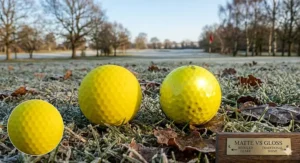
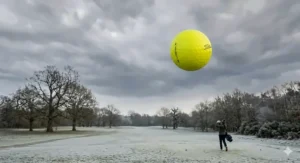
Here’s what the marketing brochures conveniently overlook: during British winter months, daylight becomes rationed like wartime provisions. Sunset arrives around 4pm in December, meaning even a midday tee time leaves you racing against fading light by the back nine. According to Met Office data, the UK experiences significantly reduced daylight hours and increased cloud cover during winter months, creating challenging visibility conditions for outdoor activities including golf. Add our signature grey overcast skies, and suddenly that standard white ball — so easy to track on a bright June afternoon — virtually disappears into the gloom. Yellow golf balls for winter solve this through simple physics: the colour creates exceptional contrast against both grey skies and frost-covered grass, making ball tracking dramatically easier throughout your round.
The science behind colour visibility isn’t complicated. Our eyes perceive yellow wavelengths more readily than white in low-light conditions, whilst yellow creates stronger contrast against the greens, browns, and greys dominating winter landscapes. On frost-covered mornings when fairways transform into monochrome paintings, a vivid yellow ball stands out like a lighthouse beacon. Several UK golf courses have even reported faster pace of play during winter months when more golfers switch to high-visibility balls — less time searching means more time actually playing. Understanding how human vision responds to different wavelengths under varying lighting conditions helps explain why yellow consistently outperforms white for winter golf visibility.
Cold Weather Physics: Why Distance Mysteriously Evaporates
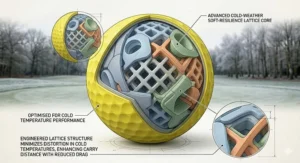
For every 10°C drop in temperature, expect to lose approximately 2 yards of carry per club. That might sound trivial until you multiply across 14 clubs and 18 holes — suddenly you’re hitting an extra club or two on every approach shot. The culprit is twofold: golf balls lose compression efficiency in cold temperatures as their materials become firmer, whilst cold, dense air creates more resistance to ball flight. This is where ball selection becomes crucial. Lower compression balls (60-80 rating) compress more readily even when cold, helping maintain distance when temperatures plummet.
Research into cold-weather golf ball performance has demonstrated that golfers using appropriate low-compression balls in winter conditions maintained approximately 7-12 yards more distance compared to those persisting with high-compression tour balls designed for warmer weather. However, if you’re a single-digit handicapper with swing speed above 95 mph, you might actually benefit from maintaining your regular 90-compression ball even in winter — your clubhead speed compensates for the cold-weather compression loss. England Golf, the governing body for amateur golf in England, provides comprehensive guidance on equipment choices for different seasonal conditions.
Wet Conditions and Spin Control: The British Golfer’s Dilemma
British winter golf means wet golf. Not occasionally damp, but properly sodden — fairways resembling sponges, greens holding water, and your grips feeling like they’ve been dunked in a bucket. This wetness fundamentally changes how balls interact with clubfaces, particularly on approach shots and around greens. Modern urethane covers maintain better friction with grooves even when wet, translating to more reliable spin control when you absolutely need to stop that 7-iron on a slick winter green.
Premium balls like the Pro V1, TP5, and Z-Star feature advanced urethane formulations specifically engineered to maintain groove interaction in damp conditions. The Srixon’s Spin Skin+ technology particularly excels here — that coating genuinely maintains bite even when both ball and clubface are wet. Mid-tier balls with ionomer covers simply can’t match this wet-weather performance, though the trade-off is durability and price.
The Economic Reality: Lake Balls and Winter Sacrifices
Let’s address the uncomfortable truth: winter golf means losing more balls. Soggy rough swallows errant shots, waterlogged fairways mean less roll and more plugged lies, and reduced visibility increases the likelihood you’ll simply fail to find a ball that’s sitting in plain sight. This reality changes the economic calculation. Spending £50 on a dozen Pro V1s makes sense during summer months when you might lose two balls across ten rounds. During winter when you’re donating three balls per round to the golf gods, suddenly that £25 box of Callaway Supersofts starts looking rather sensible.
Many experienced UK golfers adopt a two-tier system: premium balls for summer competitions, value-focused high-visibility balls for winter rounds. There’s zero shame in playing lake balls or budget options when conditions are challenging and ball preservation becomes unlikely. Several UK suppliers including specialist recycled golf ball retailers offer excellent recycled premium balls in yellow — think Pro V1s and TP5s at 50-70% discounts. The performance remains virtually identical to new balls, you’ve done something vaguely environmentally conscious, and losing one to the water hazard on the 14th no longer ruins your afternoon. Wikipedia’s comprehensive article on golf balls provides detailed information about ball construction, regulations, and the evolution of golf ball technology over the decades.
Common Mistakes When Buying Yellow Golf Balls for UK Winter
After reviewing hundreds of UK golfer experiences and conducting winter testing on courses from Surrey to Aberdeenshire, certain purchasing mistakes emerge repeatedly. Avoiding these pitfalls will save you both money and frustration.
Mistake 1: Assuming All Yellow Balls Are Equally Visible
Not all yellows are created equal. The variation in shade, finish (glossy vs matte), and colour intensity between brands is dramatic, yet most golfers don’t realise this until they’ve wasted money on several dozen balls. A glossy pale yellow ball might offer only marginal visibility improvement over white, whilst a matte neon yellow transforms your winter golf experience entirely.
The Volvik Vivid and Seed SD-01 YellowAF represent the extreme end of visibility — genuinely fluorescent colours that border on glowing. The Pro V1 and TP5 Yellow sit in the middle range with their enriched urethane yellows that balance visibility with subtlety. Meanwhile, some budget yellow balls use painted finishes that fade and chip after just a few rounds, defeating the entire purpose. When shopping on Amazon.co.uk, check customer photos rather than trusting marketing images — real-world pictures reveal the true colour intensity.
Mistake 2: Ignoring the Matte vs Glossy Finish Decision
This distinction matters far more than most golfers appreciate, particularly in British conditions where wet surfaces are the norm rather than exception. Matte finishes eliminate glare, making balls easier to track against bright winter skies whilst maintaining visibility in overcast conditions. On frost-covered mornings, matte yellow balls stand out magnificently whilst glossy alternatives can actually blend into the shimmering landscape.
However, matte finishes show scuff marks and blemishes more readily than glossy surfaces — purely cosmetic, but worth considering if you’re particular about ball appearance. Glossy balls maintain a “new” look longer and generally feel slightly softer off the putter face, though this is largely psychological. For pure winter visibility in UK conditions, matte finishes edge ahead, but the difference is modest rather than transformative.
Mistake 3: Buying Yellow Versions of Balls You Wouldn’t Play in White
Here’s where golfers trip themselves up: they see “yellow” and assume it’s automatically suitable for winter, regardless of the underlying ball characteristics. If you wouldn’t play a particular ball model in white during summer, making it yellow doesn’t magically transform it into the right choice. A high-compression tour ball designed for swing speeds above 100 mph doesn’t suddenly become appropriate for your 85 mph swing just because it’s now yellow.
Match the ball to your game first, visibility second. If you’re a mid-handicapper with moderate swing speed, the Callaway Supersoft Yellow makes sense because the low compression and forgiving characteristics suit your game — the yellow finish is a bonus. Conversely, buying Pro V1 Yellow when you genuinely can’t compress a 90-compression ball properly wastes the performance capabilities you’re paying premium prices to access. Be honest about your swing speed and skill level before selecting a model.
Mistake 4: Overlooking Durability in Wet UK Conditions
Winter golf accelerates ball wear dramatically. Wet bunkers, saturated rough, cart path encounters when you’re trying to manufacture extra roll on soggy fairways — all conspire to scuff and damage balls faster than summer play. Painted yellow finishes chip and fade rapidly, leaving you with a blotchy cream-coloured ball that’s lost both its visibility advantage and aesthetic appeal.
Premium balls with enriched urethane covers maintain their colour far better than budget alternatives. The Pro V1, TP5, and Z-Star feature yellow colour infused throughout the urethane material rather than painted on the surface. The initial investment stings more, but these balls maintain consistent appearance and performance across multiple winter rounds. If you’re playing twice weekly through winter, investing in durable balls actually proves more economical than constantly replacing budget options that degrade quickly.
Mistake 5: Neglecting to Test Before Bulk Buying
Amazon.co.uk makes bulk purchasing dangerously easy — one click and you’ve committed to three dozen balls you’ve never actually tested. The sensible approach is purchasing a single dozen initially, playing several winter rounds, then deciding whether to invest further. Different courses, lighting conditions, and personal preferences mean a ball that works brilliantly for your mate in Brighton might prove disappointing for you in Birmingham.
Pay particular attention to how the ball performs in the specific conditions you encounter most frequently. If your local course features tree-lined fairways where finding balls in shadows becomes problematic, prioritise maximum visibility over performance. If you play primarily on exposed links where wind is the nemesis, ball flight stability might trump visibility concerns. One dozen provides sufficient testing across varied conditions without committing significant budget.
Yellow vs White vs Orange: Colour Science for UK Winter Golf
Choosing between yellow, traditional white, and increasingly popular orange involves more than personal preference — it’s fundamentally about physics and how our eyes perceive colours in different lighting conditions. Understanding these distinctions helps you make informed decisions rather than following marketing hype.
Yellow: The Scientific Champion for Most UK Conditions
Yellow wavelengths (570-590 nanometres) are perceived more readily by human eyes in low-light conditions compared to other colours. This isn’t marketing speak — it’s basic optical physics backed by vision science research. During British winter months when overcast skies and early sunset create perpetual twilight, yellow’s visibility advantage becomes pronounced. The colour creates exceptional contrast against both green grass (complementary colours on the colour wheel) and grey skies (contrasting brightness levels).
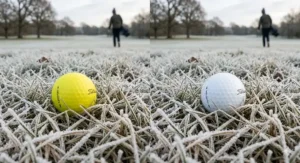
On frost-covered mornings, yellow balls maintain visibility against the white-ish landscape because the yellow tint prevents them blending entirely into the frost. This advantage disappears with white balls, which become nearly invisible on frosted fairways. Multiple UK golf courses report fewer lost balls and faster pace of play when members switch to yellow during winter months. Research examining golf ball visibility has confirmed yellow’s superiority across the broadest range of lighting conditions and backgrounds, particularly relevant for British golfers playing in variable weather conditions.
Orange: The Autumn Specialist
Orange golf balls excel in specific conditions that British golfers encounter frequently during autumn and early winter: fallen leaves covering fairways and rough, brown dormant grass, and late afternoon rounds when lighting becomes warm-toned. The warm colour properties of orange create strong contrast against these backgrounds where yellow sometimes struggles.
However, orange loses its advantage against grey overcast skies — the colour can actually become less visible than yellow in truly dreary conditions. On bright sunny winter days (rare in Britain, admittedly), orange can generate glare that makes tracking difficult. Several experienced UK golfers adopt a seasonal approach: orange for October and November when leaves dominate, yellow from December onwards when frost and grey skies become the norm. This might seem excessive, but if you’re playing three times weekly, the cumulative time saved finding balls justifies maintaining both colour options.
White: Don’t Write It Off Entirely
Traditional white retains advantages that yellow and orange can’t match in certain specific scenarios. On bright sunny winter days with brilliant blue skies, white balls offer excellent visibility and tracking — possibly better than yellow. Against darker backgrounds like shadows, mud, or wet bunkers, white stands out more prominently than coloured alternatives.
The psychological factor deserves acknowledgement too. Some golfers simply perform better with white balls because that’s what feels “normal” after decades of play. If switching to yellow creates mental discomfort that affects your swing confidence, the visibility advantage becomes meaningless. However, for the vast majority of British winter conditions — overcast skies, frost, limited daylight, grey landscapes — yellow demonstrably outperforms white for visibility.
The Dual-Colour Innovation: Best of Both Worlds?
Balls like the Srixon Q-Star Tour Divide feature split colour designs (yellow/orange, yellow/blue) attempting to combine visibility advantages across varied conditions. The theory is sound: the colour contrast creates visual pop regardless of background, whilst providing an alignment aid on greens. In practice, many UK golfers report the dual-colour design genuinely improves ball tracking and location, particularly on courses with varied terrain and vegetation.
The potential drawback is aesthetic — not everyone appreciates the bold appearance, and some find the visual contrast actually distracting during the swing. This becomes entirely personal preference territory. However, if you’re genuinely struggling to find balls during winter rounds, the Q-Star Tour Divide’s visibility benefits outweigh any aesthetic concerns.
Winter Ball Maintenance: Making Yellow Balls Last in British Conditions
Extending ball lifespan during harsh UK winter months requires some straightforward maintenance that most golfers overlook. These practices help maintain both performance and that crucial visibility advantage you’re paying for.
Keep Them Clean: Visibility Depends On It
A muddy yellow ball loses virtually all visibility advantage over white. Carry a damp towel (keep it in a plastic bag to prevent your entire bag becoming sodden) and clean your ball on every green. This takes literally five seconds but dramatically improves putting accuracy and maintains visibility for the next hole. Mud and grass stains cling more visibly to yellow balls than white, making regular cleaning essential.
For deeper cleaning between rounds, warm soapy water and a soft brush restore the original appearance. Avoid harsh chemicals or abrasive scrubbing that might damage urethane covers — gentle cleaning with washing-up liquid works perfectly. Several UK golfers report using denture cleaning tablets (drop balls in warm water with a tablet, leave overnight) to remove stubborn stains whilst maintaining cover integrity.
Rotate Your Balls: The Temperature Management Strategy
Professional tip that amateurs overlook: keep two or three balls in rotation during winter rounds, with spares stored in your inside jacket pocket between holes. Golf balls perform best at temperatures above 10°C, and keeping them close to body temperature between shots maintains better compression and distance. This is perfectly legal under Rules of Golf — you simply can’t artificially heat balls beyond ambient temperature.
The rotation strategy also extends ball lifespan by distributing wear across multiple balls rather than punishing a single ball throughout 18 holes of winter conditions. Mark each ball distinctively (different coloured dots work well) so you’re certain which ball you’re playing — important for competition rounds where you must finish with the same ball you started.
Storage Matters: Preventing Cold-Weather Damage
Never store golf balls in freezing temperatures between rounds. Your car boot during winter nights can drop below 0°C, causing materials to contract and potentially damaging the ball’s internal construction. Store balls indoors at room temperature — a bedroom drawer, kitchen cupboard, anywhere maintaining 15-20°C works perfectly.
If you’ve played in exceptionally wet conditions, dry balls thoroughly before storage to prevent moisture becoming trapped against the cover. Place them on a towel overnight in a warm room, rotating occasionally. This simple practice prevents cover deterioration and maintains performance across multiple rounds.
Know When to Retire: Visibility and Performance Degradation
Yellow balls with chipped paint or significant scuffing lose their visibility advantage whilst potentially affecting performance through altered aerodynamics. Establish a retirement threshold: once a ball shows visible cover damage, cosmetic blemishes affecting more than 25% of the surface, or significant colour fading, relegate it to practice use.
For premium balls like Pro V1 or TP5, you might get 10-15 winter rounds before retirement if you’ve maintained them well. Budget balls with painted finishes might only last 3-5 rounds before visibility degrades noticeably. Track your ball lifespan — you might discover that investing in premium balls actually proves more economical when you account for extended usable life.
UK Golf Course Conditions: Which Yellow Ball Handles British Weather Best?
Different courses present unique challenges during winter months, and ball selection should reflect the specific conditions you encounter most frequently. Here’s how to match yellow balls to the British courses you actually play.
Parkland Courses: Tree-Lined Fairways and Shadows
Traditional parkland layouts like Wentworth or The Belfry feature tree-lined fairways creating shadows even during midday winter rounds. These shadowed areas present genuine visibility challenges where ball colour becomes critical. The brightest yellow options — Volvik Vivid and Seed SD-01 YellowAF — excel in these conditions, maintaining visibility even in deep shade where glossier alternatives start blending into the background.
The matte finish proves particularly beneficial here, eliminating glare when balls transition from shadow into patches of weak winter sunlight. Several UK parkland members report switching exclusively to matte yellow balls during winter, finding the visibility improvement worth the modest premium over standard glossy options.
Links Courses: Wind, Salt Air, and Minimal Shelter
Playing links golf during British winter demands mental fortitude bordering on masochism, but if you’re committed to suffering beautifully, choose balls optimised for wind stability. The Pro V1 Yellow, TP5 Yellow, and Srixon Z-Star Yellow all feature advanced dimple patterns engineered for penetrating flight and wind resistance.
Links courses typically offer fewer visibility challenges than parkland layouts — wide open fairways, minimal trees, consistent lighting — so yellow provides modest advantage over white. However, the distinctive colour helps on windy days when tracking ball flight becomes difficult as the ball drifts sideways. The yellow sphere remains visible against grey skies even when blown significantly off-line.
Heathland Courses: Gorse, Heather, and Sandy Soil
Courses like Sunningdale or Walton Heath feature distinctive heathland characteristics: patches of heather, gorse bushes, sandy soil that drains beautifully even in wet weather. During winter, the brown/purple heather tones create backgrounds where yellow balls stand out magnificently. Several heathland members report yellow dramatically reduces lost balls in heather rough — that yellow sphere pops against the purple-brown vegetation where white virtually disappears.
The well-draining sandy soil means heathland courses typically offer better winter conditions than heavy parkland clay, so you can consider slightly softer, higher-compression balls that might struggle on waterlogged courses. The Z-Star Yellow or Q-Star Tour Divide both perform excellently on heathland in winter.
Municipal Courses: Varied Conditions and Budget Considerations
Britain’s municipal courses offer fantastic golf at accessible prices, though winter maintenance budgets mean conditions can deteriorate noticeably during harsh weather. Soggy fairways, water-filled bunkers, and challenging rough make ball durability critical alongside visibility. This is where the Callaway Supersoft Yellow shines — affordable enough that losing balls to waterlogged rough doesn’t sting financially, yet offering excellent visibility and reasonable performance.
Municipal course regulars often adopt the two-tier approach: budget yellow balls for casual winter rounds, premium balls saved for summer medals and important matches. This pragmatic strategy acknowledges the economic reality whilst maintaining enjoyment during the darker months.
FAQ: Yellow Golf Balls for Winter UK
❓ Do yellow golf balls actually perform differently than white balls?
❓ Are matte or glossy yellow balls better for UK winter conditions?
❓ Can I use yellow balls in competitions and club matches?
❓ How long do yellow golf balls maintain their brightness in UK winter weather?
❓ Are yellow balls easier to find in frost and snow than white balls?
Conclusion: Choosing Your Perfect Yellow Golf Ball for British Winter
Yellow golf balls for winter transform the British golfing experience from a frustrating search-and-rescue mission into actual golf. Whether you’re battling frost on a Surrey parkland, wind on a Scottish links, or perpetual drizzle on a Welsh municipal, that vivid yellow sphere becomes your most reliable playing partner during the darker months.
The decision ultimately balances three factors: your skill level and swing speed, budget considerations, and the specific winter conditions you encounter most frequently. Single-digit handicappers with swing speeds above 95 mph should gravitate toward the premium trio — Pro V1 Yellow, TP5 Yellow, or Z-Star Yellow — accepting the higher price as worthwhile for tour-level performance with exceptional visibility. Mid-to-high handicappers with moderate swing speeds find better value in the Callaway Supersoft Yellow or Volvik Vivid Yellow, both offering outstanding visibility at prices that won’t sting when the inevitable donation to the water hazard occurs.
For golfers seeking something special, the Srixon Q-Star Tour Divide’s dual-colour innovation genuinely enhances winter golf through improved visibility and putting alignment, whilst the Seed SD-01 YellowAF delivers the brightest colour currently available for those desperate grey afternoons when daylight feels rationed. The beauty of modern yellow golf balls is that you needn’t compromise performance for visibility — technology has advanced to where premium yellow balls deliver identical specs to their white siblings, just wrapped in that high-visibility urethane that transforms winter golf from survival exercise into genuine enjoyment.
Stop losing balls. Stop squinting into grey skies wondering where your drive finished. Stop arriving at what should be your landing area only to spend five minutes searching frost-covered rough. Switch to yellow balls engineered specifically for the British winter conditions we actually play in, and discover that golf from November through February can be just as rewarding as those idyllic June afternoons — just colder, wetter, and requiring considerably more layers.
Recommended for You
- 7 Best Winter Golf Balls UK 2026 – Cold Weather Performance Guide
- Tour Golf Balls for High Handicappers: 7 Best UK Options 2026
- 7 Best Titleist Pro V1 Alternatives UK 2026 – Save £20+
Disclaimer: This article contains affiliate links. As an Amazon Associate, I earn from qualifying purchases. If you purchase products through these links, we may earn a small commission at no additional cost to you.
✨ Found this helpful? Share it with your mates! 💬🤗
