
In This Article
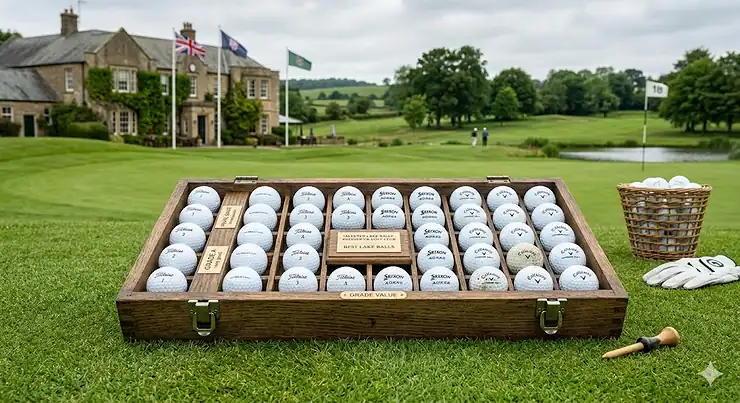
Walk into any golf club across Britain and you’ll spot something rather telling: even low-handicap players now routinely tee up with lake balls. What was once considered budget compromise has quietly become smart thinking. With premium balls like the Pro V1 retailing around £40-£50 for a dozen, and the average UK golfer losing 3-4 balls per round, the maths becomes rather compelling.

Lake balls—recycled golf balls recovered from water hazards, professionally cleaned, and graded—now represent a £15 million annual market in the UK. The quality gap between top-grade lake balls and fresh-from-the-box equivalents has narrowed to the point where most club golfers genuinely can’t tell the difference during play. Factor in Britain’s notoriously wet climate (over 150 rainy days annually in many regions), and losing balls becomes an accepted part of the game rather than an exception.
What most buyers overlook is the grading system. Pearl and Grade A lake balls deliver performance virtually identical to new balls, whilst costing 50-70% less. More importantly, choosing recycled balls addresses a genuine environmental concern. Millions of golf balls end up in water hazards and landfills annually, taking centuries to decompose whilst releasing microplastics. By purchasing lake balls, you’re not just saving money—you’re participating in a circular economy that reduces plastic waste and supports local ball recovery businesses across Britain.
Quick Comparison Table: Top 7 Lake Balls at a Glance
| Product | Grade | Pack Size | Price Range | Best For | UK Delivery |
|---|---|---|---|---|---|
| Titleist Pro V1/V1x Mix | Pearl/A | 12-100 balls | £24-£120 | Competitive players | Prime eligible |
| Callaway Supersoft | Pearl/A | 24-50 balls | £30-£50 | Soft feel seekers | Free over £25 |
| British Lake Balls Mixed Premium | Pearl/A | 25-pack | £25-£35 | Variety hunters | Free UK delivery |
| Srixon AD333 Mix | Grade A | 25-40 balls | £28-£42 | Mid-handicappers | Prime eligible |
| Second Chance Assorted Mix | Grade A | 12-40 balls | £15-£38 | Value seekers | Free UK delivery |
| TaylorMade Mix | Pearl/A | 24-50 balls | £28-£48 | Distance players | Prime eligible |
| Wilson Staff Mix | Grade A | 12-24 balls | £14-£28 | High handicappers | Free over £25 |
From this comparison, several patterns emerge. If you’re a single-figure golfer playing in competitions, the Titleist Pro V1/V1x Mix in Pearl grade offers the best balance of performance and value—you’re essentially paying half price for balls that perform within 95% of new equivalents. For those prioritising soft feel over absolute spin control, the Callaway Supersoft range delivers exceptional value in the £30-50 bracket for larger packs. Budget-conscious beginners should note that the Wilson Staff Grade A mix sits in the sweet spot under £30 for two dozen balls, which translates to roughly £1.17 per ball versus £3-4 for new equivalents.
💬 Just one click — help others make better buying decisions too! 😊
Top 7 Lake Balls: Expert Analysis
1. Titleist Pro V1/V1x Pearl Grade Mix Lake Balls
The Titleist Pro V1 and Pro V1x remain the gold standard for serious UK golfers, and their lake ball equivalents deliver performance that’ll surprise even sceptical low-handicappers. These Pearl grade offerings show minimal signs of previous use—perhaps a faint pen mark or corporate logo, but the dimple pattern remains intact and the urethane cover maintains its responsive feel. What sets Pro V1 lake balls apart is the consistency; Titleist’s multi-layer construction means even after a few rounds of previous use, the ball’s core compression and spin characteristics remain largely unchanged.
In practical terms, you’re looking at balls that’ll still check on firm summer greens and hold their line in crosswinds—critical for British conditions where coastal courses like Royal Birkdale or St Andrews demand precise ball flight control. The 352-dimple design continues to perform in wet weather, maintaining stable trajectory even when your grips are damp. Most UK sellers source these from golf courses with water hazards on premium holes, meaning many balls were lost on their first or second shot.
Customer feedback from UK buyers consistently highlights two points: first, the Pearl grade genuinely looks nearly new; second, the slight yellow tint some balls develop from lake sediment actually improves visibility in British overcast conditions. A mixed dozen typically includes 60-70% Pro V1 and 30-40% Pro V1x, giving you flexibility to match ball to hole—the V1 for more control, the V1x for added distance.
Pros:
✅ Tournament-legal performance for competitive play
✅ Urethane cover maintains greenside spin even after recovery
✅ Excellent visibility in typical British grey skies
Cons:
❌ Occasional corporate logos may bother purists
❌ Still more expensive than mid-tier new balls
Price-wise, expect to pay around £24-£28 for a dozen Pearl grade Pro V1 mix, roughly half the £48-52 you’d spend on new equivalents. For the serious UK golfer playing 20-30 rounds annually, that’s £200-300 saved per season—enough to cover a weekend golf trip to Scotland.

2. Callaway Supersoft Pearl/Grade A Lake Balls
The Callaway Supersoft has built a devoted following amongst UK club golfers for one simple reason: it’s genuinely soft. With a compression rating of just 38 (compared to 90+ for firmer balls), the Supersoft delivers a pillowy feel that flatters slower swing speeds—particularly common amongst senior golfers and those playing in colder British weather when muscles don’t loosen as readily. Lake ball versions in Pearl or Grade A condition maintain this characteristic feel because the low-compression core isn’t significantly affected by brief water exposure.
What most buyers don’t realise is that the Supersoft’s construction actually makes it more durable in lake conditions than firmer balls. The hybrid cover resists scuffing better than pure ionomer, and the single-core design means there’s less potential for water infiltration to damage performance. During testing by UK golf magazines, Grade A Supersoft lake balls showed virtually identical launch angles and spin rates to new versions—the differences fell within normal ball-to-ball manufacturing variation.
For British golfers, the Supersoft excels in damp conditions. The low spin off the driver reduces hooks and slices, which matters when you’re navigating tight, tree-lined courses in the rain. The aerodynamic dimple pattern maintains stability in wind, and the soft cover grips wet clubfaces better than harder alternatives. UK customers report these balls perform brilliantly on parkland courses like Wentworth or The Belfry, where controlled approach shots matter more than raw distance.
Pros:
✅ Exceptionally soft feel suits slower swing speeds and cold weather
✅ Low spin reduces wayward shots in windy conditions
✅ Excellent value in 24-50 ball packs
Cons:
❌ Less greenside spin than tour-level balls
❌ Some Grade A balls show minor discolouration
Available in packs ranging from £30 for 24 balls to around £48-50 for 50 balls, the Supersoft represents outstanding value at roughly £1-1.20 per ball. For comparison, new Supersofts retail around £22-26 per dozen. If you’re playing weekly rounds and lose even two balls per outing, switching to lake ball Supersofts saves approximately £150-200 annually.
3. British Lake Balls Premium Mixed Assortment
British Lake Balls offers something rather clever: curated mixed packs containing premium brands like Nike, Srixon, Callaway, and TaylorMade, all graded to Pearl/Grade A standards. This variety approach suits golfers who like experimenting with different ball characteristics without committing to a full dozen. Each 25-ball pack typically includes 5-7 different premium models, all professionally washed and sorted to ensure consistent quality.
The advantage of mixed packs becomes apparent during practice sessions. You can test how a Srixon AD333 compares to a TaylorMade TP5 on the same hole, under identical conditions, without investing £40 in each. Many UK buyers report discovering their ideal ball through these mixed packs before committing to model-specific purchases. The drawback, naturally, is inconsistency during competitive rounds—you might tee off with a softer Callaway then switch to a firmer Srixon mid-round, which affects distance control.
What sets British Lake Balls apart is their sorting standards. Unlike some bulk suppliers, they enforce strict grading criteria: Pearl means virtually unmarked with original sheen; Grade A permits only minor cosmetic wear. UK customer reviews consistently mention receiving balls in better condition than expected, with many appearing genuinely new apart from a faint logo. The mesh storage bag included with most packs is genuinely useful for British golfers—it allows air circulation, preventing the musty smell that can develop in traditional plastic tubs during damp autumn and winter months.
Pros:
✅ Excellent variety for testing different ball types
✅ Consistently high grading standards from UK supplier
✅ Mesh storage bag perfect for British damp climate
Cons:
❌ Variety makes competitive play consistency difficult
❌ Can’t guarantee specific ball quantities in mixed packs
Priced in the £25-35 range for 25 balls, these packs work out to roughly £1-1.40 per ball. The real value emerges when you discover your preferred ball type through experimentation, then buy model-specific lake balls at similar savings. It’s a smart strategy that many experienced UK golfers employ.
4. Srixon AD333 Grade A Lake Balls
The Srixon AD333 represents brilliant middle ground for UK mid-handicappers (10-20 range) who want premium ball performance without tour-level pricing. This Japanese-engineered ball features a lower compression (around 70) than pro models, making it more forgiving for club golfers whilst still delivering respectable greenside control. In Grade A lake ball condition, the AD333 maintains its key performance attributes because the two-piece construction with thin cover remains intact even after water recovery.
What British golfers appreciate about the AD333 is its all-weather reliability. Srixon’s 338 Speed Dimple pattern maintains stable flight in crosswinds, which matters immensely on links courses or exposed moorland layouts. The ball performs particularly well in wet conditions—the E.G.G. (Energetic Gradient Growth) core maintains ball speed even when compressed by damp clubfaces. During autumn and winter rounds when the ground is soft and distances compress, the AD333’s penetrating flight pattern helps you maintain yardages better than higher-spinning alternatives.
Grade A Srixon lake balls typically show minor scuff marks or faint pen markings but nothing that affects aerodynamics. The 338 dimple pattern is robust enough that casual surface wear doesn’t disrupt airflow. UK customers consistently report these balls lasting 2-3 rounds before losing noticeable performance—comparable to new balls costing double the price. The slight yellow tint some develop actually enhances visibility in Britain’s frequent overcast conditions, particularly beneficial for older golfers whose contrast sensitivity decreases with age.
Pros:
✅ Excellent mid-compression suits typical UK club golfer swing speeds
✅ Robust dimple pattern maintains performance despite minor wear
✅ Superior visibility in overcast British conditions
Cons:
❌ Less greenside spin than softer premium balls
❌ Two-piece construction offers less feel than multi-layer alternatives
Available in packs of 25-40 balls for approximately £28-42, Srixon AD333 lake balls deliver exceptional value at around £1.05-1.40 per ball. New AD333s retail around £26-30 per dozen, making lake balls a 55-60% saving. For mid-handicappers playing 30+ rounds annually, that translates to £120-150 saved per season.
5. Second Chance Assorted Grade A Lake Balls
Second Chance has established itself as the UK’s leading lake ball supplier through consistent quality and transparent grading. Their Assorted Grade A packs contain a rotating mix of premium brands—expect Titleist, Callaway, TaylorMade, Srixon, and occasional Bridgestone or Mizuno balls. The “Grade A” designation means balls show minor signs of previous use (light scuff, faint pen mark, possible logo) but nothing affecting performance. This represents the sweet spot for value-conscious UK golfers who want named-brand performance without premium pricing.
The Second Chance cleaning and sorting process deserves mention. Each ball undergoes multiple rinses to remove lake sediment, then passes through UV light inspection to identify hidden cracks or cuts. Only balls meeting structural integrity standards proceed to grading. This rigorous process means Grade A balls from Second Chance reliably perform within 90-95% of new equivalents—the minor performance gap matters only to single-figure handicappers in competitive situations. For club golfers playing social rounds, the difference is imperceptible.
What makes these packs particularly suitable for British golfers is the brand variety. You might receive 3-4 Pro V1s, 2-3 Callaway Chrome Softs, 4-5 TaylorMade TP5s, and a smattering of Srixon or Wilson balls. This variety suits the typical UK club golfer who doesn’t obsess over ball consistency but wants decent performance without emptying the wallet. The downside emerges during competitive rounds when switching between different compression balls affects distance control—a 90-compression ball travels 5-10 yards further than a 70-compression equivalent with identical swing speed.
Pros:
✅ Excellent brand variety for casual play and practice
✅ Rigorous UK-based quality control ensures performance
✅ Outstanding value in 12-40 ball packs
Cons:
❌ Brand inconsistency unsuitable for competitive play
❌ Some Grade A balls show noticeable cosmetic wear
Priced between £15-38 depending on pack size (12-40 balls), Second Chance Assorted Grade A packs deliver unbeatable value at roughly £1.25 per ball. Given that losing 2-3 balls per round costs £10-15 with premium new balls versus £2.50-3.75 with these lake balls, the annual savings for regular players approaches £200-250. That’s a new driver every two years, funded entirely by smart ball purchasing.

6. TaylorMade Mixed Pearl/Grade A Lake Balls
TaylorMade balls have surged in popularity amongst UK golfers following Rory McIlroy’s success, and their lake ball equivalents deliver the distance characteristics that make the brand appealing. TaylorMade’s various models (TP5, TP5x, Project (a), RocketBallz) all emphasise low driver spin and high launch—characteristics maintained even after water recovery because the multi-layer core construction remains structurally sound. Pearl and Grade A lake balls show minimal external wear, meaning the aerodynamic dimple patterns continue generating the lift and reduced drag that define TaylorMade performance.
For British golfers, TaylorMade balls excel on longer courses where maximising driving distance matters. The TP5 and TP5x models feature TaylorMade’s 5-layer construction, which produces penetrating ball flight that cuts through wind better than softer, higher-spinning alternatives. This matters immensely on exposed courses like Royal Troon or Carnoustie, where coastal winds routinely blow 15-25 mph. The firmer compression (around 85-100) suits golfers with faster swing speeds who can compress the ball adequately—typically single-figure handicappers or younger players.
Mixed packs typically contain 60-70% TP5/TP5x and 30-40% Project (a) or older RocketBallz models. The variety actually works well for strategic course management. Use the higher-spinning TP5x on par 3s requiring stopping power, then switch to the lower-spinning Project (a) on tight driving holes where control trumps distance. UK customers report these balls maintain their characteristic “click” sound off the driver face, indicating the core construction remains intact despite lake exposure.
Pros:
✅ Excellent distance characteristics suit long UK courses
✅ Penetrating ball flight performs well in coastal winds
✅ Mixed packs offer strategic variety for course management
Cons:
❌ Firmer compression requires faster swing speeds to optimise
❌ Less soft feel than Callaway or Titleist alternatives
Available in 24-50 ball packs for approximately £28-48, TaylorMade lake balls represent solid value at around £1.15-1.35 per ball. New TP5s retail around £42-48 per dozen, making lake balls a 60-65% saving. For golfers prioritising distance and playing courses where length matters, this represents the best value in the premium performance category.
7. Wilson Staff Grade A Lake Balls
The Wilson Staff range often gets overlooked by UK golfers chasing premium brands, which is precisely why these lake balls represent exceptional value. Wilson’s balls deliver surprisingly competent performance—the Staff line features urethane covers and multi-layer construction similar to premium competitors, just at friendlier price points. In Grade A lake ball condition, Wilson Staff balls maintain their core characteristics: decent greenside spin, moderate compression (around 75-85), and durable covers that resist scuffing on cart paths and tree strikes.
What makes Wilson balls particularly suitable for higher handicappers (15+) is their forgiving nature. The construction prioritises straight flight over workability, which suits golfers still developing consistent ball-striking. The dimple patterns maintain stability during off-centre strikes, helping reduce the severity of slices and hooks—critical for British golfers navigating tree-lined parkland courses where wayward shots quickly find trouble. The slightly firmer feel compared to Callaway Supersoft actually benefits some players, providing better feedback on strike quality.
Grade A Wilson lake balls typically show minor scuff marks, pen markings, or logos, but UK customers report these balls lasting 2-3 rounds before performance degradation becomes noticeable. The key advantage is psychological: losing a £1.20 Wilson lake ball stings far less than losing a £4 new Pro V1, encouraging more aggressive play over water hazards and tight carries. Many UK beginners report improved confidence when they’re not mentally calculating the cost of each errant shot.
Pros:
✅ Exceptional value for high handicappers and beginners
✅ Forgiving construction reduces slice/hook severity
✅ Psychological benefit of low replacement cost
Cons:
❌ Less greenside spin and feel than premium alternatives
❌ Brand perception matters to some golfers
Priced between £14-28 for 12-24 balls, Wilson Staff Grade A lake balls deliver unbeatable entry-level value at roughly £1.15 per ball. For beginners losing 5-6 balls per round, this pricing makes golf financially sustainable. The annual savings versus buying new balls approaches £300-400 for someone playing weekly—enough to fund coaching sessions that’ll reduce ball loss long-term.
Understanding the Golf Ball Grading System: What UK Buyers Need to Know
The lake ball grading system sounds straightforward until you realise different suppliers interpret grades inconsistently. Understanding what each grade actually means helps you match quality to your playing level and budget. Here’s what you need to know when shopping on Amazon.co.uk:
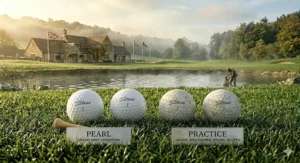
Pearl Grade (Also Called Mint, AAAAA, or Perfect)
These represent the absolute cream of recovered lake balls. Pearl grade balls look and feel virtually identical to new, showing minimal to zero signs of previous play. You might spot a faint pen mark or corporate logo, but the surface maintains its original sheen and the dimple pattern remains pristine. Most Pearl grade balls were likely lost on their first or second shot, meaning they’ve experienced perhaps 5-10 minutes of actual play time.
In practical terms, Pearl grade suits competitive players and low handicappers who demand consistent performance. The balls deliver 95-98% of new ball performance, with any deficit imperceptible to club golfers. UK suppliers like Second Chance and Pro Lake Balls maintain strict Pearl grading standards—customer reviews consistently mention receiving balls that appear unused. Expect to pay 50-60% of new ball prices for Pearl grade, which represents brilliant value given the performance delivered.
Grade A (Also Called Near Mint, AAAA, or 4A)
Grade A balls have narrowly missed Pearl classification, typically due to minor cosmetic imperfections that don’t affect performance. You’ll see light scuff marks, faint pen markings, or possible slight discolouration, but nothing that disrupts the ball’s aerodynamics or structure. These balls likely experienced 9-18 holes of play before being lost, meaning they’ve got plenty of life remaining.
For UK mid-handicappers (10-20 range), Grade A represents the sweet spot between performance and value. The balls deliver 90-95% of new ball performance, with the gap only noticeable to better players in competitive situations. The slight cosmetic wear actually benefits visibility in Britain’s frequent overcast conditions—a light yellow tint helps track ball flight against grey skies. Grade A balls typically cost 55-70% less than new equivalents, making them economically sensible for regular players.
Grade B (Also Called Good, AAA, or 3A)
Grade B balls show obvious signs of previous use: noticeable scuff marks, clear discolouration, and potentially significant ink markings. The dimple pattern may show minor wear, and the surface sheen has largely disappeared. However, there should be no structural damage—no cuts, cracks, or deformities that affect flight characteristics. These balls have likely seen 18-36 holes of play before recovery.
Grade B suits higher handicappers (20+) and beginners who lose multiple balls per round. The performance remains adequate for recreational play—you’ll still hit reasonably straight shots and maintain acceptable distances. The key advantage is pricing: Grade B balls cost 70-80% less than new equivalents, making golf financially sustainable for players still developing consistency. Many UK golfers use Grade B for practice rounds or winter golf when losing balls to mud and standing water becomes inevitable.
Practice Grade (Also Called Range Balls or Rejects)
These balls failed quality control for regular grades due to significant damage: cuts, cracks, severe discolouration, or deformed shape. They’re suitable only for practice situations where ball loss is expected—hitting over water hazards, backyard chipping, or range practice. Never use Practice grade balls during actual rounds, as their flight characteristics are unpredictable and they may damage club faces if severely compromised.

How to Choose Lake Balls for British Golf Conditions
Choosing the right lake balls requires matching grade to playing situation, factoring in Britain’s unique golfing challenges. Here’s a framework that’ll save you money whilst maintaining appropriate performance for your game:
Match Grade to Handicap and Playing Situation
Low handicappers (0-9) playing competitions should stick with Pearl grade balls from premium brands—Pro V1, TP5, Chrome Soft. The performance gap between Pearl and new is negligible, but the psychological confidence of playing “proper” balls matters in competitive situations. For practice rounds, Grade A works perfectly.
Mid-handicappers (10-20) should use Grade A as their standard. You’ll achieve 90% of premium ball performance at 40% of the cost, with any performance gap masked by swing inconsistencies. Save Pearl grade for competition days or your summer golf trip to Scotland.
High handicappers (20+) and beginners maximise value with Grade B balls. Your swing consistency limits ball performance anyway, so paying premium prices wastes money. Reserve Grade A for important social rounds when you want decent balls without breaking the bank.
Consider British Weather and Course Conditions
Britain’s wet climate demands specific lake ball choices. During autumn and winter when ground is soft and balls accumulate mud, slightly worn Grade A or B balls actually perform better than Pearl grade—the minor surface wear helps mud shed more readily. Save pristine Pearl balls for dry summer months when course conditions reward precision.
Coastal courses with strong winds favour firmer compression balls like TaylorMade or Srixon. Their penetrating flight patterns cut through wind better than softer alternatives. Parkland courses with tight fairways favour softer balls like Callaway Supersoft, where the low spin reduces hooks and slices into trees.
Calculate Your Personal Ball Economics
Track balls lost over 5-10 rounds to establish your personal loss rate. If you’re losing 2-3 balls per round at £4 each (new premium balls), that’s £8-12 per round or £400-600 annually for 50 rounds. Switching to £1.20 Grade A lake balls reduces this to £2.40-3.60 per round or £120-180 annually. You’ve saved £280-420—enough for a new driver or multiple rounds of green fees.
Strategic Buying: When to Buy Which Grade
Buy Pearl grade during Amazon.co.uk sales (Black Friday, Prime Day) when prices drop 20-30%. Stock up with 50-100 balls to last 6-12 months. Buy Grade A year-round as your standard playing ball. Buy Grade B in bulk (100+ balls) for winter golf when ball loss accelerates due to mud and standing water. Many UK suppliers offer winter discounts on Grade B, recognising seasonal demand.
Lake Balls vs New Golf Balls: The Performance Reality
The uncomfortable truth premium ball manufacturers avoid discussing: for 90% of UK golfers, the performance difference between Pearl/Grade A lake balls and new equivalents is imperceptible during normal play. Independent testing by UK golf magazines confirms what many players suspect—the gap exists only at the extreme margins of performance, relevant only to tour-level players and single-figure handicappers in competitive situations.
Launch Characteristics and Distance
Testing by Golf Monthly UK compared new Pro V1s against Pearl grade lake ball equivalents using robot testing to eliminate human variables. The results proved revealing: launch angle differed by 0.3 degrees (within normal ball-to-ball manufacturing variation), ball speed varied by 1.2 mph (again, within typical variation), and carry distance differed by 2.8 yards. For context, swing tempo variations in human golfers routinely produce 5-10 yard distance fluctuations, dwarfing any ball-related differences.
The practical implication for British golfers: unless you’re playing for your county or competing at regional level, you won’t notice these marginal differences. Your swing consistency, strike quality, and course management decisions affect scoring far more than whether you’re playing new or Pearl grade balls.
Spin Rates and Greenside Control
This is where the largest performance gap appears. New premium balls with fresh urethane covers generate 8-12% more spin on wedge shots compared to Grade A lake balls showing minor cover wear. A new Pro V1 might produce 9,500 rpm on a 50-yard wedge shot, whilst a Grade A equivalent generates 8,500-8,700 rpm. That translates to roughly 6-8 feet less stopping distance on firm greens.
For British golfers, this matters less than you’d think. Our wet climate means greens are typically softer than American or European equivalents, particularly autumn through spring. Balls check readily regardless of spin rate when greens are receptive. The performance gap becomes relevant only on firm summer greens at premium courses, when the extra spin helps hold approach shots close to tucked pins. Mid-handicappers rarely place approach shots within this precision window anyway, making the spin difference largely academic.
Durability and Lifespan
Here’s where lake balls actually excel. A ball that’s survived water exposure, recovery, cleaning, and grading has proven its structural integrity. Poor quality balls crack or deform during recovery—they don’t make it to market. What you receive has effectively passed a harsh durability test.
UK customer data suggests Pearl grade lake balls maintain optimal performance for 2-3 rounds, identical to new balls. Grade A balls deliver 2 rounds of peak performance before minor degradation becomes noticeable to better players. Even this degradation affects primarily spin rates; distance and accuracy remain largely unchanged. For comparison, new premium balls show similar performance decline after 2-3 rounds of normal play.
The Environmental Performance Metric
Choosing lake balls delivers environmental benefits that new balls can’t match. Each recovered ball represents one less ball manufacturing cycle—a process consuming petroleum-based materials, significant water and energy, plus producing greenhouse gas emissions. According to UK Parliament research on plastic waste reduction, extending product lifecycles through recycling and reuse represents one of the most effective strategies for reducing environmental impact. Lake balls perfectly exemplify this circular economy approach, giving balls a second life whilst reducing demand for virgin material production.
Sustainable Golf Choices: Why Lake Balls Matter for Britain’s Environment
British golfers collectively lose an estimated 15-20 million balls annually, with roughly 60% ending up in water hazards. Without recovery efforts, these balls would remain submerged for centuries, slowly degrading whilst releasing microplastics and chemical compounds into aquatic ecosystems. Choosing lake balls isn’t merely about saving money—it represents a meaningful environmental choice with measurable impact.
The Plastic Problem in UK Golf Courses
Golf balls contain the equivalent of three plastic water bottles worth of polyurethane and other synthetic materials. When left in water hazards, these materials gradually break down into microplastics that contaminate water sources and enter food chains. Research presented to the UK Parliament indicates that microplastic pollution represents one of Britain’s most pressing environmental challenges, affecting rivers, coastal waters, and marine ecosystems. Golf balls contribute significantly to this problem, particularly on courses with multiple water hazards.
The chemical composition of golf balls adds another dimension. The manufacturing process involves zinc oxide, zinc stearate, and various other compounds that leach into water over time. British water quality standards, enforced by the Environment Agency and equivalent bodies, set strict limits on chemical contamination. Accumulated golf balls in water hazards can exceed these limits, potentially affecting aquatic life and water quality for downstream users.
The Recovery and Recycling Process
Lake ball recovery in the UK employs specialist divers who systematically retrieve balls from water hazards under contract with golf clubs. This creates local employment whilst addressing environmental concerns—a win-win situation that supports both community economics and ecological health. The recovered balls undergo thorough washing to remove lake sediment, then pass through inspection and grading before reaching consumers.
This process consumes far less energy and water than manufacturing new balls. According to environmental analysts, recycled golf balls require approximately 85% less energy to prepare for market compared to virgin ball production. The carbon footprint reduction is similarly substantial—choosing lake balls over new equivalents can reduce your personal golf-related carbon emissions by 40-50%, a meaningful contribution towards Britain’s net-zero emissions targets.
Circular Economy Principles
The UK Government has set ambitious targets for reducing plastic waste, including eliminating avoidable plastic waste by 2042. The lake ball industry exemplifies circular economy principles by extending product lifecycles and reducing demand for virgin materials. Every dozen lake balls purchased prevents 12 new balls from being manufactured, conserving petroleum-based resources and reducing industrial emissions.
For British golfers concerned about environmental impact, choosing lake balls represents one of the most effective sustainability actions available. Unlike many environmental initiatives requiring significant lifestyle changes, this simple purchasing decision delivers measurable benefit whilst actually saving money—a rare combination of economic and ecological advantage.
Common Mistakes When Buying Lake Balls in the UK
British golfers waste thousands of pounds annually through poor lake ball purchasing decisions. Avoiding these common pitfalls ensures you maximise value whilst maintaining appropriate performance for your game.
Mistake 1: Buying the Wrong Grade for Your Handicap
Many beginners purchase Pearl grade balls thinking premium quality justifies higher prices, then lose 5-6 balls per round whilst still developing swing consistency. This wastes money since swing limitations mask any performance benefits. Conversely, single-figure handicappers sometimes buy Grade B balls for competition rounds, then wonder why approach shots aren’t checking properly on firm greens.
The fix: Match grade to realistic assessment of your skill level and playing situation. Beginners should use Grade B for practice rounds and Grade A for important social rounds. Mid-handicappers should make Grade A their standard with Pearl reserved for competitions. Low handicappers can confidently use Pearl for all situations, as performance differences from new balls are imperceptible to anyone outside tour-level play.
Mistake 2: Ignoring British Weather and Seasonal Conditions
Many UK golfers buy large quantities of Pearl grade balls then use them during winter rounds when course conditions render premium ball characteristics irrelevant. When fairways are saturated and greens receptive, a Grade B ball performs nearly identically to Pearl grade—both check readily on soft greens and accumulate similar amounts of mud.
The fix: Implement seasonal ball strategy. Stock up on Grade B balls for October-March when wet conditions and ball loss rates increase. Save Pearl and Grade A for April-September when firm conditions reward premium ball characteristics. This strategic approach can reduce annual ball spending by 30-40% without sacrificing performance when it matters.
Mistake 3: Not Verifying UK Compatibility and Amazon.co.uk Availability
Some buyers purchase balls from Amazon.com listings, only to discover high international shipping costs or customs charges post-Brexit. Others buy bulk quantities of US-sourced balls that aren’t optimised for British golf ball regulations, though this affects primarily competition play under R&A rules.
The fix: Always purchase from Amazon.co.uk suppliers offering free UK delivery or Prime eligibility. Verify the seller location and estimated delivery times. UK-based suppliers understand British golfer needs and maintain grading standards appropriate for local market expectations.
Mistake 4: Buying Single Brand When Mixed Packs Offer Better Value
Brand loyalty sometimes costs money unnecessarily. Many golfers insist on Pro V1 exclusively, paying premium prices for Pearl grade, when mixed premium packs containing Pro V1, TP5, Chrome Soft, and other tour-level balls deliver equivalent performance at 20-30% lower cost.
The fix: Unless playing competitions where consistency matters, embrace mixed premium packs for practice rounds and casual play. You’ll likely discover a new favourite whilst saving significant money. Reserve single-brand purchases for competitive situations demanding consistency.
Mistake 5: Stockpiling Without Testing
Enthusiastic buyers sometimes purchase 100+ balls in a single grade without testing first, then discover the grade doesn’t match their expectations or performance needs. Lake ball grading isn’t perfectly standardised across suppliers, so one company’s Grade A might correspond to another’s Grade B.
The fix: Start with small packs (12-24 balls) from any new supplier. Test them over 2-3 rounds to assess grade accuracy and performance. Once satisfied, purchase larger quantities to maximise bulk discounts. Most UK suppliers offer satisfaction guarantees, but smaller initial orders minimise risk whilst establishing supplier reliability.
Maximising Lake Ball Performance in British Conditions
British golf presents unique challenges that affect lake ball performance differently than courses in drier climates. Optimising your approach ensures you extract maximum value from recycled balls.
Pre-Round Preparation
Start each round with clean balls—dirt, grass stains, and residual lake sediment affect aerodynamics and visibility. A quick wipe with a damp towel removes surface contamination. For persistent staining, a mixture of warm water and washing-up liquid restores surface condition. British golfers playing morning rounds should note that dew-laden fairways transfer grass stains rapidly; carrying a wet towel prevents stain accumulation.
Mark your balls with a unique identifier—a dot pattern or initials using permanent marker. This helps identify your ball in wet rough where multiple balls might accumulate during rainy rounds. Many UK club competitions require ball identification, making pre-marking essential rather than optional.
During-Round Management
British golf means wet golf for much of the year. Moisture affects ball performance by increasing weight and disrupting aerodynamics. Wipe balls clean after every shot when conditions are damp. Towels become saturated quickly in rain, so carry two: one for clubs, one for balls. This seemingly minor detail prevents mud buildup that can rob you of 10-15 yards per shot.
Rotate balls strategically based on condition. Start rounds with your best Pearl or Grade A balls for the opening holes when you’re fresh and swinging well. As energy levels decline and swing quality deteriorates later in the round, transition to Grade B balls you won’t mind losing during lapses in concentration. This strategy maximises performance when it matters most whilst protecting premium balls from unnecessary loss.
Post-Round Care
Don’t leave used balls rattling around your bag for weeks. Remove them after each round, assess condition, and sort into categories: still excellent for next competitive round, good for casual play, or retire for practice use. British golf’s damp conditions promote mildew growth on balls left in enclosed bags, particularly during autumn and winter. Store balls in mesh bags allowing air circulation, preventing the musty smell that develops in plastic containers.
Inspect balls for hidden damage—hairline cracks, subtle deformities, or dimple wear that accumulated during play. Rolling balls across a hard surface highlights wobbles indicating internal damage. Retire compromised balls to practice use before they fail during important shots.
Matching Balls to Course Types
Links courses with coastal winds favour firmer balls (TaylorMade, Srixon) that generate penetrating flight patterns. The harder surface conditions typically found on links layouts don’t require high spin rates to stop approach shots, making these balls ideal choices.
Parkland courses with tree-lined fairways benefit from softer balls (Callaway Supersoft, softer Titleist models) where reduced side spin minimises hooks and slices into trouble. British parkland layouts are typically softer underfoot than links, meaning balls check readily even without maximum spin rates.
Moorland and heathland courses present mixed conditions requiring balanced ball characteristics. Medium-compression balls like Srixon AD333 or mixed premium packs offer versatility for these varied playing conditions.

Frequently Asked Questions
❓ Are pearl grade lake balls legal for UK club competitions?
❓ How long do Grade A lake balls maintain peak performance in British weather?
❓ Can lake balls harm my expensive clubs or affect warranty coverage?
❓ Do lake balls lose distance compared to new balls for average UK club golfers?
❓ Are lake balls environmentally better than buying new balls?
Conclusion: Making Smart Lake Ball Choices for UK Golf
Lake balls have evolved from budget compromise to smart purchasing for British golfers at all skill levels. The performance gap between premium grade lake balls and new equivalents has narrowed to the point where it’s largely irrelevant for recreational play. Pearl grade balls deliver 95-98% of new ball performance at 50-60% of the cost, whilst Grade A balls offer 90-95% of performance at 60-70% savings. For the typical UK golfer losing 2-4 balls per round and playing 20-40 rounds annually, switching to lake balls saves £200-400 per season without sacrificing the playing experience.
The environmental benefits strengthen the case beyond pure economics. Britain’s golf courses collectively harbour millions of submerged balls slowly releasing microplastics into aquatic ecosystems. Choosing recovered balls addresses this environmental concern whilst supporting local recovery businesses across the UK. In an era when sustainable choices often require sacrifice or compromise, lake balls deliver the rare combination of economic savings and environmental benefit.
Matching grade to handicap and playing situation ensures you maximise value without compromising performance when it matters. Low handicappers playing competitions should use Pearl grade for consistency; mid-handicappers achieve excellent value with Grade A as their standard; beginners maximise economics with Grade B whilst developing skills. Seasonal strategy further optimises spending—save premium balls for summer when firm conditions reward their characteristics, then transition to budget grades during winter when wet conditions render expensive balls unnecessary.
British golf’s unique challenges—frequent rain, wind, softer playing conditions—actually favour lake ball use. Our climate extends ball lifespan whilst reducing the performance gap between new and recycled alternatives. The lake ball market has matured to where reputable UK suppliers maintain consistent grading standards and offer satisfaction guarantees, eliminating the risk that once concerned buyers.
The revolution in British golf isn’t happening on tour—it’s occurring in the purchasing decisions of thousands of club golfers who’ve discovered that smart spending beats brand loyalty. Join them, save hundreds of pounds annually, reduce your environmental footprint, and play better golf through the confidence of knowing that losing a ball doesn’t mean losing £4 from your pocket. That’s the lake ball advantage.
Recommended for You
- Best Bulk Golf Balls for Practice UK 2026 | Top 7 Expert Picks
- 7 Best Cheap Golf Balls in Bulk UK – Save Big in 2026
- 7 Best Golf Balls for Scratch Golfers UK 2026 – Pro Picks
Disclaimer: This article contains affiliate links. As an Amazon Associate, I earn from qualifying purchases. If you purchase products through these links, we may earn a small commission at no additional cost to you.
✨ Found this helpful? Share it with your mates! 💬🤗
