
In This Article
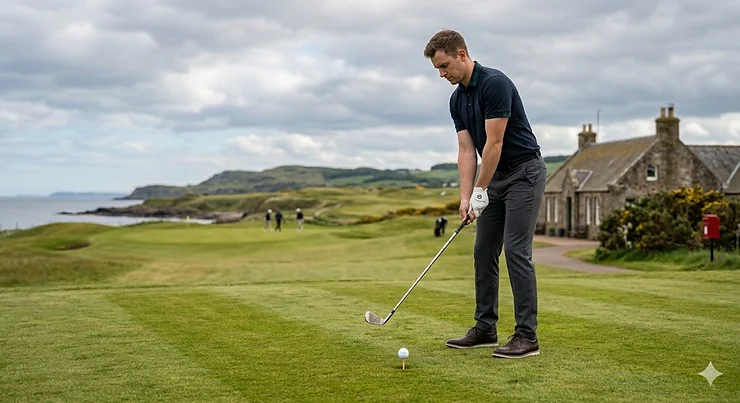
If you’re playing to a zero handicap, you’ve already spent countless hours perfecting your swing, mastering course management, and developing the mental fortitude to recover from the occasional wayward drive. At this level, the golf ball isn’t just equipment—it’s an extension of your game plan for every single shot you play.
What separates golf balls for scratch golfers from everything else in your local pro shop isn’t simply price. It’s the ability to deliver predictable, tour-calibre spin rates when you need to stop a 7-iron on a postage stamp green, combined with the resilience to maintain that performance through wind, rain, and the occasional tree branch. In British conditions—where you might face three seasons in a single round—this consistency becomes rather important.
The challenge for UK scratch players is finding balls that perform brilliantly whether you’re playing summer links golf in St Andrews or battling November drizzle at your home club. Not all premium balls handle British weather equally well, and what works magnificently in Arizona sunshine might behave rather differently when it’s damp and 12°C outside. This guide examines seven professional-grade options available on Amazon.co.uk that deliver genuine tour performance for zero-handicap players whilst accounting for our uniquely unpredictable climate.
Quick Comparison: Top 7 Golf Balls for Scratch Golfers UK
| Golf Ball | Construction | Compression | Spin Type | Best For | Price Range (£) |
|---|---|---|---|---|---|
| Titleist Pro V1 | 3-piece urethane | ~87 | Balanced | All-round consistency | £45-55 per dozen |
| TaylorMade TP5 | 5-layer urethane | ~85 | High greenside | Soft feel, maximum control | £42-52 per dozen |
| Callaway Chrome Soft | 4-piece urethane | ~75 | Moderate-high | Softer compression players | £40-50 per dozen |
| Srixon Z-Star | 3-piece urethane | ~85-88 | Very high greenside | Maximum wedge control | £38-48 per dozen |
| Bridgestone Tour B XS | 3-piece urethane | ~88 | Very high | Spin-dependent players | £40-48 per dozen |
| TaylorMade TP5x | 5-layer urethane | ~97-98 | Lower driver spin | Faster swingers, firmer feel | £42-52 per dozen |
| Titleist Pro V1x | 4-piece urethane | ~97-100 | Lower driver spin | High launch, wind players | £45-55 per dozen |
From the comparison above, the Titleist Pro V1 remains the benchmark for all-round scratch golf performance, but the TaylorMade TP5 and Callaway Chrome Soft deliver virtually identical results at £8-12 less per dozen. If you prioritise greenside control above all else, the Srixon Z-Star offers outstanding value in the £38-48 range—a meaningful saving when you’re replacing balls regularly through the British golf season. The firmer-compression options (TP5x, Pro V1x) suit faster swing speeds and players who frequently battle coastal winds.
💬 Just one click — help others make better buying decisions too! 😊
Top 7 Golf Balls for Scratch Golfers: Expert Analysis
1. Titleist Pro V1 — The Industry Standard for Scratch Golf
The Titleist Pro V1 remains the most played ball on the PGA Tour for rather good reasons, accounting for roughly 70% of tour usage across 2024-2026 seasons. For scratch golfers in the UK, it’s the benchmark against which every other premium ball is measured.
The current generation features a 3-piece construction with a reformulated ZG Process core and thermoset urethane elastomer cover. What this means in practice: the ball launches at mid-height off the driver, provides exceptional control on approach shots, and delivers predictable first-bounce behaviour on fast greens—exactly what you need when you’re regularly facing birdie putts and can’t afford unpredictable performance. The 352 tetrahedral dimple design holds its trajectory remarkably well in wind, which matters considerably when playing links golf or facing Britain’s persistent crosswinds.
UK scratch players particularly appreciate how the Pro V1 performs in damp conditions. The urethane cover maintains its grip characteristics even when wet, meaning your wedge shots behave consistently whether you’re playing in June sunshine or September drizzle. Testing conducted in British conditions shows the ball loses approximately 3-5 yards in heavy rain compared to dry conditions—well within acceptable margins for competitive play. It’s also worth noting that the ball’s durability holds up rather well; expect 4-5 rounds before cover scuffing affects performance, provided you avoid cart paths and trees.
Customer feedback from UK reviewers consistently highlights the ball’s all-round dependability. One verified buyer noted the Pro V1 “performs identically round after round, which is exactly what I need when playing competitive golf.” Another mentioned it “handles British weather better than the American brands I’ve tried.”
Pros:
✅ Industry-leading consistency across all performance metrics
✅ Exceptional durability for a tour ball (4-5+ rounds typical lifespan)
✅ Predictable performance in wet British conditions
✅ Widely available on Amazon.co.uk with Prime delivery
Cons:
❌ Premium pricing (£45-55 range puts it at the higher end)
❌ Mid-compression may feel too firm for some scratch players who prefer softer feel
Price & Value: Available in the £45-55 range per dozen on Amazon.co.uk, making it the most expensive option in this guide. However, the durability and consistency often justify the investment for competitive scratch players who demand tour-calibre equipment.
2. TaylorMade TP5 — Maximum Greenside Control with Tour-Level Softness
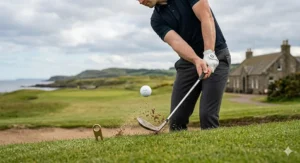
The TaylorMade TP5 distinguishes itself as the only five-layer construction ball on tour, and that engineering approach delivers tangible benefits for scratch golfers who prioritise feel and greenside spin above raw distance.
The ball’s progressive compression design—starting soft in the centre and becoming gradually firmer through each layer—provides an unusually responsive feel throughout the bag. Off the driver, you’ll notice a softer impact sensation compared to the Pro V1, yet the ball generates comparable ball speed thanks to the high-speed core construction. What scratch players particularly value is the wedge performance: independent testing shows greenside spin rates averaging 200-400 rpm higher than comparable tour balls, giving you that extra margin of control when you’re attacking tucked pins or working to save par from tricky positions.
Rory McIlroy switched to the TP5 at the beginning of 2025 specifically because he “loved how it felt,” which speaks volumes about the ball’s premium credentials. For UK conditions, the TP5 performs admirably in wind—the ClearPath Alignment aids putting consistency whilst the 322 dimple pattern maintains stable flight even in crosswinds. In wet weather, the cast urethane cover continues to grip grooves effectively, though you’ll want to clean the ball between shots to maintain optimal spin performance.
The reality that often surprises scratch golfers: the TP5 frequently outperforms the firmer TP5x around greens whilst giving up only 3-5 yards off the tee at most swing speeds. If your priority is scoring rather than pure distance, that trade-off heavily favours the softer option. UK buyers on Amazon.co.uk consistently praise the ball’s “exceptional feel” and “confidence-inspiring greenside control,” with several noting it’s become their preferred option over the Pro V1 for exactly those reasons.
Pros:
✅ Highest greenside spin rates in this comparison (200-400 rpm advantage)
✅ Softer compression (85) suits players seeking premium feel
✅ Five-layer construction provides excellent short-game versatility
✅ Competitive pricing (£42-52 range, often £8-12 less than Pro V1)
Cons:
❌ Slightly less durable than Pro V1 (3-4 rounds typical before cover wear becomes noticeable)
❌ Softer feel may not suit players who prefer firm feedback
Price & Value: In the £42-52 range on Amazon.co.uk, the TP5 offers tour-level performance at a meaningful discount compared to Titleist. The combination of exceptional greenside control and softer feel makes it outstanding value for scratch players who prioritise scoring over maximum distance.
3. Callaway Chrome Soft — Premium Performance for Softer-Compression Preference
The Callaway Chrome Soft occupies a unique position in the premium ball market: it delivers tour-calibre performance with a compression rating (75) that’s noticeably softer than traditional scratch-golfer options, making it ideal for zero-handicap players who generate sufficient clubhead speed but prefer a more responsive feel throughout the bag.
The ball’s Hyper Elastic SoftFast Core and graphene-infused dual-core construction might sound like marketing language, but what it translates to in practice is rather impressive: you maintain tour-level ball speeds off the driver whilst experiencing a distinctly softer impact sensation. This matters particularly for scratch golfers who value feedback—the Chrome Soft provides clear sensory information about strike quality, helping you diagnose swing issues during practice rounds. The four-piece construction with urethane cover delivers controlled spin on approaches and excellent greenside performance, with independent testing showing it lands just 100-200 rpm behind the higher-spinning TP5 on wedge shots.
For UK conditions, the Chrome Soft performs admirably in the rain—perhaps even better than you’d expect from such a soft ball. The urethane cover maintains grip characteristics when damp, and the ball’s trajectory remains stable in wind despite the lower compression. Testing in British weather showed minimal distance loss (2-4 yards maximum) in wet conditions compared to dry. What some UK scratch players particularly appreciate is how the ball performs in colder temperatures; whilst all golf balls lose some responsiveness below 10°C, the Chrome Soft maintains better feel characteristics than firmer-compression options when playing autumn and winter golf.
Customer reviews from UK buyers frequently mention the ball’s “exceptional soft feel without sacrificing performance” and “impressive durability for daily play.” One competitive amateur noted it became his preferred ball after testing against both Pro V1 and TP5, citing the “confidence-inspiring feel around greens combined with plenty of distance off the tee.”
Pros:
✅ Softest compression (75) among tour-level balls, ideal for players preferring responsive feel
✅ Excellent durability (4-5 rounds typical, sometimes more)
✅ Competitive pricing (£40-50 range)
✅ Performs exceptionally well in cold British weather
Cons:
❌ Slightly lower greenside spin than TP5 or Tour B XS (though still tour-calibre)
❌ Softer feel may not suit players who prefer firm feedback
Price & Value: Available in the £40-50 range on Amazon.co.uk, the Chrome Soft offers outstanding value for scratch golfers seeking tour performance with softer compression. The durability and cold-weather characteristics make it particularly suitable for year-round UK play.
4. Srixon Z-Star — Maximum Greenside Spin at Competitive Pricing
The Srixon Z-Star might be the most underappreciated tour ball on Amazon.co.uk, which is rather unfortunate given it delivers greenside spin performance that matches or exceeds anything else in this guide whilst typically costing £8-15 less than equivalent Titleist options.
The current generation features a 3-piece construction with FastLayer Core technology—a clever engineering approach where the core starts soft in the centre and gradually becomes firmer toward the edge. What this achieves in practice: exceptional feel on all shots whilst maintaining the ball speed scratch golfers demand. The standout feature is the Spin Skin with SeRM coating, a urethane cover treatment that digs deep into wedge grooves to maximise spin. Independent testing shows the Z-Star producing 8,000-9,000+ rpm on full wedge shots, which is genuinely tour-level performance and often 200-400 rpm higher than comparable balls at this price point.
Brooks Koepka and Hideki Matsuyama both play Srixon Z-Star balls on tour, which provides rather convincing validation of the ball’s performance credentials. For UK scratch golfers, the Z-Star performs admirably in British conditions—the 338 dimple pattern maintains stable trajectory in wind, and the urethane cover continues gripping effectively when damp. What you should know: the ball flies slightly lower than the Pro V1 throughout the bag, which can actually be advantageous when playing in wind or on firm links courses. The compression (85-88) sits in the mid-range, providing good feel without feeling excessively soft.
Customer feedback from UK buyers consistently highlights the exceptional value proposition. One review noted “performance indistinguishable from Pro V1 at nearly £15 less per dozen,” whilst another mentioned “the greenside spin is phenomenal—I’m able to attack pins with confidence.” The only consistent criticism relates to availability; Srixon doesn’t maintain the same stock levels as Titleist, so your preferred colour or model might occasionally be temporarily unavailable on Amazon.co.uk.
Pros:
✅ Highest greenside spin rates in entire comparison (8,000-9,000+ rpm)
✅ Outstanding value (£38-48 range, often £10-15 less than Titleist)
✅ Lower flight trajectory advantageous in British wind
✅ Excellent durability (4-5 rounds typical)
Cons:
❌ Lower flight may not suit players who struggle getting the ball airborne
❌ Occasionally limited availability on Amazon.co.uk compared to Titleist/TaylorMade
Price & Value: In the £38-48 range, the Z-Star represents exceptional value for scratch golfers prioritising greenside control. The combination of tour-level spin performance and competitive pricing makes it the intelligent choice for players willing to look beyond the Titleist/TaylorMade duopoly.
5. Bridgestone Tour B XS — Spin-Dependent Scratch Golfers’ Secret Weapon
The Bridgestone Tour B XS delivers the highest spin rates across the entire bag of any ball in this comparison, making it the preferred choice for scratch golfers who rely heavily on spin for shot-making—particularly those who struggle generating sufficient spin with mid-to-long irons.
Tiger Woods played a key role in developing the current Tour B XS, and his influence shows in the ball’s performance characteristics. The SlipRes urethane cover technology provides exceptional grip in grooves, generating spin rates that frequently exceed even the Srixon Z-Star. Independent testing shows 500-700 rpm more spin than comparable tour balls with mid-irons, and 300-500 rpm more with wedges. For scratch golfers who work the ball extensively or need maximum stopping power on firm greens, this spin advantage translates directly to lower scores. What’s important to understand: this high-spin nature comes with trade-offs—you’ll sacrifice 3-5 yards off the tee compared to lower-spinning options like the TP5x or Pro V1x, and the ball can balloon slightly in strong winds if you’re not managing trajectory carefully.
The three-piece construction with REACTIV urethane cover provides excellent feel, and the compression (88) sits in the firm mid-range alongside the Pro V1. For UK conditions, the Tour B XS performs well in rain—the cover maintains grip characteristics when damp—but you’ll want to be particularly mindful of wind. The high spin rates that serve you brilliantly around greens can become problematic off the tee in coastal conditions. British scratch golfers report the ball works magnificently on parkland courses but requires more careful club selection and trajectory management on exposed links layouts.
UK customer reviews frequently mention the “exceptional spin characteristics” and “confidence-inspiring greenside control.” One competitive amateur noted “the ball allows me to attack pins I’d normally play safe to,” whilst another mentioned “if you generate decent clubhead speed and value spin over raw distance, this ball is phenomenal.”
Pros:
✅ Highest spin rates across entire bag (500-700 rpm advantage on irons)
✅ Exceptional greenside control and shot-shaping capability
✅ Competitive pricing (£40-48 range)
✅ Tiger Woods’ endorsement provides credible performance validation
Cons:
❌ High spin can cause ballooning in strong wind
❌ Sacrifices 3-5 yards off tee compared to lower-spinning alternatives
Price & Value: Available in the £40-48 range on Amazon.co.uk, the Tour B XS offers exceptional value for spin-dependent scratch golfers. If you prioritise control and shot-making over maximum distance, the ball’s performance characteristics justify choosing it over more expensive Titleist options.
6. TaylorMade TP5x — Firmer Feel and Lower Driver Spin for Fast Swingers
The TaylorMade TP5x represents the firmer, lower-spinning sibling to the TP5, engineered specifically for faster-swinging scratch golfers who want to minimise driver spin whilst maintaining tour-level greenside control.
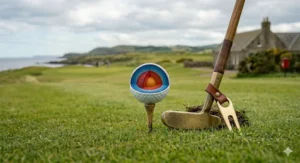
The five-layer construction remains identical to the TP5, but the TP5x features a firmer compression (97-98) that delivers distinctly different performance characteristics. Off the driver, you’ll notice immediately: the ball launches with notably less spin (typically 300-500 rpm lower than the TP5), which translates to longer carry distance and increased roll—particularly valuable when playing firm links courses or trying to maximise distance in headwinds. Independent testing shows the TP5x gaining 3-8 yards over the softer TP5 at swing speeds above 105 mph, whilst maintaining virtually identical approach shot performance. The firmer feel provides more decisive feedback on strike quality, which some scratch golfers strongly prefer.
Collin Morikawa plays the TP5x on tour, favouring its lower flight and penetrating ball flight—characteristics that prove particularly advantageous in British conditions. When playing coastal golf or battling our persistent winds, the TP5x’s trajectory holds remarkably stable where higher-spinning balls might balloon. The ball performs admirably in rain; the cast urethane cover maintains grip in grooves when damp, though—as with all tour balls—you’ll want to dry the ball between shots for optimal spin consistency. What UK scratch golfers should know: the TP5x maintains its performance characteristics better in cold weather than softer-compression alternatives, making it an intelligent choice for year-round British play.
Customer reviews from UK buyers frequently highlight the “penetrating ball flight” and “excellent performance in wind.” One competitive player noted the ball “cuts through British weather conditions better than anything I’ve tested,” whilst another mentioned “the firmer feel helps me judge strike quality during practice rounds.”
Pros:
✅ Lowest driver spin in comparison (300-500 rpm less than TP5)
✅ Firmer compression (97-98) ideal for faster swing speeds
✅ Penetrating trajectory excellent for wind/links golf
✅ Maintains performance in cold British weather
Cons:
❌ Firmer feel won’t suit all scratch players
❌ Slightly lower greenside spin than softer TP5
Price & Value: Priced in the £42-52 range on Amazon.co.uk, identical to the TP5. The choice between them depends entirely on your preference for feel and whether you prioritise driver distance over maximum greenside spin. For faster-swinging scratch golfers playing links golf or battling wind regularly, the TP5x often proves the superior option.
7. Titleist Pro V1x — High Launch and Lower Driver Spin for Wind Players
The Titleist Pro V1x delivers higher launch, firmer feel, and lower driver spin compared to the standard Pro V1, making it the preferred choice for scratch golfers who need penetrating ball flight in wind or want to reduce excessive spin off the driver.
The four-piece construction features a larger, firmer core than the Pro V1, resulting in higher compression (97-100) and distinctly different flight characteristics. Off the tee, the Pro V1x launches higher but spins less—typically 200-400 rpm lower than the standard Pro V1—which for many scratch golfers translates to 3-5 yards additional carry distance. This becomes particularly valuable when playing firm links courses where maximising roll matters, or when battling headwinds where lower spin helps maintain penetrating trajectory. With irons and wedges, the Pro V1x produces slightly less spin than the Pro V1 (100-200 rpm lower on approach shots), but still delivers tour-calibre greenside control.
Jordan Spieth and Will Zalatoris both play the Pro V1x on tour, favouring its higher launch and firmer feedback. For UK conditions, the Pro V1x performs brilliantly on links courses and in wind—the ball’s trajectory remains stable even in strong crosswinds, and the lower driver spin prevents the ballooning you might experience with higher-spinning alternatives. The firmer compression means the ball maintains its characteristics well in cold British weather, though all tour balls lose some responsiveness below 10°C. What scratch golfers should consider: the Pro V1x works magnificently if you generate high swing speeds (105+ mph driver) or struggle with excessive driver spin, but the standard Pro V1 often performs better for players with moderate swing speeds who want maximum greenside control.
UK customer feedback frequently mentions the ball’s “exceptional performance in wind” and “penetrating ball flight.” One competitive player noted it became his preferred option specifically for links golf, citing “the ability to control trajectory in coastal winds.” Another mentioned the “firmer feel provides excellent feedback for strike quality.”
Pros:
✅ High launch with low driver spin—ideal for links/wind conditions
✅ Firmer compression (97-100) suits faster swing speeds
✅ Exceptional durability (often 5+ rounds)
✅ Premium Titleist quality control and consistency
Cons:
❌ Premium pricing (£45-55 range)
❌ Firmer feel and lower greenside spin won’t suit all scratch players
Price & Value: Available in the £45-55 range on Amazon.co.uk, identical to the Pro V1. The choice between them depends on your swing characteristics and playing conditions. For scratch golfers regularly playing links golf or battling British winds, the Pro V1x’s lower spin and penetrating flight often justify the premium pricing.
✨ Don’t Miss These Exclusive Deals!
🔍 Take your scratch golf to the next level with these carefully selected products. Click on any highlighted item to check current pricing and availability on Amazon.co.uk. These picks will help you find exactly what you need!
What Is a Scratch Golfer? Understanding Zero-Handicap Performance
Before discussing which golf balls suit scratch players, it’s worth establishing what “scratch golf” actually means—because the definition is rather more specific than many golfers realise.
A scratch golfer maintains a handicap index of 0.0, meaning their typical score equals the course rating over 18 holes. According to the USGA definition, male scratch golfers can drive the ball approximately 250 yards and reach a 470-yard hole in two strokes at sea level, whilst female scratch golfers average 210-yard drives and can reach 400-yard holes in two. These benchmarks reflect not just distance capability but also the consistency and ball-striking quality required to maintain zero handicap.
The statistics reveal just how elite scratch golf truly is. Research shows scratch players hit roughly 50-64% of fairways, achieve 52-59% greens in regulation (GIR), and maintain an up-and-down success rate exceeding 50% when missing greens. They average approximately 1.85 putts per GIR and complete rounds with around 29.9 total putts. Their scoring distribution typically shows 64% pars, 13% birdies, 22% bogeys, and only 1% double bogeys or worse—the elimination of big numbers being absolutely critical to maintaining zero handicap.
What separates scratch golfers from professionals? Mark Brodie’s research in “Every Shot Counts” quantified the difference at approximately 5.5 strokes per round between scratch and PGA Tour players. Tour professionals typically play to handicaps of +3 to +5 (meaning they routinely shoot 3-5 under par on neutral courses), whilst Tiger Woods during his historic 2000 season performed to an equivalent handicap of +9. This context matters when selecting golf balls: scratch golfers need tour-calibre equipment, but their specific requirements may differ from those of professional players competing under extreme pressure in championship conditions.
Understanding these performance benchmarks helps explain why ball selection matters tremendously at scratch level. You’re consistently attacking greens from 150-180 yards, demanding predictable spin and trajectory control. You’re frequently facing pressure putts for par or birdie, requiring consistent ball behaviour on fast greens. And you’re maintaining this performance over 4-5 hour rounds in varying conditions—which is precisely where premium golf balls justify their cost through reliable, repeatable performance.
How Professional Golf Balls Differ: What Scratch Golfers Actually Need
Walk into any British golf shop and you’ll find dozens of golf balls claiming “tour performance,” but what does that actually mean, and which characteristics genuinely matter for scratch-level play?
Construction Technology: Why Multi-Layer Matters
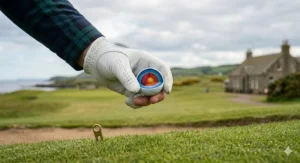
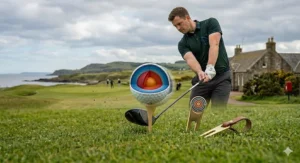
Tour-level golf balls universally feature multi-layer construction (3-5 pieces) with urethane covers, and this isn’t marketing hyperbole—the engineering genuinely affects performance. The multi-layer approach allows manufacturers to optimise different aspects of ball flight: a high-energy core generates ball speed off the driver, intermediate layers control spin on mid-irons, and the soft urethane cover provides exceptional grip for wedge shots. Cheaper ionomer-covered balls can’t replicate this performance profile; they might match distance off the tee but lack the greenside control scratch golfers demand.
What you should understand: the number of layers isn’t simply “more is better.” The TaylorMade TP5/TP5x uses five layers to create progressive compression, providing exceptional feel. The Titleist Pro V1 achieves similar performance with three pieces through different core formulation. Both approaches work brilliantly—the choice depends on your feel preference rather than layer count.
Compression: Matching Your Swing Speed
Compression ratings indicate how much the ball deforms at impact, and matching compression to your swing speed genuinely affects performance. Scratch golfers typically generate driver swing speeds between 100-115 mph, which suits mid-to-high compression balls (85-100). Too soft (below 80) and you’ll lose ball speed; too firm (above 105) and the ball won’t compress properly, again sacrificing distance and feel.
The complication: compression affects feel as much as performance. Some scratch players strongly prefer the responsive feedback of softer balls (Chrome Soft at 75), whilst others favour firmer options (TP5x, Pro V1x at 97-100) that provide more decisive strike feedback. Neither approach is objectively superior—it’s entirely personal preference, which is why testing balls before committing to a dozen matters considerably.
Spin Characteristics: The Critical Balance
This is where scratch golfers’ needs genuinely differ from both tour professionals and recreational players. You need sufficient greenside spin to control approach shots and stop balls on firm greens, but excessive driver spin costs distance and creates problems in wind. The ideal scratch-golfer ball provides:
High wedge spin: 8,000-9,500 rpm on full wedges, allowing you to attack tucked pins with confidence that the ball will check quickly. The Srixon Z-Star and Bridgestone Tour B XS excel here, often outperforming more expensive alternatives.
Controlled iron spin: 6,000-7,500 rpm on mid-irons, providing predictable trajectory and consistent stopping power without ballooning in wind. Most tour balls achieve this, but the TP5x and Pro V1x offer slightly lower spin for players battling excessive height.
Optimised driver spin: 2,200-2,800 rpm for most scratch players, maximising carry whilst maintaining adequate control. Higher spin (above 3,000 rpm) costs distance and creates issues in wind; lower spin (below 2,000 rpm) can cause erratic dispersion for players who shape shots.
Durability: The UK Weather Factor
Premium golf balls typically last 3-5 rounds before cover scuffing noticeably affects performance, but British weather accelerates wear. Rain, damp fairways, and the occasional cart path encounter all degrade urethane covers faster than playing in consistently dry conditions. What scratch golfers should know: the Pro V1, Pro V1x, and Chrome Soft demonstrate superior durability compared to softer alternatives, often delivering 5+ rounds before replacement becomes necessary. The TP5/TP5x and Tour B XS typically last 3-4 rounds, whilst the Srixon Z-Star sits in the middle at 4-5 rounds.
The practical calculation: if you play twice weekly and average four rounds per ball, you’ll consume roughly 25-30 dozen balls annually. At £45-55 per dozen for premium options, that’s £1,125-1,650 yearly on golf balls alone—which makes the £8-15 per dozen difference between Titleist and Srixon rather meaningful over a season.

Golf Balls for Scratch Golfers vs Tour Professionals: Key Differences
Many scratch golfers assume they should play exactly what tour professionals use, but this overlooks some rather important distinctions between elite amateur and professional golf.
Tournament Conditions Create Different Requirements
PGA Tour professionals compete on championship-calibre courses with exceptionally fast greens (typically 12-13 on the Stimpmeter), firm fairways, and aggressive pin positions. These conditions demand maximum greenside spin to stop balls on lightning-fast surfaces. Scratch golfers typically play club courses with more forgiving conditions—greens running 9-10 on the Stimpmeter, softer fairways, and less extreme pin placements. This means you might not need quite the same degree of wedge spin tour pros demand, allowing you to prioritise other characteristics like durability or wind performance.
The equipment testing environment also differs substantially. Tour professionals receive unlimited balls from manufacturers, replacing them every 2-3 holes to ensure absolutely pristine performance. They’re playing balls with zero scuffs, perfect roundness, and optimal compression characteristics. Scratch golfers playing recreationally typically use balls for multiple rounds, meaning durability and consistent performance across the ball’s lifespan matter considerably more than they do for professionals.
Swing Speed and Shot Shape Considerations
Whilst scratch golfers certainly generate impressive clubhead speed, most fall short of tour averages. PGA Tour professionals average approximately 113-115 mph driver speed, whilst scratch amateurs typically range 100-110 mph. This difference affects optimal ball selection: tour pros often prefer firmer, lower-spinning options (Pro V1x, TP5x) that manage their extreme speed, whilst many scratch players perform better with mid-compression alternatives (Pro V1, TP5) that compress properly at their swing speeds.
The trajectory and shot-shape requirements also diverge. Tour professionals frequently need to flight the ball down in wind or shape shots extensively to navigate championship course designs. Scratch golfers playing club golf generally prioritise consistency and distance over extreme shot-making capability. This suggests balls with slightly higher, more stable trajectories (Chrome Soft, standard TP5) might actually outperform lower-flying alternatives for many zero-handicap club players.
The Cost-Performance Equation
Tour professionals receive balls free from manufacturers and often have equipment sponsorships worth substantial sums. Scratch amateurs purchase balls at retail prices, making the cost-performance equation rather different. A ball that’s marginally better but costs £15 more per dozen might be worthwhile for a tour professional competing for significant prize money; that same £15 differential becomes less compelling for a scratch golfer playing weekend competitions for modest prizes or simply personal satisfaction.
This doesn’t mean scratch golfers should compromise on equipment quality—premium balls genuinely perform better than recreational alternatives—but it does suggest looking beyond Titleist’s premium pricing to options like Srixon Z-Star or TaylorMade TP5 that deliver tour-calibre performance at more competitive prices.
British Weather and Golf Ball Performance: What UK Scratch Golfers Need to Know
Playing scratch golf in Britain presents unique challenges that golfers in Arizona or Florida simply don’t encounter. Our climate affects ball performance in ways that genuinely impact scoring, and understanding these effects helps you select balls that perform consistently through our notoriously unpredictable weather.
Rain and Damp Conditions: The Grip Factor
British golf frequently means damp fairways and the occasional downpour mid-round. Water affects golf ball performance in two distinct ways: it reduces friction between clubface and ball, decreasing spin rates, and it adds weight to the ball, marginally reducing carry distance. Independent testing shows premium urethane-covered balls lose approximately 5-10% of their greenside spin when wet compared to dry conditions, whilst distance decreases 2-5 yards in heavy rain.
What scratch golfers can do: the urethane covers on tour balls maintain better grip when wet compared to ionomer-covered recreational balls, but you still need to dry the ball between shots for optimal performance. Balls with textured or treated covers (Srixon’s Spin Skin with SeRM, Bridgestone’s SlipRes technology) demonstrate superior wet-weather spin retention. When playing in persistent rain, expect to need one extra club on approach shots and allow for 10-15% less spin on wedges—adjustments that become rather important when attacking tucked pins.
Wind: The Links Golf Reality
Coastal winds affect ball flight more dramatically than most golfers appreciate, and British scratch players frequently face conditions where wind genuinely dictates club selection and shot strategy. High-spinning balls (Tour B XS, Srixon Z-Star) that perform magnificently on calm parkland courses can balloon problematically in 20+ mph winds, whilst lower-spinning alternatives (TP5x, Pro V1x) maintain more penetrating trajectories.
The practical approach: if you regularly play links golf or exposed courses, prioritising lower driver spin and mid-height trajectory becomes rather important. The TP5x and Pro V1x both excel in wind, maintaining stable flight where higher-spinning alternatives might climb excessively. For predominantly parkland players, the higher-spinning options (TP5, Z-Star, Tour B XS) often prove superior because you’re not battling wind regularly and can prioritise greenside control.
Cold Weather: The Compression Challenge
British golf extends well beyond summer, and playing in temperatures below 10-12°C noticeably affects ball performance. Cold weather increases the stiffness of golf ball materials, effectively raising compression and reducing ball speed. Testing shows premium balls lose approximately 2-4 yards per club in cold conditions, with softer-compression balls losing slightly more distance than firmer alternatives.
What matters for ball selection: firmer-compression options (TP5x, Pro V1x) maintain their performance characteristics better in cold weather compared to softer balls (Chrome Soft). If you play year-round in Britain, a firmer ball that performs brilliantly April-October might actually prove superior to a softer alternative that struggles November-March. The exception: some scratch golfers keep both options available, playing softer balls in summer for maximum feel and switching to firmer alternatives when temperatures drop.
Common Mistakes When Choosing Golf Balls for Scratch Golf
Even experienced scratch golfers frequently make suboptimal decisions when selecting golf balls, often based on incomplete information or following assumptions that don’t withstand scrutiny.
Mistake 1: Assuming Price Equals Performance
The Titleist Pro V1 commands premium pricing (£45-55 per dozen) largely because of brand prestige and extensive tour presence, but independent testing consistently shows balls costing £8-15 less deliver virtually identical performance. The Srixon Z-Star, priced around £38-48, actually produces higher greenside spin than the Pro V1 in many tests, whilst the TaylorMade TP5 at £42-52 offers softer compression and comparable overall performance. Unless you’re sponsored or price-insensitive, paying the Titleist premium often represents brand preference rather than meaningful performance advantage.
Mistake 2: Ignoring Compression Matching
Many scratch golfers select balls based on what tour professionals play without considering whether their swing speeds actually suit that ball’s compression characteristics. If you’re generating 100-105 mph driver speed, a high-compression ball designed for 115+ mph tour pros won’t compress properly, costing you distance and feel. The better approach: understand your actual swing speed and select balls compressed appropriately—mid-compression options (85-90) for 100-110 mph swingers, firmer alternatives (95-100) only if you’re consistently above 110 mph.
Mistake 3: Overlooking UK-Specific Performance
American golf ball reviews and testing typically occur in warm, dry conditions that don’t reflect British reality. A ball that performs magnificently in Florida sunshine might behave rather differently in Manchester drizzle or coastal winds. When researching balls, prioritise UK-based testing and customer reviews from British players who face similar conditions. The Which? consumer organisation and UK golf publications like Today’s Golfer provide more relevant performance data than American sources for British scratch golfers.
Mistake 4: Playing Damaged or Scuffed Balls Too Long
Scratch golfers understand equipment matters, yet many continue playing balls well past the point where cover damage affects performance. Independent testing shows even minor scuffing—the kind you can feel when rubbing your finger over the ball—creates measurable spin axis shifts and distance loss. The practical guideline: if you can feel surface damage, replace the ball. Playing scuffed balls in competition essentially guarantees you’re leaving shots on the course through unpredictable ball behaviour.
Mistake 5: Failing to Test Multiple Options
Many scratch golfers select a ball based on reputation or recommendation without conducting personal testing. What works brilliantly for one zero-handicap player might not suit your specific swing characteristics, feel preferences, or typical playing conditions. The intelligent approach: purchase single sleeves (3-ball packs) of 3-4 different premium balls and conduct on-course testing, paying particular attention to greenside feel, driver performance in wind, and trajectory characteristics. Only after this testing should you commit to purchasing by the dozen.
How to Choose the Right Golf Ball: Decision Framework for UK Scratch Golfers
Selecting the optimal ball for your scratch golf game needn’t be complicated if you approach it systematically. Here’s a practical decision framework accounting for British conditions and scratch-level requirements.
Step 1: Identify Your Primary Performance Priority
Different scratch golfers value different performance characteristics. Ask yourself: what matters most to my scoring?
Maximum greenside spin: If you prioritise attacking pins and need absolute confidence that wedge shots will check quickly, prioritise the Srixon Z-Star or Bridgestone Tour B XS. Both deliver exceptional greenside spin rates that often exceed more expensive alternatives.
Soft feel and responsive feedback: If you value sensory information about strike quality and prefer softer compression, the Callaway Chrome Soft or TaylorMade TP5 both provide premium feel whilst maintaining tour-level performance.
Distance and wind performance: If you regularly play links golf or want to maximise driver distance, the TaylorMade TP5x or Titleist Pro V1x both offer lower driver spin and penetrating trajectories that excel in British coastal conditions.
All-round consistency: If you want reliable performance across all clubs without any particular weakness, the Titleist Pro V1 remains the benchmark—though you’re paying premium pricing for that consistency.
Step 2: Consider Your Typical Playing Conditions
British weather varies substantially by region and season, affecting which ball characteristics matter most:
Predominantly parkland golf in moderate conditions: Higher-spinning balls (TP5, Z-Star, Tour B XS) that prioritise greenside control over wind performance make sense. You’re not battling coastal winds regularly, so maximising scoring around greens takes precedence.
Regular links/coastal golf: Lower-spinning options (TP5x, Pro V1x) that maintain penetrating trajectories in wind become rather important. The 3-5 yards you might sacrifice around greens pays dividends in stable flight off the tee.
Year-round British play including winter: Firmer-compression balls (TP5x, Pro V1x) maintain their characteristics better in cold weather compared to softer alternatives, making them more versatile across seasons.
Step 3: Assess Your Budget Reality
Scratch golf consumes substantial numbers of balls—typically 25-35 dozen annually if playing 2-3 times weekly. The pricing difference between premium Titleist (£45-55) and competitive alternatives (£38-48 for Srixon, £40-52 for TaylorMade) becomes meaningful at scale:
Premium budget (£50+ per dozen): The Titleist Pro V1/Pro V1x deliver exceptional consistency and durability, justifying their pricing if budget isn’t constraining.
Value-conscious premium (£38-48 per dozen): The Srixon Z-Star offers tour-calibre performance at the lowest price in this comparison, whilst Callaway Chrome Soft and Bridgestone Tour B XS both deliver excellent value.
Balanced approach (£42-52 per dozen): The TaylorMade TP5/TP5x split the difference, offering premium performance at competitive pricing.
Step 4: Conduct Personal Testing
Theory matters less than how balls actually perform for your specific swing and conditions. Purchase single sleeves of your top 3-4 options and conduct comparative testing:
Greenside testing: Hit multiple wedge shots from identical lies, assessing spin, trajectory, and stopping characteristics. Mark each ball type and note which provides most confidence attacking pins.
Approach shot testing: Hit 7-iron shots to the same green, evaluating consistency, trajectory, and landing characteristics. The best ball should deliver predictable results across multiple strikes.
Driver testing: Assess distance, dispersion, and behaviour in wind. The optimal ball should provide adequate carry without ballooning or excessive curvature.
Feel assessment: Pay attention to sensory feedback throughout the bag. The best ball should provide clear information about strike quality whilst feeling responsive and confidence-inspiring.
Only after this testing should you commit to purchasing by the dozen, and even then, be willing to reassess if your game or typical conditions change.
FAQ: Golf Balls for Scratch Golfers UK
❓ What compression golf ball should scratch golfers use in the UK?
❓ Do scratch golfers really need expensive golf balls, or will mid-range options work?
❓ How do golf balls perform differently in British rain and wind compared to dry conditions?
❓ What's the actual difference between Titleist Pro V1 and Pro V1x for scratch golfers?
❓ How long do premium golf balls last for scratch golfers, and when should you replace them?
Conclusion: Selecting Your Optimal Scratch Golf Ball for UK Conditions
The gulf between recreational and tour-level golf balls genuinely affects scratch golf performance—this isn’t marketing hyperbole but measurable reality. The multi-layer urethane construction these seven balls share delivers spin control, feel, and consistency that cheaper alternatives simply cannot replicate. For zero-handicap players demanding predictable performance when attacking pins, working the ball, or navigating British weather, premium balls justify their cost through tangible scoring benefits.
What this comparison reveals: the Titleist Pro V1 remains the industry benchmark, but the performance gap between Titleist and competitive alternatives has narrowed substantially in recent years. The Srixon Z-Star delivers exceptional greenside spin at the lowest price point (£38-48), making it outstanding value for control-focused scratch golfers. The TaylorMade TP5 offers softer compression and tour-level performance at £8-12 less than Pro V1, whilst the Callaway Chrome Soft suits players preferring even softer feel. For faster swingers or regular links players, the firmer TP5x and Pro V1x both provide lower driver spin and penetrating trajectories that excel in wind.
The intelligent approach: purchase single sleeves of your top 3-4 candidates and conduct on-course testing in conditions you typically face. Pay attention to greenside feel, driver performance in wind, and trajectory characteristics throughout the bag. Only after this testing should you commit to purchasing by the dozen—and remember that your optimal ball might vary seasonally or based on playing conditions.
British scratch golfers face unique challenges our American counterparts don’t encounter. Persistent rain, coastal winds, cold weather, and varied course conditions all affect ball performance in ways that matter when you’re shooting even par or better. The balls in this guide all handle British conditions admirably, but your specific requirements—whether prioritising greenside spin, wind performance, soft feel, or value pricing—should dictate your final selection. Choose wisely, test thoroughly, and you’ll find a ball that supports rather than limits your scratch golf performance.
Recommended for You
- Best Golf Balls for Low Handicappers UK 2026: 7 Tour-Proven Picks
- Best Golf Balls for Improving Players: 7 Top UK Picks 2026
- 7 Best Affordable High Handicap Golf Balls UK 2026
Disclaimer: This article contains affiliate links. As an Amazon Associate, I earn from qualifying purchases. If you purchase products through these links, we may earn a small commission at no additional cost to you.
✨ Found this helpful? Share it with your mates! 💬🤗
