
In This Article
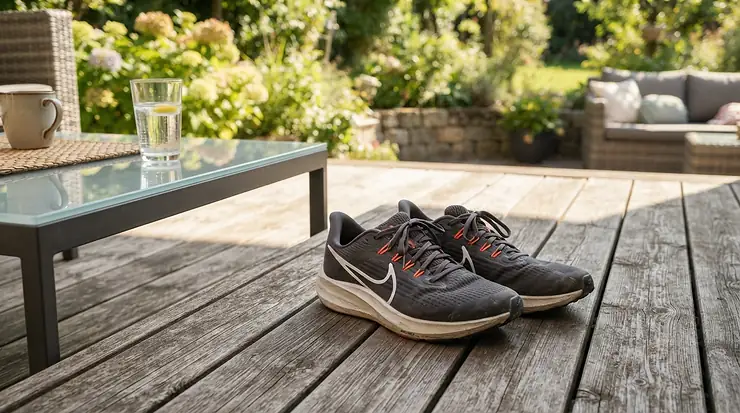
Golf shoes for flat feet with arch support are golf shoes built around a firm, contoured footbed, a structured heel cup and a stable midsole, so a low arch doesn’t collapse inward mid-swing or across four miles of fairway. The better pairs also add wide fittings and room for a removable insole.

Flat feet, where the arch drops towards the floor when you stand, are more common than most golfers admit. Golf has a cruel sense of timing about them. You load the trail foot, rotate, shift onto the lead foot, then walk somewhere between four and six miles. Every one of those moments asks the arch to act like a spring, and a flat foot’s spring is tired before the first tee. The NHS Wales guidance on flat feet is a sensible first stop if you’re unsure whether your feet are flexible, rigid or simply unremarkable. Anything painful deserves a podiatrist’s opinion, not a shoe review.
What follows is a researched shortlist, not a diary of wear-testing. I’ve pulled together published specifications, independent UK reviews from National Club Golfer and Golf Monthly, and patterns in retailer feedback. Then I’ve added the analysis spec sheets skip: what each feature means for a collapsing arch, a rolling heel or a sore plantar fascia. You get seven shoes from budget to premium, plus the practical bits product listings rarely mention.
Quick Comparison: 7 Golf Shoes for Flat Feet with Arch Support
| Shoe | Traction | Widths | Price range | NCG verdict | Best For |
|---|---|---|---|---|---|
| FitVille SpeedEx V4 | Moulded cleats | Standard to extra wide | £60-£70 | 4/5 | Budget wide feet |
| FitVille Primix V2 | Spikeless | Wide and extra wide (up to 4E) | £75-£85 | 4.5/5 | Maximum room and comfort |
| adidas S2G Spikeless Leather 24 | Spikeless | Standard (check listing) | £85-£95 | 5/5 | Sturdy heel on a budget |
| Under Armour Drive Pro Clone | Spiked or spikeless | Check listing | £140-£160 | 5/5 | Fast swingers wanting stability |
| Skechers Blade Tour Slip-In | Spiked | Medium and wide | £130-£150 | 5/5 | Arch Fit insole, easy entry |
| FootJoy Pro/SL 2026 | Spikeless | Medium, wide, extra wide | £150-£165 | 5/5 | Widest fitting range |
| ECCO Biom H5 | Spikeless | Check listing | £170-£190 | Not rated by NCG | Removable-insole comfort |
The two FitVille models give the widest fittings under £90, which matters because flat feet tend to spread under load. The FootJoy Pro/SL 2026 is the only premium shoe here offering three width choices. If bending down to lace is a struggle, the Skechers Blade Tour Slip-In solves that problem, while the ECCO Biom H5 comes with a stability caveat covered below.
💬 Just one click — help others make better buying decisions too!😊
Top 7 Golf Shoes for Flat Feet with Arch Support: Expert Analysis
Each pick below combines real specifications, independent review findings and plain-English interpretation. Where a detail couldn’t be verified, I’ve said so.
1. FitVille SpeedEx V4 — extra-wide fittings at a budget price
The headline here is availability. The FitVille SpeedEx V4 comes in UK sizes 7-13, including half sizes and extra-wide fittings, which is rare below £100. The moulded cleats mean no spike wrench and no clatter across the clubhouse floor. The padding around the ankle cradles the heel, which helps limit the inward roll that tires flat feet late in a round.
Who is it for? Golfers with wide, flexible flat feet who want support without a big outlay. National Club Golfer picks it as its wide-feet choice in its 2026 plantar fasciitis round-up and calls it a must for those with orthopaedic conditions. At this price, expect the foam footbed to flatten sooner than premium alternatives.
Reviewers consistently describe it as comfortable straight from the box, with strong wet-weather performance. The recurring reservation is looks. Some retailer-listing reviewers across FitVille’s wide range say sizing runs snug, so consider the extra-wide fitting if you’re between widths.
Pros:
- ✅ Half sizes and extra-wide fittings available
- ✅ Comfortable out of the box, no break-in
- ✅ Strong grip in wet conditions
Cons:
- ❌ Utilitarian looks won’t suit everyone
- ❌ Budget foam may compress faster
Price: the £60-£70 range, which is excellent value for this much width.
2. FitVille Primix V2 — squared toe box and widths up to 4E
The FitVille Primix V2 trades elegance for honesty about foot shape. FitVille offers it in wide and extra-wide fittings up to 4E, with a premium leather upper and a spikeless outsole in UK sizes 7-14. The dual-density midsole pairs softer cushioning with firmer material, the same principle running shoes use to resist an inward roll. A performance arch support insole and nylon-plated stability element complete the package.
On paper, that stack suits flat feet well. A roomy forefoot lets toes splay naturally, while the firmer midsole and plate resist torsion. The reviewer at National Club Golfer initially thought the shoe looked bulky with its squared toe. After a round, though, he reported being blown away by the comfort and stability, awarding 4.5 stars.
The trade-off is spikeless grip. On steep, soggy slopes a spiked shoe still bites harder, so this is better for dry-to-damp parkland than links in January.
Pros:
- ✅ Widths up to 4E for genuinely wide feet
- ✅ Dual-density midsole adds stability
- ✅ Reviewers praise comfort and value
Cons:
- ❌ Squared toe looks divisive
- ❌ Spikeless traction is less secure on wet slopes
Price: roughly the £75-£85 range, a bargain for the feature list.
3. adidas S2G Spikeless Leather 24 — sturdy heel on a modest budget
The adidas S2G Spikeless Leather 24 earns its place through its heel. National Club Golfer’s reviewer singled out the heel’s strength and the durable leather, describing a sturdy, solid base that felt secure underfoot. That matters because a firm heel counter, the stiff cup around the back of your heel, resists the sideways collapse that makes overpronation feel like standing on a wobbly shelf.
Here’s my honest caveat. This shoe isn’t marketed around arch support, so I’d treat it as a stable shell for your own insole. With a quality aftermarket footbed in the £10-£35 range, it becomes a very competent supportive option. Sizing runs UK 6.5-14.5, and the laces can skip the top eyelets if your instep feels cramped.
Reviewers noted plenty of grip despite the lack of spikes, plus a spikeless design that stayed comfortable over 18 holes. The main reservation is simple preference: some golfers want spikes.
Pros:
- ✅ Durable leather upper
- ✅ Strong, secure heel
- ✅ Broad UK size range
Cons:
- ❌ Arch support isn’t a headline feature
- ❌ Spike-lovers may want more bite
Price: around the £85-£95 range, fair value if you’ll add an insole.
4. Under Armour Drive Pro Clone — dual-density foam, stable platform
The Under Armour Drive Pro Clone is the performance pick. National Club Golfer gave it five stars, praising phenomenal grip and no break-in period. The clever bit is the dual-density cushioning: softer foam inside for comfort, firmer foam on the outside for stability and more effective weight transfer. For a flat foot, that firm outer wall acts like a gentle guardrail against the arch folding inward.
It comes in spiked (£140-£160 range) and spikeless versions, in UK sizes 7-12. Who benefits? Faster swingers who generate big lateral forces and need the shoe to hold still when they load the lead side. The reviewer reported that longer rounds were where it excelled.
One gap: I couldn’t confirm in the reviews whether the footbed lifts out, so check the listing before committing to custom orthotics. The sporty design is the other reservation, as traditionalists may wince.
Pros:
- ✅ Exceptional grip, spiked or spikeless
- ✅ Dual-density foam balances comfort and stability
- ✅ Soft immediately, no break-in
Cons:
- ❌ Sporty look divides opinion
- ❌ Removable-insole status unconfirmed
Price: the £140-£160 range, justified if swing speed or hills demand stability.
5. Skechers Blade Tour Slip-In — Arch Fit insole with hands-free entry
Convenience meets support here. The Skechers Blade Tour Slip-In pairs hands-free entry with an Arch Fit insole that National Club Golfer’s reviewer said moulds to the foot. His verdict: stability was extremely good, the forefoot wider than expected, and the heel felt solid. It weighs about 0.82kg, comes in medium and wide in UK sizes 7-12, and carries a one-year waterproof warranty with replaceable Tour Flex Pro Softspikes.
Think about what that means. A pre-shaped arch support gives a flat foot something to push against immediately, while the wider forefoot reduces pinching. The slip-in heel construction suits stiff backs and ageing knees. Whether the insole lifts out isn’t confirmed here, though Skechers’ Arch Fit insoles on other golf models are described as removable, so check this listing if you use orthotics.
It scored five stars. The only complaint was that, at the price, an included shoe bag would be nice.
Pros:
- ✅ Arch Fit insole moulds to the foot
- ✅ Solid heel and wider forefoot
- ✅ Hands-free entry, waterproof warranty
Cons:
- ❌ Premium pricing without extras
- ❌ Only medium and wide widths
Price: the £130-£150 range, fair for a tour-level comfort shoe.

6. FootJoy Pro/SL 2026 — three widths and a roomier toe
The FootJoy Pro/SL 2026 is the all-rounder. National Club Golfer gave it five stars for outstanding lightweight comfort, excellent traction and stability, noting a noticeably roomier toe box. It’s waterproof, wipes clean with a damp cloth, and comes in UK sizes 6-14 in medium, wide and extra wide. That width range is its trump card, because a flat foot that spreads under load needs room, not squeeze.
For flat feet specifically, stability without stiffness is the appeal. Earlier Pro/SL generations were noted for a removable footbed, which suits custom orthotics, but confirm that detail on the 2026 listing. A US podiatry practice’s golfer guide also lists the Pro/SL among its most-recommended shoes for foot pain, though that’s one practice’s opinion rather than a clinical trial.
The reservations: sporty looks that traditionalists may not love, and a premium price.
Pros:
- ✅ Medium, wide and extra-wide fittings
- ✅ Lightweight yet stable and waterproof
- ✅ Wipe-clean upper, easy upkeep
Cons:
- ❌ Sporty styling isn’t for everyone
- ❌ Higher price than rivals
Price: the £150-£165 range, good value for the widest fitting choice.
7. ECCO Biom H5 — removable-insole comfort with a stability caveat
The ECCO Biom H5 is the shoe I’d buy for a specific job, not as an automatic flat-foot answer. It’s a spikeless model for men and women, with a BOA lacing option, retailing for around the £170-£190 range in the UK according to Golf Monthly. ECCO has a history of removable Ortholite inlays across its Biom family, and a US retailer lists the H5 in its removable-insole category. Even so, verify that on the specific listing.
The caveat matters. Golf Monthly’s verdict was that it isn’t the most stable spikeless shoe. If your flat feet are flexible and your main worry is heel stability, shop the others first. Where the ECCO Biom H5 makes sense is for a golfer with custom orthotics who wants a premium, cushioned base and doesn’t swing hard enough to need maximum lateral support.
I couldn’t find enough verified owner feedback to summarise, so treat the Golf Monthly review as the main evidence.
Pros:
- ✅ Reported removable insole for orthotics
- ✅ BOA option for fine-tuned fit
- ✅ Premium brand with wide UK availability
Cons:
- ❌ Not the most stable spikeless option
- ❌ Top-of-range price
Price: the £170-£190 range, which is hard to justify unless the insole flexibility matters.
Side-by-Side: How the Support Features Compare
| Shoe | Arch support approach | Stability note | Best For |
|---|---|---|---|
| FitVille SpeedEx V4 | Supportive insole | Padded ankle collar | Budget width |
| FitVille Primix V2 | Performance arch support insole | Nylon-plated stability, dual-density midsole | Wide, flexible flat feet |
| adidas S2G Spikeless Leather 24 | Standard footbed (upgrade advised) | Strong heel | Insole swappers |
| Under Armour Drive Pro Clone | Dual-density foam | Firm outer foam | Fast swingers |
| Skechers Blade Tour Slip-In | Arch Fit moulding insole | Solid heel, wider forefoot | Easy entry plus support |
| FootJoy Pro/SL 2026 | Cushioned, roomy last | Stable yet flexible | Wide-fit seekers |
| ECCO Biom H5 | Removable inlay (verify) | Less stable per Golf Monthly | Custom orthotic users |
Reading across, the FitVille Primix V2 and Skechers Blade Tour Slip-In offer the most built-in arch support, while the adidas S2G and ECCO Biom H5 are better treated as platforms for your own insole. The Under Armour Drive Pro Clone is the stability specialist if swing speed is your issue.
Your First 30 Days in Golf Shoes for Flat Feet with Arch Support
New support changes how your foot loads, so even a brilliant shoe can feel odd at first. Here’s a sensible schedule.
- Days 1-3: house wear. Wear them indoors for an evening or two with golf socks. Check for heel slip and pressure across the widest part of the foot.
- Days 4-7: range session. Hit 40-50 balls and note any arch ache. Mild muscle tiredness is normal; sharp pain isn’t.
- Week 2: nine holes. Walk, don’t ride. Loosen the laces slightly at the instep if the top of your foot throbs.
- Week 3: full round. Check for hot spots afterwards, then adjust lacing rather than assuming the shoe is wrong.
- Week 4: review. If your arches still ache, try a different insole or consult a podiatrist.
A few tricks the product pages skip. Use heel-lock lacing (threading the top eyelets twice to cinch the heel) to improve heel stability. After each round, take the insole out to dry, because damp footbeds break down faster. Check soft spikes monthly, and rotate two pairs if you play most weekends. The most common first-month mistake is switching insoles and shoes simultaneously, which makes it impossible to know what’s helping.
Which Pair for Which Golfer? Real-World Scenarios
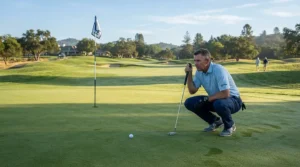
These are composite profiles, not real customers, built to show how the shortlist maps to real situations.
The Saturday walker on a tight budget. She plays 18 holes weekly on a parkland course, has wide, flexible flat feet and wants to keep spending under £90. The FitVille Primix V2 gives her width and a dual-density midsole, while the FitVille SpeedEx V4 is the cheaper fallback if she plays in wet conditions.
The golfer with podiatrist-made orthotics. He’s played for twenty years and needs the factory footbed out. The FootJoy Pro/SL 2026 is a strong candidate, provided the listing confirms a removable insole, as is the ECCO Biom H5 if his swing isn’t too aggressive. The adidas S2G Spikeless Leather 24 works as a cheaper shell.
The fast swinger whose heel collapses. He generates serious speed and feels his heel roll at impact. The Under Armour Drive Pro Clone and Skechers Blade Tour Slip-In offer the firmest platforms in this list.
The golfer with a stiff back. Bending to tie laces is a daily negotiation. The slip-in entry of the Skechers Blade Tour Slip-In removes the problem while still providing arch support.
✨ Don’t Miss These Exclusive Deals!
🔍 Take your golf game to the next level with these carefully selected shoes. Click on any highlighted item to check current pricing and availability. These picks will help you create authentic comfort on every fairway you walk!
How to Choose Golf Shoes for Flat Feet with Arch Support
Choose shoes with a firm, contoured footbed, a rigid heel cup, a width that matches your foot spread and a midsole that resists twisting. Then test them in the late afternoon, when feet are largest. Here are the steps with the reasoning behind each.
- Press the footbed. It should feel firm and contoured, not squashy. Soft foam collapses under flat feet within a few holes.
- Check for a removable insole. Lift the footbed out. If it comes out, you can add orthotics later; if it’s glued, you’re locked in.
- Match width to foot spread. Flat feet usually widen under load, so try wide fittings even if you normally buy standard.
- Test the heel counter. Pinch the back of the shoe. A firm counter resists collapsing, which is the foundation of heel stability.
- Twist the shoe. A shoe that wrings like a towel offers little torsional support.
- Choose traction for your course. Spikes for hilly, wet courses; spikeless for dry, flat ones. Most UK clubs require soft spikes, so check your club’s rules.
- Try them with golf socks, late in the day. Feet swell, and a morning fit lies.
Men’s Golf Shoes with Orthotic Insoles: How a Removable Insole Changes the Game
Why a removable insole matters
A removable insole is the feature that decides whether men’s golf shoes with orthotic insoles are even possible. Without it, adding a custom or aftermarket orthotic raises your foot by several millimetres, jamming your toes against the upper. With it, you swap the factory footbed for support matched to your arches. That’s why podiatry-led golfer guides recommend checking this feature first.
Do you need custom orthotics?
Not necessarily. An NHS podiatry leaflet from Livewell South West says research shows no difference between custom and over-the-counter insoles for plantar heel pain. That finding concerns heel pain specifically, so it doesn’t settle every flat-foot case. Even so, it suggests starting with a well-made off-the-shelf insole in the £10-£35 range before paying for custom work.
How to fit an orthotic properly
- Remove the factory insole and use it as a size template.
- Check the heel depth: your heel shouldn’t pop out when walking.
- Lace firmly, as an orthotic changes the shoe’s internal volume.
- Walk around before taking it on the course.
If you wear full-length orthotics, wide fittings like the FitVille Primix V2 or FootJoy Pro/SL 2026 give them space to sit flat.
Supportive Golf Shoes for Overpronation: Taming the Inward Roll
Overpronation means the foot rolls inward more than average after heel strike, and flat feet often travel with it. In golf, that shows up when your trail foot rolls in during the backswing or your lead heel collapses at impact. The knee can follow the foot inward, which is why some golfers feel it higher up the leg.
Supportive golf shoes for overpronation share traits: a wide, stable base; a firm medial (inner) side to the midsole; a stiff heel counter; and midsole foam that doesn’t bottom out. The Under Armour Drive Pro Clone‘s firmer outer foam and the FitVille Primix V2‘s dual-density midsole and nylon plate target exactly this. The Skechers Blade Tour Slip-In adds an arch-shaped insole to guide the foot.
Avoid ultra-soft, minimalist shoes. They feel lovely in the shop and leave an overpronating foot unsupported across 18 holes. If you suspect significant overpronation, a gait analysis at a podiatrist or specialist running shop is worth more than any review, this one included.
Heel Stability: The Part of the Shoe Doing the Heavy Lifting
If the arch is the spring, the heel is the anchor. Heel stability comes from three things: a firm heel counter, a deep heel cup and collar padding that locks the ankle in place. Poor heel stability lets your foot slide and tilt inside the shoe, forcing your muscles to correct it.
You can test this in the shop. Squeeze the heel counter: it should resist. Walk briskly and see whether your heel lifts. Stand on one leg and check whether the shoe wobbles with you.
In this lineup, National Club Golfer’s reviewers described the Skechers Blade Tour Slip-In‘s heel as solid and the adidas S2G Spikeless Leather 24‘s heel as strong. The FitVille SpeedEx V4 has generous ankle padding. By contrast, Golf Monthly flagged the ECCO Biom H5 as not the most stable spikeless option. FitVille also describes a U-shaped heel cup and TPU midfoot support on its wider spiked range, though check whether your chosen model includes them. Slip-in designs trade adjustable lockdown for convenience, so if your heel slips, a lace-up with heel-lock lacing may serve you better.
Plantar Fasciitis Support: Golf Shoes That Go Easy on the Heel
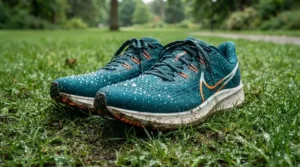
The plantar fascia is a band of tissue running from heel to toes, and when it’s irritated, the first steps out of bed can feel like treading on a drawing pin. NHS podiatry leaflets generally advise supportive, cushioned shoes with a firm sole, and National Club Golfer’s guidance for golfers adds slightly heavier, ergonomic shoes and avoiding narrow fits that restrict the forefoot.
Plantar fasciitis support in a golf shoe therefore means three things: cushioning under the heel, a firm midsole that doesn’t flex like a flip-flop, and enough width to let the toes splay. An NHS leaflet from Livewell South West notes that thick, cushioned soles with a moderate-to-high heel drop (8-12mm) can ease heel pressure. Many golf shoes sit lower than that, so check the stated drop if heel pain is your priority.
Interestingly, the same leaflet lists “flat feet cause heel pain” as a common myth. So don’t assume flat feet and heel pain are automatically linked.
Among the seven, the FitVille SpeedEx V4 and FitVille Primix V2 lead on width and padding, while the Skechers Blade Tour Slip-In brings its moulding insole. None replaces medical advice, and persistent heel pain deserves a GP or podiatrist.
Arch-Support Golf Shoes vs Standard Golf Shoes vs Trainers with Insoles
| Option | Arch support | Grip and stability | Typical cost | Best For |
|---|---|---|---|---|
| Dedicated arch-support golf shoes | Built-in, often with removable insole | Designed for swing forces | £60-£190 | Flat feet wanting one reliable pair |
| Standard golf shoes | Minimal flat footbed | Good traction, variable support | £50-£150 | Neutral arches |
| Trainers plus insoles | Strong cushioning, insole adds support | Weak lateral stability, poor wet grip | £60-£150 plus £10-£35 | Dry-day or range compromise |
Dedicated shoes win because the support is integrated with traction. A trainer-plus-insole combo is cheaper on paper but sacrifices the lateral stability a golf swing demands, and wet UK turf punishes smooth outsoles. Standard golf shoes are fine for neutral feet but leave flat arches working overtime.
Consider value, too. A £140-£160 pair played 40 rounds a year over two seasons works out at roughly £1.75-£2 per round, while a £60-£70 pair replaced every year costs about £1.50-£1.75. In other words, pricier shoes aren’t wasteful if they last, but cheaper dedicated pairs make perfect sense if you’re testing what your feet need.
Common Mistakes When Buying Golf Shoes for Flat Feet
Chasing softness. Plush feels wonderful for ten minutes. For flat feet, firm and contoured beats marshmallow.
Ignoring width. A shoe can be the right length and still strangle a spreading forefoot. Try wide fittings.
Assuming “arch support” means the same thing everywhere. Some shoes have a shaped insole; others merely a bump. Press it and feel.
Buying without checking insole removal. If you might ever use orthotics, confirm the footbed lifts out before ordering.
Skipping the heel test. A shoe with a floppy counter will undo any arch support.
Treating pain as a shoe problem only. Persistent or worsening pain needs professional assessment. The right shoes help, but they don’t diagnose.
Over-trusting star ratings. A five-star rating from a golfer with neutral arches tells you little about how a shoe handles yours. Look for reviews mentioning width, support and heel hold.
Long-Term Cost and Maintenance
Supportive shoes last longer when you maintain them. Dry them at room temperature, never on a radiator, which warps footbeds and cracks leather. Remove insoles after wet rounds. Replace soft spikes when worn, because uneven spikes cause uneven loading, which defeats the point of a supportive shoe.
Watch for the signs of retirement: a footbed that no longer springs back, a heel counter that has softened, or outsole wear that’s lopsided. As a rough guide, many golfers get one to three seasons from a good pair, depending on frequency. Replacing the insole alone can extend a shoe’s life, particularly with models like the adidas S2G Spikeless Leather 24, where the upper outlasts the foam.
Waterproofing matters over UK winters. The Skechers Blade Tour Slip-In carries a one-year waterproof warranty, so keep your receipt. If heel or arch pain persists despite good shoes, the NHS plantar fasciitis page explains symptoms and when to see a GP.
FAQ
❓ How much should I spend on golf shoes for flat feet with arch support?
❓ Do wide-fit golf shoes help flat feet?
❓ How long do arch-support golf shoes last?
❓ Are spikeless golf shoes safe in wet UK conditions?
❓ Which golf shoe brands offer wide fittings in the UK?
Conclusion
Finding golf shoes for flat feet with arch support comes down to four checks: a firm contoured footbed, a heel that stays put, enough width and, if you use orthotics, a removable insole. Everything else is seasoning.
My shortlist in one breath: the FitVille SpeedEx V4 for the smallest budget, the FitVille Primix V2 for maximum room, the adidas S2G Spikeless Leather 24 as a sturdy shell for your own insole, and the Under Armour Drive Pro Clone for fast swingers. The Skechers Blade Tour Slip-In wins on convenience and Arch Fit support, the FootJoy Pro/SL 2026 on width choice, and the ECCO Biom H5 only if the removable insole is your priority.
Remember the limits of this guide. It’s built on published specs and independent reviews, not personal wear-testing, and several details, such as insole removal on particular models, need confirming on the live listing. If pain persists, see a podiatrist; shoes support, but they don’t diagnose.
Recommended for You
- Spiked Vs Spikeless Golf Shoes For Beginners: 7 Smart Picks (2026)
- Leather Golf Shoes For Traditional Clubs With Dress Codes: 7 Best ’26
- Golf Trainers For The Driving Range And Clubhouse: 7 Best Buys (2026)
Disclaimer: This article contains affiliate links. As an Amazon Associate, I earn from qualifying purchases. If you purchase products through these links, we may earn a small commission at no additional cost to you.
✨ Found this helpful? Share it with your friends! 💬🤗
