
In This Article
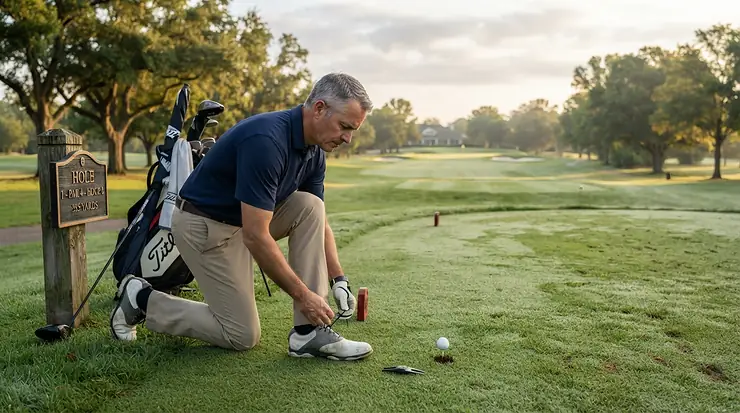
Buying your first pair of golf shoes is oddly stressful. You haven’t hit a decent drive yet, but you’re already being asked to pick a side in a debate that has run through UK clubhouses since Fred Couples wandered onto the 2010 Masters in spikeless Eccos. Spiked vs spikeless golf shoes for beginners isn’t a war with a clear winner. It’s a trade between grip and comfort, between wet-weather confidence and trainer-like ease.

Here’s the 2026 picture. Spiked shoes use replaceable plastic cleats that bite into the turf. Spikeless shoes rely on moulded rubber nubs and lugs. Tour professionals wear both, and the evidence for a swing advantage either way is modest and mixed. What matters for you is where you play, how often, and how much you want to spend before you know whether golf will stick.
This guide does the sums for you. You get seven real shoes across budget, mid-range and premium, and every spec is translated into what it means on a wet Tuesday at your local course. Where published reviewers have rated a shoe, I summarise their verdict. Where I couldn’t verify enough customer reviews to summarise honestly, I say so rather than invent anything. Prices are given as ranges only, so check current prices before you buy.
What Is the Difference Between Spiked vs Spikeless Golf Shoes for Beginners?
Spiked golf shoes use replaceable soft cleats screwed into the sole for maximum grip on wet or sloping turf. Spikeless golf shoes use a moulded rubber outsole with built-in nubs for lighter, trainer-style comfort and easier off-course wear. For beginners, spikeless generally suits dry conditions, while spiked suits wet, hilly courses.
That’s the snippet answer. The story behind it is useful too. Metal spikes wrecked greens, so clubs banned them, and plastic cleats took over in the early 1990s. Spikeless designs only went mainstream after 2010. An equipment editor’s side-by-side comparison of spiked and spikeless performance concluded that spiked models still tend to grip better, while noting that plenty of tour players have moved to spikeless anyway.
Why does this matter more for beginners, not less? Because you’re standing in these shoes for three to five hours. A foot that slips mid-swing ruins the strike, and a shoe that pinches ruins the round. Grip and comfort aren’t luxuries when your technique is still wobbling. They’re the foundation you build the rest on.
Quick Comparison Table: 7 Shoes at a Glance
Before the deep dive, here’s the cheat sheet. Prices are ranges from the time of research and will move, so check current price on the day.
| Product | Traction Type | Price Range | Best For |
|---|---|---|---|
| adidas S2G 26 | Spikeless | Mid-£80s to low-£90s | Budget first pair, dry-weather rounds |
| adidas Adipower 26 | Spikeless (spiked version also sold) | Around £110–£120 | Trainer feel with a spiked option in the same family |
| Under Armour Halo Tour | Spikeless | Around £120–£130 | Comfort-first golfers wanting tour-level support |
| FootJoy Pro/SL 2026 | Spikeless | Around £150–£165 | Walkers on uneven lies, wide or extra-wide feet |
| Ecco Biom H5 | Hybrid spikeless | £160–£190 range | Mixed UK conditions in a leather shoe |
| FootJoy Original Water Resistant | Spiked, replaceable cleats | Just under £100 | Cheapest entry to proper spikes |
| Puma Avant Tour | Spiked, removable cleats | £125–£135 range | Wet, hilly courses and leather waterproofing |
The table shows a clear price ladder. The adidas S2G 26 and the FootJoy Original Water Resistant are the two sub-£100 doors into the game. Both are cheaper than any of the premium spikeless options, but they solve different problems: dry-weather comfort versus wet-weather grip. If you can only afford one pair and play year-round in the UK, the spiked FootJoy Original Water Resistant is the more cautious buy, while the adidas S2G 26 wins if summer golf is the plan.
💬 Just one click — help others make better buying decisions too!😊
Top 7 Spiked and Spikeless Golf Shoes for Beginners: Expert Analysis
Each pick below follows the same logic. First what stands out, then what the specs mean in practice, then who it suits, then the review picture and an honest pros-and-cons call.
1. adidas S2G 26 — best value first pair
The standout here is the price-to-polish ratio. National Club Golfer’s reviewers named it their best-value spikeless pick, and at the mid-£80s for the textile version (a few pounds more for leather) it undercuts most branded rivals.
It’s a laced, spikeless design with what the review calls basic waterproofing. Laces matter more than they sound. A locked-down heel and midfoot stops your foot sliding inside the shoe on the downswing, which is half of what stability means at beginner speeds. Basic waterproofing means dew and a passing shower, not a week of Pennine drizzle.
Based on the spec picture, this suits the beginner who wants to find out whether golf is a hobby or a phase without a £150 commitment. The casual styling also lets it double as an everyday trainer, which spreads the cost across more wears. What the spec sheet won’t tell you is traction, since no hard testing data is published. Treat it as a dry-weather shoe until you’ve tried it on your own course.
On review sentiment, NCG’s tester praised the comfortable fit, premium-feeling build and value, and flagged that some golfers may need to size up. I couldn’t verify a large pool of customer ratings, so this is editorial sentiment, not a customer average.
Pros:
- ✅ Very comfortable fit, according to reviewers
- ✅ Looks and feels pricier than it is
- ✅ Wearable off the course too
Cons:
- ❌ Waterproofing is only basic
- ❌ May need sizing up
Price range: mid-£80s to low-£90s, so check current price. Verdict: excellent value for a first pair if you mainly play in the dry.

2. adidas Adipower 26 — retro looks, trainer-like comfort
The hook is a throwback silhouette that still feels like a running shoe underneath, which is rare in a golf shoe at this price.
The spikeless version retails at around £110, and the reviewer described it as very light. A waterproof spiked sibling in the same range is sold at roughly £120. That’s the interesting bit for beginners, because it means you can learn your fit in one configuration and move to the other later without relearning a brand’s sizing. The reviewer also noted that plenty of premium shoes now cost well beyond £150, which makes this a sweet-spot option for club golfers.
My read, grounded in the specs and the review: this is for the beginner who wants one brand’s last, a trainer-style feel, and the option to switch to spikes for winter. The reviewer hoped conditions wouldn’t be too extreme this summer, which suggests it’s most convincing in fair weather.
NCG gave it five stars, praising the trainer-like comfort, the retro-sporty look and the light feel, and flagged no faults. That’s editorial sentiment from one outlet. I couldn’t verify a robust pool of customer reviews.
Pros:
- ✅ Trainer-like comfort and light feel
- ✅ Spiked sibling available in the same range
- ✅ Priced below many premium rivals
Cons:
- ❌ Wet-weather grip not proven in published testing
- ❌ Retro styling is a taste call
Price range: around £110–£120, so check current price. Verdict: strong mid-range value, especially if you like the idea of a spiked backup.
3. Under Armour Halo Tour — tour-grade stability, sneaker comfort
The headline is the outsole. The rubber wraps up the sidewall for added support at impact, which is a clever fix for a classic spikeless weakness.
That wrap matters because the biggest strain on a shoe comes when your weight drives into the lead foot at impact. A sidewall that curls upward helps stop the sole edge from rolling away under load. Pair that with a waterproof version being listed at UK retailers, and you have a spikeless shoe that’s thinking about the swing, not just the car park.
Analytically, this suits golfers who are already sure they want spikeless but don’t want to feel like they’re swinging in gym shoes. NCG’s reviewer felt it delivered tour-level stability and comfort in a modern, trainer-style look, and reckoned it would hold up for regular competition play. Beginners who expect to play weekly rather than monthly benefit most from that durability.
NCG scored it 4.5 stars, calling it extremely comfortable, with the only knock being that the design won’t suit everyone. Again, that’s one outlet’s editorial view, not a customer-review aggregate, which I couldn’t verify at scale.
Pros:
- ✅ Sidewall-wrapped outsole supports the swing
- ✅ Extremely comfortable per the reviewer
- ✅ Waterproof version available
Cons:
- ❌ Styling polarises opinion
- ❌ Dearer than the budget spikeless picks
Price range: around £120–£130, so check current price. Verdict: fair value for stability-minded beginners who want spikeless.
4. FootJoy Pro/SL 2026 — NCG’s most stable spikeless pick
This is the benchmark spikeless shoe, and it earns its reputation on uneven ground.
NCG’s reviewer said the 2026 version stays secure on awkward lies, including fairway bunkers, with no hint of slipping. It’s also waterproof and easy to wipe clean, and it comes in medium, wide and extra-wide fittings from UK 6 to 14. Wide fittings are a bigger deal than they sound. A shoe that’s too narrow lets your foot squash sideways, and that’s exactly where beginners lose balance.
So who’s it for? The walker on a hilly or undulating course who wants a spikeless shoe that behaves on sloping lies. It’s also a strong pick for anyone with broad feet. The trade-off is price: you’re paying premium money for what’s essentially a very polished spikeless trainer.
An older independent review also rated the Pro SL line as the best waterproof spikeless shoe in its comparison, which fits NCG’s current praise. That’s two editorial sources, not customer data, and I couldn’t verify a robust customer-review pool for the 2026 version.
Pros:
- ✅ Secure on uneven lies and in bunkers
- ✅ Waterproof and wipe-clean
- ✅ Medium, wide and extra-wide fittings
Cons:
- ❌ Sporty looks won’t suit everyone
- ❌ Premium price for a first pair
Price range: around £150–£165, so check current price. Verdict: the safest premium spikeless buy if you walk hills or have wide feet.
5. Ecco Biom H5 — leather hybrid built for mixed conditions
The standout is the hybrid concept executed in full-grain leather, which is rarer than the textile alternatives.
Retailers describe the lace-up H5 as a hybrid spikeless design with a strengthened heel for support and durability. Leather typically holds its shape and sheds water better than mesh, so it suits golfers who play across seasons. The textile version of the range has been sold at the upper-£150s, and the leather one costs more, hence the £160–£190 range.
The research angle is interesting. An Ecco-focused biomechanical comparison of hybrid and soft-spike versions found no differences in ground reaction forces, club-head speed or ball speed, and about 73% of participants said they’d pick the hybrid. Because the study centres on Ecco designs, treat it as supportive rather than neutral proof. NCG also gave the sibling Biom C5 five stars, praising its construction and how it moulds to the foot, though that review isn’t of the H5 itself. I couldn’t verify enough customer reviews of the H5 to summarise.
Pros:
- ✅ Full-grain leather upper for durability
- ✅ Strengthened heel adds support
- ✅ Hybrid design suits changeable weather
Cons:
- ❌ Costs more than most first-time buyers want to spend
- ❌ Leather needs a little more care than synthetics
Price range: £160–£190, so check current price. Verdict: worth it if you want one durable pair for all seasons.

6. FootJoy Original Water Resistant — cheapest route to real spikes
This is the budget gateway to replaceable cleats, and it keeps the traditional feel.
The listed specs include a Fast Twist cleat system with six replaceable PiVix spikes, a Duramax rubber outsole and a one-year warranty. Replaceable cleats mean you swap the worn ones rather than binning the whole shoe, which is the quiet money-saver in spiked golf. The Austin last has a rounded toe and fuller forefoot, which gives wider feet room to spread. At roughly 390g a shoe, it’s respectable, though on paper not trainer-light.
My analysis: if you play wet, walk a lot and don’t care about wearing golf shoes to the pub, this is the sensible budget play. The honest caveat is the water-resistant label. A retailer’s guide positions it as a sub-£100 option, but don’t expect premium waterproofing.
I couldn’t verify enough customer or editorial reviews of this specific model to give you a sentiment summary, and I’d rather say that than make something up. Check the current reviews at the retailer before buying.
Pros:
- ✅ Replaceable cleats extend the shoe’s life
- ✅ Just under £100 for real spikes
- ✅ Roomy forefoot for wider feet
Cons:
- ❌ Water-resistant rather than fully waterproof
- ❌ Traditional look is less off-course friendly
Price range: just under £100, so check current price. Verdict: the best budget way into spiked shoes.
7. Puma Avant Tour — removable cleats, leather polish
Here the hook is a tour-styled leather shoe with removable spikes.
The specs list a full-grain leather upper, a PROFOAM midsole, a removable spiked TPU outsole and a one-year waterproof guarantee. Full-grain leather is the part doing the waterproofing work. The cushioned midsole tackles the fatigue of a four-hour walk, and the removable cleats mean you can refresh traction without replacing the shoe.
Who benefits most? A beginner in a wet or hilly region who’s planning to play year-round and wants a shoe that looks the part at a members’ club. NCG’s winter-shoe roundup rated the related Puma Avant at four and a half stars. That isn’t a review of the Tour model itself, and I couldn’t verify enough customer reviews to summarise honestly.
Pros:
- ✅ Removable cleats for refreshable traction
- ✅ Leather upper with one-year waterproof cover
- ✅ Cushioned midsole for long walks
Cons:
- ❌ Traditional styling limits off-course use
- ❌ Costs noticeably more than the budget spiked option
Price range: £125–£135, so check current price. Verdict: a solid wet-weather investment if you’re committed to year-round golf.
Top 7 Specs and Ratings Compared
| Product | Traction System | Waterproofing (as listed) | Editorial Rating |
|---|---|---|---|
| adidas S2G 26 | Spikeless | Basic | NCG: 5/5 |
| adidas Adipower 26 | Spikeless (spiked sibling exists) | Spiked sibling listed as waterproof | NCG: 5/5 |
| Under Armour Halo Tour | Spikeless | Waterproof version listed | NCG: 4.5/5 |
| FootJoy Pro/SL 2026 | Spikeless | Waterproof | NCG: 5/5 |
| Ecco Biom H5 | Hybrid spikeless | Not verified | Not rated (sibling C5: 5/5) |
| FootJoy Original Water Resistant | Replaceable Fast Twist cleats | Water resistant, one-year warranty | Not verified |
| Puma Avant Tour | Removable spiked TPU outsole | One-year waterproof | Related Avant: 4.5/5 |
These are editorial ratings from one outlet, not customer averages, so read them as a guide, not gospel. The pattern is clear: the spikeless shoes cluster around four-and-a-half to five stars, while the spiked models are less thoroughly reviewed. That says more about review coverage than quality. If waterproofing is your priority, the FootJoy Pro/SL 2026 and Puma Avant Tour have the clearest credentials. The adidas S2G 26 is the one to skip for wet winters.
Your First 30 Days: Setup, Break-In and Maintenance
New shoes deserve a plan. Here’s a simple one that works for either type.
Week one: wear them around the house and the range. Never debut new golf shoes on the first tee of a competition. Lace them firmly, with a snug heel and an open forefoot, and wear them for an hour or two at a time. If a heel slips or your toes jam, you’ve found a sizing problem before it costs you a round.
Week two: nine holes. Play a short loop, noting any rubbing. Reviewers flagged sizing quirks on the adidas S2G 26, and sizing issues like that are easier to fix before you’ve worn the shoes outside.
Weeks three and four: full rounds. If you chose spikes, check that every cleat is tight after each round, using the cleat wrench that usually comes with a shoe or a spare set. Loose cleats feel dreadful on hard paths.
After every round: brush off mud, wipe the upper, and let the shoes dry naturally. Skip radiators, which crack leather and warp soles. Stuff wet shoes with newspaper to draw moisture out.
Common first-month mistakes: buying half a size too tight “for stability”, wearing thin socks with a roomy shoe, and leaving wet shoes in a boot overnight. Fit and care beat features every time.

Real-World Scenarios: Three Beginner Profiles
Spec sheets are abstract. These three imagined profiles show how the logic plays out.
The weekend pay-and-play golfer. Two rounds a month, flat parkland, a budget under £100, mostly summer. The adidas S2G 26 fits like a glove. The mid-£80s price and casual look make it a no-regret purchase, and the dry-weather weakness barely matters.
The hilly-club regular. Weekly rounds year-round on an undulating course, walking, with a £150 budget. Here the FootJoy Pro/SL 2026 is the logical spikeless choice thanks to its reported stability on uneven lies. If your course turns to mud by November, the Puma Avant Tour with its removable cleats is the cautious alternative.
The cash-strapped winter links player. Coastal course, wind and rain, under £100. This is the case where the FootJoy Original Water Resistant shines, because the replaceable spikes give you grip on soggy turf. Budget for a spare set of cleats and don’t expect miracles from the water resistance, so wear decent socks.
The lesson is that your course matters more than the brand. Match the shoe to your weather, your hills and your wallet, then worry about colour.
Buyer’s Decision Framework: If This, Choose That
Use this checklist when you’re staring at a shop wall of shoes.
- If you play mostly May to September on dry fairways, choose spikeless: adidas S2G 26 or adidas Adipower 26.
- If you walk steep or sloping courses, choose the FootJoy Pro/SL 2026 or a spiked model for the extra bite.
- If your course is regularly sodden, choose spikes: FootJoy Original Water Resistant or Puma Avant Tour.
- If you want one shoe for everything, choose a hybrid like the Ecco Biom H5 and accept the higher price.
- If you have wide feet, start with the FootJoy Pro/SL 2026 and its wide and extra-wide fittings.
- If you want to wear them to the pub too, choose a trainer-style spikeless like the Under Armour Halo Tour.
The simplest tiebreaker is this: weather first, budget second, looks third. A shoe that matches your conditions will always out-perform a prettier one that doesn’t.
✨ Ready to Find Your First Pair?
🔍 Click any highlighted product name above to check current pricing and availability on Amazon UK. Take your time, check your size, and pick the shoe that suits your course, not just your Instagram.
How to Choose Spiked vs Spikeless Golf Shoes for Beginners
Here’s the step-by-step method for spiked vs spikeless golf shoes for beginners, with the reasoning behind each step.
- Audit your course conditions. Is it parkland that drains well, or a clay-heavy track that holds water? Soggy turf rewards spikes, and dry fairways rarely do.
- Be honest about your swing speed. Most beginners aren’t swinging at tour pace, so the extreme grip of an aggressive cleat is less critical for you than for a low-handicapper.
- Prioritise fit and width. A shoe that locks your heel and gives your forefoot room will do more for balance than any outsole tech.
- Decide how much waterproofing you need. “Water resistant” and “waterproof” aren’t the same, and the warranty length tells you what the maker believes.
- Think about off-course wear. If you want a shoe for the clubhouse and the school run, spikeless is more practical.
- Set a realistic budget. Sub-£100 gets you the adidas S2G 26 or the FootJoy Original Water Resistant. £150-plus opens the premium tier.
- Check your club’s rules. Some clubs have footwear policies, and metal spikes are widely banned. Ask before you buy.
Stability During the Swing: What the Evidence Actually Says
Stability during the swing is where this debate gets heated, so let’s look at the data.
A Pinehurst study led by a golf instructor and a retired kinesiology professor found that replaceable cleats improved driving distance, ball speed, shot dispersion and smash factor compared with spikeless shoes. It used 28 adult male golfers, each hitting ten drives on dry, flat ground. That’s a respectable design, but note the limits: only men, only drives, only dry turf, with supportive commentary from a cleat manufacturer.
The Ecco-focused lab comparison pointed the other way. It found no differences in ground reaction forces, club-head speed or ball speed between a hybrid and a soft-spike model. Two studies, two conclusions, which tells you the effect, if any, is small.
An experienced equipment editor argued that spiked models grip better than spikeless, but also reported a winter round where mud clogged a spiked outsole and cost traction. So spikes aren’t a magic wand.
For you, the practical takeaway is that stability during the swing comes from three things: a snug, locked-down fit, an outsole matched to the ground, and conditions. If your feet don’t move inside the shoe and don’t slide on the turf, you’re stable. Chasing the last 1.5% of ball speed can wait.

Hybrid Golf Shoes for Mixed Course Conditions
The UK weather has never read the forecast, so hybrid golf shoes for mixed course conditions deserve a proper look. The word “hybrid” is used loosely. Retailers sometimes mean a spikeless outsole with cleat-like lugs, and sometimes just an athletic-style construction with leather uppers. Read the spec, not the label.
The idea is simple: one shoe that copes with a bone-dry July and a soggy October without the cleat-swapping faff. The Ecco Biom H5 is the clearest example in this guide, combining leather with a spikeless hybrid sole. The trade-off is that hybrids rarely beat a purpose-built spiked shoe in deep mud or a spikeless trainer in the heat.
Dual Traction Pattern: Two Jobs, One Outsole
A dual traction pattern means the outsole uses different lug shapes in different zones. The forefoot typically gets grip aimed at rotation during the swing, while the heel gets braking and walking traction. Ecco’s E-DTS TWIST outsole, for example, places slightly larger cleats in high-abrasion areas. Puma’s Puma Fusion Crush Sport is marketed with a dual-zone spikeless outsole. For a beginner, a good dual traction pattern means fewer compromises between walking comfort and swing grip.
Convertible Outsole: What It Really Means
A convertible outsole is a term that gets stretched. In practice it means one of two things. Either the same shoe family comes in spiked and spikeless versions (like the adidas Adipower 26), or the shoe has removable cleat receptors (like the FootJoy Original Water Resistant and Puma Avant Tour) so you can swap or refresh the cleats. A truly one-shoe, two-modes design is rare, so check the maker’s guidance before assuming you can wear a spiked shoe without its cleats.
Low Profile Traction Golf Shoes for New Golfers
Low profile traction golf shoes for new golfers are the quiet heroes of the beginner market. “Low profile” means short, wide traction elements that grip the turf without digging deep. That suits beginners for three reasons.
First, comfort. A lower outsole sits closer to the ground, which makes the shoe feel more like a trainer and less like a platform. Second, walking. Taller cleats feel awkward on hard paths and clubhouse floors, whereas low profile pods and nubs don’t. Third, turf. Gentler traction is kinder to the course, which is why clubs prefer it.
Several spiked models list SoftSpikes’ Pulsar Low Profile cleats, a design aimed at delivering stability without an aggressive profile. Among spikeless shoes, the adidas S2G 26 and Under Armour Halo Tour keep a modest tread but add sidewall support.
A simple test: put the shoes on in the shop and walk on a hard floor. If it feels like stilts, move on. Low profile traction golf shoes for new golfers should feel natural, because a shoe you trust is one you stop thinking about, and that’s when your swing improves.
Spiked vs Spikeless Golf Shoes for Beginners: Head-to-Head
Here’s the direct, written comparison of spiked vs spikeless golf shoes for beginners.
| Factor | Spiked | Spikeless | Best For |
|---|---|---|---|
| Wet-grass traction | Generally stronger | Good in dry, weaker in slick conditions | Spiked: Puma Avant Tour |
| Comfort | Can feel stiffer | Trainer-like, lighter | Spikeless: adidas Adipower 26 |
| Off-course wear | Limited | Excellent | Spikeless: Under Armour Halo Tour |
| Maintenance | Check and replace cleats | Wipe clean | Spikeless: FootJoy Pro/SL 2026 |
| Budget entry | Just under £100 | Mid-£80s | FootJoy Original Water Resistant or adidas S2G 26 |
The table makes one thing obvious: neither type wins every row. Spikeless wins on everyday comfort and convenience, while spiked wins when the turf turns slick. The FootJoy Pro/SL 2026 is the strongest argument for spikeless on stability, while the Puma Avant Tour is the strongest argument for spikes on weather.
For perspective, a golf.com writer’s informal test found average ball speed 2.2 mph higher in spiked shoes (151.2 vs 149.0 mph), roughly 1.5%. The author was careful to say it wasn’t proof. If you’re a beginner, that margin is small compared with the benefit of simply making clean contact.
Long-Term Cost and Maintenance
Cheap shoes can be expensive, and pricey shoes can be cheap. It’s all in the cost per round.
Take an illustrative example. A shoe in the £85–£95 range used for around 80 rounds over two seasons works out at roughly a pound per round. A £160 premium shoe used for 100 rounds is about £1.60 per round. The gap is smaller than the sticker shock suggests, provided the shoe lasts.
Spiked shoes add a running cost in replacement cleats, but those cost a fraction of new shoes (check current prices). The upside is that fresh cleats restore grip, extending the useful life of the shoe. Spikeless shoes have no replacement parts, so when the tread wears smooth, the shoe is effectively done.
Maintenance differs too. Leather models like the Ecco Biom H5 and Puma Avant Tour need drying and the occasional conditioning. Synthetics like the FootJoy Pro/SL 2026 wipe clean with a damp cloth.
Finally, a word on rules. Metal spikes are banned at most courses, and many clubs have their own footwear policies. A quick call to your club avoids an awkward moment in the car park, and it protects the greens that everyone is trying to putt on.
FAQ
❓ Can I wear golf shoes with removable cleats without the cleats in?
❓ Are spikeless golf shoes good enough for wet UK winters?
❓ How much should a beginner spend on golf shoes?
❓ When should I replace worn golf cleats?
❓ Can a beginner just wear trainers on the course?
Conclusion
Spiked vs spikeless golf shoes for beginners comes down to your weather, your wallet and your walking. If you play mainly in dry months and want comfort that works off the course too, the adidas S2G 26 and adidas Adipower 26 are sensible spikeless starting points. If stability on uneven ground and wide-foot fit matter, the FootJoy Pro/SL 2026 and Under Armour Halo Tour earn their premium. If your course is wet, your hills are steep, or you play all year, the FootJoy Original Water Resistant and Puma Avant Tour give you spikes, and the Ecco Biom H5 is the one-shoe compromise for mixed conditions.
The evidence on swing benefits is real but small, and even a university golf programme’s guidance concedes that opinion is mixed and the choice is highly personal. So don’t overthink it. Get the fit right, match the outsole to your course, and spend the rest of your energy on the swing.
Recommended for You
- Leather Golf Shoes For Traditional Clubs With Dress Codes: 7 Best ’26
- Golf Trainers For The Driving Range And Clubhouse: 7 Best Buys (2026)
- Waterproof Golf Shoes For Wet British Winters: 7 Proven Picks (2026)
Disclaimer: This article contains affiliate links. As an Amazon Associate, I earn from qualifying purchases. If you purchase products through these links, we may earn a small commission at no additional cost to you.
✨ Found this helpful? Share it with your friends! 💬🤗
